
As an exo pet enthusiast, you already know that central bearded dragons are fascinating desert reptiles with highly specialized biological needs. While these incredible lizards originate from the harsh, arid environments of the Australian outback, water still plays an absolutely vital role in maintaining their systemic health. Water is required not just for basic internal hydration, but also for supporting proper skin elasticity, shedding execution, and complex intestinal digestion.
A very frequent inquiry that continuously arises among both novice keepers and seasoned herpetologists revolves around the practical application of external hydration. Specifically, owners want to understand how a consistent Bearded Dragon Soaking routine can optimize long-term health. Finding the exact baseline for this practice ensures your reptile avoids the physiological stress associated with chronic sub-clinical dehydration or excessive humidity levels within their artificial habitat.
In this comprehensive architectural guide, we will dive deep into the multi-faceted health advantages of topical water therapy. We will evaluate the ideal behavioral frequencies required across different lifecycle stages and establish a clear framework for your weekly care schedule. By understanding these core concepts, you can guarantee your beloved companion remains adequately hydrated, vibrant, and perfectly healthy inside its modern enclosure.
The Biological Importance of Bearded Dragon Soaking
Before analyzing scheduling frequencies, it is critical to dissect the physiological mechanisms that make a regular Bearded Dragon Soaking session highly advantageous. Unlike domestic mammals that rely purely on oral consumption, desert reptiles have evolved integrated lifestyle behaviors to utilize environmental moisture effectively. While they do not absorb massive amounts of water directly through their scales, the clinical physical contact with warm water supports multiple anatomical systems simultaneously.
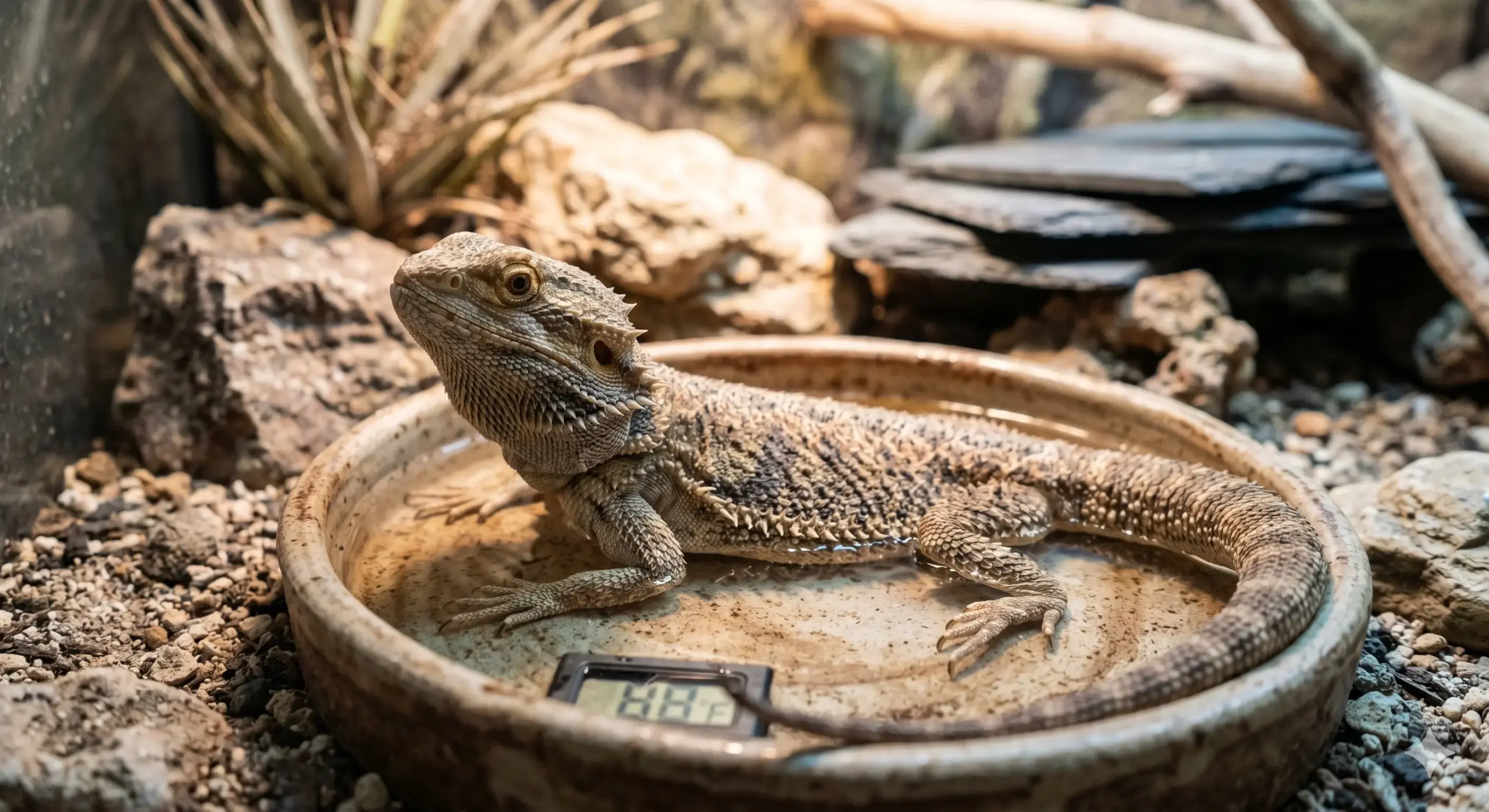
Systemic Hydration Mechanics
Many central bearded dragons are notoriously picky about drinking clean fluid directly from a standing water bowl within their terrariums. In the wild, they often lick morning dew from desert rocks or rely heavily on the ambient moisture content found inside their live insect prey and fresh leafy greens. Introducing a structured schedule for Bearded Dragon Soaking allows these animals to naturally stimulate their drinking reflex by dipping their snout into the shallow pool.
Additionally, specialized historical research indicates that these reptiles can absorb subtle amounts of moisture via their cloaca during immersion. This specific region handles both waste excretion and minor electrolyte balancing, making water contact helpful for cellular fluid equilibrium. Regular immersion ensures that sub-clinical dehydration does not slowly manifest into severe metabolic or renal complications over time.
Critical Shedding Support (Ecdysis)
Stuck reptile shed, clinically known as dysecdysis, is a common pathological condition that can become incredibly painful and lead to localized peripheral tissue infections. When a lizard grows, its old external skin layers dry out and must separate cleanly from the newly formed dermal layers beneath. If the ambient terrarium humidity is permanently low, stubborn patches of old skin often remain tightly wrapped around fragile extremities.
A focused session of Bearded Dragon Soaking acts as an excellent preventative therapy by physically softening the stubborn, dried keratin layers safely. The targeted moisture allows the old, restrictive patches to naturally slide away from sensitive areas like the delicate tail tip and tiny toes. This completely eliminates the dangerous need for keepers to manually peel dry skin, which can inadvertently damage the underlying live tissues.
Gastrointestinal Stimulation and Constipation Relief
If your pet lizard is currently struggling with mild solid waste impaction due to accidental substrate ingestion or low ambient temperatures, a warm bath provides immediate relief. The direct therapeutic warmth radiating from the water layout penetrates deep into the abdominal cavity, effectively relaxing the internal smooth muscle walls. This localized thermal exposure stimulates active peristalsis throughout the long reptilian digestive tract, encouraging proper bowel movements.
During a normal Bearded Dragon Soaking routine, it is incredibly common for a sluggish reptile to completely relieve its bowels directly into the basin. This physical reaction is a positive indicator that the warmth is successfully resolving internal gastrointestinal stagnation before it scales into a severe blockage. Regular hydrotherapy ensures that solid waste and white, chalky urates pass through the cloacal opening smoothly without causing painful straining.
Determining the Ideal Frequency: How Often Should You Soak?
The exact logistical frequency of a proper Bearded Dragon Soaking schedule is never a rigid, one-size-fits-all protocol for keepers. Instead, the ideal routine depends closely on several dynamic variables, including shifting seasonal cycles, individual health conditions, and unique behavioral tolerances. Analyzing these specific parameters allows you to easily customize an optimal strategy that keeps your exotic pet thriving without causing unnecessary environmental stress.
| Life Stage / Condition | Recommended Frequency | Target Water Duration | Primary Clinical Purpose |
|---|---|---|---|
| Healthy Adult (Maintenance) | 2 to 3 times per week | 15 – 20 minutes | General hydration & digestive health |
| Active Shedding Cycle | Daily or every other day | 20 minutes | Softening stubborn, stuck layers |
| Winter Brumation State | Once every 2 to 4 weeks | 10 – 15 minutes | Preventing severe winter dehydration |
| Clinical Dehydration Recovery | Once daily (under supervision) | 15 minutes | Restoring critical cellular fluid levels |
1. The Baseline General Rule (Standard Maintenance)
For a perfectly healthy adult lizard living under optimal husbandry parameters, implementing a Bearded Dragon Soaking routine 2 to 3 times per week is highly recommended. This balanced baseline frequency provides sufficient external hydration benefits without overloading the enclosure with excess moisture or causing physical stress from handling. It also gives you a predictable, scheduled opportunity to evaluate their physical body condition closely outside the standard enclosure walls.
2. Adjustments During the Active Shedding Cycle
The very moment you observe your lizard’s colorful skin transitioning into a distinct dull, cloudy, or grey appearance, they are entering an active shed. To facilitate a smooth physical shedding process, you should immediately increase your Bearded Dragon Soaking frequency to once every single day or every other day. This temporary boost in targeted moisture ensures the expanding skin layers remain pliable enough to lift away naturally without constricting blood flow.
3. Reductions During Winter Brumation
If your mature pet suddenly enters a natural state of brumation—the reptilian equivalent to mammalian winter hibernation—you must drastically reduce your handling routines. During this deep metabolic sleep cycle, performing a Bearded Dragon Soaking session once every two weeks or even once a month is more than enough. This minimal intervention keeps their vital organs safely hydrated while preventing you from fully waking them up and disrupting their natural hormonal cycles.
The Human Experience: A Lifelong Bond of Patience
I remember the quiet panic of my first winter as a reptile keeper. My dragon, Spike, sat motionless in the corner of his wooden enclosure, his skin turning a ghostly, calcified grey that made my heart sink. He refused his favorite dubia roaches. He ignored the fresh turnip greens entirely. I felt completely out of my depth, worried that I was failing this small, ancient-looking creature that relied on me for survival.
Every afternoon became a slow, deliberate ritual of patience. I would gently lift his heavy, lethargic body and place him into the shallow porcelain basin filled with warm water. At first, he would just stare at me with those deep, expressive golden eyes. It was a silent communication between two entirely different species. Then, as the warmth worked its magic, he would let out a long, visible sigh and completely relax his core. Watching him splash his tail softly brought a wave of absolute relief over me. It taught me that keeping exotic pets isn’t just about tracking numbers or setting up smart thermostats. It is about learning to read the silent, subtle body language of a creature that can’t tell you what hurts.
How to Properly Soak Your Dragon (Step-by-Step Protocol)
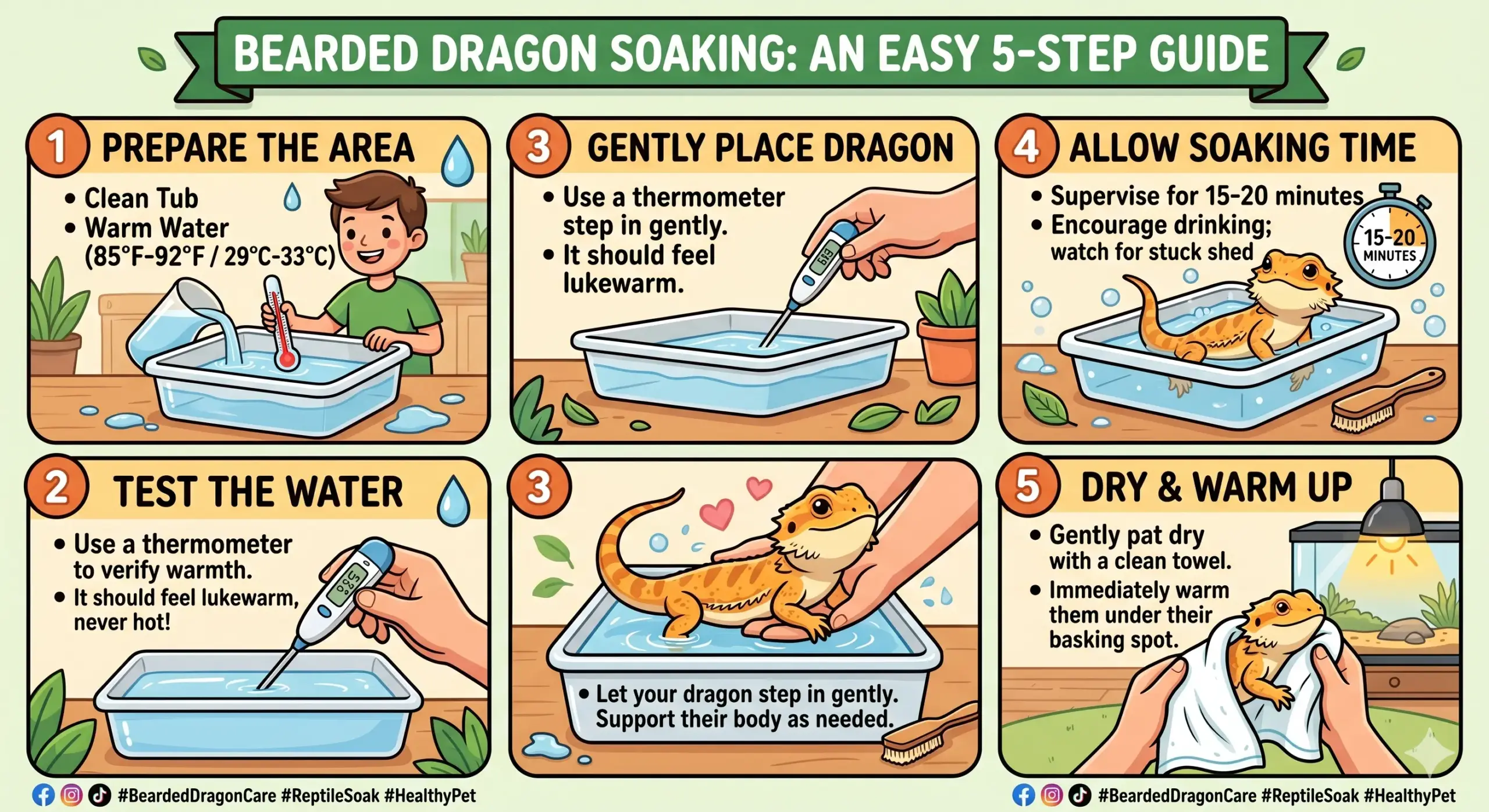
Mastering the logistical frequency of a Bearded Dragon Soaking routine is only half of the health equation; implementing the correct physical technique is equally critical. Because these animals are adapted for arid terrestrial life, improper bath management can quickly induce intense panic or severe physical harm. Following a strict, structured step-by-step protocol protects your pet’s physical safety while maximizing the therapeutic rewards of their water time.
Step 1: Calibrating the Ideal Water Temperature
The water utilized for any Bearded Dragon Soaking session must always feel safely lukewarm to the touch, specifically calibrated between 85°F and 92°F. It is absolutely essential to utilize a precise digital infrared thermometer to verify this parameter before placing your exotic reptile into the basin. Water that is too hot can effortlessly scald their highly sensitive belly scales, while cold water can rapidly plunge their ectothermic bodies into hypothermia.
Step 2: Managing Safe Water Depth Levels
Always fill your designated washing basin or plastic container strictly up to the level of your individual dragon’s front shoulder blades. As a firm safety rule, the water depth should never exceed more than 1 to 2 inches, depending on the physical size of the lizard. Your pet must be able to stand completely flat on its four feet with its head and nostrils elevated comfortably well above the waterline at all times.
Step 3: Monitoring Total Session Duration
A highly effective and therapeutically beneficial Bearded Dragon Soaking session should generally last anywhere between 15 to 20 minutes maximum. Keeping your pet immersed for longer periods can cause the standing water to cool down significantly, which drains vital heat from their body core. If the water temperature drops below 85°F before the session finishes, either gently refresh it with warm water or end the bath immediately.
Step 4: Providing Absolute Continuous Supervision
Never, under any circumstances, leave your pet entirely unattended inside a water basin, even for a brief single minute. Reptiles can unexpectedly slip on smooth plastic surfaces, flip onto their backs, or fall asleep from the soothing warmth, presenting an immediate drowning hazard. Keeping a watchful eye on their physical movements ensures you can step in instantly if their head accidentally dips below the shallow water surface.
Recognizing Clinical Signs That Demand an Immediate Soak
There are certain physical circumstances where you will need to completely bypass your standard weekly schedule to address urgent physiological issues. Environmental heat spikes or a temporary refusal to eat can quickly accelerate hydration loss, requiring rapid intervention from the keeper. You must train your eye to regularly scan your central bearded dragon for the following clinical symptoms of advanced dehydration:
- Distinctly Sunken Eyes: The orbits will appear noticeably hollow and set deep back into the lizard’s skull structure.
- Loss of Skin Elasticity: If you gently pinch a small fold of skin on their flank, it remains wrinkled instead of snapping back instantly.
- Severe Lethargy: The reptile exhibits a total lack of physical energy, refusing to bask or move around the enclosure.
- Chalky Hard Urates: The normally soft white portion of their solid droppings appears completely solid, yellowed, or chalky.
If you identify these specific warning signs, initiating a daily 15-minute Bearded Dragon Soaking therapeutic routine is highly recommended until their clinical symptoms fully resolve. For further professional veterinary guidance on diagnosing specialized reptile health conditions, you can consult the official healthcare resources provided by the Association of Reptile and Amphibian Veterinarians (ARAV). Promptly addressing these early structural hydration warnings effectively prevents the onset of dangerous uric acid crystal accumulation within their kidneys.
Discover Your Dragon’s Hidden Personality Traits!
Understanding your exotic pet’s internal hydration needs is just one essential part of becoming an elite reptile keeper. Every single lizard possesses a completely distinct set of behavioral quirks, preferences, and communication styles that define how they interact with their owners. If you want to dive deeper into your pet’s mind, take our interactive Bearded Dragon Personality Quiz right now to decode their unique traits!
Final Thoughts for Elite Exotic Pet Keepers
Mastering the specific structural routine of a proper Bearded Dragon Soaking schedule will significantly elevate your exotic pet’s daily quality of life. This regular habit provides an incredible, low-stress window to closely bond with your lizard while safely monitoring their physical development. By staying highly proactive with their hydration needs, you can easily ward off common modern husbandry issues like painful stuck shed and intestinal impaction.
Always remember that maintaining a pristine, structurally sound habitat layout is what ultimately keeps these desert reptiles healthy over their long lifespans. If you are currently building a brand new home or optimizing your current setup, make sure to pair your bathing routine with proper heating elements. Keeping an accurate balance between external hydration practices and high-quality basking spots ensures your beautiful lizard remains energetic, healthy, and thriving for many years to come.
Frequently Asked Questions About Bathing Dragons
Q: Can I use commercial dog or cat soaps when soaking my bearded dragon?
A: Absolutely not. You must never use any chemical soaps, bubbles, or commercial pet shampoos during a regular bathing session. A lizard’s skin is highly permeable, and they will often drink directly from the bathwater, meaning any synthetic chemicals can cause severe internal poisoning or topical chemical burns.
Q: What should I do if my lizard accidentally defecates in the water basin?
A: This is a very common physical reaction caused by the warm water relaxing their digestive tract. The moment they defecate, you must immediately remove the lizard from the basin, safely drain the contaminated water, sanitize the container thoroughly, and start fresh with clean water if they still require a soak.
Q: How do I properly dry my bearded dragon off after finishing their bath?
A: Once the session is over, gently wrap your lizard in a clean, soft cotton towel and softly pat them dry to remove excess surface moisture. Immediately place them directly back into their enclosure underneath their primary basking spot so they can quickly restore their core body temperature back to optimal levels.