
Owning a unique companion animal brings immense joy, architectural curiosity, and distinct biological responsibilities. Whether you share your home with a delicate Axolotl or a spiked African Pygmy Hedgehog, maintaining optimal Exotic Pet Health requires diving deep into specialized veterinary science. Traditional domesticated animals like cats and dogs have centuries of streamlined medical research behind them. Exotic species, conversely, call for a highly tailored approach rooted in specific native environmental parameters and concrete empirical data.
At our platform, we believe that providing care for exotic pets requires more than just passion; it requires verified data and scientific backing. To ensure that every guide we publish—whether it’s about Axolotls or Hedgehogs—is safe and accurate, we cross-reference our content with world-class institutions and global regulatory bodies. Achieving peak Exotic Pet Health involves an ongoing commitment to understanding nutrition, metabolic bone patterns, behavioral ecology, and specialized husbandry.
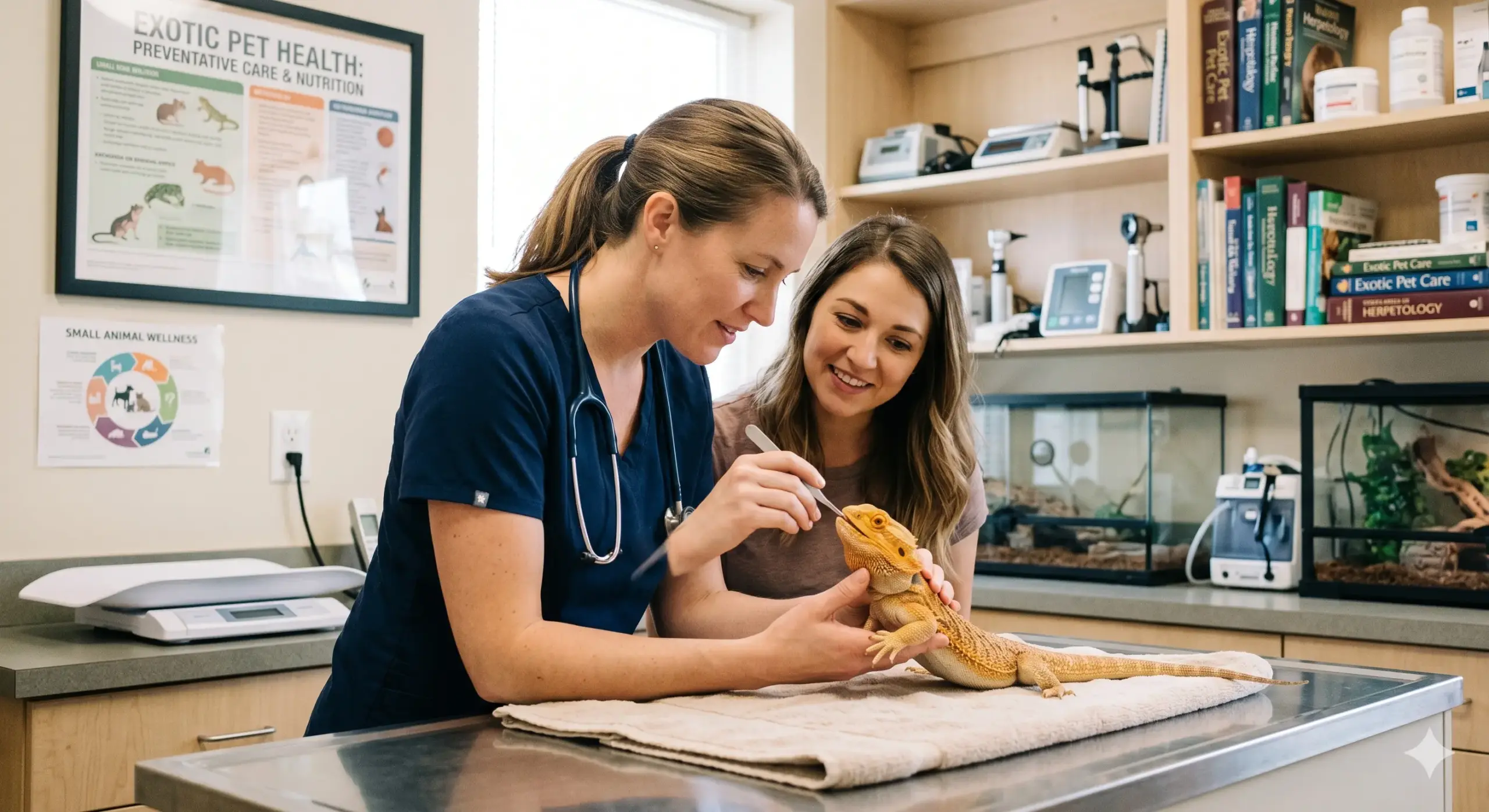
Academic and Biological Foundations of Exotic Pet Health
When we investigate the complex genetics or skin pathologies of rare species, we dive deep into high-level academic resources. For instance, our understanding of cellular biology in small mammals is often informed by Academic Research on Exotic Species. By leveraging such advanced data, we can provide our readers with insights that go beyond basic pet care. True mastery over Exotic Pet Health means understanding why certain reptiles fail to synthesize vitamin D3 without exact UVB wavelengths, or how an amphibian’s semi-permeable skin absorbs environmental pathogens instantly.
Pathological issues in exotic animals often present subtly. Unlike a dog that might whine when in pain, a prey animal like a guinea pig, hedgehog, or bearded dragon will actively hide its illness to prevent looking vulnerable. This biological defense mechanism makes it imperative for owners to closely monitor subtle changes in weight, feces consistency, and daily activity levels. For comprehensive guidance on professional global veterinary medicine standards, you can consult the official World Small Animal Veterinary Association (WSAVA) to review global health frameworks and specialized animal care initiatives.
Global Standards, Bio-Security, and Biodiversity
Exotic pets are part of a global ecosystem, and their care must align with international safety standards. We closely monitor updates regarding environmental health and species protection from official governmental documents, such as International Biodiversity Protocols. This ensures that the advice we give is not only effective but also ethically and legally sound on a global scale. Protecting Exotic Pet Health means acknowledging that our home terrariums and enclosures are micro-ecosystems that mirror wild conditions.
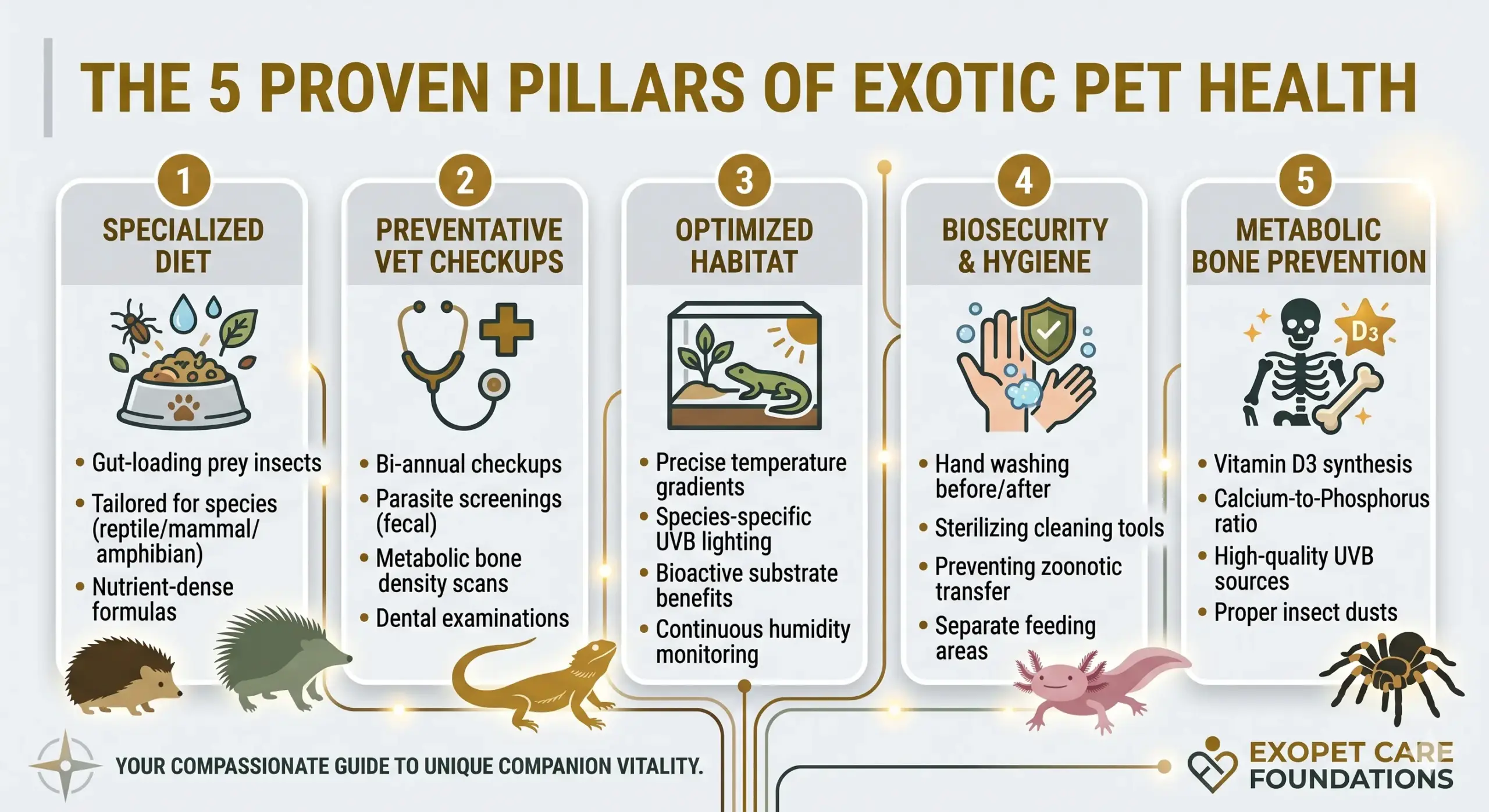
Biosecurity is another cornerstone of long-term wellness. Zoonotic diseases—illnesses that can pass from animals to humans, such as Salmonella from reptiles—require precise handling protocols. Washing hands before and after touching your pet, sterilizing cleaning tools, and keeping enclosures away from human kitchens are non-negotiable standards. When we elevate our daily husbandry routines, we simultaneously safeguard our human families and optimize the longevity of our treasured animals.
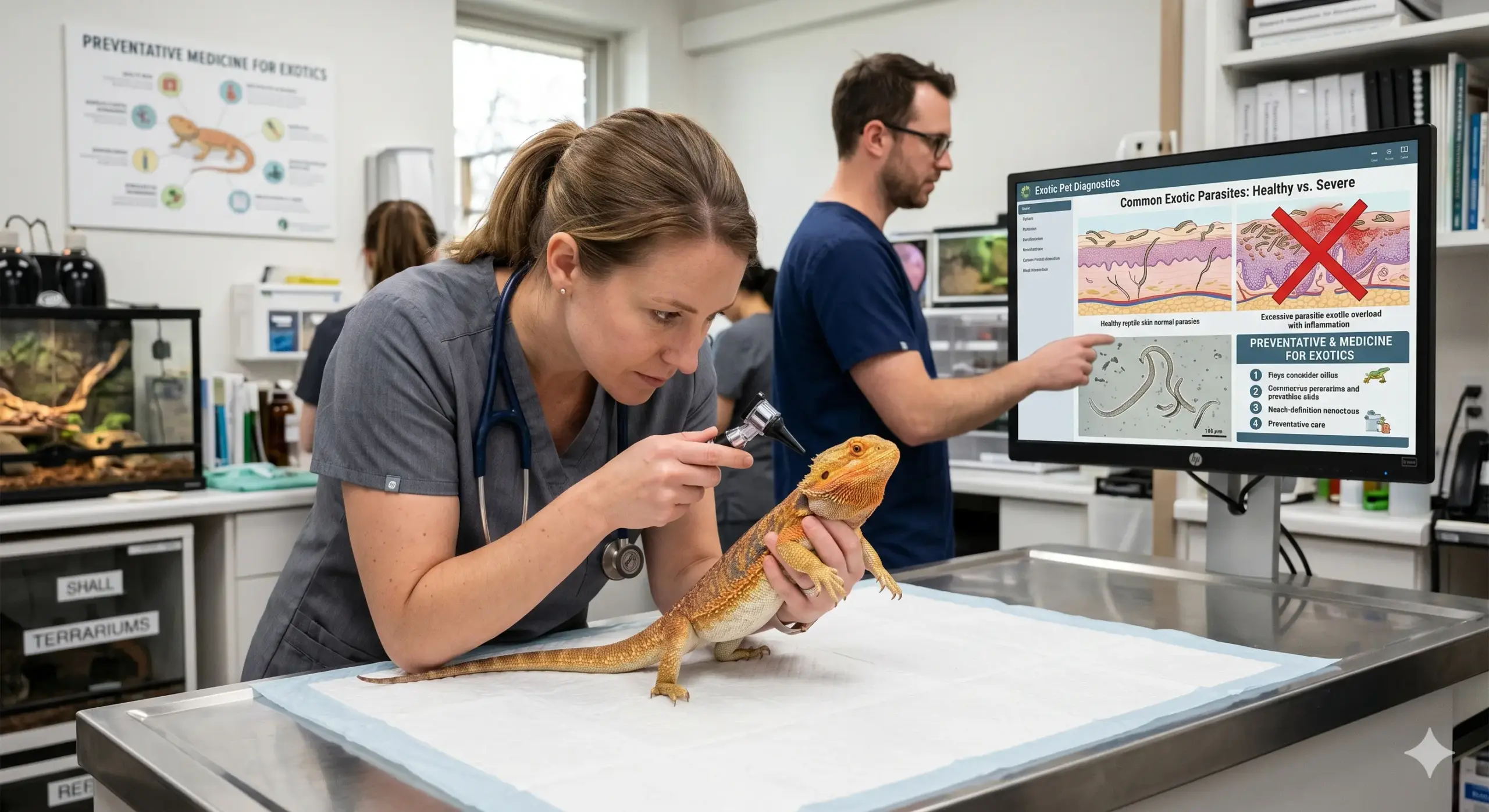
The Human Experience: A Journey of Trust and Patience
I remember the first time I brought home a rescued chameleon. He was terrified. A frail, shaking leaf of a creature hiding behind artificial vines. Every time I stepped into the room, his skin shifted to an angry, stressed hiss-black hue. It broke my heart. I wondered if I had made a terrible mistake. Weeks turned into agonizing months of quiet waiting. I would sit by his enclosure for hours, reading a book aloud just so he could grow accustomed to the gentle cadence of my voice. No touching. No forced interactions. Just pure, unadulterated stillness.
Then, it happened. One Tuesday morning, he didn’t run away. He stayed on his branch. His eyes swiveled, locked onto me, and remained calm. I held out a single hornworm on the palm of my hand. He hesitated. Time slowed down. With an elegant, deliberate launch of his tongue, he took the offering. My heart leaped. In that singular, silent micro-moment, an unspoken bridge of absolute trust was built across a massive evolutionary chasm. It wasn’t about clinical care metrics then; it was about the raw, beautiful vulnerability of two entirely different species finding a common language of safety in a shared world.
Specialized Veterinary Insights and Preventative Care
To stay ahead of common diseases like “Cotton Wool” fungal infections, we collaborate with specialized niche platforms. We often feature our detailed findings in a Comprehensive Exotic Pet Guide to reach a wider community of enthusiasts. These specialized resources are essential for tackling specific health issues that general pet websites might overlook. Preventative intervention is significantly cheaper and infinitely less stressful than emergency surgery for a critically ill reptile or pocket pet.
Nutrition plays a dominant role in maintaining excellent Exotic Pet Health. Many exotic species suffer from nutritional secondary hyperparathyroidism, commonly referred to as Metabolic Bone Disease (MBD). This condition is almost entirely preventable through correct dietary ratios of calcium to phosphorus, combined with high-quality ultraviolet lighting. Gut-loading prey insects with nutrient-dense formulas before feeding them to insectivorous pets ensures your animal receives biologically active vitamins naturally.
A Comparison Matrix of Common Exotic Pet Requirements
To help visualize the distinct variations in requirements across different animal classes, we have structured an analytical breakdown. It clearly shows how varied husbandry can be, reinforcing why generalized care advice simply does not cut it.
| Pet Classification | Primary Diet Needs | Environmental Control | Common Health Pitfall |
|---|---|---|---|
| Amphibians (e.g., Axolotl) | Carnivorous (Nightcrawlers, pellets) | Water temperature (60-64°F), low flow | Fungal skin issues, ammonia toxicity |
| Reptiles (e.g., Bearded Dragon) | Omnivorous (Insects, leafy greens) | High UVB light, strict temperature gradients | Metabolic Bone Disease (MBD) |
| Small Mammals (e.g., Hedgehog) | Insectivorous/Omnivorous (High protein, low fat) | Warm ambient room temps (72-80°F) | Obesity, Wobbly Hedgehog Syndrome (WHS) |
| Invertebrates (e.g., Tarantula) | Live insects (Cickets, roaches) | Species-dependent humidity settings | Molding, dehydration, molt failures |
As illustrated above, every single animal family demands an entirely different framework of execution. Failing to maintain water chemistry for an amphibian leads directly to skin degradation, whereas failing to provide a heat gradient for a reptile halts their digestive track entirely. Therefore, keeping a close eye on these unique pillars is the only realistic way to sustain long-term vitality.
Technical Documentation and Community Notes
Research is an ongoing process. We maintain a library of Technical Care Documentation and ExoPet Research Summary Notes to archive our latest findings and community reports. These summaries serve as a quick-reference point for our editorial team and our readers alike, ensuring no detail is missed in the pursuit of pet wellness. By tracking aggregate patterns of Exotic Pet Health globally, we can spot shifting epidemiological trends early, allowing owners to adapt their setups dynamically before clinical symptoms ever manifest.
Preventing Sudden Dermatological Issues
Maintaining a flawless habitat configuration protects your animal from opportunistic pathogens. For instance, if you notice strange, filamentous patches developing on your amphibian or fish’s skin, you should immediately read about how to treat white cotton-like spots on your pet to diagnose potential saprolegniasis or fungal outbreaks. Addressing these external symptoms early is a vital component of long-term wellness. Once your habitat is perfectly secure, you can confidently explore the most popular companions to see which unique animal best aligns with your care capabilities, making an informed and compassionate choice!