
Imagine peering into a dimly lit freshwater tank, only to find a pair of curious, unblinking eyes staring back at you from beneath a frilly crown of external gills. These captivating creatures have taken the exotic pet world by storm, leaving many fascinated beginners to wonder: are axolotl dangerous to humans?
No, axolotls are not dangerous to humans at all because they lack true teeth capable of puncturing human skin, possess no venom, and are entirely docile aquatic salamanders. While they can carry certain surface bacteria like Salmonella, simple hand hygiene eliminates any genuine risk to your health.
Understanding the boundaries of safe interaction ensures a harmonious relationship with your unique water dragon. Let us dive deep into the specific biological traits, handling myths, and essential safety guidelines every keeper must master.
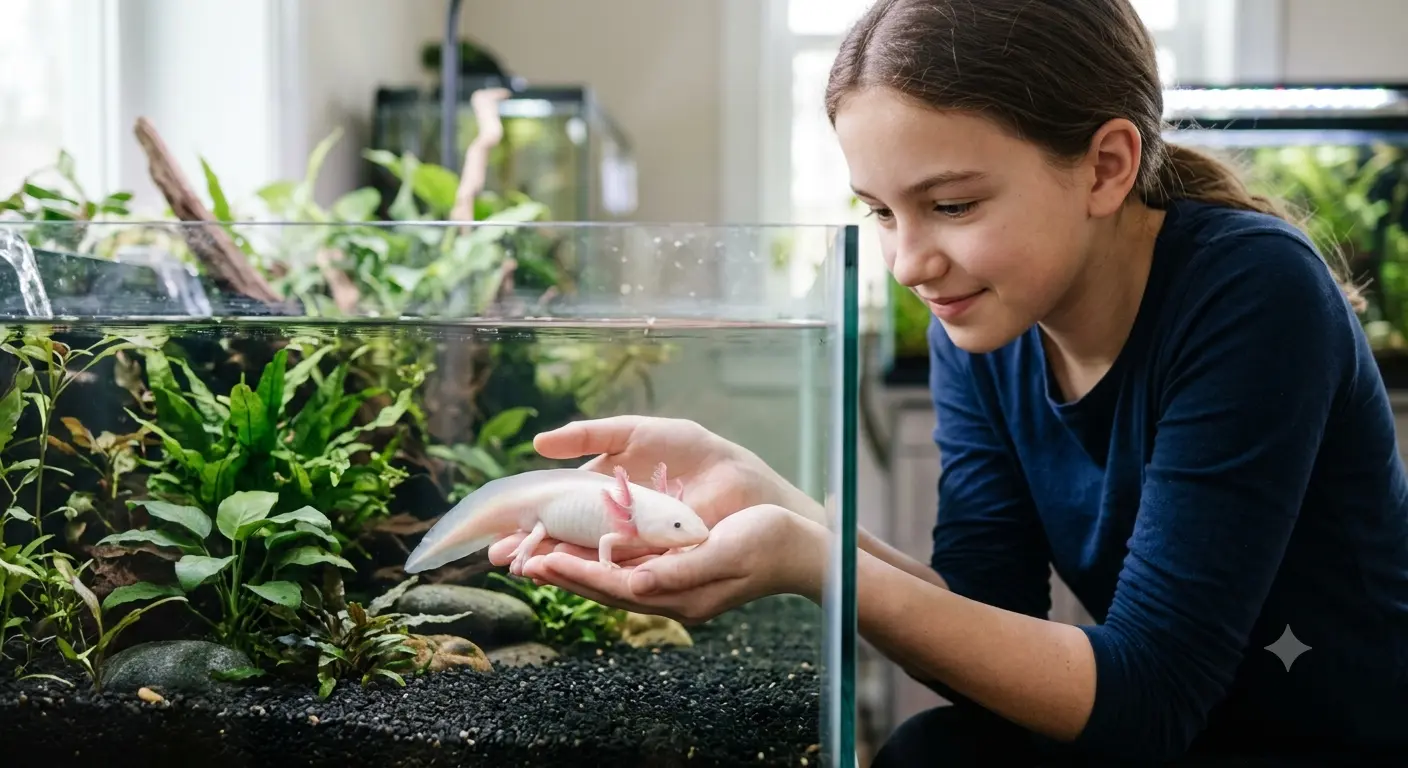
The Reality of the Axolotl Bite
A primary concern for new keepers revolves around the physical mechanics of an unexpected nip during feeding times. You might feel a sudden, tiny vacuum-like suction when your hand gets too close to their mouths.
This species utilizes a unique mechanism known as suction feeding to capture their prey whole in the wild. They quickly open their wide mouths, drawing in water along with earthworms or pellets instantly.
Instead of sharp, predatory teeth designed to tear flesh, they possess rows of tiny, rough vestigial teeth. These structures feel exactly like fine sandpaper rubbing against your fingertip rather than a dangerous puncture.
Therefore, even if an aggressive adult mistakes your moving finger for a juicy nightcrawler, the resulting bite cannot break your skin. It causes absolutely no pain, zero bleeding, and leaves no mark behind.
Do Axolotls Carry Toxins or Venom?
Many wild amphibians naturally produce potent toxins on their skin surfaces to deter terrestrial predators from eating them. This biochemical defense mechanism makes people highly suspicious of handling exotic aquatic species safely.
Fortunately, these neotenic salamanders do not secrete dangerous poisons, nor do they possess any specialized venom delivery systems. They rely entirely on camouflage and hiding places within their native lake habitats to survive.
You do not have to worry about systemic chemical poisoning or burning sensations if your skin contacts their mucus layer. Their slime coating is designed strictly to protect their delicate bodies from aquatic pathogens.
However, the lack of chemical danger does not mean their bodily secretions are entirely sterile for human contact. Maintaining clean habits remains highly beneficial for both the keeper and the pet over time.
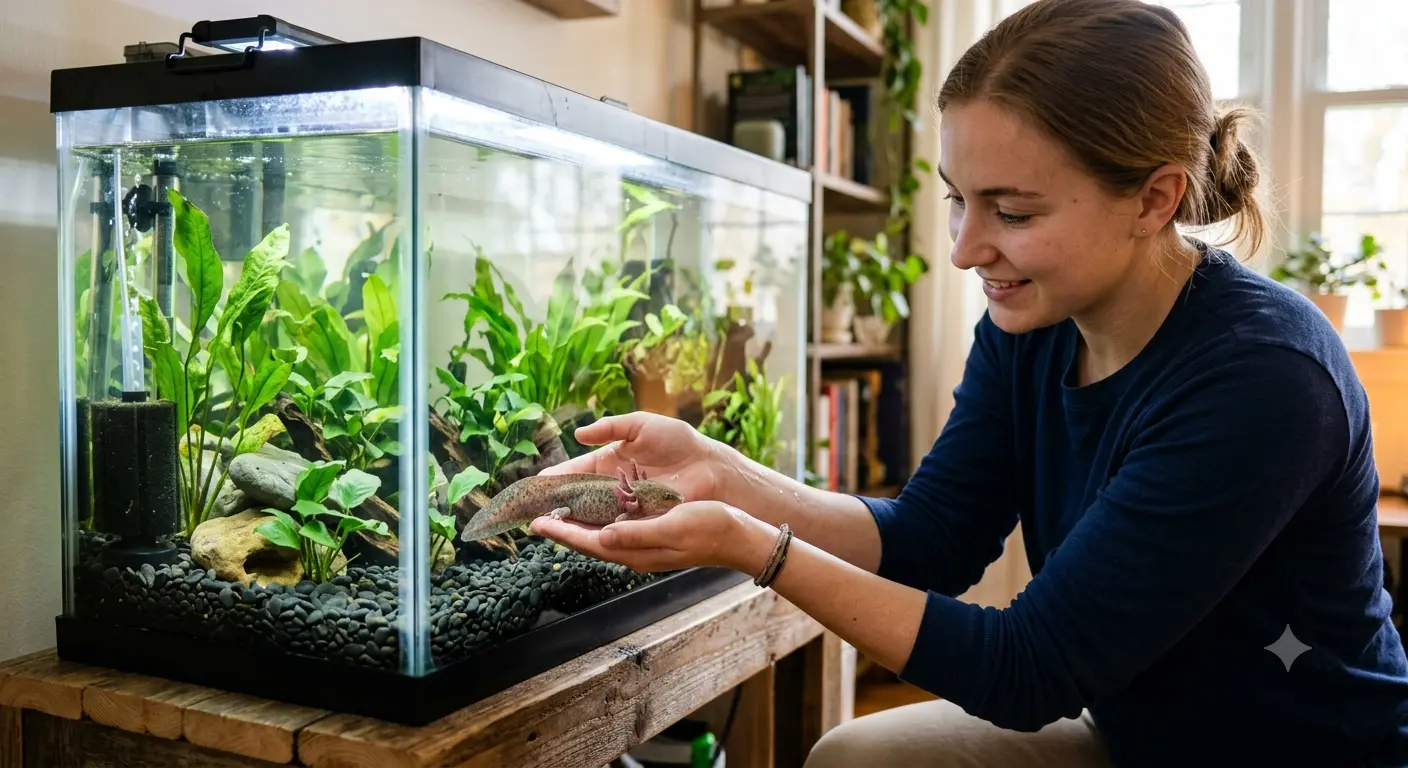
Understanding Salmonella and Bacterial Risks
While these creatures lack physical weapons or venom, they can naturally host microscopic organisms that pose minor health challenges. Like all aquatic pets, their digestive tracts can harbor standard bacterial strains seamlessly.
The most notable pathogen associated with keeping captive amphibians is Salmonella, which sheds into the aquarium water consistently. If a keeper accidentally transfers contaminated tank water to their mouth, mild gastrointestinal distress could follow.
This hidden microbial presence is precisely why vulnerable individuals must exercise heightened caution around home aquariums. Pregnant women, young children, and immunocompromised individuals should avoid direct contact with waste material entirely.
To keep your household completely safe, always wash your hands thoroughly with warm, soapy water immediately after tank maintenance. Utilizing dedicated tools for cleaning prevents any cross-contamination into your kitchen or living spaces.
Why Handling is Dangerous to the Axolotl
When evaluating safety, the conversation must shift to address how human interactions impact these incredibly fragile creatures. The truth is that humans pose a far greater threat to them than they do to us.
Their entire bodies are covered by a highly delicate, specialized slime coat that serves as their primary immune defense system. Touching them with bare fingers strips this barrier away, exposing them to lethal fungal attacks.
Additionally, their skeletal structure consists largely of soft, pliable cartilage rather than dense, calcified bone material. Squeezing them or lifting them out of the water can compress internal organs severely, causing permanent damage.
For these reasons, you should treat your pet as a strictly look-but-don’t-touch display animal for their own well-being. If you want to know are axolotl dangerous to manipulate, the answer lies in the psychological stress they experience during handling.
A Rookie Mistake in Amphibian Care
On a chilly Tuesday afternoon last November, my partner brought home an adult leucistic female named Barnaby. I considered myself an experienced herpetologist, yet these unique fully aquatic creatures brought unexpected lessons.
Barnaby seemed unusually lethargic during her first week in the new display setup. I assumed she needed immediate physical inspection to check for hidden skin sores or bacterial infections.
I gently lifted her using a fine mesh net to examine her underbelly closely. The sudden exposure to air triggered instant panic, causing her to thrash wildly against the rough fabric mesh.
The next morning, I noticed fuzzy white patches developing rapidly along her golden external gills. My direct physical intervention had stripped her protective mucus coating, inviting a severe opportunistic saprolegnia fungal outbreak.
I tried treating the water with traditional commercial reptile medications, but her condition worsened daily. Finally, an experienced exotic vet suggested simple, clean water parameters combined with cold, monitored tea baths.
Leaving her completely untouched in a darkened, chilled quarantine tub allowed her natural immune system to recover perfectly. It taught me that keeping my hands out of the tank completely was the ultimate secret to her survival.
Safe Tank Companions vs. Human Safety
Because these animals pose no threat to you, you might think they make wonderful roommates for other aquatic creatures. However, their peaceful nature makes them incredibly vulnerable to active tank mates.
Common aquarium fish, including aggressive nibblers like nippy barbs or goldfish, view those fluffy, red external gills as delicious food. They will relentlessly pick at the breathing organs, causing severe blood loss and chronic stress.
Conversely, small fish or tiny shrimp will inevitably end up as a quick midnight snack for an adult salamander. Their poor eyesight causes them to snap at anything moving past their mouth blindly.
According to the official care guidelines provided by the Association of Reptile and Amphibian Veterinarians (ARAV), keeping them in a species-only aquarium is the safest practice. Single housing eliminates accidental injuries, systemic infections, and competitive stress entirely.
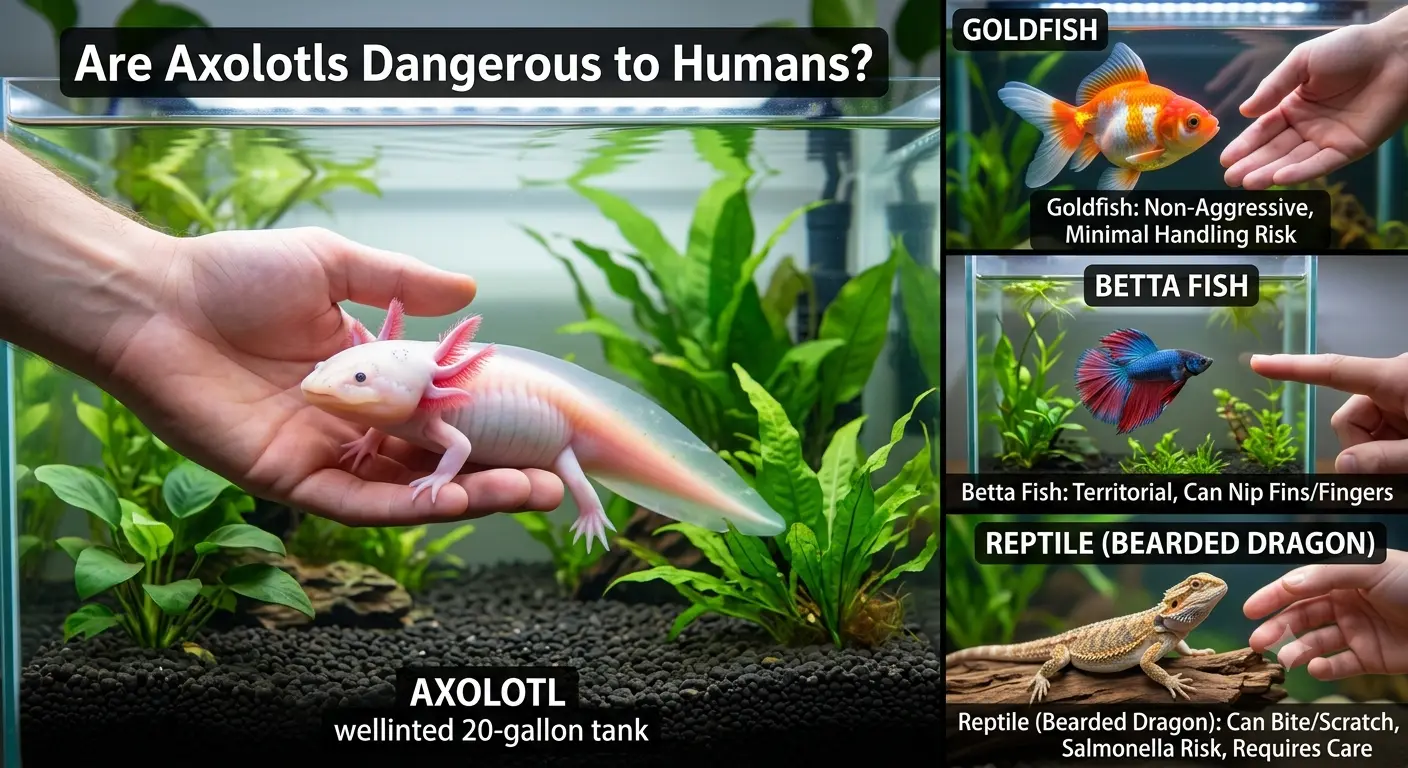
Axolotl Safety Profiles Compared
To help you understand how these fascinating amphibians fit into your home ecosystem, let us look at their general safety traits compared to other common exotic aquatic pets available on the market.
| Pet Species | Bite Risk | Toxin Presence | Human Danger Level |
|---|---|---|---|
| Axolotl | None (Sandpaper texture) | None Detected | Extremely Low |
| Bearded Dragon | Mild (Can break skin) | None Detected | Low (Salmonella risk) |
| Tiger Salamander | None (Suction based) | Mild Skin Irritants | Low (Requires handling care) |
| Pacman Frog | Moderate (Sharp jaws) | Mild Toxins | Medium (Painful bites) |
This matrix illustrates clearly that your aquatic friend sits comfortably at the bottom of the danger scale. Your primary daily focus should remain on maintaining pristine water conditions rather than worrying about personal injury.
Essential Safety Protocols for Owners
Enjoying your exotic pet safely requires implementing a few structured habits into your weekly tank maintenance routine. These steps ensure your household remains protected while keeping your pet completely stress-free.
- Use Long Tweezers: Always feed your pet using long, soft-tipped feeding tongs to prevent them from accidentally grabbing your fingers during a enthusiastic strike.
- Invest in Nitrile Gloves: Wear powder-free waterproof gloves if you must move tank decorations or rearrange plumbing components inside the water environment.
- Maintain Low Water Temperatures: Keep the aquarium water consistently between 60°F and 65°F to minimize the rapid growth of harmful pathogenic bacteria.
- Secure the Enclosure: Install a tight-fitting mesh lid on top of the glass tank to prevent curious household cats or dogs from reaching into the water.
By treating their environment with respect, you eliminate the minor biological risks associated with keeping amphibians. Your pet will thrive peacefully while you enjoy their charming, alien expressions safely from behind the glass.
Conclusion: Enjoying Your Water Dragon Peacefully
When searching online to verify are axolotl dangerous to humans, you can rest easy knowing they are perfectly safe companions. They lack the biological tools to inflict harm, choosing instead to drift lazily among their artificial plants.
The secret to successful ownership lies in recognizing their fragility and respecting their aquatic boundaries. Keep their water clean, feed them high-quality nightcrawlers, and avoid unnecessary physical handling at all costs.
As long as you practice basic hand hygiene, these smiling creatures present a wonderful, risk-free window into the natural world. Protect their delicate slime coat, and they will reward you with years of quiet, captivating companionship.
Frequently Asked Questions
1. Can an axolotl bite off your finger?
Absolutely not. They do not possess any true, sharp teeth or strong jaw bones capable of cutting through human flesh or bone structures. Their bite feels like a soft, suctioned patch of coarse sandpaper.
2. Is the slime coat of an axolotl poisonous to human skin?
No, their slime coat contains no toxic secretions or venomous chemicals that can harm human beings. However, you should still avoid touching it because human skin oils can ruin their delicate immune defense system.
3. Can children safely care for a pet axolotl?
Yes, children can enjoy them under close adult supervision. Because these pets must not be held, they are great for kids to watch, provided an adult handles the water chemistry and sanitizes hands afterward.
4. What diseases can you catch from an axolotl aquarium?
The primary concern is Salmonella poisoning, which can spread if you accidentally ingest contaminated tank water during maintenance. Washing your hands thoroughly with antibacterial soap prevents this risk entirely.