
Imagine sitting quietly by an enclosure, watching a reptile adjust its posture to a subtle shift in room illumination. While their beautiful side-facing ocular structures captivate us, these reptiles possess an ancient solar sensor hidden right on top of their heads. Understanding the unique dynamics of the bearded dragon third eye vs normal ocular biology unlocks the deepest secrets of proper saurian husbandry and daily environmental care.
The core distinction in the bearded dragon third eye vs normal comparison lies in their physiological functions; lateral visual structures construct detailed, colorful imagery of the environment, whereas the dorsal solar sensor strictly detects changes in light intensity, solar radiation levels, and overhead shadows to regulate biological cycles and warn of birds.
For any dedicated keeper trying to mimic natural wild conditions, grasping this sensory system is absolutely paramount. Let us dive deep into the anatomical marvels, practical management strategies, and unique behavioral indicators that define this incredible reptilian sensory balance.
Anatomical Matrix: Bearded Dragon Third Eye vs Normal Ocular Structures
To fully comprehend how these lizards perceive the world, we must dissect the anatomical layout of these separate evolutionary traits. The standard lateral visual organs function similarly to human sight, featuring a complex lens, iris, and a highly specialized retina. These side organs capture sharp, high-definition shapes and a stunning spectrum of vivid colors that help the lizard find moving insects.
In stark contrast, the dorsal solar sensor, scientifically classified as the parietal structure, resembles a translucent, pale scale centered squarely between the true cranial ridges. Though it possesses a primitive lens and retinal cells, it completely lacks an adjustable iris, preventing it from producing clear focal images. Instead, it hooks directly into the pineal complex, functioning as a specialized light-metering device.
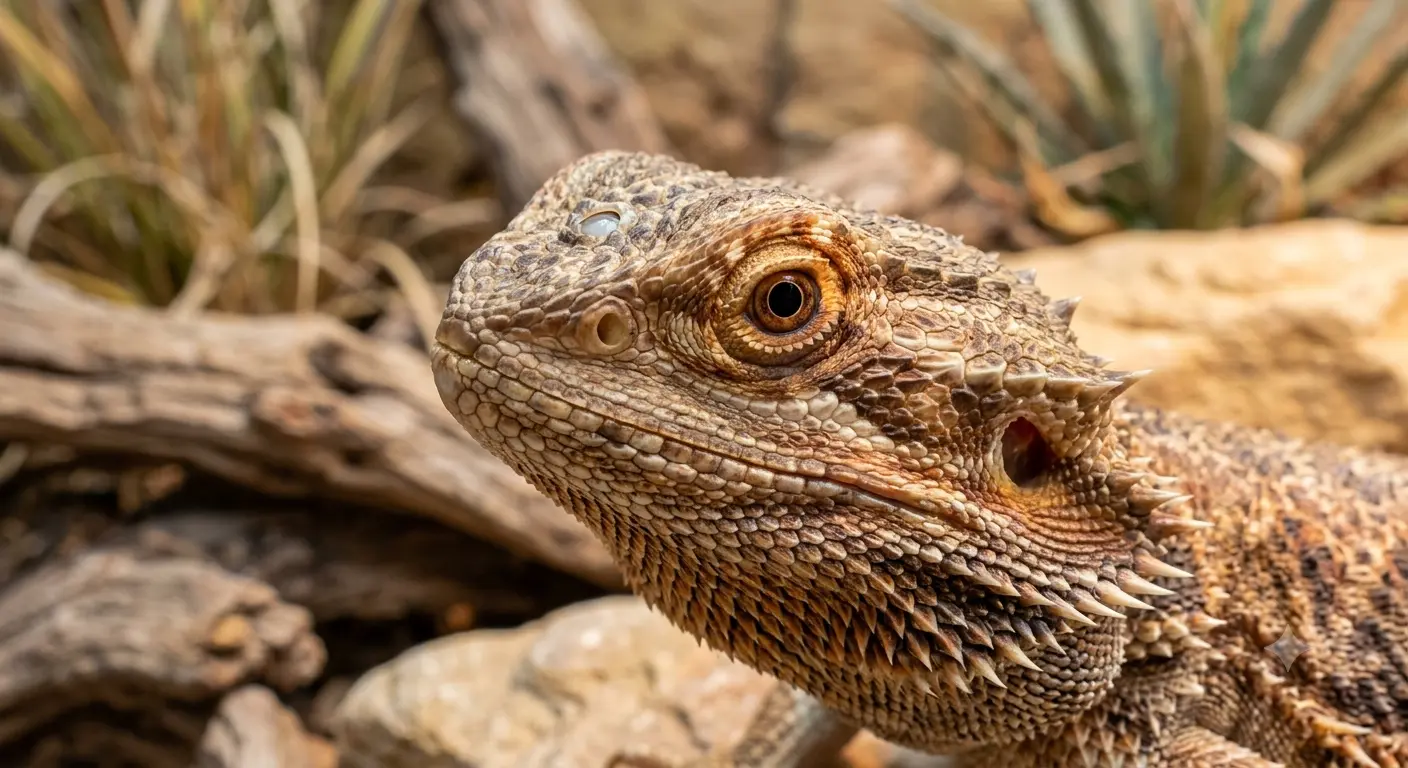
When analyzing the bearded dragon third eye vs normal visual capabilities, the physiological pathways highlight a beautiful evolutionary split. Lateral organs process detailed horizontal scenery, allowing the lizard to gauge physical distances accurately during a hunt. The cranial solar spot monitors the sky continuously, tracking solar cycles and cosmic shifts without requiring the lizard to tilt its head upward.
Primary Functions of the Parietal Scale in Captive Habitats
The specialized dorsal sensor plays a massive role in regulating the baseline daily behavior of your companion. By measuring light waves and ambient radiation, this small dot informs the brain exactly when the sun rises, peaks, and sets. This constant sensory feedback loops directly into endocrine pathways, managing healthy hormone releases that govern seasonal cycles, hunger drives, and vital shedding patterns.
Furthermore, this organ functions as a crucial built-in warning system against natural aerial predators in the wild. If a hawk, eagle, or even a heavy storm cloud passes directly above the lizard, the sudden drop in solar intensity triggers an immediate survival reflex. This defensive instinct often causes the animal to flee toward the nearest rock crevice or flatten its body to stay hidden.
In our artificial enclosures, this aerial shadow reflex can easily be tripped accidentally by an unannounced hand or a moving ceiling fan. Recognizing the difference in how the bearded dragon third eye vs normal sight registers motion prevents a lot of unnecessary stress during handling. Your pet is not being aggressive; it is just reacting to a deep biological alarm triggered by overhead shadows.
Ocular Capabilities: Color Range, Depth, and Motion Tracking
The standard visual organs of these inland lizards are remarkably advanced compared to many other common household pets. They possess specialized cone receptors that allow them to see a massive range of vibrant colors, including full ultraviolet wavelengths. This specialized UV sight helps them find nutritional plants, spot tiny insects, and read the subtle territorial color changes on fellow lizards.
Their physical placement on the sides of the skull creates an incredibly wide, sweeping field of peripheral vision. This setup allows them to monitor two entirely different directions at the exact same time with ease. The small downside to this wide placement is a restricted front-facing field, which is why they often tilt their heads sideways to examine things closely.
The dorsal parietal dot does not participate in tracking moving insects or admiring colorful terrarium decor. It acts as an ambient solar gauge, reading the invisible shifts in environmental energy while the main visual system focuses on food. Balancing these two inputs allows the lizard to thrive safely under the hot desert sun.
Direct Biological Comparison Matrix
To help visualize these distinct differences clearly, we can break down the unique characteristics of each organ side-by-side.
| Anatomical Feature | Standard Ocular Organs (Lateral) | Parietal Spot (Dorsal Sensor) |
|---|---|---|
| Image Formation | High-definition, sharp shapes | No imagery; light and shadow only |
| Color Perception | Full color spectrum plus ultraviolet waves | Measures raw light intensity and wavelengths |
| Primary Purpose | Hunting, navigation, reading body language | Circadian rhythms, solar basking, predator warnings |
| Neurological Connection | Optic tectum for fast visual processing | Pineal gland for direct hormonal control |
This distinct separation shows why analyzing the bearded dragon third eye vs normal features is so critical for modern reptile keepers. A deficiency in one area can completely throw off the balance of the other, leading to chronic lethargy or severe appetite loss. Keeping both systems happy requires precise environmental engineering.
A Keeper’s Notebook: The Basking Blur of Cooper
Last winter, my mature male lizard, Cooper, started acting incredibly erratic during our afternoon bonding sessions. Every single time my hand approached the top screen of his enclosure, he would bolt frantically into his hide, turning pitch black. His normal lateral vision was sharp as a tack during feeding, so I could not figure out why he was suddenly so terrified of me.
I tried changing his staple live insects and even rearranged his favorite driftwood logs, but the frantic hiding continued for weeks. I felt completely defeated as a keeper, worrying that I had somehow permanently broken my deep bond with him. It was incredibly stressful watching him refuse his greens out of sheer panic day after day.
Then, quite by accident, I noticed my new living room floor lamp was casting a huge, rhythmic shadow right across his top scale whenever I walked past. The mystery was instantly solved; my overhead movements were constantly tripping his ancient aerial alarm system. I moved the lamp, started approaching him from a low, front-facing angle, and his calm, sweet disposition returned almost overnight.
Optimizing Enclosure Lighting Systems for Combined Sensory Success
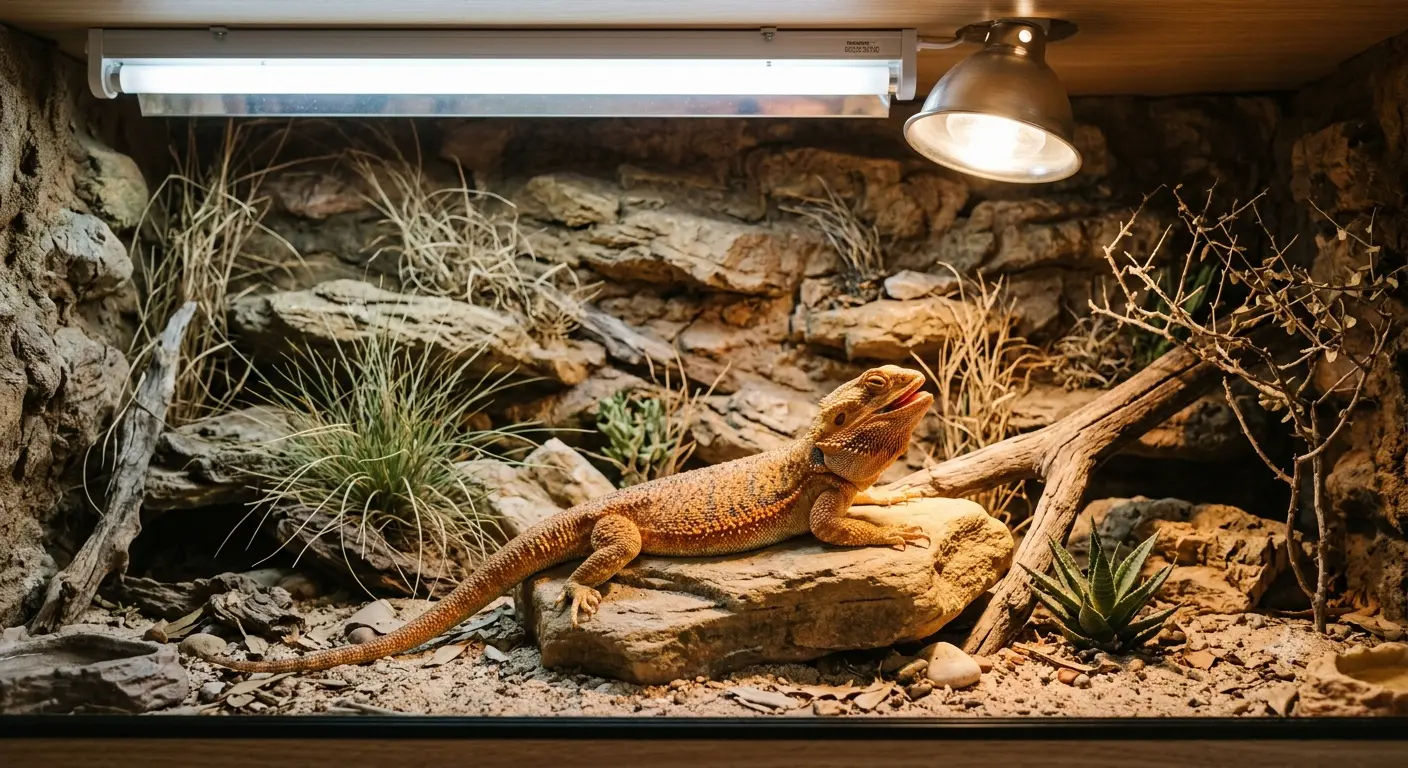
To keep both sensory pathways working perfectly, your artificial terrarium setup must provide a highly accurate imitation of natural desert sunlight. High-quality linear T5 UVB bulbs are absolutely essential for providing the correct radiation wavelengths across the main basking zone. This specialized light fuels vital vitamin processes while giving their advanced color vision the exact wavelengths needed to see properly.
Additionally, your heat bulbs should always be placed right alongside your primary ultraviolet lights to create a realistic, single solar source. Because the dorsal sensor guides the lizard to the brightest spot to warm its core, split setups can cause serious confusion. If the heat and light come from different areas, the lizard might sit under a bright light that offers zero actual warmth.
For more advanced husbandry strategies and deep design breakdowns, exploring the detailed guides over at the Association of Reptile and Amphibian Veterinarians (ARAV) is highly recommended. Combining scientific lighting data with attentive daily observation ensures your pet stays active, vibrant, and completely stress-free for years to come.
Protecting Cranial Sensors During Shedding and Daily Maintenance
The specialized skin covering the parietal region requires extra care and attention during heavy seasonal shedding cycles. Retained skin caps on top of the head can easily muffle the delicate light-sensing cells below, throwing off internal biological clocks. Never attempt to manually peel or pick at loose skin patches around this sensitive spot, as you could easily damage the underlying tissue.
Instead, prioritize regular warm water soaks and maintain proper hydration levels to let the old skin slign off naturally. Providing clean, textured rocks and natural branches allows your lizard to safely rub its head to remove stubborn pieces on its own. Keeping this area clear ensures their natural solar meter stays perfectly calibrated.
Furthermore, avoid placing any heavy decorative items or stick-on thermometers directly above the central basking spot where they might block light. For more essential tips on maintaining optimal health and avoiding hidden habitat dangers, check out our comprehensive breakdown on bearded dragon third eye secrets. Keeping these dual sensory pathways working together harmoniously is the real secret to long-term herpetological success.
Frequently Asked Questions (FAQs)
In conclusion, comparing the bearded dragon third eye vs normal ocular traits reveals a brilliant dual-sensory system perfectly tuned for desert survival. By respecting the unique limitations and triggers of both systems, we can easily design low-stress habitats that help our modern saurian companions thrive beautifully in captivity.