
Seeing your beloved aquatic pet floating helplessly at the water’s surface can be incredibly frightening. You walk into the room, expecting a friendly swim, but instead, you find them bobbing like a cork. It is a moment that makes every amphibian keeper’s heart stop immediately.
While sometimes this behavior is just a quirky, temporary habit, other times it acts as an urgent warning sign of stress or underlying illness. Understanding the exact mechanics behind why is my axolotl floating is the very first step to ensuring their long-term health and safety.
In this comprehensive guide, we will dive deep into the biological reasons, environmental triggers, and practical solutions for this common issue. By looking at water chemistry, diet, and behavior, you can easily determine whether your floating friend needs quick intervention or just a bit of time to rest.
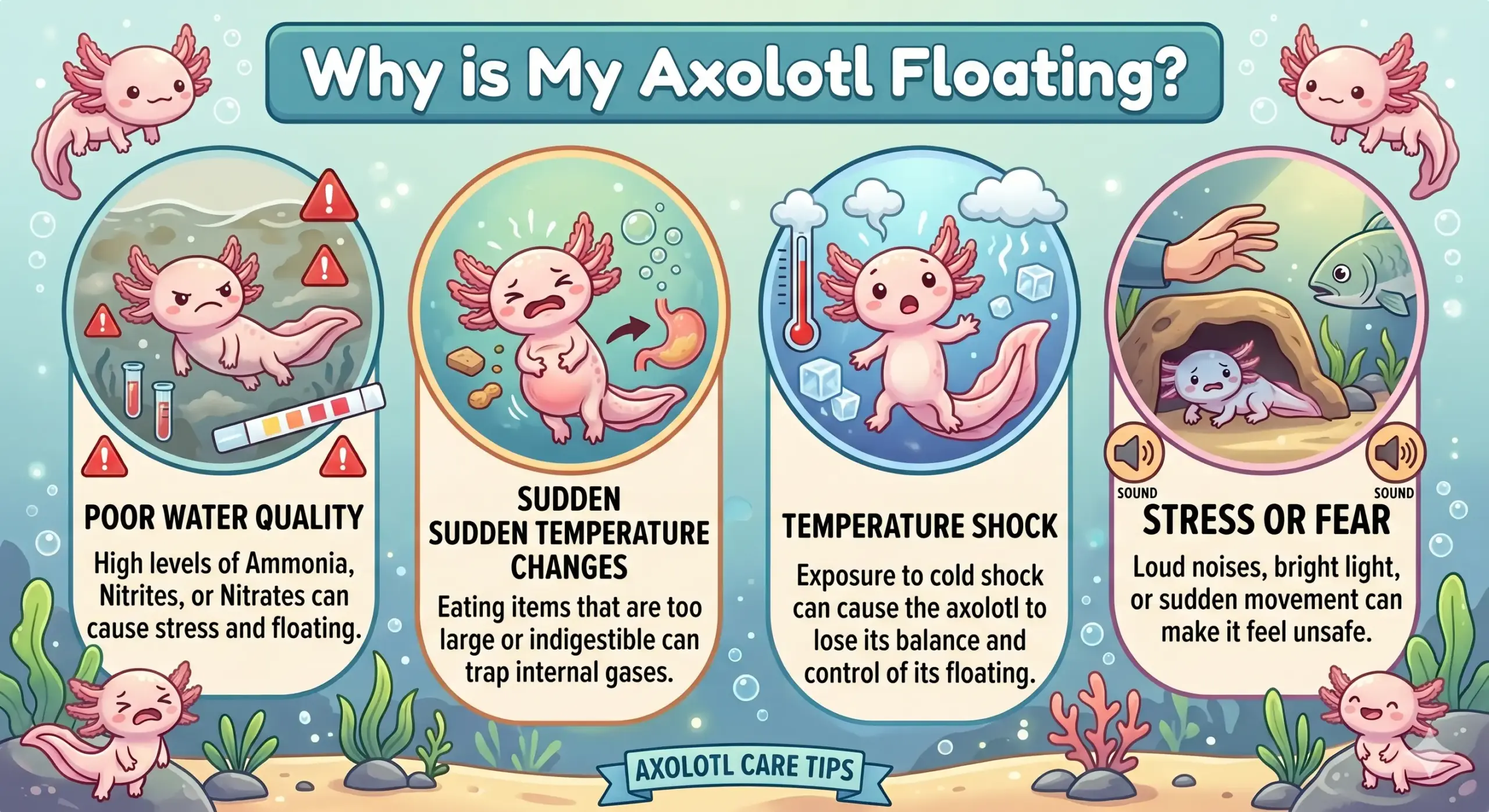
1. Air Bubbles and The “Gulping” Effect
Axolotls are fascinating creatures because they possess a unique dual respiratory system. They rely heavily on their external, feathery gills to extract oxygen directly from the water column, but they also have primitive, functional lungs.
Occasionally, an axolotl will swim directly to the surface to take a quick, dramatic gulp of atmospheric air. This is entirely normal behavior. However, if they accidentally swallow too much air during this process, problems can start to arise quickly.
The swallowed air gets temporarily trapped inside their primitive digestive tract or lungs, causing them to float like a miniature balloon. Many beginners ask why is my axolotl floating after feeding times, and often, this simple gulping of surface air is the primary culprit.
The Signs of Gulping Issues
The axolotl looks completely healthy, energetic, and responsive, but they simply cannot stay at the bottom of the aquarium. You might observe them attempting to swim downwards, only to float back up to the top immediately.
The Solution for Air Trapping
Usually, this issue resolves itself without any human intervention within a few hours. They will eventually “burp” or pass the trapped gas naturally through their system. Just ensure there are no sharp decorations near the surface where they are floating.
2. Constipation, Bloating, and Gastrointestinal Impaction
When asking yourself why is my axolotl floating, you must always look closely at their digestive health. If your exotic pet hasn’t pooped in several days, metabolic gas can rapidly build up inside their delicate gut tract.
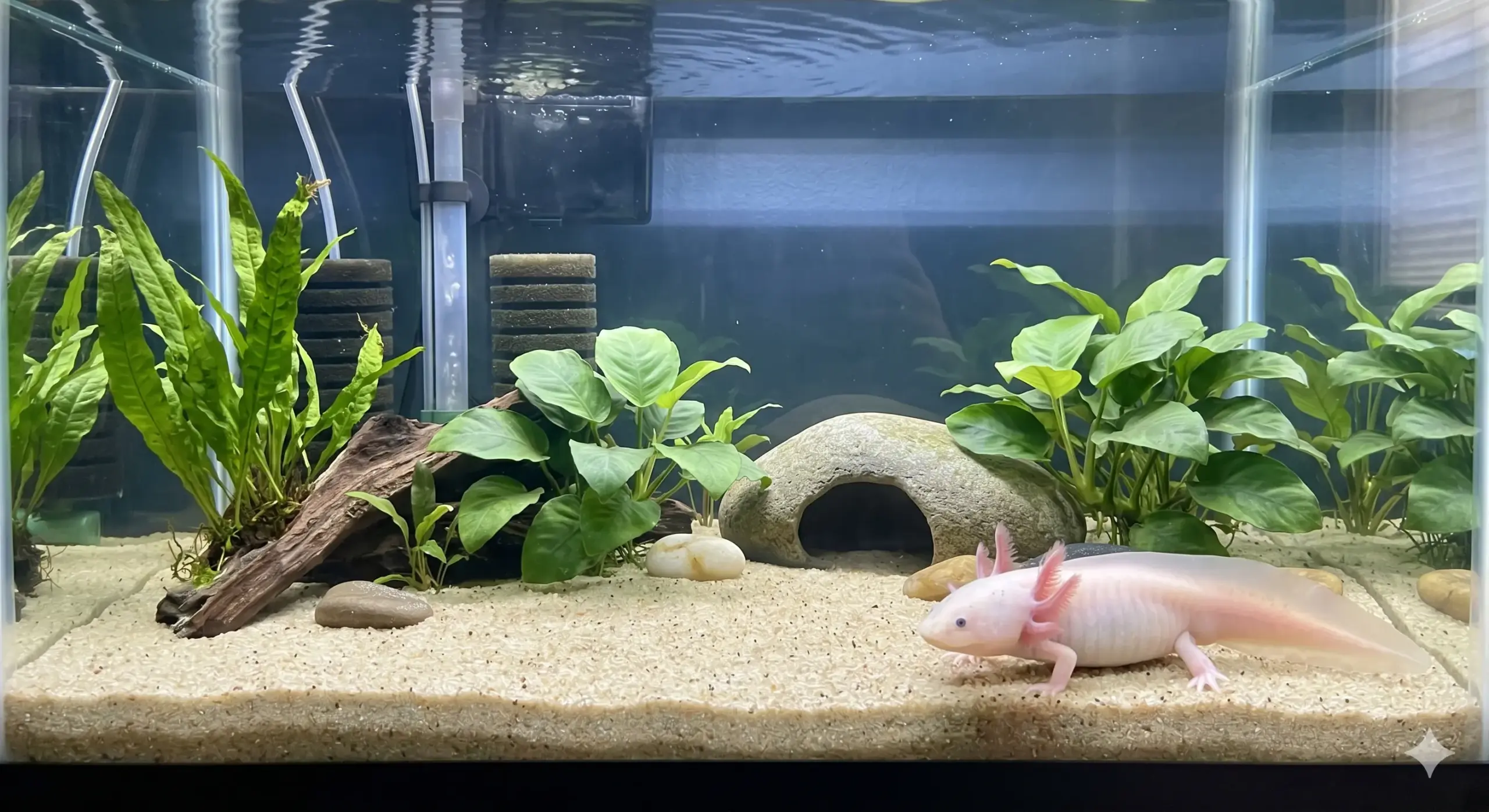
This painful buildup is frequently caused by eating food items that are simply too large to digest properly. Another common and dangerous cause is the accidental swallowing of loose gravel, small stones, or improper substrate from the tank floor.
Axolotls are vacuums that snap at anything that moves near their mouths. When they ingest gravel, it creates a physical blockage in their stomach. This impaction traps gas, alters their natural equilibrium, and forces them to float uncontrollably.
The Signs of Impaction and Constipation
You will typically notice the axolotl floating with their tail tilted significantly upwards while their head points down. Their abdomen might look unusually swollen, round, or asymmetrical when viewed from a top-down angle.
The Solution for Digestive Blockages
You can offer a soothing “tea bath” using organic black tea, or simply wait in a calm environment. Most importantly, never use loose gravel in an axolotl tank; always utilize fine aquarium sand or maintain a completely bare-bottom tank setup.
3. Poor Water Quality and Severe Ammonia Spikes
The chemical composition of your aquarium water plays a massive role in the physical well-being of your amphibian. High levels of toxic Ammonia or Nitrites can quickly irritate an axolotl’s sensitive, permeable skin and delicate external gills.
When these chemical levels spike unexpectedly, it triggers severe respiratory distress and overwhelming systemic stress. If you are constantly wondering why is my axolotl floating, checking the parameters should be your immediate, automated reflex action.
Poor water parameters can damage their slime coat, leaving them vulnerable to secondary bacterial infections. Therefore, monitoring your nitrogen cycle parameters regularly is an absolute necessity for every single exotic pet owner out there.
The Signs of Chemical Stress
Floating caused by toxic water parameters is almost always accompanied by distinct physical signs. Look for tightly curled external gills, a forward-curled tail tip, noticeable skin redness, or excessive mucus production around the body.
The Solution for Water Issues
Test your aquarium water immediately using a reliable, high-quality liquid testing kit. If you detect any trace of Ammonia or Nitrites, perform an immediate 30% to 50% water change using properly dechlorinated, cool water.
4. High Water Temperature and Oxygen Depletion
Axolotls are strictly cold-water creatures that naturally thrive in chilly environments. Their biological systems are optimized for cold temperatures, which means warm water is an immediate threat to their overall survival.
If your aquarium water temperature rises above 22°C (72°F), the water loses its ability to hold dissolved oxygen efficiently. This heat stress answers the question of why is my axolotl floating when the summer months arrive and room temperatures rise.
Furthermore, elevated temperatures speed up their metabolism unnaturally, which causes rapid cellular stress. This combination of a fast metabolism and low oxygen causes them to lose muscle control, leading to passive floating.
The Signs of Heat Stress
The axolotl looks completely lethargic, weak, and non-responsive to external stimuli. The aquarium water will feel warm to your touch, and the external gills may look noticeably shrunken or pale instead of vibrant red.
The Solution for High Temperatures
Move the aquarium to the coolest room in your house or install specialized aquarium cooling fans. In extreme cases, investing in a high-quality commercial aquarium chiller is the absolute best way to maintain stable, safe temperatures year-round.
5. Stress Caused by Strong Filter Flow
In the wild, axolotls originate from calm, slow-moving lake complexes with virtually no noticeable current. They are not built for swimming against strong, turbulent water movements inside a confined glass aquarium.
If your internal or hang-on-back filter is too powerful, the intense water movement will constantly push them around. Sometimes, analyzing why is my axolotl floating reveals that the creature isn’t sick at all, but simply trapped in a strong current.
Constant, unyielding water flow stresses them out significantly over time, depleting their energy reserves. A stressed axolotl will eventually stop eating, suffer from a weakened immune system, and exhibit floating behaviors due to sheer exhaustion.
The Human Experience: A Keeper’s Personal Reflection
I still remember the absolute panic of my first year keeping these beautiful creatures. One rainy Tuesday evening, I walked into my room and saw my little leucistic companion bobbing near the filter intake. My heart sank instantly into my stomach. I thought the worst. Was I failing as a keeper?
I sat by the glass for hours. Silence filled the room while I watched every single faint movement of those delicate pink gills. It taught me patience. I realized then that husbandry is not just a set of rigid scientific rules written in textbooks; it is a deep emotional bond built on silent observation and empathy. Fortunately, it was just a temporary air bubble that passed by the next morning. But that profound feeling of responsibility changed the way I look at aquarium care forever.
Why is My Axolotl Floating? Comprehensive Causes Matrix
| Primary Cause | Typical Floating Position | Urgency Level | Primary Immediate Action |
|---|---|---|---|
| Air Bubble Gulping | Horizontal / Flat at surface | Low | Observe closely for 12-24 hours |
| Guts Constipation | Tail tilted upwards | Medium | Offer tea bath, check substrate |
| Ammonia / Nitrite Spike | Lethargic floating with curled gills | High | Perform immediate 50% water change |
| Elevated Temperature | Lethargic near surface | Critical | Turn on cooling fans or apply ice packs |
| Strong Filter Current | Drifting helplessly across tank | Medium | Baffle the filter flow or reduce output |
When is Floating Considered a True Emergency?
It is important to differentiate between temporary floating and a dangerous medical crisis that requires immediate intervention. If your axolotl is floating completely sideways or completely upside down, this is never normal behavior.
Furthermore, if they are trying desperately to swim down to the bottom but keep popping back up like a buoy for more than 24 hours, action must be taken. When diagnosing why is my axolotl floating for extended periods, advanced illnesses like fluid retention must be considered.
According to official veterinary guidelines published by the World Aquatic Veterinary Medical Association, prolonged buoyancy issues indicate swim bladder-like dysfunction or systemic infection.
In these critical situations, it is time to consult an exotic veterinarian or consider “Tubbing” your pet. Tubbing involves placing them in a small container of shallow, clean, cool water where they can touch the bottom without floating, reducing their stress immediately.
Knowing the answers to why is my axolotl floating is just one single piece of the overall health puzzle. To ensure your aquatic friend lives a long, happy, and genuinely healthy life, check out our comprehensive Axolotl Care Guide for everything you need to know about expert axolotl keeping!
Frequently Asked Questions (FAQ)
Q: Why is my axolotl floating continuously for days?
A: If the floating behavior persists for more than 24 to 48 hours, it is rarely a simple air bubble and usually points to constipation, poor water parameters, or an early bacterial infection.
Q: Can an axolotl float purely for fun or enjoyment?
A: While some individuals may float occasionally to relax or explore, persistent floating is usually a sign of gas or environmental stress rather than pure fun.
Q: How does a tea bath help a floating or constipated axolotl?
A: The natural tannins found in black tea help soothe the axolotl’s sensitive skin, tighten their pores, and act as a mild astringent to encourage natural bowel movements.