
Have you ever glanced into a freshwater tank and found yourself instantly captivated by a wide, gummy grin and feathery external gills?
You aren’t alone; the entire world seems obsessed with these charming aquatic salamanders.
But why is this obsession so universal, and are axolotl cute by scientific design?
The answer is a resounding yes, purely because they perfectly embody the biological principles of ‘baby schema,’ triggering our innate caretaking instincts.
Axolotls retain their larval characteristics throughout their entire lives, a phenomenon known as neoteny, which keeps them looking perpetually young and adorable.
In this deep dive, we will explore the biological facts to understand why are axolotl cute to millions of pet enthusiasts globally.
Neoteny: Why Are Axolotl Cute According to Biology
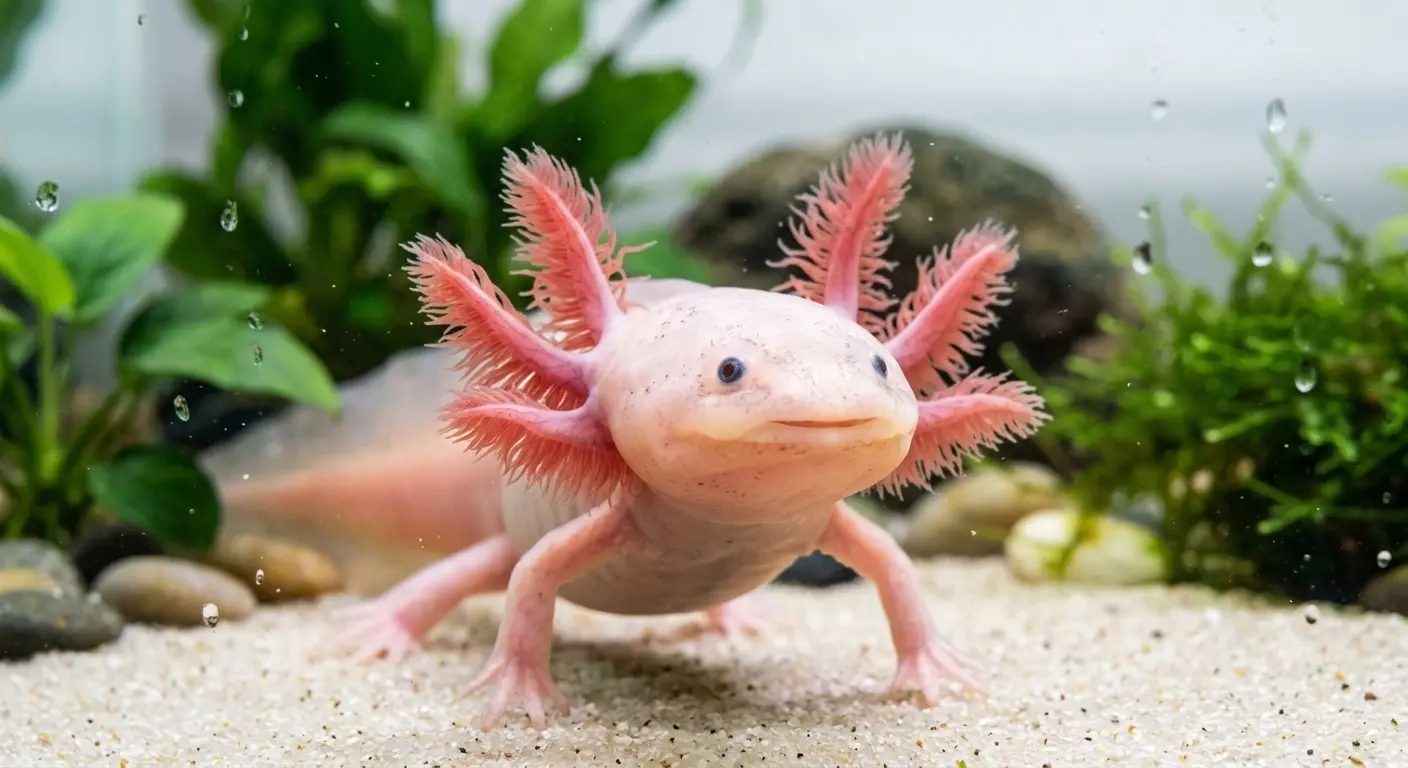
The primary scientific reason are axolotl cute lies in a fascinating biological concept called neoteny, or paedomorphosis.
Unlike most amphibians that undergo metamorphosis to transition from aquatic larvae to terrestrial adults, axolotls rarely leave the water.
They reach sexual maturity while retaining their larval features, including their aquatic lifestyle and, crucially, their distinctive external gills.
This retention of juvenile features means axolotls effectively never ‘grow up’ in the traditional sense.
From an evolutionary perspective, this unusual adaptation allowed *Ambystoma mexicanum* to thrive in the stable environment of the ancient lake systems of Mexico.
According to research highlighted by the Association of Reptilian and Amphibian Veterinarians (ARAV), preserving larval characteristics directly impacts their survival mechanism and physical structure.
Think about why puppies or kittens are adorable; it’s their big features relative to their body size.
The axolotl takes this to the extreme, offering us a window into a life stage that most species quickly outgrow.
This biological quirk explains precisely why are axolotl cute to human observers across different cultures.
The Psychology of ‘Baby Schema’ (Kindchenschema)
When we ask are axolotl cute, we are actually reacting to a deep-seated psychological trigger.
Austrian ethologist Konrad Lorenz first described ‘baby schema’ (Kindchenschema) as a set of physical features that humans perceive as cute.
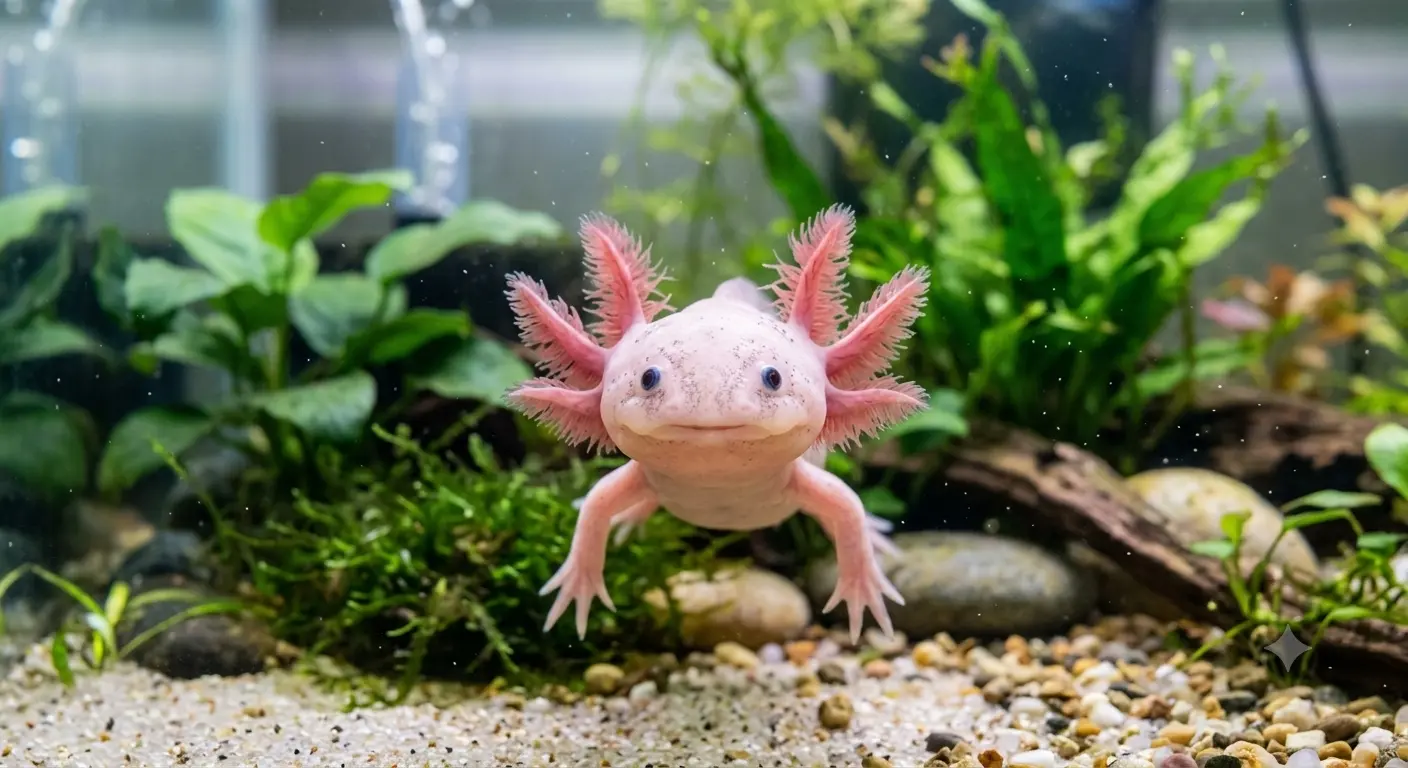
These features include a large head relative to the body, a high forehead, large eyes, and soft body contours.
Axolotls check every single one of these boxes with remarkable precision.
Their disproportionately large heads and wide-set eyes are classic indicators of vulnerability and youth.
The gentle curve of their mouth, often interpreted as a smile, further proves why are axolotl cute to the human eye.
Our brains are hardwired by evolution to respond to these cues with a desire to nurture and protect.
This response was crucial for the survival of human infants, who are born helpless.
When we see an axolotl, our brain misinterprets these neotenic features as belonging to a human baby, triggering a flood of positive emotions.
Feathery Gills and Gummy Grins: Specific Triggers
While neoteny provides the structural basis, specific physical features explain why are axolotl cute in daily interactions.
Their external gills are perhaps their most defining and charming characteristic.
These are not just functional organs for respiration; they are frilly, feathery appendages that frame the face.
They add a texture and a ‘softness’ to the axolotl’s appearance that is rarely seen in other aquatic creatures.
When an axolotl gently flicks its gills to circulate oxygen, the movement is mesmerizing and undeniably sweet.
It enhances the overall perception of fragility and unique beauty.
Then there is the famous axolotl grin.
Their mouth structure naturally curves upwards, creating a permanent expression of mild contentment.
Humans are incredibly sensitive to facial expressions, and a ‘smiling’ face is universally comforting.
This involuntary grin is perhaps the most significant sensory trigger that answers are axolotl cute for casual observers.
Scientific Comparison: Axolotls vs. Other Common Aquatic Pets
To understand why are axolotl cute compared to other aquatic animals, it’s helpful to look at common pets side by side.
This comparison table highlights the specific features that elevate the axolotl’s cute factor.
| Feature | Axolotl (*A. mexicanum*) | Goldfish (*C. auratus*) | Betta Fish (*B. splendens*) |
|---|---|---|---|
| Body Shape | Soft, elongated, salamander-like | Robust, streamlined | Sleek, flared fins |
| Primary Breathing | External, feathery gills (Cute texture) | Internal gills (Not visible) | Labyrinth organ/internal gills |
| Facial Expression | Permanent “gummy grin” (Baby schema) | Neutral or downturned | Downturned or aggressive |
| Movement | Slow, deliberate walking/swimming | Constant, active swimming | Graceful, aggressive flaring |
| Life Stage Perception | Perpetually juvenile (Neoteny) | Adult | Adult |
As the table demonstrates, axolotls possess a unique combination of larval features and soft textures.
Their physical structure simply aligns more closely with the biological definition of cuteness than the streamlined, mature forms of goldfish or bettas.
They are, from a human psychological perspective, scientifically engineered to be adored.
A Keeper’s Tale: When Chibi Met the Worm
You see the science, the biological ‘neoteny’ argument, and you think, “Okay, I get it.” But owning one is a totally different roller coaster.
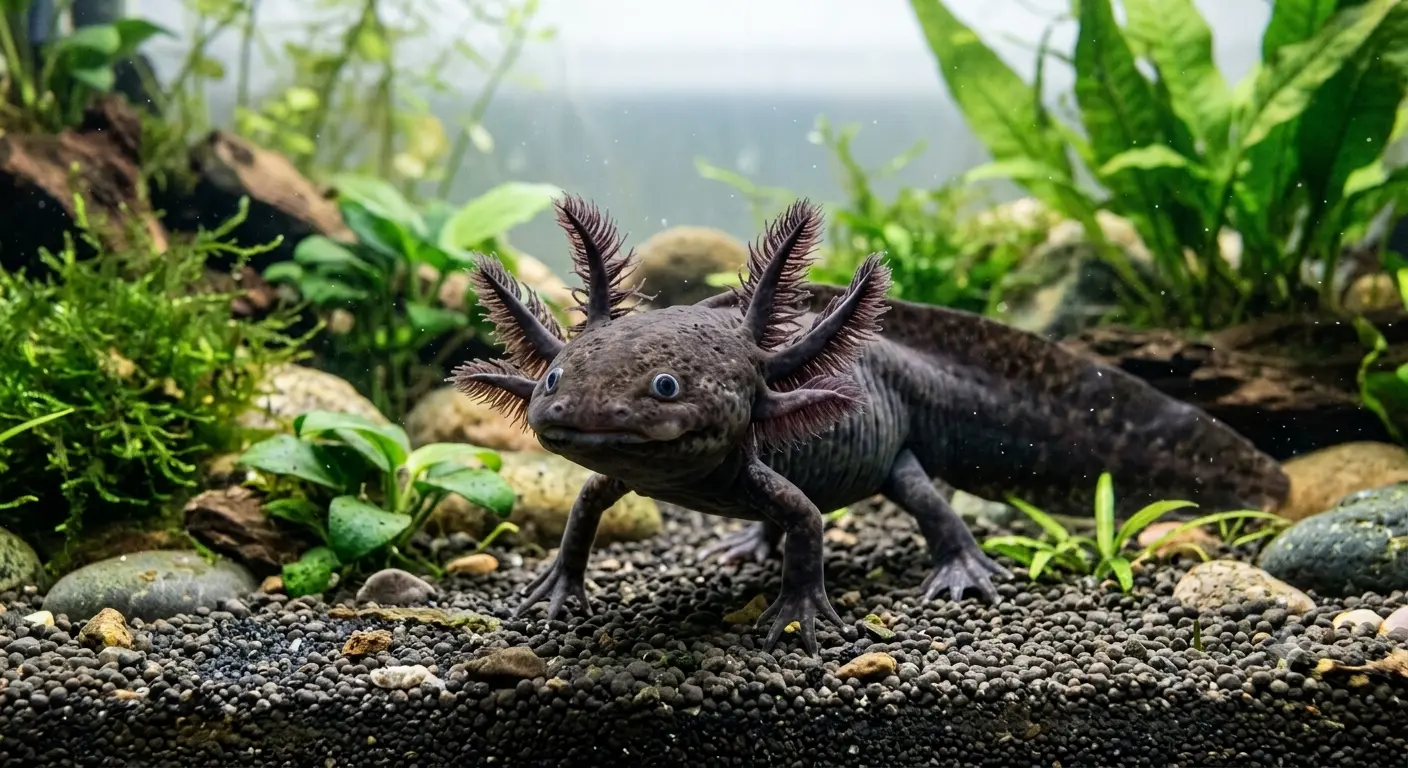
I remember when I first brought Chibi, my leucistic salamander, home.
I had read all the guides, set up the chilled tank, and I thought I was ready.
The first few days were pure panic.
Chibi wouldn’t eat.
I tried everything: pellets, frozen bloodworms, even sophisticated liquid foods.
Nothing.
Her gills looked a little curled, which the internet told me was a sign of extreme stress, and I was absolutely heartbroken.
I felt like a failure, convinced I was somehow hurting this delicate creature despite my best efforts.
Then, on Tuesday—it was a rainy afternoon, I remember—I tried a nightcrawler.
It was too big.
I had to cut it, a disgusting job I hated.
I wiggled the segment in front of Chibi with tongs, expecting the same apathy.
Suddenly, with a speed I didn’t know she possessed, *SNAP!*
She inhaled it, and the resulting *gulp* and subsequent content ‘grin’ was the most rewarding moment of my pet-keeping life.
It wasn’t science in that moment.
It was just pure, unfiltered relief and a sudden, fierce connection to a creature that needed me to get it right, even if I messed up first.
Cuteness and Regeneration: A Surprising Biological Link?
Axolotls are famous in the scientific community for more than just their looks.
They possess an extraordinary ability to regenerate lost limbs, tail, spinal cord, and even parts of their brain and heart.
This incredible regenerative power is a cornerstone of current medical research.
While regeneration itself isn’t aesthetic, it contributes to why are axolotl cute in a powerful way.
Knowing that they can heal from significant injuries makes them seem resilient yet simultaneously emphasizes their unique status.
This resilience doesn’t make them ‘tough’ in our minds; instead, it reinforces their special, almost magical nature.
It’s an additional layer of fascination that keeps us engaged with these unique animals.
The Evolutionary Paradox: Is Cuteness an Advantage?
From an evolutionary perspective, features are selected based on survival advantage.
It might seem that appearing vulnerable and baby-like is a disadvantage in the wild.
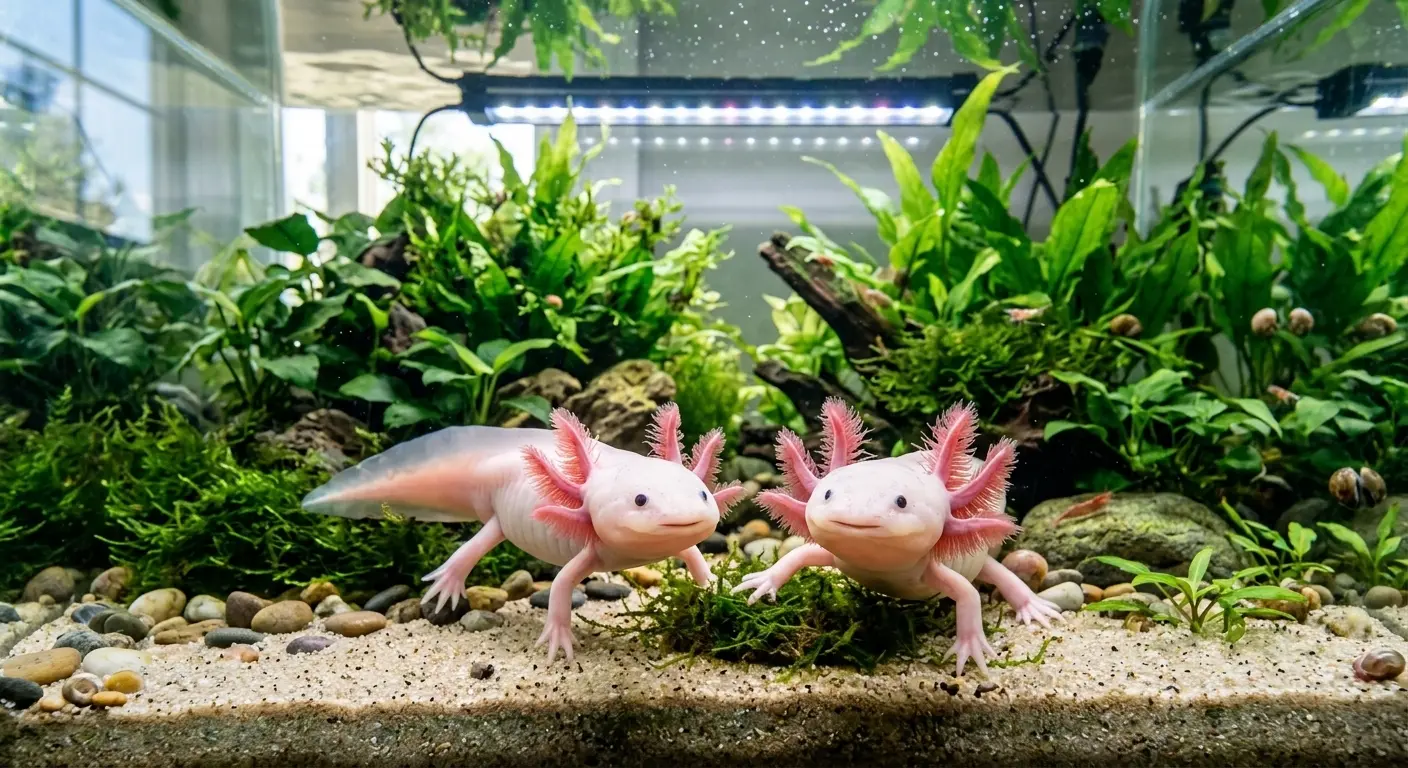
However, neoteny allowed axolotls to remain in a stable, resource-rich aquatic environment, avoiding the risky transition to land.
In the modern world, this cuteness has become their salvation and their curse.
It has fueled a global demand for them as exotic pets, which has driven a conservation crisis in their native habitat.
They are critically endangered in the wild, yet thriving in laboratories and home aquariums around the globe.
While discussing their endearing nature, it is crucial to remember they are complex animals, not toys.
If you are considering owning one, ensure you are fully prepared for their specialized care requirements.
Understanding their vulnerability is part of understanding why are axolotl cute to caregivers.
Crucially, before bringing one home, potential owners often wonder: are axolotl dangerous to humans or other pets?
Conclusion: The Irresistible Scientific Design
In summary, the pervasive appeal of the Mexican walking fish is no accident.
It is rooted in the powerful science of neoteny, which preserves the universally adored features of baby schema into adulthood.
Their large heads, feathery external gills, and permanent gummy grins are precise sensory triggers that unlock our caretaking instincts.
Whether you find them in a lab or an aquarium, the data is clear: are axolotl cute because their biological architecture demands it.
Their regenerative abilities and evolutionary history only add to the complexity of our fascination.
The science shows us that when we look at an axolotl, we are wired to smile back.
Frequently Asked Questions (FAQs) – Frase Optimized 2026
Why do humans find axolotls so cute?
Humans find axolotls cute primarily because of ‘baby schema’ (Kindchenschema). Their neotenic features—like large heads, wide eyes, and soft bodies—resemble human infants, automatically triggering our instinct to nurture and protect them.
Do axolotls stay cute forever?
Scientifically, yes. Because they are neotenic, they retain their juvenile, larval characteristics—including their external gills and wide-eyed look—throughout their entire adult life, making them appear perpetually young.
Is their cuteness an evolutionary advantage?
In their native wild habitat, their larval features were an adaptation for an aquatic life, not ‘cuteness.’ However, their aesthetic appeal to humans has ensured their survival as a species in captivity (labs and homes) while their natural habitat is destroyed.
Does their regeneration ability make them cuter?
While not an aesthetic feature, their incredible ability to regenerate limbs and organs adds to their uniqueness and fragile allure. It makes them seem almost magical, enhancing human fascination.