
The Solitary Forager: Why Your Social Expectations Are Biologically Flawed
The hedgehog as a pet reality check begins with one uncomfortable truth: these animals were never designed for companionship. Every scroll through social media suggests otherwise — a tiny, sleepy creature nestled in a human palm, quills flattened, expression serene.
That image sells millions of hedgehogs into homes every year. What it doesn’t show is the 11 p.m. wheel sprint, the defensive hiss, or the stress response triggered by a well-meaning squeeze.
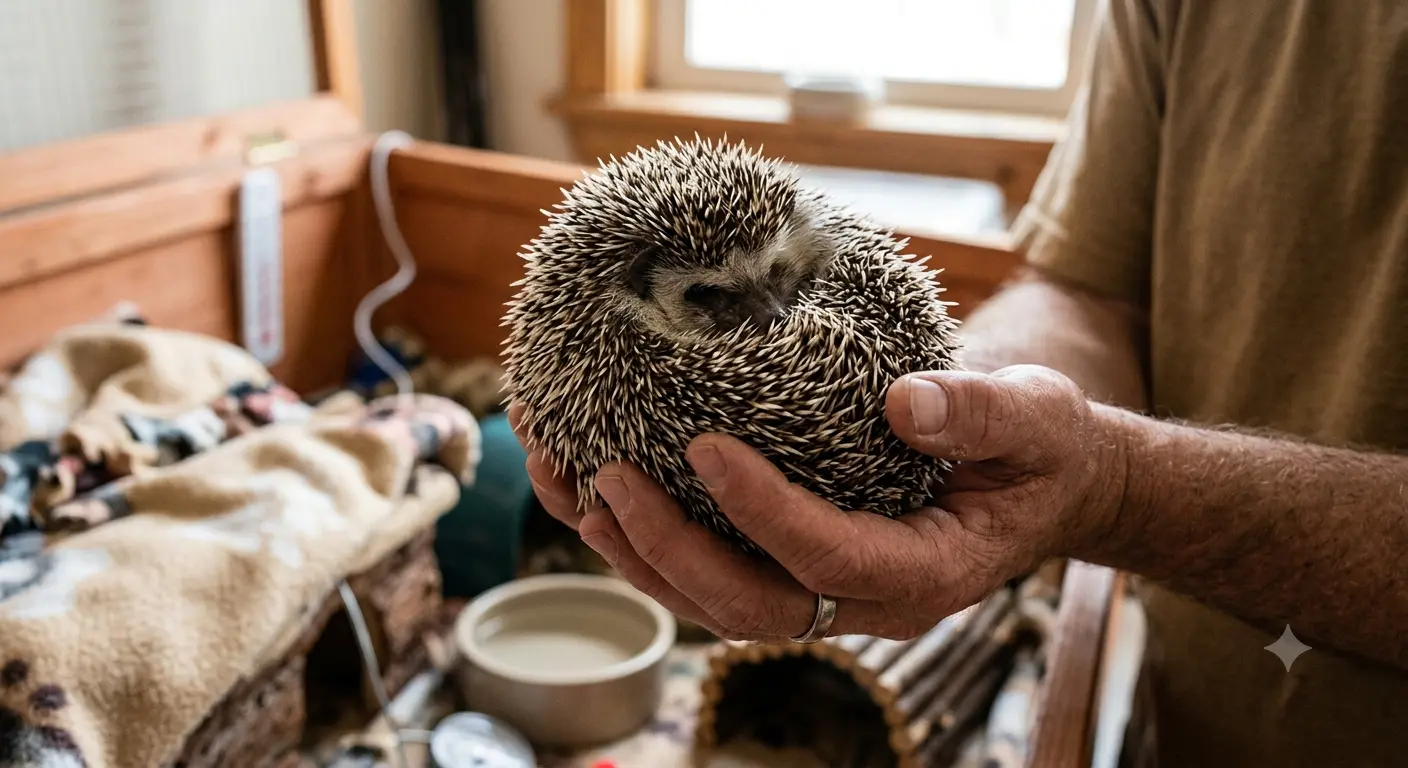
Hedgehogs are not domesticated animals — they are wild foragers housed in cages. According to PETA, hedgehogs can travel up to 2.5 miles in a single night while foraging in the wild.
That biological drive doesn’t disappear because an animal lives in a habitat bin in a spare bedroom. It persists, and when the environment can’t accommodate it, behavioral stress follows.
Their solitary nature compounds this further. Unlike dogs or even rats, hedgehogs have no evolutionary wiring for social bonding. They do not seek out human touch as comfort.
What looks like “snuggling” in viral clips is often a hedgehog in a low-arousal, torpor-adjacent state — a behavioral state worth understanding before interpreting it as affection.
In practice, hedgehogs are alert and active only during hours most owners are asleep. The bulk of their waking life is spent doing the following activities:
- Running on a wheel, sometimes for hours continuously
- Foraging and exploring their enclosure
- Avoiding or habituating to human interaction — not seeking it
This makes them a “look but don’t touch” companion for most of the day. Owners who expect warmth and responsiveness often find an animal that balls up defensively at handling, quills raised, body rigid.
That response isn’t a personality flaw — it’s biology. Understanding it is the first step toward ethical ownership, and it starts long before the temperature dial, which is where the next critical challenge begins.
The Thermal Life-Support System: Managing the Hibernation Risk
Thermal regulation is one of the most unforgiving aspects of hedgehog care — and one that casual keepers consistently underestimate when weighing hedgehog pet pros and cons.
African Pygmy Hedgehogs require a strict ambient temperature range of 72–80°F. Drop below that window, and you trigger a physiological crisis. This isn’t a minor comfort issue; it’s a survival threshold baked into their biology.
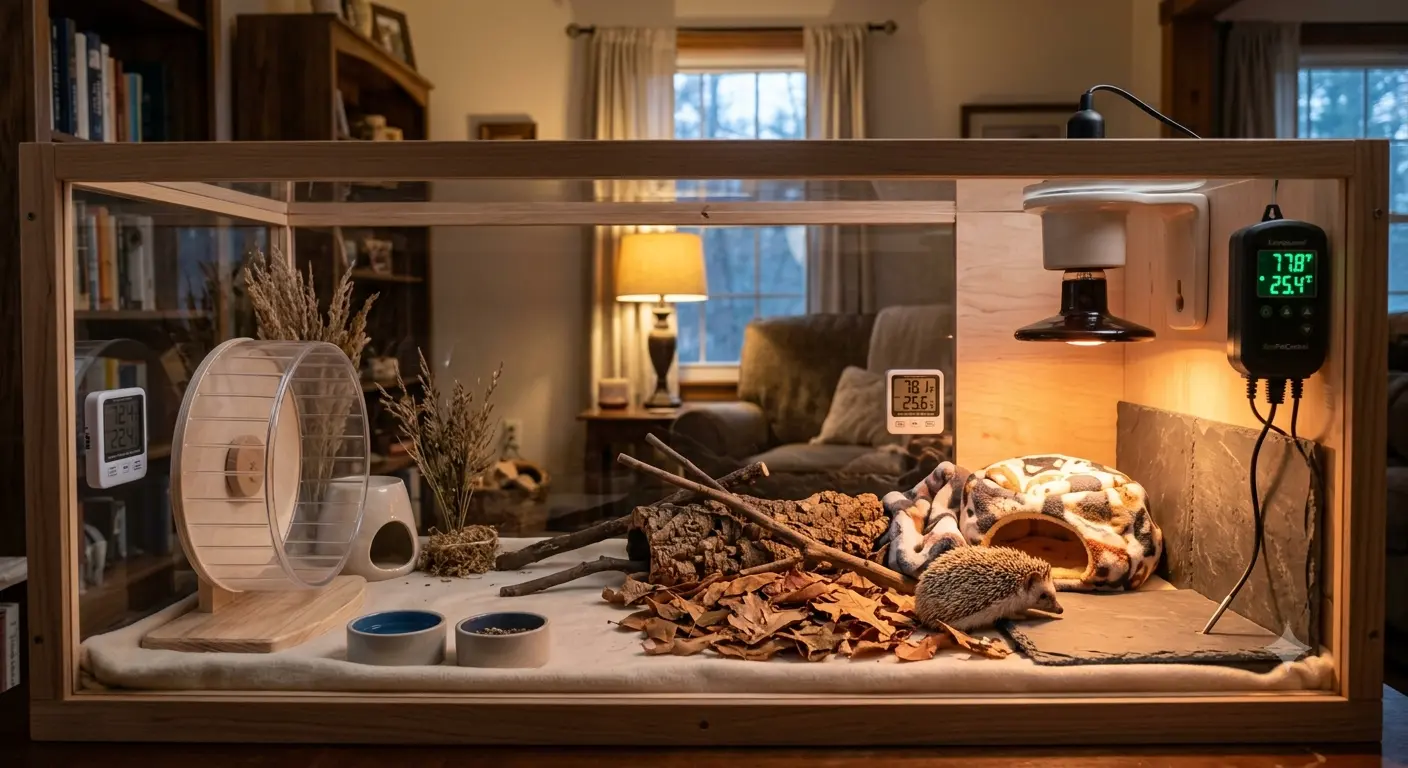
As noted in exotic pet care guidance, warm ambient temperatures aren’t optional — they’re a core metabolic requirement for this species. The critical distinction most owners miss is the difference between natural hibernation and captive torpor.
Wild hedgehog species in temperate climates evolved true hibernation as a survival mechanism. African Pygmy Hedgehogs did not. When a captive specimen attempts to hibernate due to insufficient heat, the result is metabolic shutdown.
Failure to maintain the narrow thermal window leads to life-threatening torpor that is frequently fatal, according to specialized veterinary guidance on hedgehog care. Equipment isn’t optional — it’s life support.
A proper thermal setup requires these key components:
- Ceramic Heat Emitter (CHE): Provides radiant heat without light disruption to nocturnal sleep cycles.
- Digital thermostat: Prevents dangerous temperature spikes or drops — analog controls are too imprecise.
- Digital thermometer: Placed at enclosure level, not ceiling height, for accurate readings.
Recognizing a hibernation attempt early can be the difference between recovery and death. Watch closely for these severe warning signs:
- Unusual lethargy or unresponsiveness during active hours
- Cold, stiff body despite being awake
- Slow or labored breathing
- Inability to uncurl fully
These thermal demands translate directly into financial and logistical commitments that extend well beyond a basic cage setup — and they intersect with other biological vulnerabilities that will be explored next.
Metabolic Hazards: The High Cost of Improper Nutrition
Improper diet is one of the fastest pathways to organ failure in captive hedgehogs — and most commercial pet food makes the problem worse, not better.
African Pygmy hedgehogs are obligate insectivores, meaning their digestive systems evolved around high-protein, chitin-rich prey rather than carbohydrate-heavy kibble.
In practice, owners reaching for generic cat pellets or “hedgehog mix” from a pet store are offering food that misaligns with this biology at a fundamental level.
Commercial cat food, even premium varieties, typically delivers excessive fat ratios and insufficient chitin — the structural fiber found in insect exoskeletons that supports gut motility.

Without regular access to live or dried insects like mealworms and crickets, captive hedgehogs develop chronic nutritional deficiencies that quietly compound over time.
Obesity is the most predictable outcome of a carbohydrate-heavy diet in a species with limited natural activity. In the wild, hedgehogs travel miles nightly foraging.
In captivity — particularly in households where proper protocols aren’t followed and wheel time is inconsistent — that caloric surplus has nowhere to go. Fatty liver disease and kidney failure follow.
Then there’s the genetic variable. Approximately 10% of pet African Pygmy hedgehogs in North America are affected by Wobbly Hedgehog Syndrome (WHS), a progressive neurological disorder with no cure.
According to data cited on ResearchGate, WHS causes gradual muscle wasting, paralysis, and seizures, typically manifesting between two and three years of age.
The condition is hereditary, yet the pet trade has done little to eliminate affected breeding lines. For prospective owners, this statistic alone reframes the hedgehog’s appealingly low purchase price.
Zoonotic Risks and the CDC Reality Check
Hedgehog ownership carries genuine public health risks that most beginner care guides gloss over entirely — and official warnings make the stakes impossible to ignore.
Salmonella is the headline risk. The Centers for Disease Control and Prevention (CDC) is unambiguous: “Hedgehogs can carry Salmonella germs in their droppings even if they look healthy and clean.”
That last clause is critical. A hedgehog showing no signs of illness can still shed the bacteria onto its enclosure, bedding, and any surface it touches — including your hands.
For anyone researching hedgehog care for beginners, this is the fact that should come before every habitat guide. The “kissing and snuggling” instinct is a real transmission vector.
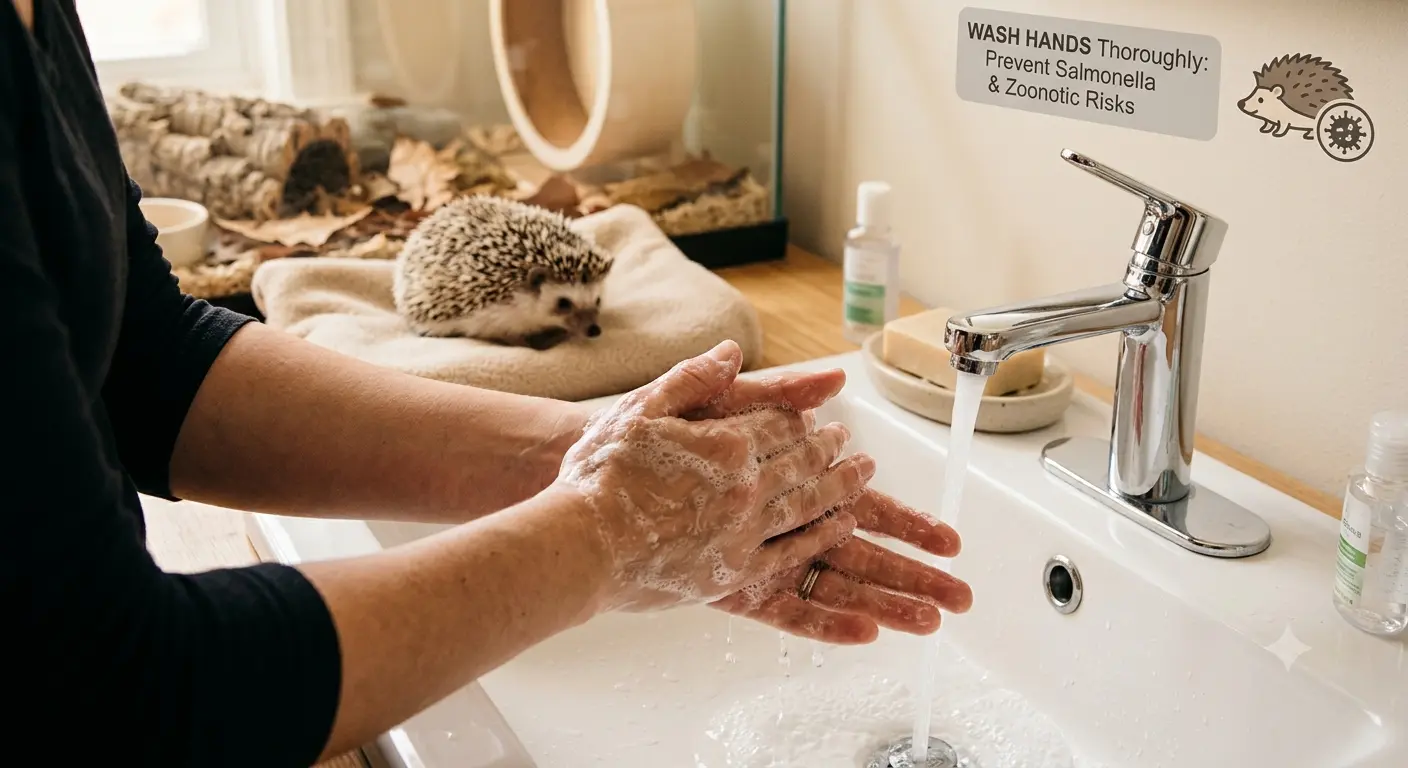
Exotic pet owners frequently underestimate face-to-face contact risk. Handling a hedgehog and then touching your mouth creates a direct route for bacterial and fungal transfer.
Beyond Salmonella, hedgehogs are documented carriers of dermatophyte fungi (ringworm). A comprehensive breakdown of these pathogens is documented in Hedgehog Zoonoses research published via PMC.
Households with children under five face the sharpest risk. Young children are statistically more likely to touch their faces after handling animals and less likely to wash hands thoroughly.
Core hygiene protocols for any hedgehog household include:
- Always wash hands with soap and water immediately after handling the animal or cleaning its enclosure.
- Keep the hedgehog away from food preparation areas and shared eating surfaces.
- Supervise all child interactions and eliminate face-to-face contact entirely.
These aren’t optional precautions — they’re baseline requirements. And they only work if every person in the household follows them consistently before acquisition.
The Ethics of Acquisition: Breeders vs. Pet Shops
Where you source a hedgehog matters as much as how you care for one — and the wrong starting point can shorten the hedgehog pet lifespan before you’ve even set up the enclosure.
Pet shop hedgehogs are a genetic lottery you’re almost guaranteed to lose. Chain retailers rarely track lineage, screen for Wobbly Hedgehog Syndrome (WHS), or provide health guarantees.
Hedgehog community research consistently warns that purchasing a pet shop animal introduces unknown genetic defects and accelerates WHS transmission through the captive population.
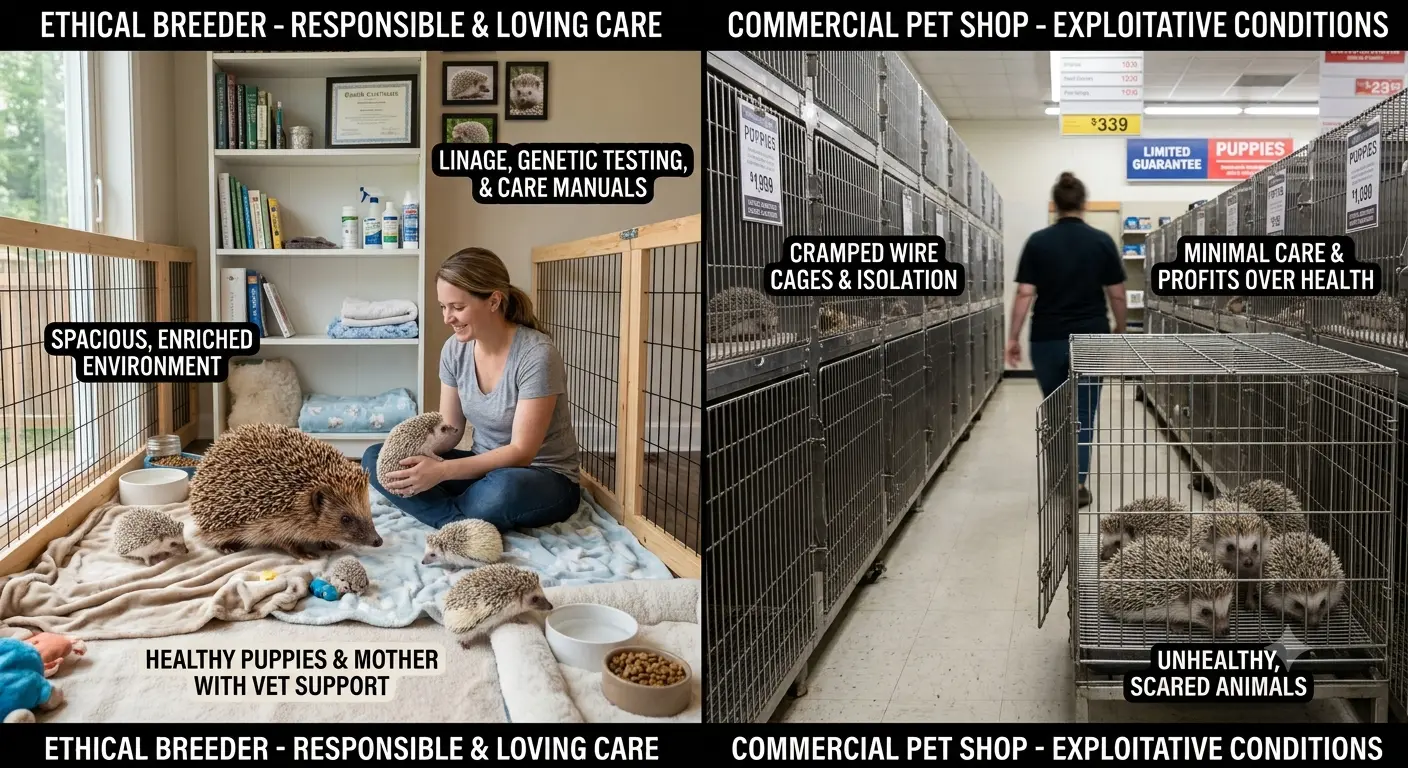
Vetting an ethical breeder requires asking pointed questions regarding pedigree lineage, parent genetic screening for WHS, health guarantees, and inspecting the environment where animals are raised.
Legal status adds another layer of complexity. Hedgehogs are banned outright in California, Georgia, Pennsylvania, Hawaii, and several other states. Confirm local ordinances before any purchase.
The impulse buy trap is real. Hedgehogs look manageable in a pet store cage, but their nocturnal schedules, thermal sensitivity, and specialized veterinary needs only reveals itself later.
The Bottom Line: Is a Hedgehog Right for You?
Hedgehogs are high-maintenance specialist animals — not beginner pets — and every piece of evidence covered in this article points to the same conclusion.
| Biological Factor | Captive Reality |
|---|---|
| Lifespan | 4–6 years of technical commitment |
| Activity Cycle | Strictly nocturnal (Peak midnight to 4 a.m.) |
| Social Structure | Solitary (Cohousing causes severe stress) |
| Temperature Needs | Strict 72–80°F range to prevent fatal torpor |
The welfare literature consistently reinforces that hedgehogs thrive under keepers who approach husbandry the way other enthusiasts approach reptile thermal gradients — with rigor and preparation.
Adult hobbyists who enjoy the technical side of exotic animal care are the right fit. Casual keepers, families seeking a child’s first pet, or anyone expecting low-effort companionship are not.
Mastering Exotic Husbandry with Exopetsecrets
Awareness of risk is only the first step — transforming that awareness into confident, consistent care is where animal welfare is actually won or lost.
Every biological challenge covered in this article — thermoregulation demands, WHS susceptibility, obesity-driven metabolic decline, zoonotic risk — has a practical counterpart.
The gap between a hedgehog that thrives for six or seven years and one that deteriorates by year three is rarely about intention. It’s about access to species-specific knowledge.

If you find yourself handling an animal originating outside commercial breeding lines, referring to a wild hedgehog guide can offer foundational insights into their primal survival behaviors and physiological needs.
That’s precisely where science-backed care manuals close a critical gap. General pet advice doesn’t translate to exotic species. Ethics don’t stop at the source; they extend into every husbandry choice.
Exopetsecrets builds its guides around that full-spectrum responsibility, translating peer-reviewed biology into actionable daily protocols that hobbyist keepers can realistically follow.
The 5 Proven Pillars framework — covering nutrition, thermal environment, enrichment, health monitoring, and socialization — exists specifically to prevent metabolic and neurological decline.
Download the full hedgehog care manual before you purchase an animal — not after. Informed preparation is the single highest-impact welfare decision a prospective owner can make.