
Understanding the reproductive habits of exotic pets is essential for dedicated breeders and enthusiastic keepers worldwide. When exploring the fascinating world of small mammals, one frequently asked question stands out: how do hedgehogs mate? The process is remarkably intricate, combining delicate courtship rituals with a unique physical approach designed to navigate sharp defensive quills safely.
For breeders tracking these fascinating nocturnal animals, timing is absolutely everything to ensure healthy litters. A central element of managing this entire reproductive timeline relies heavily on knowing exactly how long are hedgehogs pregnant. Gaining precise insight into this specific biological duration allows caretakers to offer optimal nutritional modifications and comfortable nesting materials when the time arrives.
Successful reproduction relies on recognizing key behavioral triggers, optimal environmental setups, and physiological cycles. In this comprehensive guide, we will break down the entire mating process, detail specific gestation periods, and provide actionable tracking data. Let us dive deep into the fascinating details of hedgehog reproduction and successful breeding management.
The Intricate Process of Hedgehog Courtship and Mating
The entire mating sequence begins with an elaborate, often noisy courtship ritual that can last for hours. The male hedgehog will circle the female repeatedly, emitting unique snorting, puffing, or rhythmic whistling sounds to signal his clear intent. This vocal display is crucial for calming the inherently solitary and territorial female.
Female hedgehogs are notoriously choosy and will initially react with defensive postures, lowering their heads and flattening their sharp quills. If she completely rejects his advances, she may butt him with her forehead or run away entirely. The persistent male continues his courtship circles until she ultimately decides to relent and accept his presence.
Once receptive, the female drops her quills flat against her body and flattens herself completely against the substrate. She curves her back slightly and shifts her hindquarters upward to allow safe, seamless physical access. This precise postural shift prevents the male from sustaining severe puncture injuries from her sharp defensive armor during copulation.
The actual mating act itself is brief but can occur multiple times within a single courtship session. Because females are induced ovulators, the physical act of mating actually triggers the release of eggs for fertilization. Immediately following successful copulation, the pair must be carefully separated to avoid aggressive territorial fighting.
Gestation and Timeline: How Long Are Hedgehogs Pregnant?
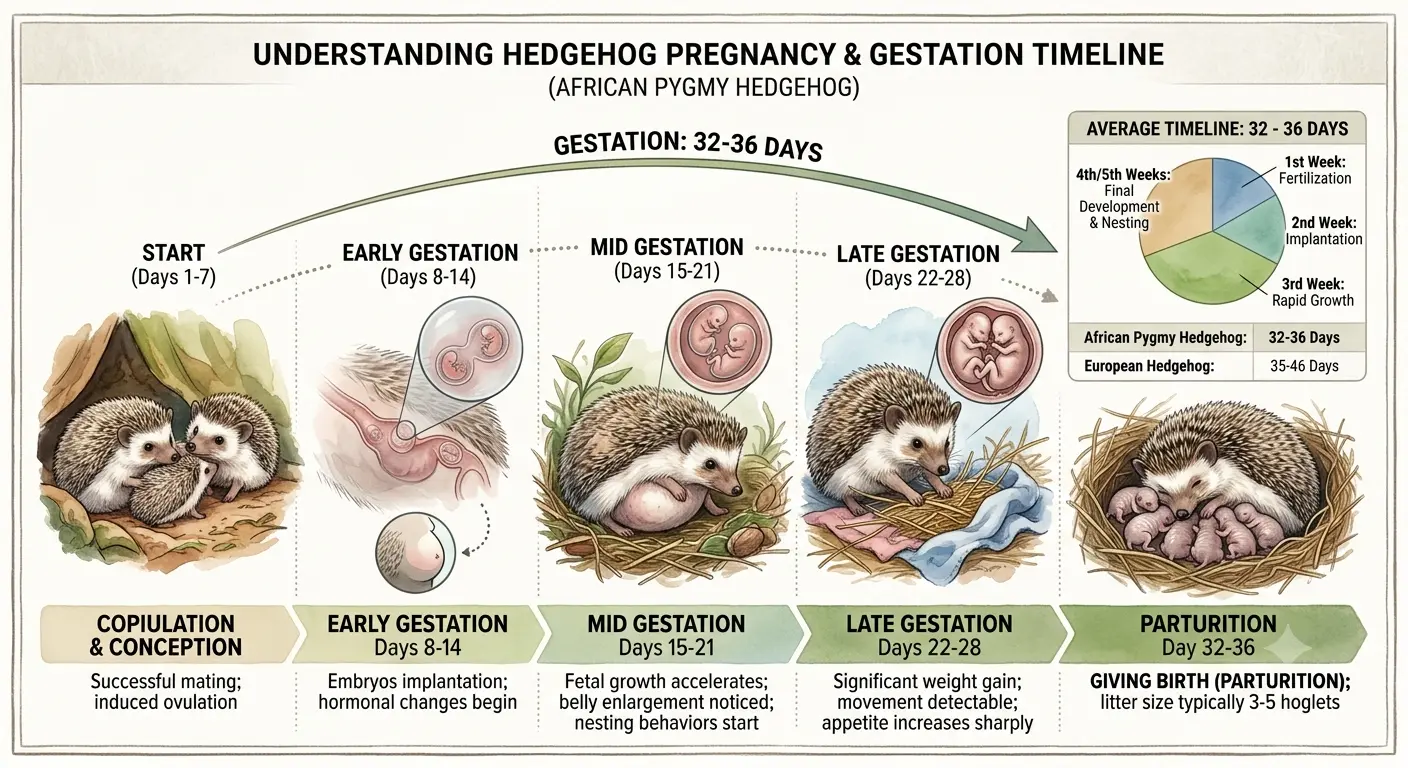
Once fertilization occurs successfully, a highly specific internal biological clock begins ticking for the expectant female. A primary question among breeders is exactly how long are hedgehogs pregnant before giving birth? The typical gestation timeframe for the standard African Pygmy hedgehog ranges between 32 to 36 days.
Interestingly, some European varieties can carry their young for up to 46 days depending on environmental variables. This precise timeline highlights why accurate record-keeping is absolutely paramount for a breeder. Knowing how long are hedgehogs pregnant enables you to predict the exact delivery date with extreme accuracy.
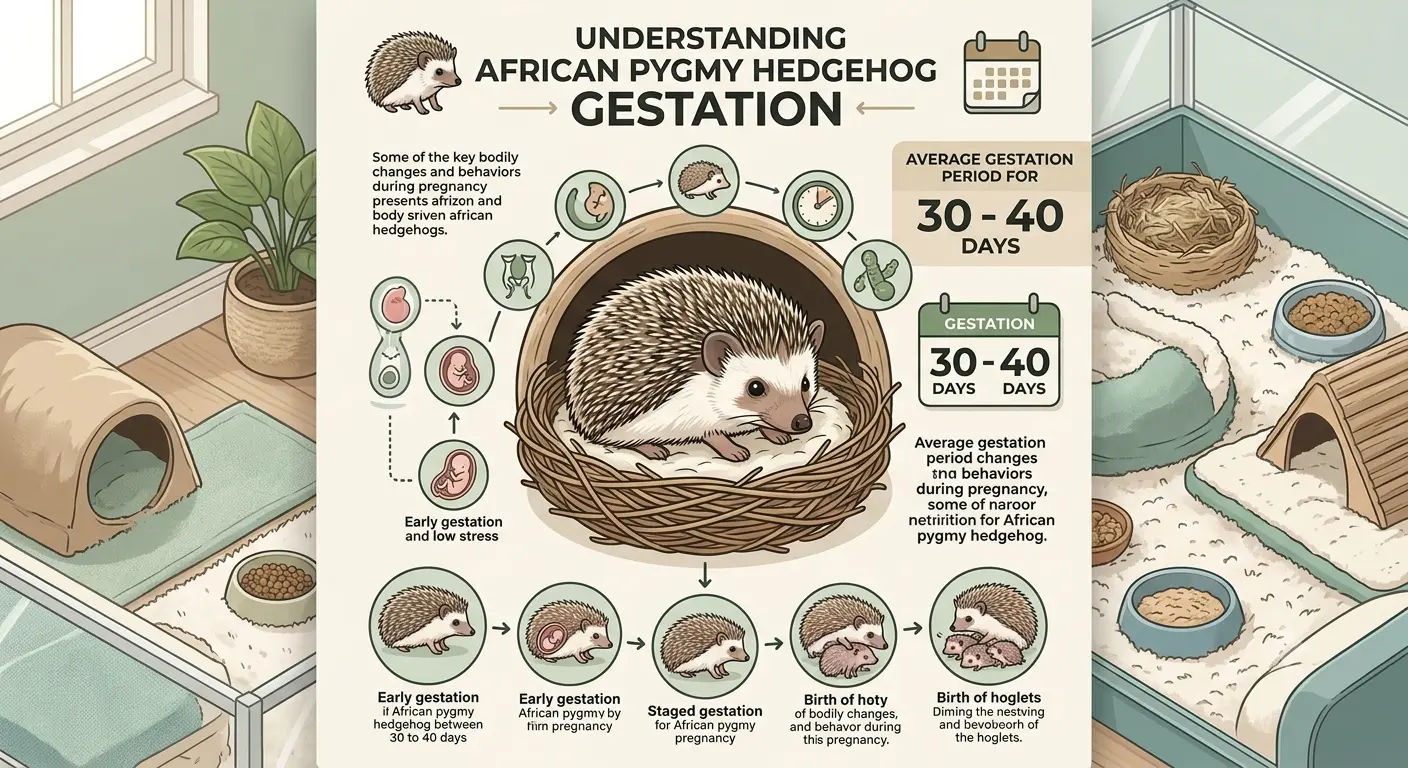
During the first two weeks of gestation, external physical signs of pregnancy are almost impossible to detect. As the third week approaches, the female will display noticeable weight gain and her lower abdomen will feel significantly firmer. Her eating habits will escalate dramatically as her body prepares to nourish developing embryos.
In the final week of pregnancy, the female will exhibit intense nesting behaviors, rearranging substrate and soft materials frantically. Providing the right cage environment during this crucial phase ensures she feels entirely secure. This minimizes the risk of stress-induced complications or abandonment of the litter immediately post-birth.
An Unfiltered Story: A Reptile Breeder’s Accidental Mammalian Journey
I have spent over fifteen years working intimately with scaly, ectothermic creatures, managing delicate incubation boxes and precise humidity levels for rare geckos. Mammals were never my forte. But three winters ago, my cousin went abroad and dumped a pair of sharp, spiked creatures named Barnaby and Cleo into my lap on a rainy Tuesday afternoon.
They lived in separate enclosures, but one evening while cleaning Barnaby’s tub, I foolishly placed him into Cleo’s domain, thinking a few minutes of cohabitation wouldn’t hurt. Chaos erupted. A strange, loud, wheezing sound filled my reptile room, resembling a broken espresso machine rather than romance. Barnaby was walking in endless, dizzying circles around Cleo, huffing like a miniature steam train while she hissed fiercely, raising her spines like a defensive fortress. I panicked, thinking they were going to tear each other apart right there on the wood shavings.
Instead of separating them immediately, I tried a traditional reptile tactic: lowering the ambient temperature slightly to calm them down, which was a massive mistake. The lowering temperature only made Cleo angrier, and she began aggressively bumping Barnaby with her spiked forehead. I sat on my stool, frustrated, nursing a scratched thumb, completely out of my depth with these stubborn, pointy balls of fur and spine. It was a stark contrast to the quiet, predictable mating dances of my bearded dragons.
Then, after nearly two hours of this agonizing standoff, the noise abruptly stopped. Cleo completely flattened her spines to the floor, laying entirely still while Barnaby approached carefully from behind. It hit me right then that nature had a beautiful, precise design for navigating those dangerous quills without any injuries. I separated them shortly after, deeply relieved that the spiky drama had concluded without bloodshed, returning to my quiet lizards with a newfound respect for mammalian persistence.
Breeding Dynamics: The Ultimate Comparison Matrix
To better understand how hedgehog reproduction compares to other common small exotic pets, look at the matrix below. This data highlights specific differences in gestation, litter sizes, and behavioral traits across popular species.
| Species Name | Average Gestation Period | Typical Litter Size | Ovulation Type | Weaning Age |
|---|---|---|---|---|
| African Pygmy Hedgehog | 32 – 36 Days | 3 – 5 Hoglets | Induced | 4 – 6 Weeks |
| European Hedgehog | 35 – 46 Days | 4 – 6 Hoglets | Induced | 5 – 6 Weeks |
| Guinea Pig | 59 – 72 Days | 2 – 4 Pups | Spontaneous | 3 Weeks |
| Sugar Glider | 15 – 17 Days (Joeys move to pouch) | 1 – 2 Joeys | Spontaneous | 8 – 10 Weeks |
As illustrated above, tracking how long are hedgehogs pregnant reveals a relatively short yet highly delicate timeline compared to other small exotic mammals. Managing these specific periods requires tailored environmental control, high-protein dietary upgrades, and minimal handling to guarantee maternal peace of mind.
Critical Care Strategies for Pregnant and Lactating Females
Providing exceptional husbandry during the gestation period is absolutely critical for the survival of both the mother and her upcoming hoglets. You must increase her calcium and protein intake by introducing high-quality kitten kibble or live insects like gut-loaded mealworms. These nutrients support developing skeletal structures and ensure rich milk production later on.
Isolation is another vital factor to maintain during this delicate phase of their life cycle. A pregnant female must be housed entirely alone in a quiet, low-traffic room away from loud noises and bright lights. For comprehensive information on how to care for newborns once they arrive, read our detailed baby hedgehog guide to ensure their safety.

Never disturb the nesting box during the final days of pregnancy or the first week following delivery. Disturbing the mother can trigger severe stress, causing her to reject or harm her offspring. For advanced clinical breeding guidelines, consult professional resources like the Association of Exotic Mammal Veterinarians (AEMV) to ensure you follow standard veterinary protocols.
Monitoring environmental humidity and maintaining a stable ambient temperature between 75°F and 80°F is absolutely essential. Sudden temperature drops can cause the pregnant mother to enter a dangerous state of torpor. By prioritizing stability and nutrition, you ensure a successful transition from courtship to a healthy litter of hoglets.
Frequently Asked Questions Regarding Hedgehog Reproduction
Q: How many times a year can hedgehogs breed safely?
A: In captivity, hedgehogs can technically breed year-round, but responsible breeders limit it to one or two litters per year. This allows the female’s body ample time to recover, maintaining her long-term health and vitality.
Q: Exactly how long are hedgehogs pregnant on average?
A: The standard gestation period for domesticated African Pygmy hedgehogs is generally between 32 and 36 days. Accurate tracking from the day of successful mating is essential to prepare the nesting environment properly.
Q: Can male and female hedgehogs live together permanently?
A: No, hedgehogs are strictly solitary animals. Keeping males and females together permanently leads to severe territorial aggression, constant stress, and dangerous, uncontrolled breeding cycles.
Q: What should I do if a female rejects her newborn hoglets?
A: If a mother rejects her litter due to stress, you must immediately consult an exotic veterinarian. Hand-rearing hoglets requires specialized formulas, precise temperature control, and round-the-clock feeding schedules.