
Imagine watching your calm, docile pet basking lazily under their heat lamp, looking like they barely have the energy to blink. Suddenly, a stray insect darts across the room, and your spiked companion transforms into an absolute blur of pure athletic motion. Many reptile enthusiasts find themselves completely stunned the first time they witness this explosive burst of speed from a creature that usually looks like a living stone statue. If you have ever wondered exactly how fast can a bearded dragon run, you are definitely not alone in your curiosity.
A healthy adult bearded dragon can reach top running speeds of up to 9 miles per hour (14.5 kilometers per hour) when sprinting short distances. This impressive velocity is primarily utilized to flee from dangerous predators or to successfully catch fast-moving insects. Their unique evolutionary biology allows them to deploy these quick bursts of kinetic energy on demand before rapidly cooling down.
Understanding the full mechanical extent of their physical capabilities helps pet parents optimize their domestic enclosures and indoor free-roaming environments safely. In this comprehensive guide, we will analyze the precise biomechanics, environmental variables, and wild behavioral adaptations that dictate how fast can a bearded dragon run throughout its lifetime.
The Evolutionary Biomechanics of Reptilian Speed
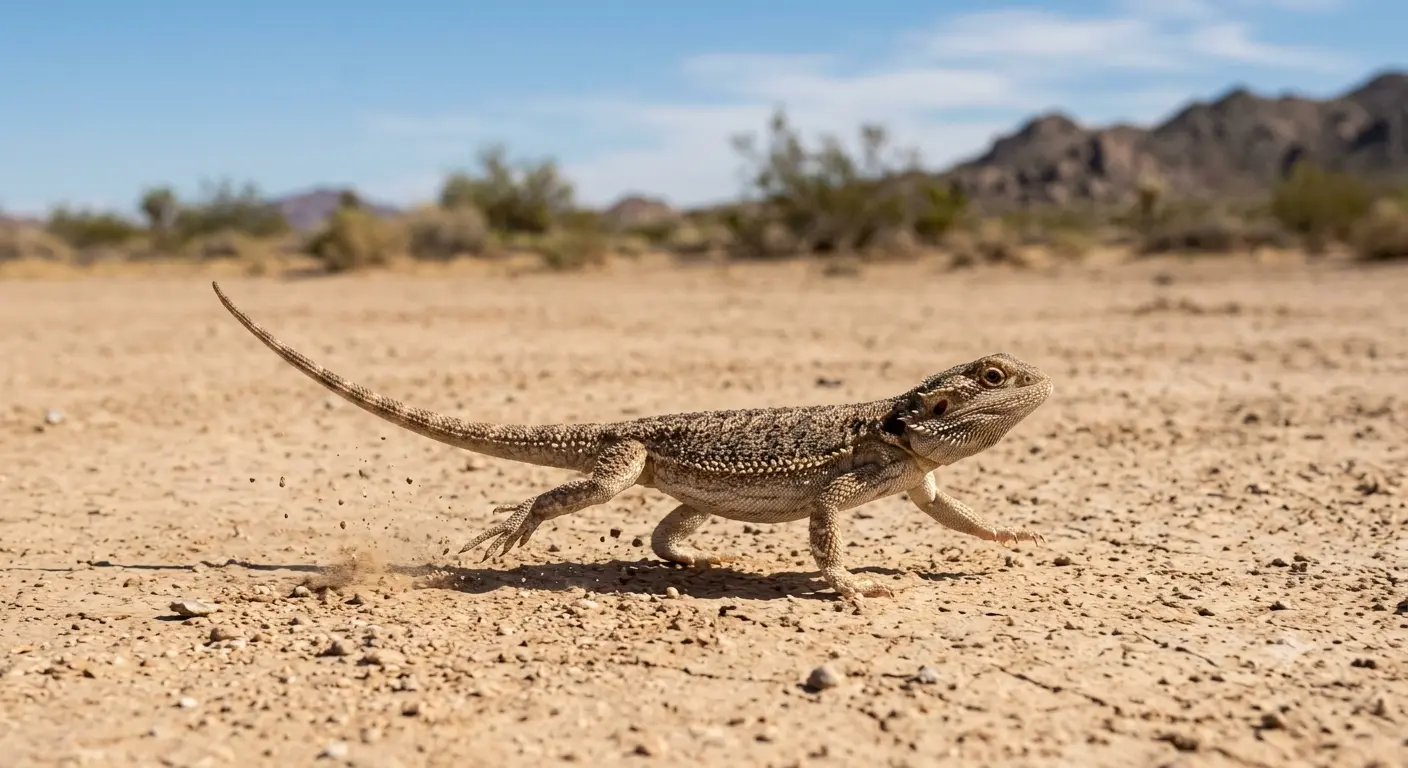
The native environment of the Pogona vitticeps consists of rugged, open landscapes where hiding spots are often highly scarce. To survive in these harsh settings, evolution favored creatures capable of sudden, high-intensity acceleration over long-distance endurance running profiles. Their physical bodies are structurally optimized for rapid thrust, featuring incredibly powerful hind legs paired with a highly flexible skeletal column.
When studying how fast can a bearded dragon run, specialists look closely at their specialized muscle fiber composition. Their limbs contain a significantly high percentage of fast-twitch glycolytic muscle fibers, which facilitate immediate explosive movement without requiring instant oxygen. However, this physiological system causes them to tire out very quickly due to rapid lactic acid buildup.
Their sprawling posture, while seemingly inefficient compared to upright mammals, acts as a low-profile stability system on shifting sands. By swinging their bodies laterally, they maximize the stride length of each individual step taken during a full sprint. This distinct side-to-side locomotion distributes their weight evenly, keeping them from sinking deeply into soft outdoor soils.
How Fast Can a Bearded Dragon Run in the Wild?
Life in the unforgiving Australian outback is a constant high-stakes game of survival requiring maximum physical performance. When examining how fast can a bearded dragon run in the wild, field researchers observe much higher sustained intensities than in domestic settings. Out in the open brush, a slow reaction time inevitably means becoming an easy meal for a bird of prey.
Wild specimens are continually forced to navigate complex natural obstacles like fallen eucalyptus branches, sharp rocks, and sandy dunes. To efficiently cross these varied terrains while escaping dangerous dingoes or birds, they routinely hit their maximum physiological limit of 9 mph. These intense wild sprints are typically executed in straight, focused lines toward the nearest dense thicket or rocky crevice.
Furthermore, hunting wild prey demands an exceptional level of quickness that captive lizards simply do not need to display. Chasing down erratic desert locusts or speedy beetles requires a perfect combination of rapid mental calculation and sudden physical acceleration. Therefore, the wild environment constantly refines their running efficiency through the uncompromising law of natural selection.
The Crucial Role of Ambient Temperature
Because these fascinating creatures are ectothermic organisms, their actual movement velocity is directly tied to external environmental heat sources. If a wild lizard is caught out in the early morning before properly basking, its physical speed drops drastically. Their muscles require an optimal internal core temperature of around 95°F to 105°F to achieve peak running performance.
Conversely, if they become severely overheated in the midday sun, they will actively seek shade rather than run excessively. Maintaining this precise thermal balance is essential for their neurological reflexes and muscle contraction speeds alike. In captivity, maintaining a proper thermal gradient is just as vital for preventing long-term physical lethargy.
Bearded Dragon Running on Two Legs: Bipedal Locomotion
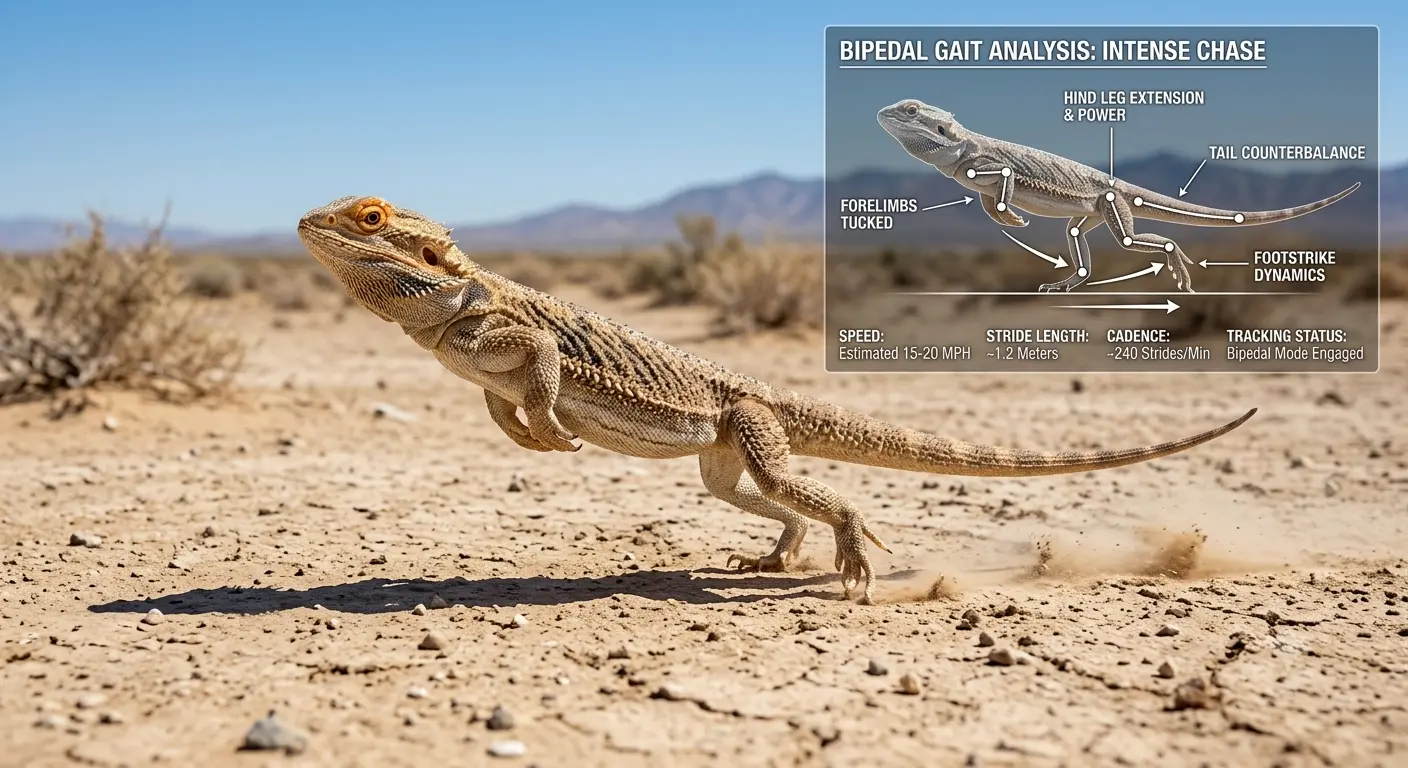
One of the most visually spectacular sights in the reptile world is witnessing a bearded dragon running on two legs. This fascinating phenomenon, scientifically known as facultative bipedal locomotion, usually occurs when the lizard reaches its absolute maximum acceleration threshold. The front half of the body lifts completely off the ground, leaving only the powerful hind limbs to drive them forward.
Biologists discovered that this bipedal stance is not necessarily an intentional choice made by the lizard to gain extra speed. Instead, it is a natural aerodynamic consequence of intense forward acceleration causing the front torso to lift upward. As the hind legs push off the earth with immense force, the center of mass shifts dramatically backward toward the tail base.
The heavy, muscular tail plays a critical structural role during these high-speed bipedal sprint sessions by acting as a counterweight. Without the stabilization provided by the trailing tail, the lizard would instantly flip forward or lose its directional balance entirely. This unique bipedal behavior is highly reminiscent of ancient dinosaur locomotion patterns preserved in fossil records.
Domestic Speed: Why Captive Lizards Run Inside the Home
In a comfortable home setting, your pet will rarely have a genuine survival reason to sprint at maximum velocity. However, domestic keepers frequently observe their pets suddenly bolting across the living room carpet during scheduled out-of-cage exercise times. Understanding these domestic outbursts requires analyzing their psychological state and sensory reactions to our human environments.
Often, a sudden sprint inside the house is triggered by pure environmental curiosity or a sudden burst of playful energy. Exploration is a fantastic form of mental stimulation that keeps captive reptiles from sliding into systemic depression or physical obesity. Providing a completely safe space for these domestic workouts ensures they maintain healthy muscle tone throughout their lives.
However, unexpected loud noises, sudden overhead shadows, or the sight of a domestic dog can instantly trigger a fear-based flight response. When startled, a captive lizard will run blindly toward any dark corner or heavy piece of furniture it can find. As responsible owners, we must meticulously manage these environmental factors to prevent accidental injuries during exercise periods.
A Professional Herpetologist’s Journey: Real-World Sprint Discoveries
A few winters ago, my beautiful orange-phase central lizard, whom I affectionately named Rocky, began acting incredibly sluggish within his enclosure. He refused his usual fresh greens, rarely moved from his favorite piece of grapevine wood, and looked completely disinterested in his surroundings. Being deeply worried about his apparent lack of vitality, I immediately assumed his environmental temperatures were far too low. I spent days adjusting the thermostat, adding powerful new ceramic heat emitters, and meticulously measuring the basking zone with infrared thermometers, but nothing seemed to change his stubborn mood.
One bright Sunday afternoon, out of absolute desperation to see him show some signs of life, I decided to place him directly onto the cold hardwood floor of our spacious, sunlit kitchen. For the first few minutes, he simply sat there like a decorative paperweight, staring blankly at the bottom of the refrigerator. Then, out of nowhere, my mischievous black cat accidentally knocked a small plastic bottle cap off the counter, causing it to clatter loudly against the tile floor. The sudden, sharp noise completely transformed Rocky into an unguided scaly missile.
He stood high up on his toes, completely lifted his front legs off the ground, and sprinted bipedally straight toward the narrow gap under the stove with mind-boggling quickness. I had to slide on my stomach across the floor to gently block his path before he disappeared into the dark dusty void. That chaotic afternoon taught me a valuable lesson about hidden reptilian energy reserves; they might look incredibly lazy, but their survival reflexes remain fully intact and ready to deploy in the blink of an eye when external stimuli catch them by surprise.
Factors Influencing Sprint Capabilities in Captivity
Not every individual lizard will display the exact same level of physical quickness or athletic agility during their lives. Several critical physiological components directly dictate how fast can a bearded dragon run in a domestic household setting over time. By closely monitoring these distinct factors, owners can accurately benchmark their pet’s structural wellness.
Age is a massive factor, as energetic juveniles and sub-adults are naturally much lighter and highly prone to frequent running. Their smaller body mass allows them to accelerate almost instantly without putting excessive stress on their developing skeletal joints. Older adults, especially those over six years of age, possess much heavier bodies and generally prefer a sedentary lifestyle.
Overall body weight and structural condition are equally critical metrics for assessing potential physical velocity. An overweight lizard burdened by an improper diet will struggle significantly to lift its abdomen fully off the ground during movement. This extra physical strain can eventually lead to chronic joint degradation, painful pododermatitis, or severe cardiovascular fatigue.
| Life Stage | Average Weight Range | Primary Running Trigger | Relative Speed Level |
|---|---|---|---|
| Juvenile (0-6 Months) | 20 – 150 grams | Insect Hunting / Fear Responses | Very High (Agile Sprints) |
| Sub-Adult (6-18 Months) | 150 – 400 grams | Territorial Exploration / Curiosity | Maximum (Peak Bipedal Output) |
| Mature Adult (1.5 – 6 Years) | 400 – 550 grams | Basking Movement / Food Response | Moderate (Short Burst Sprinting) |
| Geriatric (6+ Years) | 450+ grams | Minimal Movement / Basking Shifts | Low (Slow Deliberate Walking) |
Safety Management During Indoor Free-Roaming Exercise
Allowing your scaly companion to regularly explore your home is an excellent way to encourage natural running behaviors safely. However, a human home contains dozens of hidden hazards that can easily harm a sprinting lizard moving at peak velocity. Meticulous preparation of the physical space is absolutely mandatory before opening the enclosure doors.
First, always ensure all other domestic pets, such as curious dogs or predatory cats, are completely locked in a separate room. Even the most well-behaved mammal can instinctively pounce when they see a small lizard suddenly bolt across the room. Additionally, carefully check the entire floor for tiny objects like loose coins, needles, or small toys that could be accidentally swallowed.
Keep in mind that slick flooring materials like polished hardwood, smooth laminate, or glossy ceramic tiles present a major physical challenge. Their sharp claws cannot find proper traction on these glassy surfaces, causing their legs to spin uselessly in place, which can potentially strain their hip muscles. Providing large area rugs or textured yoga mats gives them the ideal grip needed to sprint safely without slipping.
If your pet ever experiences minor mobility struggles or digestive issues after intense exercise sessions, it is vital to check their internal health. Understanding underlying wellness concerns, such as discovering effective bearded dragon constipation remedies warm bath options, ensures your pet remains comfortable enough to stay active. Proper hydration and regular bowel movements are fundamental pillars of sustained physical agility.
When to Worry: Recognizing Abnormal Lethargy vs. Natural Rest
While these reptiles are famous for their explosive speed bursts, they naturally spend the vast majority of their day sitting completely still. New owners often struggle to differentiate between a healthy lizard that is simply relaxing and a sick lizard suffering from severe clinical lethargy. Recognizing the subtle behavioral signs of physical distress early can save your pet’s life.
A healthy, resting lizard will remain highly alert to its immediate surroundings, keeping its eyes wide open and tracking movements. If you approach the enclosure with a favorite insect, they should react almost instantly with intense focus and physical readiness. Their bodies should feel firm and properly supported by their limbs when they choose to move around.
Conversely, if your pet remains completely limp when picked up, keeps its eyes perpetually closed during peak basking hours, or drags its rear legs lifelessly, immediate veterinary attention is required. These severe symptoms often point toward deep-seated nutritional deficiencies, advanced Metabolic Bone Disease (MBD), or severe internal parasitic infections. For expert medical guidance, always consult an accredited organization like the Association of Reptile and Amphibian Veterinarians (ARAV) to find a specialized vet near you.
Frequently Asked Questions About Reptilian Speed
Q1: Can a human easily outrun a fully grown bearded dragon?
A: Yes, absolutely. While a lizard hitting 9 mph feels incredibly fast inside a small living room, the average adult human can easily run between 12 to 15 mph. You can easily overtake them, but their tiny size allows them to quickly slide under low furniture long before you can safely react.
Q2: Why does my pet run directly toward the glass walls of its tank?
A: This common behavior, often called “glass surfing,” is usually a clear sign that the lizard wants more physical space to explore or notices its own reflection. It can also indicate that the internal enclosure temperatures are too high, forcing them to desperately look for a cooler escape route.
Q3: Do running speeds drop significantly when a lizard is shedding its skin?
A: Yes, their overall activity levels drop drastically during a shed cycle. The tight, dying skin causes significant physical discomfort and limits their natural joint flexibility, making them prefer to remain safely hidden away until the old skin completely detaches.
Q4: Does running on slick tile floors hurt my lizard’s long-term health?
A: Running continuously on slick surfaces causes their limbs to repeatedly slip sideways, putting unnatural twisting forces on their femoral joints. Over many months, this lack of floor traction can cause painful joint inflammation or chronic muscle strains.
Conclusion: Celebrating Your Pet’s Surprising Athleticism
Ultimately, answering how fast can a bearded dragon run reveals the incredible evolutionary survival strategies built into these marvelous desert creatures. From their fast-twitch muscle fibers to the breathtaking sight of bipedal sprinting on their hind legs, their bodies are marvels of natural engineering. They can easily transform from lazy baskers into high-speed sprinters the second their survival instincts are triggered.
By providing a expansive enclosure, maintaining perfect basking temperatures, and setting up safe, high-traction indoor exercise spaces, you can help your pet preserve this natural athletic vitality for many years to come. Keep a close eye on their daily movements, respect their need for quiet rest, and enjoy the wonderful, chaotic moments when your scaly friend decides to show off their true outback sprinting heritage.