
Planning a proper home for an exotic aquatic pet requires moving past traditional pet care assumptions. Setting up a home for an axolotl is very different from a standard tropical fish tank. These unique Mexican amphibians have specific biological needs that must be met to thrive in captivity.
If you are a new owner, understanding the core axolotl aquarium requirements is the first step toward a long-lived and happy pet. Many beginners fail because they overlook the unique axolotl aquarium requirements like water temperature and substrate safety within their initial setup.
By strictly following these parameters, you ensure your “water dragon” stays healthy. In fact, mastering the structural guidelines from day one prevents nearly all common health issues seen in captive amphibians. Preparing the perfect Axolotl Tank environment is crucial for success.
Let’s dive deep into the essential environment options every owner must know. This comprehensive layout will guide you through space allocation, thermal control, filtration paradoxes, and chemical balancing to design a safe home.
1. Choosing Your Axolotl Tank: Why Floor Space is Crucial
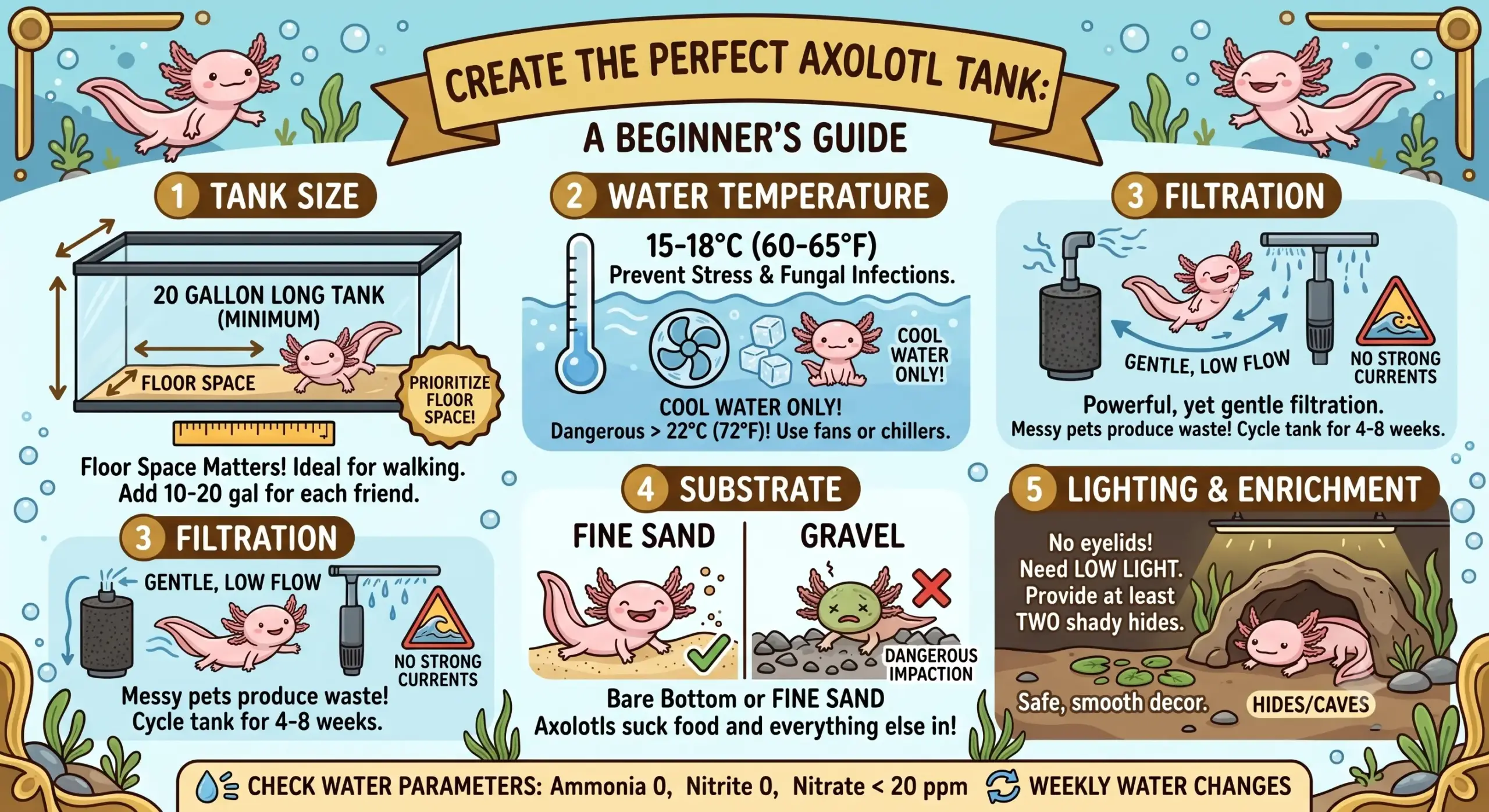
One of the most important axolotl aquarium requirements is prioritizing floor space over height. Unlike fish that swim at all levels, axolotls are bottom-dwellers that spend their days walking along the base of their enclosure.
A tall, narrow habitat leaves your amphibian confined to a cramped footprint. This restriction severely limits their natural pacing behaviors and increases territorial stress if sharing your Axolotl Tank space with another mate.
Minimum Size: A 20-gallon “Long” tank is the absolute minimum for one adult. However, to truly meet the best ecosystem standards, a 29 or 30-gallon Axolotl Tank is highly recommended to dilute organic waste effectively over time.
The Golden Rule: For every additional axolotl, add at least 10-20 gallons of space. Overcrowding your Axolotl Tank is a direct violation of basic care guidelines and leads to chronic stress, aggressive nipping, and poor water quality.
Dimensions Matter: Always look for “Long” or “Breeder” style models rather than “Tall” ones for your Axolotl Tank. These footprints maximize the valuable surface area where your pet will sleep, hunt, and explore daily.
2. Temperature: Cooling Down Your Axolotl Tank Environment
Unlike almost any other popular aquarium pet, axolotls are strictly cold-water creatures. Meeting the temperature-related guidelines inside the Axolotl Tank is often the biggest challenge for owners living in warmer climates.
These animals originate from high-altitude lakes in Mexico where glacial runoffs keep temperatures low. They lack the biological evolutionary adaptations to process metabolic waste efficiently when kept in warm water setups.
Ideal Range: The sweet spot for an Axolotl Tank is between 15°C to 18°C (60°F to 65°F). Keeping the water within this range is one of the non-negotiable rules that preserves structural immunity.
The Danger Zone: Enclosure temperatures above 22°C (72°F) are lethal. Heat stress within the Axolotl Tank causes fungal infections, rapid loss of appetite, and eventually death by crashing their highly sensitive respiratory mechanics.
Cooling Solutions: To maintain a safe Axolotl Tank, many owners use aquarium fans or, in warmer regions like Jordan, a dedicated chiller. Never use a heater; it is the absolute enemy of a healthy environment.
3. Filtration and the Low-Flow Paradox in an Axolotl Tank
Axolotls are notoriously messy pets. They produce a high bio-load, making the filtration choices for your Axolotl Tank one of the most technical requirements to successfully execute over extended periods.
They lack true chemical stomachs, meaning their digestion processes raw food into dense, organic solid wastes. These proteins breakdown rapidly into high concentrations of highly toxic dissolved ammonia complexes inside your closed system.
Waste Management: High-quality filtration is a priority, but there is a catch. Amphibians housed in an Axolotl Tank have delicate, external gills that are highly sensitive to strong water currents, inducing chronic physical stress patterns.
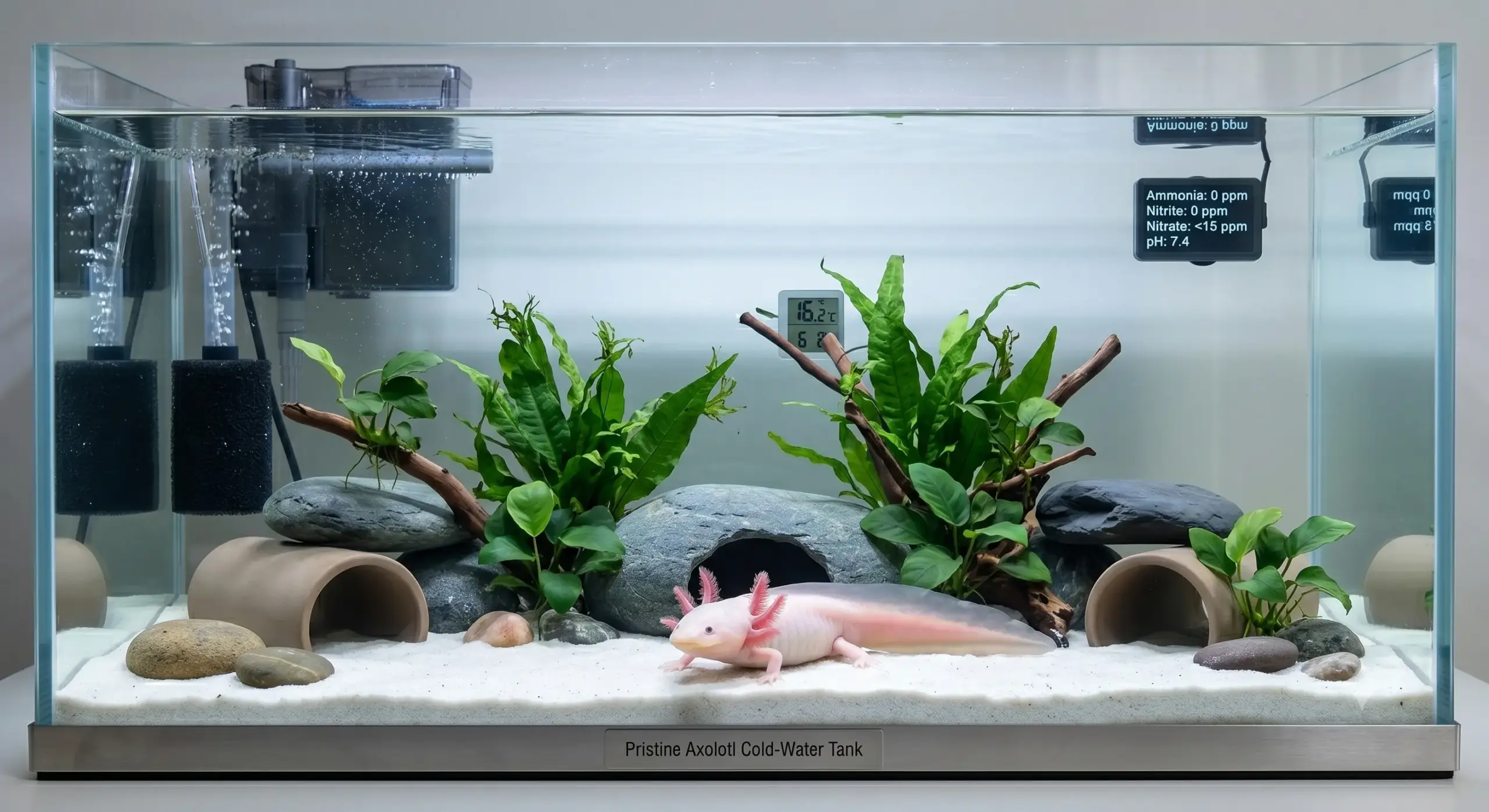
The Solution: Use a spray bar to disperse the water return or establish a large sponge filter. A sponge filter is often the gold standard for an Axolotl Tank because it provides excellent biological filtration without creating a dangerous whirlpool effect.
The Nitrogen Cycle: You MUST cycle your Axolotl Tank for 4-8 weeks before adding your pet. Adding an animal to an uncycled enclosure is the number one cause of death and a complete failure to meet basic survival needs.
4. Substrate: Choosing Safe Materials for Your Axolotl Tank
The way axolotls eat—vacuum-feeding—makes the choice of substrate a vital part of managing an Axolotl Tank safely. They suck in everything in front of them with incredible force, drawing materials deep down their throats.
Their downward-facing jaws act like high-powered vacuums during daily feeding. If an object fits within their wide mouth radius inside the Axolotl Tank, it will inevitably end up inside their simple digestive tract.
The Danger of Gravel: Small stones or gravel are a fatal hazard inside any Axolotl Tank. They can be swallowed, causing impaction (a blockage in the gut) which often requires surgery or leads to death. Avoiding gravel is a core safety rule.
Safe Substrate Alternatives for an Axolotl Tank
- Fine Sand: Very fine sand (less than 1mm) is safe because if swallowed inside the Axolotl Tank, it passes through the digestive tract easily without tearing internal tissue.
- Bare-Bottom: A tank with no substrate is the easiest to clean and 100% safe, though some owners find it less aesthetically pleasing or notice their pets slipping while walking.
- Large Slate Rocks: Large, smooth rocks that are significantly bigger than the axolotl’s head are also acceptable and provide steady traction.
| Substrate Type | Safety Rating | Pros for Axolotl Tank | Cons for Axolotl Tank |
|---|---|---|---|
| Fine Aquarium Sand (<1mm) | Excellent | Natural look, easy traction, passes safely if swallowed | Can trap detritus gas pockets over time |
| Bare-Bottom Tank | 100% Safe | Incredibly simple to siphon, zero impaction risks | No natural grip for walking, looks clinical |
| Large Smooth Slate | Good | Heavy aesthetic appeal, completely unswallowable | Waste debris easily gets trapped in deep joints |
| Standard Gravel / Pebbles | Lethal | None | Guaranteed severe internal gut impaction and death |
5. Lighting and Enrichment: Customizing the Axolotl Tank Decor
Axolotls do not have eyelids. This biological fact dictates specific environmental requirements regarding light intensity, requiring dark rest periods inside the Axolotl Tank to keep their biological circadian rhythms properly balanced.
Constant exposure to high-output living-room or enclosure illumination leaves them anxious. They will actively pace along your Axolotl Tank glass surfaces searching for dark relief, rubbing their sensitive snouts raw against the walls.
Low Lighting: They are very sensitive to bright lights. If you use lights for plants in your Axolotl Tank, ensure they are dim or heavily filtered through floating plants like Frogbit or Salvinia which block overhead glare.
Essential Hides: Every setup that follows proper design must include at least two caves or hides inside the Axolotl Tank. These provide a sanctuary where the axolotl can escape the light and feel secure.
Safe Decor: Ensure all decorations are smooth. Sharp plastic plants or rough volcanic stones inside the Axolotl Tank can easily tear their delicate skin and fibrous gills, opening paths for virulent waterborne bacterial infections.
The Human Experience: A Bond Forged in Patience
I remember the first month vividly. My skin was constantly cold from checking the temperature of the water late at night. I spent hours sitting on the hard floor, watching those tiny pink external gills wave back and forth through the glass. It is a slow kind of pet ownership. You do not fetch a ball or listen to a warm purr against your chest. Instead, there is a quiet serenity in the room that changes you over time. One evening, after a particularly exhausting shift at work, I noticed him staring right back at me with that famous, permanent amphibian smile. It felt deeply personal. That simple interaction made the weeks of scrubbing biological film, testing ammonia levels, and wrestling with frozen water bottles entirely worth it. You learn to appreciate a completely foreign form of life. This slow-burning connection turns the routine chore of daily tank upkeep into a grounding, peaceful ritual of love.
6. Water Chemistry: The Invisible Axolotl Tank Metrics
Beyond the physical setup, the chemical balance is a major part of ensuring your ecosystem functions properly. Amphibians breathe directly through their skin, making them twice as susceptible to trace elemental toxins compared to traditional fish.
Dissolved gases and heavy minerals touch their bloodstreams almost immediately through osmosis. According to established global standards outlined by the Axolotl Colony Research Group, minor chemistry drops trigger systemic organ failures within your Axolotl Tank.
pH Levels: They prefer slightly alkaline water, ideally between 7.4 and 7.6. This specific alkalinity scale inside the Axolotl Tank keeps their protective slime coat thick, vibrant, and actively repelling fungal spores.
Hardness: They thrive in hard water with plenty of calcium and magnesium minerals. If your domestic tap water is too soft, you may need to add specialized mineral salts designed specifically for amphibians into the Axolotl Tank.
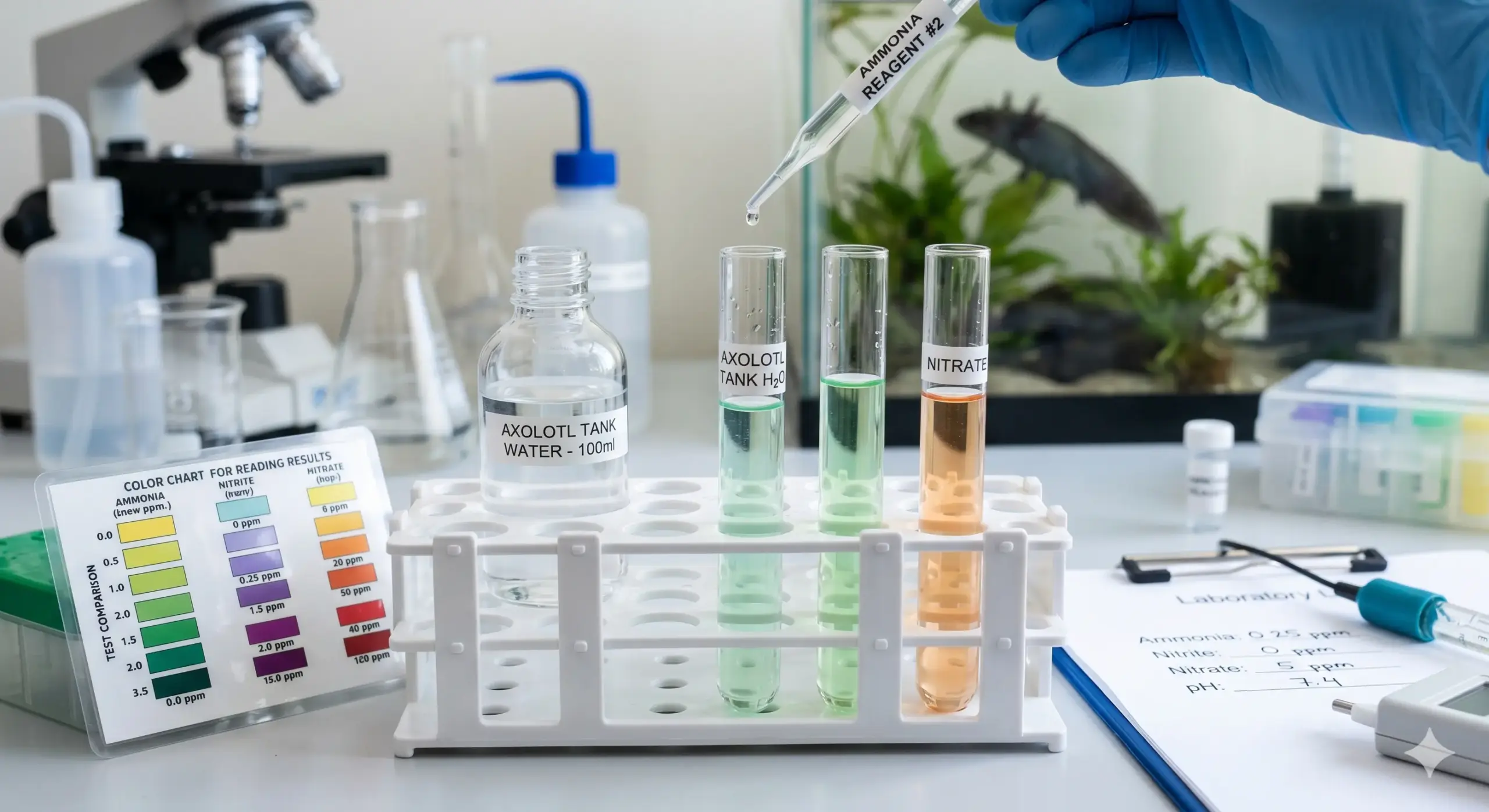
Zero Tolerance: Ammonia and Nitrite must always be at 0 ppm. Nitrates should be kept below 20 ppm through weekly water changes. Monitoring these levels is the only way to ensure you are managing your Axolotl Tank safely over long periods.
Conclusion: Consistency Keeps Your Axolotl Tank Stable
Meeting these essential criteria might seem overwhelming at first, especially the cooling and cycling parts. However, once the nitrogen cycle is established and your temperature control is stable, keeping an Axolotl Tank healthy is incredibly rewarding and relatively low-maintenance.
Proper preparation and a deep understanding of structural needs are the keys to a thriving, smiling aquatic friend. Dedicate yourself to the initial setup, honor their unique physiology within your Axolotl Tank, and you will enjoy over a decade of wonderful companionship.