
The natural world is full of wonders, but few creatures are as scientifically fascinating as the Axolotl (Ambystoma mexicanum). Often referred to as the “Peter Pan of the animal kingdom” because they never truly grow up, these Mexican salamanders hide a secret that sounds like pure science fiction. A major biological breakthrough occurred when researchers discovered that an Axolotl can regrow its heart, limbs, and even parts of its brain perfectly.
This isn’t just a slow, standard healing process; it is a flawless, scarless biological reconstruction. For years, evolutionary biologists have poked and prodded these creatures to understand how an Axolotl can regrow its heart and other complex structures. In this comprehensive guide, we explore the deep science behind this medical superpower and what it means for the future of human medicine.
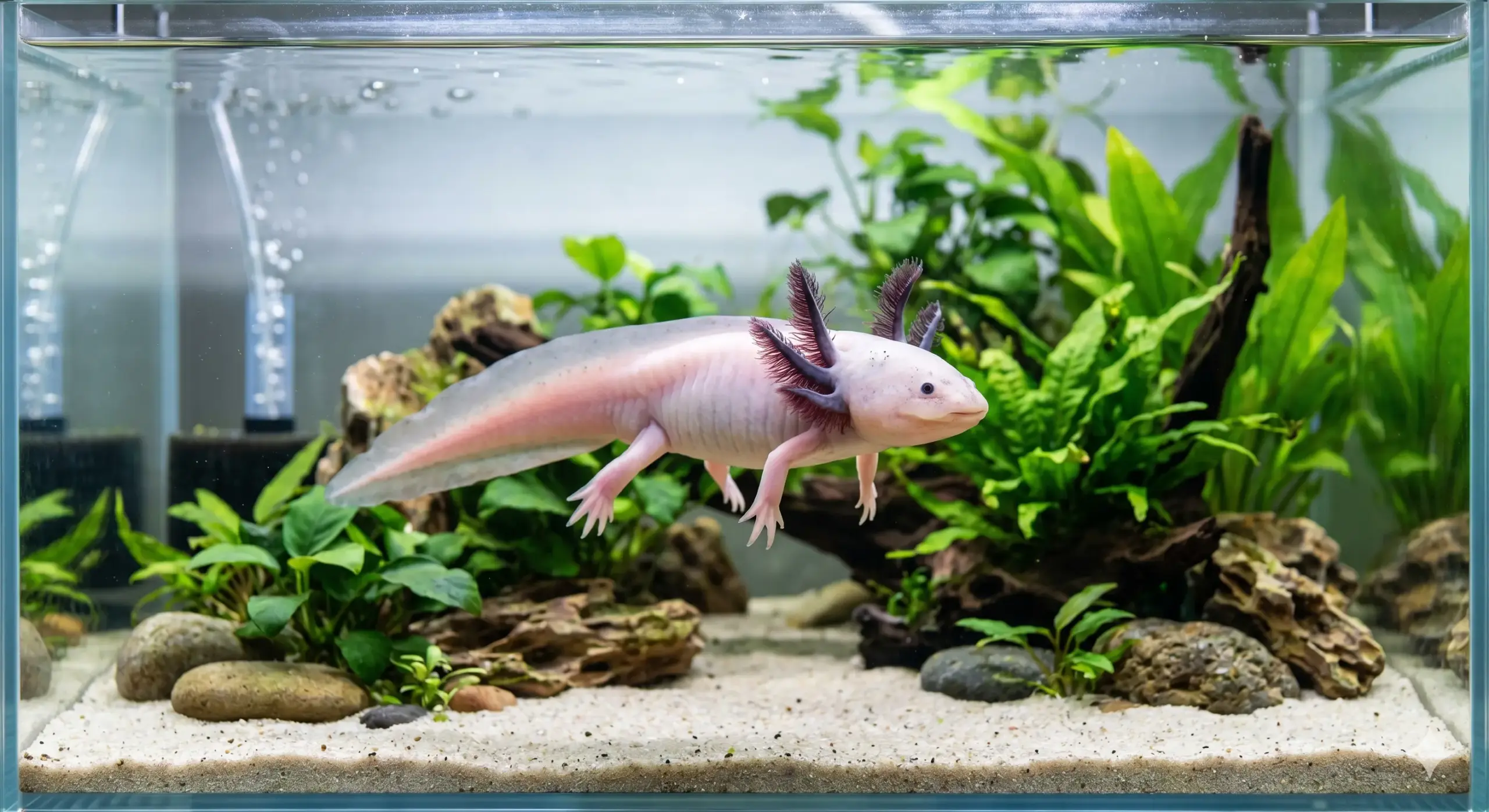
More Than Just a Missing Leg: Scarless Cellular Healing
Most multicellular organisms, including humans, have incredibly restricted biological healing capabilities. When we experience a deep tissue cut or trauma, our immune system rushes to form stiff scar tissue. This tissue serves as a fast emergency patch to prevent immediate infection, but it completely lacks the functional properties of original muscle or skin.
The salamander takes a completely different path toward healing. If an Axolotl experiences a severe limb loss—whether it is a front leg or a long tail tail—it never forms a simple stump. Instead, it triggers a cascade of rapid cellular signals that reorganize the surrounding matrix.
Within mere days, a specialized clump of cells known as a blastema forms at the exact site of the traumatic injury. This blastema consists of cells that have actively “reverted” back to a completely undifferentiated, stem-cell-like state. These active cellular building blocks then multiply rapidly, organizing themselves to build exactly what the missing appendage requires.
They transform effortlessly into bone, fresh muscle tissue, complex cartilage, and functional neurological pathways. In a few weeks, the missing limb returns entirely, remaining fully functional and completely identical to the original structure. It is this exact machinery that explains how an Axolotl can regrow its heart and other internal organ systems.
The Miracle of Cardiac Regeneration: Axolotl Can Regrow Its Heart
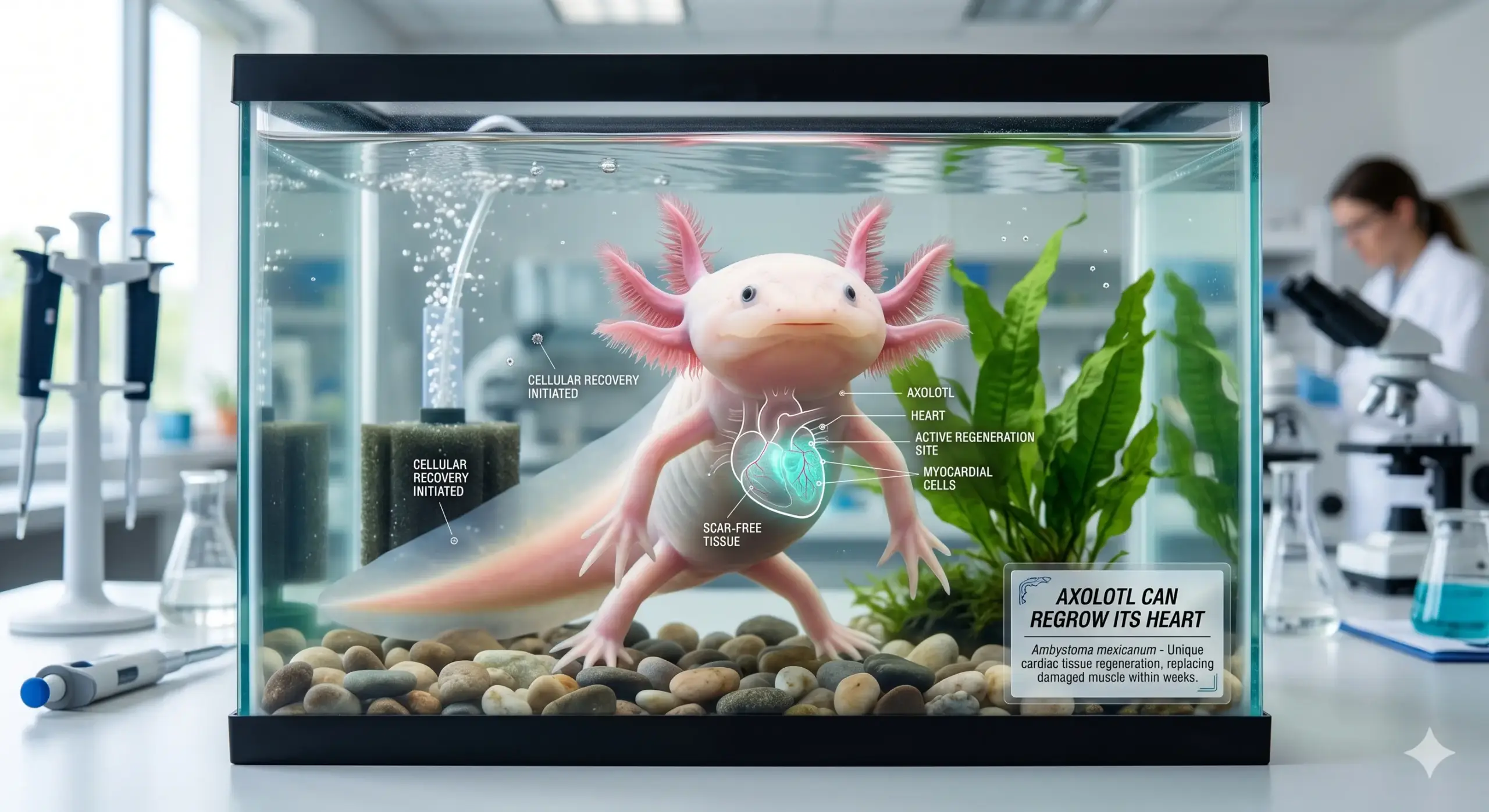
While regenerating an external limb is visually impressive, the internal organ capabilities are what truly shock the modern medical community. Rigorous laboratory studies have fully confirmed that an Axolotl can regrow its heart even after losing up to 25% of its entire ventricle chamber.
In humans, a myocardial infarction (heart attack) causes permanent, irreversible biological damage. The damaged heart muscle is permanently replaced by stiff scar tissue that is completely unable to pump blood, eventually leading to chronic failure. However, an Axolotl can regrow its heart by utilizing highly specialized mechanisms that prevent the formation of rigid scar blockages.
When an injury occurs, the Axolotl’s body simply instructs nearby healthy cardiomyocytes to divide and create new, fully functional heart cells. The organ continues to beat steadily during this phase, providing oxygen while regenerating its own walls. Within less than two months, there is no structural or functional sign that a severe cardiac injury ever occurred.
This miraculous ability shows that an Axolotl can regrow its heart without experiencing any reduction in long-term performance or lifespan. Understanding this mechanism is the holy grail for scientists trying to unlock regenerative pathways in human patients.
Can They Really Regrow Their Brain?
It sounds completely impossible, but advanced neurological research confirms that an Axolotl can regrow its heart and its brain tissue with equal ease. Scientists have successfully demonstrated that these amphibians can completely regenerate significant portions of their telencephalon—the largest and most complex region of their brain.
Following a severe neurological tissue loss, the surrounding cells trigger a localized proliferative response to rebuild the missing architecture. They effortlessly spin new neural webs, reestablishing complex synaptic connections without causing any visible behavioral deficits.
What is even more mind-blowing is that they do not seem to lose any prior cognitive memories or environmental survival skills. They continue to forage for food, navigate their aquatic environments, and respond to sensory stimuli as if the trauma never happened.
This specific neural mechanism is being closely analyzed by global neuroscientists. The goal is to discover how these pathways can be replicated to treat human degenerative brain diseases, such as Alzheimer’s and Parkinson’s.
The Human Experience: A Lifelong Bond and Silent Lessons
I remember the first time I held a compromised salamander in my breeding facility. My hands shook slightly. The tiny creature looked so fragile, yet its calm black eyes held a strange, ancient resilience. It had a deep tear near its gills from a tank mate’s aggressive behavior. I panicked initially, but nature had other plans. Day by day, I watched in absolute awe as new tissue emerged like magic over the wound. It was a silent, humbling lesson in patience. My perspective on healing changed forever. These animals aren’t just specimens in glass tanks; they are deep emotional teachers that remind us of our own hidden capacity to recover from deep internal wounds.
Why Don’t Humans Have This Regenerative Superpower?
This remains the classic multi-million-dollar question in evolutionary biology. Genetic mapping shows that humans actually possess the foundational genetic instructions required for complex tissue regeneration in our DNA.
After all, every human being successfully develops an entire complex body from a single fertilized egg cell inside the mother’s womb. However, as mammalian species evolved over millions of years, our bodies chose to switch off these specific regenerative genes.
The evolutionary trade-off favored rapid, aggressive scarring to seal wounds quickly, preventing lethal bacterial infections in warm-blooded animals. In contrast, the Axolotl never turns off these ancient embryonic genetic switches throughout its entire life cycle.
By remaining permanently in their aquatic larval form throughout adulthood—a fascinating biological condition known as neoteny—they keep their youthful, regenerative genetic pathways fully active. This allows them to utilize the same cellular machinery to ensure an Axolotl can regrow its heart at any age.
| Feature / Capability | Axolotl (Ambystoma mexicanum) | Humans (Homo sapiens) |
|---|---|---|
| Limb Regeneration | Complete, perfect replacement including bone and nerves | Impossible; results in permanent stump and scar tissue |
| Heart Muscle Repair | Flawless regeneration of up to 25% of cardiac tissue | Permanent scarring after injury leading to heart failure |
| Brain Tissue Restoration | Can rebuild the telencephalon and restore neural links | Extremely limited; neural loss is usually permanent |
| Primary Healing Method | Blastema formation and stem-cell-like proliferation | Fibrosis (scarring) and rapid immune response |
How Owners Can Support This “Superpower” in Captivity
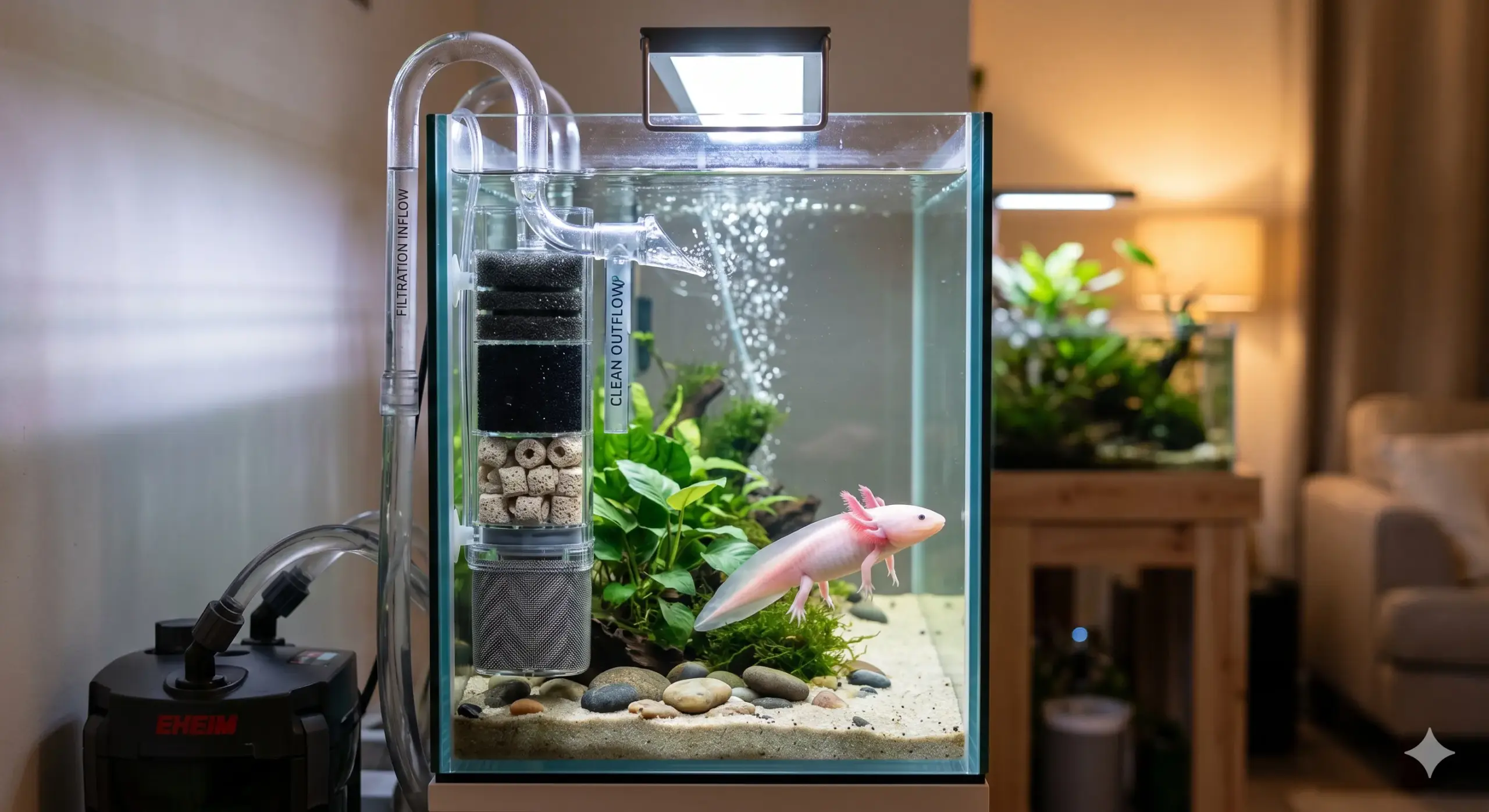
If you are lucky enough to keep one of these creatures, you must realize that tissue regeneration requires an immense amount of metabolic energy. To help your pet successfully heal from any minor skin nicks, tank injuries, or scratches, you must strictly optimize their living environment.
Maintaining pristine water quality is absolutely paramount. According to official guidelines provided by the Axolotl Colony Research Group, any measurable trace of ammonia or nitrites will immediately stall the cellular division process.
Keep your aquarium water parameters strictly stabilized, and ensure you perform regular, gentle water changes. Additionally, keep tank temperatures cool, ideally between 16°C and 18°C, because high ambient heat halts cellular regeneration and induces lethal stress.
Finally, provide a rich, high-protein diet to supply the necessary metabolic building blocks. Fresh earthworms and high-quality salmon pellets offer the perfect nutritional fuel required for a healing amphibian.
Conclusion: The Future of Medicine Looks Like an Axolotl
The Axolotl is a beautiful, living reminder that nature still holds profound biological secrets that can revolutionize human life. The definitive fact that an Axolotl can regrow its heart and brain makes it an invaluable asset to modern medical science.
By studying their unique cellular pathways, geneticists hope to one day switch on the dormant regenerative genes hidden deep within human DNA. The next time you look at your aquatic pet’s smiling face, remember that you are looking at a creature that actively defies death and trauma.
Frequently Asked Questions (FAQ)
Q: Is it true that an Axolotl can regrow its heart completely?
A: Yes, scientific research has proven that an Axolotl can regrow its heart tissue flawlessly, replacing up to 25% of damaged cardiac walls with fully functional, beating muscle cells without leaving any permanent scars.
Q: How many times can an Axolotl regenerate the same missing limb?
A: An Axolotl can regenerate the exact same limb perfectly dozens of times. However, if the area is injured repeatedly over a short period, the precision of the replacement limb may slightly decrease over time.
Q: Does the Axolotl feel pain during the tissue regeneration process?
A: Yes, Axolotls have fully functional nervous systems and feel initial pain from injuries. However, their bodies quickly trigger rapid healing mechanisms and stress reduction behaviors to manage the trauma effectively.