
Owning a companion reptile brings immense joy to your daily routine. However, as a dedicated exotic pet enthusiast, you recognize that precision nutrition serves as the baseline for their long-term health and vitality.
One primary concern that naturally arises for every reptile owner centers on dietary management. To raise a thriving reptile, you must master the fundamental rule: how often and what exactly does a Bearded Dragon eat to stay in peak condition?
Providing the correct dietary volume prevents severe skeletal problems, mitigates the risk of liver disease, and supports their active immune systems throughout their lives.
In this comprehensive guide, we analyze the exact dietary demands of these reptiles by isolating age brackets, appropriate insect ratios, and seasonal behavioral patterns.
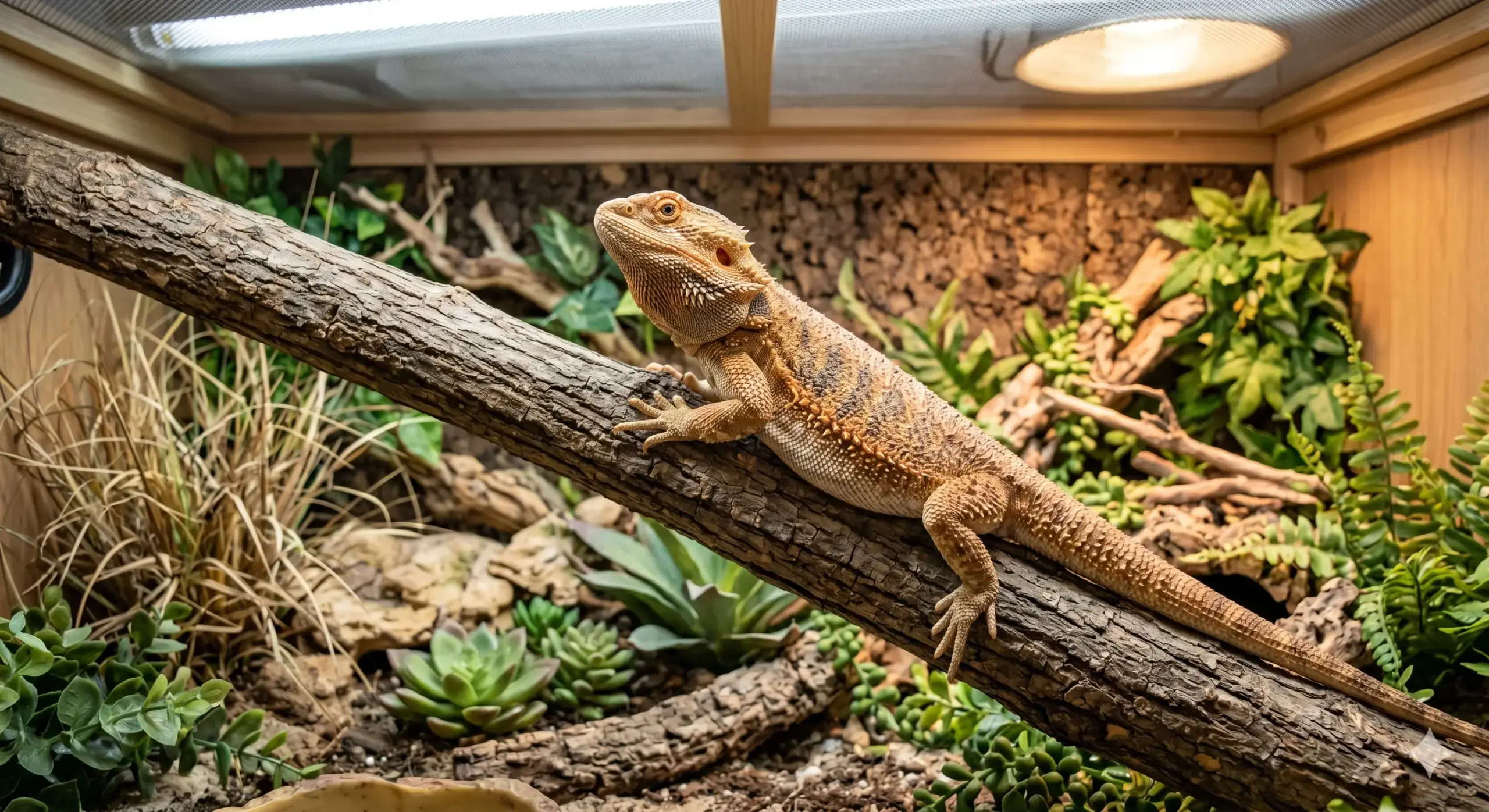
Understanding Life Stages and What a Bearded Dragon Eat
The total volume of nutrients a healthy Bearded Dragon eat fluctuates dramatically as the animal transitions from a hatchling into full adulthood.
Their inner metabolic rates shift from requiring rapid-growth proteins to needing dense plant fibers for daily weight maintenance and gut stabilization.
Failing to adjust these ratios at key development intervals can result in rapid obesity or structural deformities that impact their overall mobility.
1. Hatchlings and Babies (0–6 Months)
Baby reptiles act like miniature growing machines, demanding steady fuel inputs to support their rapid skeletal framework and muscle elongation.
At this volatile developmental phase, a growing Bearded Dragon eat small live insects roughly three times per day to keep up with intense metabolic demands.
Utilize the popular ten-minute rule: allow your young reptile to consume as many appropriately sized live insects as they want within a controlled feeding window.
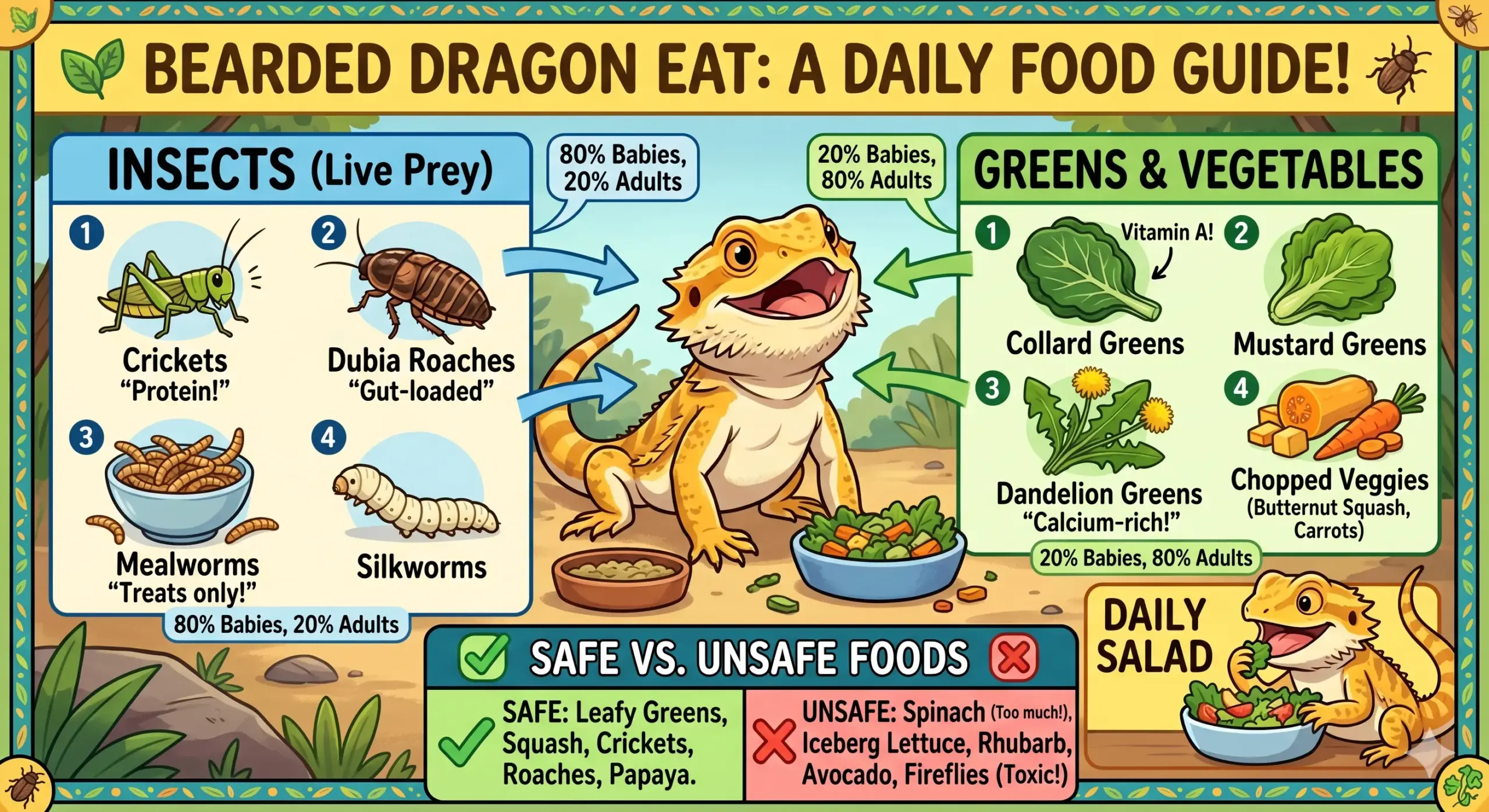
As a strict nutritional benchmark, their daily intake during these early months should consistently consist of 80% small insects and 20% finely chopped leafy greens.
2. Juveniles (6–18 Months)
When your reptile safely enters the sub-adult stage, their exponential growth rate begins to plateau, altering their daily nutritional baseline.
You will soon notice they naturally start exhibiting curiosity toward their salad bowl, tasting various colorful greens throughout the morning hours.
During this transition, the frequency of insect feeding can be reduced to once or twice daily without risking muscle loss.
Achieving structural balance is essential here; gradually shift the daily ratio to approximately 50% live insects and 50% fresh vitamin-rich greens.
3. Adults (18+ Months)
Fully mature reptiles are highly susceptible to visceral obesity and fatty liver disease if their owners continue overfeeding them high-fat live insects.
Their sedentary adult bodies no longer require the intense, concentrated protein building blocks that sustained them during their initial youth.
An adult Bearded Dragon eat complex vegetable matter as their primary fuel source, meaning one carefully managed feeding session per day is perfectly sufficient.
The definitive adult nutritional formula requires a diet of 80% fresh vegetables and only 20% live insects offered two to three times per week.
The Human Experience: A Lifelong Bond Built on Patience
I remember the early mornings. My first hatchling looked so incredibly fragile inside that massive enclosure.
I worried constantly about his appetite because he would refuse his greens for days on end, leaving me completely terrified that I was failing him as a keeper. My anxiety peaked during his first major skin shed when he went completely cold on his favorite roaches, turning his head away in total defiance. It required immense patience to learn his subtle cues.
Now, watching him confidently sprint across the living room rug to sit in a patch of warm sunlight brings a deep sense of quiet satisfaction. We developed a real rhythm over the years. That fragile little hatchling grew into a calm, deeply trusting companion who sits right on my shoulder while I work at my desk. Trust takes time to build.
Selecting Safe and Nutritious Food Items
Understanding the volume of food required is only half the battle; knowing exactly what clean items a Bearded Dragon eat ensures long-term vitality.
Excellent live insect staples include nutrient-dense Dubia roaches, active crickets, and calcium-rich silkworms sourced from clean, reputable commercial breeders.
Avoid offering excessive quantities of mealworms or waxworms because their high fat content can rapidly destabilize your pet’s ideal weight parameters.
For the green portion, utilize fresh collard greens, mustard greens, and turnip greens as the solid structural foundation for their daily salads.
While they extract vital hydration from fresh vegetables, keeping a clean, shallow water dish inside the enclosure remains highly recommended for ambient humidity.
| Life Stage | Insect vs. Green Ratio | Feeding Frequency | Primary Food Focus |
|---|---|---|---|
| Baby (0-6 Months) | 80% Insects / 20% Greens | 3 Times per day | Small crickets, Dubia nymphs, chopped greens |
| Juvenile (6-18 Months) | 50% Insects / 50% Greens | 1-2 Times per day | Medium insects, diverse vegetable salads |
| Adult (18+ Months) | 20% Insects / 80% Greens | Once per day | Collard greens, turnip tops, occasional roaches |
Environmental Factors That Suppress Reptile Appetite
If you discover your pet is refusing meals, analyze your environmental parameters according to standard guidelines from the Association of Reptile and Amphibian Veterinarians (ARAV).
These animals are cold-blooded ectotherms, meaning they rely entirely on precise external heat gradients to break down and process the food items they consume.
If your dedicated basking zone drops below 95°F (35°C), their core metabolic breakdown slows down significantly, causing them to immediately stop eating.
It is also completely natural for a healthy Bearded Dragon eat absolutely nothing for several days right before shedding their old skin layers.
Furthermore, look out for brumation, a natural semi-hibernation state triggered during winter where mature adults minimize food intake for consecutive weeks.
Critical Feeding Mistakes You Must Avoid
Never offer live prey items that are physically larger than the exact measurement between your reptile’s eyes to prevent dangerous gut impactions.
Always dust your live insect batches with high-quality pure calcium powder containing Vitamin D3 to shield your pet from Metabolic Bone Disease.
Additionally, never leave active, uneaten crickets roaming free inside the enclosure overnight because they can bite and severely stress your sleeping reptile.
Frequently Asked Questions About Reptile Nutrition
How long can an adult reptile go without eating food?
A healthy, fully mature adult can survive for several weeks without food if they are entering a natural cycle of winter brumation. However, if your pet abruptly stops eating during their active summer phases while showing signs of lethargy, schedule a veterinary checkup immediately.
Can I feed wild insects caught in my backyard to my pet?
No, you should never offer wild-caught insects to your pet. Backyard bugs frequently carry dangerous trace chemical pesticides, lawn fertilizers, and internal parasites that can easily sicken or fatally poison your reptile. Stick exclusively to clean, commercially raised feeder insects.
Why is my young juvenile refusing to eat any fresh greens?
Young juveniles are biologically driven to prioritize high-protein insects to fuel their rapid growth phases. To encourage them to eat salads, try offering fresh greens early in the morning before you provide any live insects, or place moving feeder worms directly on top of the salad bowl.
Is it safe to feed fresh spinach or iceberg lettuce daily?
No, iceberg lettuce consists mostly of water and lacks proper nutritional value, while spinach contains high levels of oxalates. Oxalates bind directly to vital calcium molecules, preventing your reptile from absorbing it efficiently, which can eventually lead to severe metabolic bone issues.