
As a devoted reptile keeper, your primary goal is to provide a balanced, highly nutritious diet that mimics what your pet would find in nature. However, navigating the world of reptile nutrition can be a minefield for beginners and experienced owners alike. Not everything green, leafy, or natural is safe for your companion’s food dish. In fact, running into certain everyday fruits, plants, and insects can result in severe illness or sudden fatalities within a matter of hours.
Understanding nutritional boundaries is a vital pillar of responsible husbandry. In this comprehensive guide, we will break down the absolute dangers hidden in common household foods. We will list the top 10 Toxic Foods for Bearded Dragons you must keep away from your dragon’s enclosure at all costs to safeguard their health and longevity.
1. Avocados: The Silent Nutritional Killer
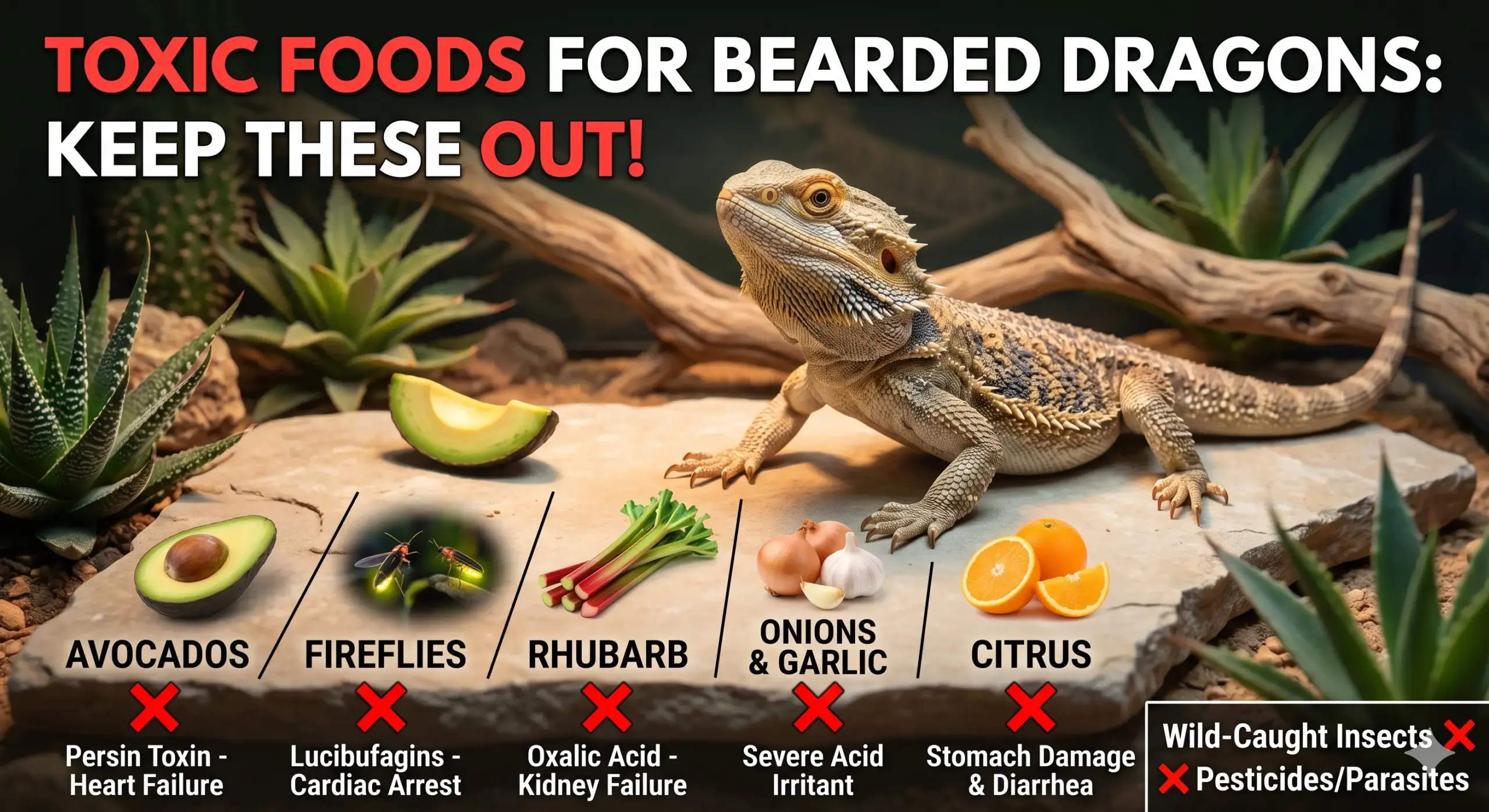
Avocados are incredibly hazardous and top the list of dangerous items for reptiles. They contain a specific fungicidal toxin called persin. While harmless to humans, persin is highly toxic to bearded dragons. When ingested, even in tiny quantities, this chemical compound wreaks havoc on their cardiovascular and respiratory systems.
In small amounts, consuming avocado can cause severe respiratory distress, lethargy, and noticeable discomfort. In larger amounts, it leads to rapid heart failure and death. Because there is no safe margin or dosage, you must never offer even a tiny piece of avocado skin, flesh, or leaves to your pet.
2. Fireflies and Glowing Insects: Instant Lethality
This is perhaps the most dangerous and instantly fatal item on our list. Fireflies, lightning bugs, and any wild insects that possess the ability to glow contain self-defense chemicals called lucibufagins. These cardiotoxins are profoundly toxic to reptiles, acting as a direct poison to the heart muscle cells.
The lethal threshold is terrifyingly low; a single firefly contains enough concentrated toxin to kill a full-grown adult bearded dragon in less than an hour. If you notice fireflies flying near your home, ensure your enclosure mesh is completely secure. Never allow your pet to hunt wild bugs that exhibit bioluminescence.
3. Rhubarb: A Quick Path to Kidney Failure
Rhubarb is an absolute biological hazard for any captive reptile species. This garden stalk contains incredibly high levels of oxalic acid and potassium oxalates. When these substances enter the bloodstream, they bind rapidly with calcium, forming sharp, microscopic crystals that clog the filtering systems of the body.
These extremely high concentrations of oxalates are highly poisonous and cause immediate, acute kidney failure. Rhubarb is widely recognized by exotic veterinarians as one of the most dangerous plants available, meaning it must be entirely blacklisted from your kitchen prep area.
4. Onions, Garlic, and Leeks: Severe Acidic Irritants
Members of the allium family—which includes white onions, red onions, garlic, shallots, and leeks—contain high amounts of volatile organic sulfur compounds and chemical irritants. These plants are built to deter wildlife in the wild, and their chemical profiles are far too harsh for a reptile’s sensitive system.
These foods are incredibly acidic for bearded dragons and can easily burn or irritate the delicate mucosal lining of their digestive tract. Feeding these aromatics leads to severe gastrointestinal issues, painful bloating, internal inflammation, and a complete breakdown of normal nutrient absorption.
5. Citrus Fruits: Dangerous Triggers for Severe Diarrhea
While lemons, oranges, limes, and grapefruits do not technically possess an “instantly fatal” chemical toxin like fireflies, they present a massive threat to small animals. Citrus fruits are heavily loaded with citric acid and natural sugars, which cannot be processed efficiently by a desert reptile’s stomach.
This excess acid severely irritates the stomach lining and disrupts the delicate gut flora, triggering rapid, explosive diarrhea. In small reptiles, unchecked diarrhea leads to profound dehydration and dangerous electrolyte imbalances, which can quickly turn a minor digestive issue into a life-threatening emergency.
6. Iceberg Lettuce: The Nutritional Void
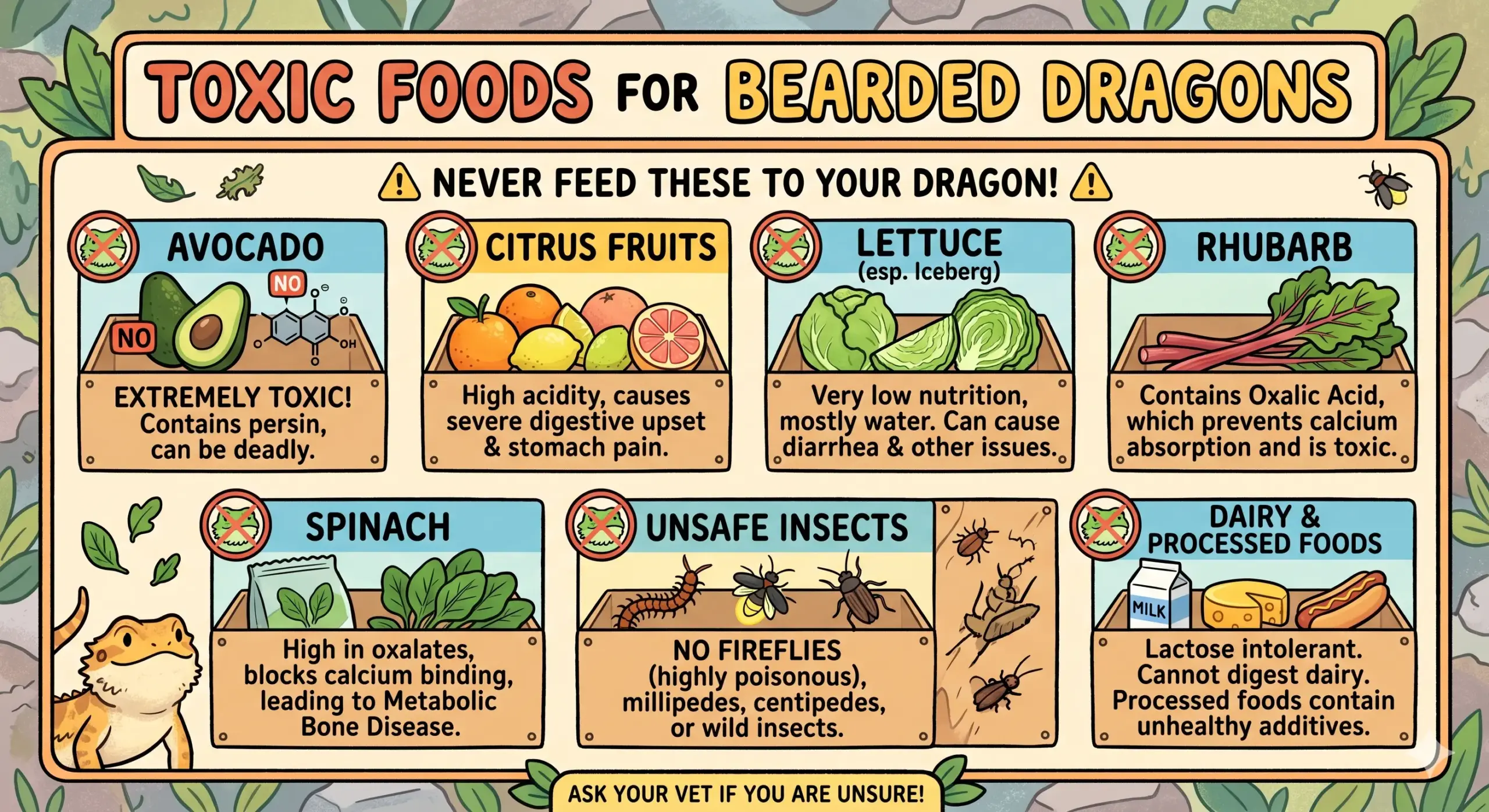
Many new keepers ask: why is lettuce on a list of Toxic Foods for Bearded Dragons? While iceberg lettuce is not chemically poisonous or laced with toxic compounds, its danger lies in its complete lack of substance. Iceberg lettuce consists almost entirely of water and contains virtually zero nutritional value, vitamins, or minerals.
Regularly feeding iceberg lettuce fills up your pet’s stomach, making them refuse actual nutrient-dense greens. Over time, this habits leads to severe chronic diarrhea, profound malnutrition, and a long-term decline in skeletal and immune health. It is a slow, silent path to physical deterioration.
7. Beet Greens and Spinach: The Hidden Traps for MBD
Beet greens and spinach fall into a category of foods that require extreme caution, and are best avoided entirely. Just like rhubarb, these greens are saturated with high levels of oxalates. Oxalates bind directly to dietary calcium inside the gut, rendering the calcium completely unabsorbable by the body.
When a dragon’s body cannot absorb calcium from food, it begins leaching it from its own bones to survive. This directly causes Metabolic Bone Disease (MBD), a painful condition that leads to broken bones, deformed spines, leg tremors, and eventual paralysis. While a tiny speck once a month might not cause immediate death, avoiding them completely is the safest choice for long-term health.
8. Wild-Caught Insects: Parasites and Pesticide Cocktails
It can be tempting to catch a free cricket or grasshopper from your backyard, but wild-caught insects are incredibly risky. Unlike commercially raised feeder bugs, wild insects act as natural hosts for dangerous internal parasites, hookworms, and protozoa that can quickly colonize your reptile’s digestive tract.
Furthermore, these insects routinely carry trace amounts of chemical pesticides, herbicides, and fertilizers collected from neighboring gardens. These hidden toxins bioaccumulate inside the bug, turning a simple backyard snack into a lethal dose of poison for an unsuspecting captive lizard.
9. High-Fat Meats: Mammalian Liver Hazards
Feeding mammalian meats like ground hamburger, cooked steaks, or raw beef chunks is a massive dietary mistake. Bearded dragons are insectivores and herbivores; their metabolic systems are not evolutionary designed to break down or process the complex saturated fats and dense proteins found in mammals.
Consistently feeding a high-fat meat diet forces the liver to work overtime, leading to rapid obesity, arterial issues, and hepatic lipidosis (fatty liver disease). Keep their protein sources restricted to high-quality insects like dubia roaches, black soldier fly larvae, and occasional hornworms.
10. Eggplant: Highly Acidic and Calcium-Blocking
Eggplant is another vegetable that should never find its way into your pet’s feeding dish. It is naturally acidic, which causes mild to severe digestive upset when consumed. More importantly, eggplant possesses a very poor calcium-to-phosphorus ratio, containing significantly more phosphorus than calcium.
Excess phosphorus binds to calcium inside the body, preventing its utilization. Long-term or repetitive feeding of eggplant directly contributes to severe calcium deficiency, paving the way for metabolic complications. It simply offers no benefits that cannot be safely obtained from better vegetable alternatives.
The Human Experience: A Lesson in Vulnerability and Vigilance
I remember the cold sweat. It was a quiet Tuesday evening when Spike, my first rescue lizard, managed to slide his terrarium glass door open with his nose. He darted across the living room tile. My heart stopped when I saw him chewing on a stray leaf that had fallen off a decorative plant near the windowsill. Chaos. Total panic set in as I rushed to grab my keys. The drive to the emergency vet clinic felt like a blur. Sitting in that sterile waiting room, watching the slow hum of the neon lights, taught me a profound lesson about the terrifying vulnerability of these scaly companions.
They trust us completely with their lives. Unlike a dog that might sniff out a toxic substance and back away, these curious creatures rely entirely on our vigilance to build a safe boundary around their world. That stressful night shifted how I looked at husbandry. It wasn’t just about reading care sheets anymore; it became a deep, emotional commitment to double-checking every single piece of green before it crossed the threshold of his enclosure. Building that bond of trust takes months of patience, but protecting that trust takes only a second of focused awareness.
Summary Table: Quick Food Safety Reference
| Food Item | Toxicity Level | Primary Health Risk |
|---|---|---|
| Avocado | Extremely High | Respiratory Distress & Heart Failure |
| Fireflies & Glowing Bugs | Lethal / Fatal | Instant Cardiac Arrest & Death |
| Rhubarb | Extremely High | Acute Kidney Failure |
| Onions & Garlic | Moderate to High | Severe Gastrointestinal Burn & Irritation |
| Citrus Fruits | Moderate | Severe Dehydration & Chronic Diarrhea |
| Iceberg Lettuce | Nutritional Void | Malnutrition & Skeletal Decline |
| Spinach & Beet Greens | Cumulative Threat | Metabolic Bone Disease (MBD) |
| Wild-Caught Insects | High Risk | Parasites & Pesticide Poisoning |
What to Do If Your Dragon Ingests Something Toxic?
If you suspect or have visual confirmation that your bearded dragon has ingested a toxic substance, you must contact a qualified exotic veterinarian immediately. Do not sit back and wait for clinical symptoms to manifest on their own. As prey animals in the wild, reptiles are biologically hardwired to mask their pain, weakness, and discomfort until their systems are near collapse.
While preparing to transport your pet, try to identify exactly what was eaten, how much was consumed, and the precise time the incident occurred. Never attempt to force-vomit a lizard at home without professional veterinary guidance, as this can easily cause asphyxiation or worsen internal chemical burning.
Safe Alternatives: What Should You Feed Instead?
Knowing what to avoid is only half the battle of proper reptile care. To keep your scaly friend thriving, active, and brightly colored, you should redirect your focus toward these safe, nutrient-dense dietary alternatives:
- Safe, Calcium-Rich Greens: Completely swap out iceberg lettuce, spinach, or rhubarb for staples like Collard Greens, Mustard Greens, Dandelion Greens, and Turnip Greens. These choices offer an exceptional calcium-to-phosphorus ratio.
- Safe, Hydrating Fruits: Replace dangerous citrus options with small, controlled treats of Blueberries, fresh Papaya, Raspberries, and peeled Apples. Keep in mind that fruit items should only constitute a maximum of 10% of their overall food intake.
- Safe, Vibrant Veggies: Ditch the eggplant and onions. Instead, color their salad bowls with Butternut Squash, yellow or red Bell Peppers, Acorn Squash, and thinly shaved Carrots.
Symptoms of Poisoning in Bearded Dragons
When dealing with accidental toxicity, every minute counts. Keep a close eye on your pet and watch for these critical red flags that indicate systemic poisoning:
- Extreme Lethargy: If your dragon is completely unresponsive, refusing to lift its head, or seems unusually weak during its normal basking hours.
- Persistent Black Beard: A beard that stays solid black for hours without an obvious environmental trigger is a universal sign of intense physical pain, fear, or localized internal distress.
- Vomiting: Reptiles rarely vomit due to their anatomy. If you observe them expelling food or mucus, it is a serious indicator of acute chemical toxicity.
- Seizures or Muscle Tremors: Sudden twitching, shaking limbs, or loss of motor control are often triggered by rapid chemical imbalances or fast-acting neurotoxins (such as those found in glowing fireflies).
- Foul-Smelling Diarrhea: Triggered heavily by highly acidic citrus fruits or contaminated wild insects carrying chemical residues.
FAQ: Common Questions About Bearded Dragon Safety
Q: Can bearded dragons eat grapes safely?
A: Yes, grapes are safe, but only as an occasional treat given once a week at most. Grapes have a very high water and sugar content, which can cause runny stools if overfed. Always slice them in half to eliminate any potential choking hazards.
Q: Is bread, crackers, or dairy safe for my dragon?
A: Absolutely not. Reptiles are completely lactose intolerant and do not possess the enzymes required to digest dairy products. Bread contains processed grains and yeast that expand in the stomach, causing intense bloating, severe gas, and physical impaction (gut blockage).
Q: Can they safely eat wild grass from my lawn?
A: We highly discourage picking grass from outdoors. Even if your family does not use chemical pesticides, wild grass can easily be contaminated by wild animal waste, soil-borne parasites, or microscopic fungal spores that can make your reptile terribly sick.
Q: Are spider plants or household succulents toxic?
A: It depends heavily on the specific plant species. While classic spider plants are generally non-toxic, many common household succulents—such as Aloe Vera—contain chemical sap that triggers severe intestinal cramping and diarrhea. It is always best to stick exclusively to verified safe leafy greens.
Conclusion
Managing your bearded dragon’s daily nutrition doesn’t have to be an overwhelming or stressful experience. By completely eliminating the “Big 10” toxic foods mentioned in this guide, and focusing your efforts on high-quality greens and gut-loaded insects, you are paving the way for a long, vibrant life for your scaly companion. For more authoritative guidelines on handling exotic animal health crises, feel free to explore the reptile medical support resources on the British Veterinary Association (BVA) website. When preparing their next meal, always remember the golden rule of reptile husbandry: If you aren’t 100% sure an item is completely safe, keep it out of the enclosure!
“Eliminating toxic hazards is the first step toward safeguarding your reptile’s cage, but true mastery means unlocking their deepest biological mysteries. Be sure to explore our fascinating breakthrough on The Secret Third Eye of Bearded Dragons to discover how this hidden organ senses the world, regulates behavior, and shapes your pet’s natural instincts!”