
Floating effortlessly like tiny, smiling water dragons, Mexican walking fish have taken the exotic pet community by storm with their frilly external gills and charming expressions. But beneath that permanently cheerful face, novice keepers often wonder: are axolotl dangerous to own, or are they truly the gentle aquatic companions they appear to be? To satisfy your search intent immediately, no, axolotls are completely harmless to humans as they lack venom, true teeth to pierce skin, or aggressive instincts. However, understanding their unique biology and how they interact with tank mates is vital before introducing one into your home ecosystem.
When planning your freshwater aquarium setup, safety parameters must extend beyond human interactions to protect every living organism involved. While these neotenic salamanders pose absolutely zero threat to your family, their predatory feeding habits mean they can become accidental hazards to smaller aquatic inhabitants. Let us dive deep into the biological mechanics, community testimonies, and safety guidelines required to keep these fascinating amphibians successfully without compromising your household safety.
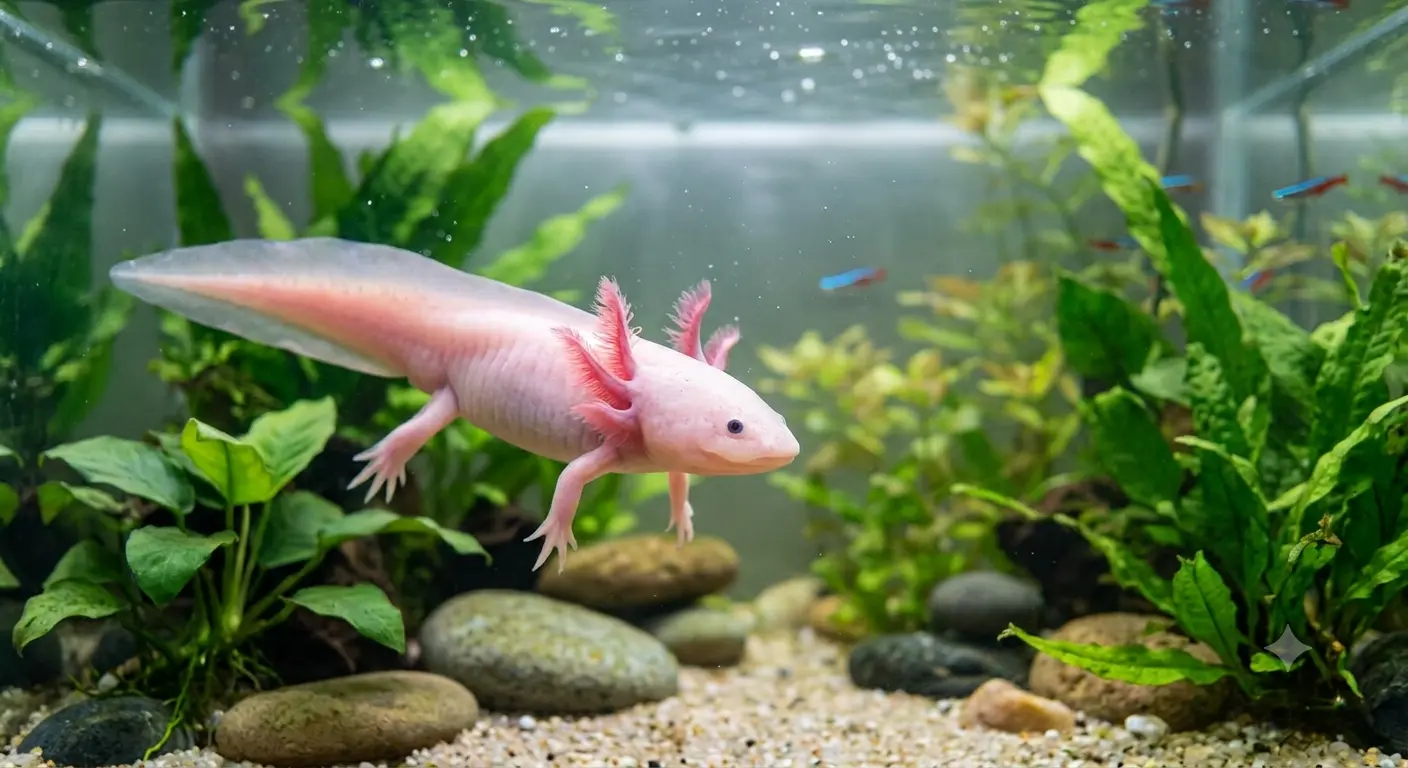
Are Axolotl Dangerous to Humans?
The biological makeup of these amphibians ensures they remain completely safe for human keepers of all ages and experience levels. Many first-time owners look at their wide mouths and worry about potential injuries during maintenance routines or regular feeding sessions. Fortunately, they do not possess calcified, sharp teeth designed for tearing flesh, relying instead on vestigial pedicellate teeth that feel like fine sandpaper. If an overeager salamander accidentally snaps at your finger during feeding time, the sensation is nothing more than a soft, vacuum-like suction pinch.
Moreover, these creatures produce no toxins, defensive venoms, or poisonous skin secretions that can harm human skin upon accidental contact. The primary biological concern regarding human safety does not stem from the animal itself, but rather from standard aquarium microbiology. Like all aquatic creatures, their tank water can naturally harbor microscopic strains of Salmonella bacteria if proper filtration protocols are neglected. Maintaining clean conditions ensures that you will never have to worry whether are axolotl dangerous to the health of your family members.
To ensure a thoroughly safe environment, always practice strict hand hygiene by washing thoroughly before and after placing your hands inside the aquarium water. This basic preventative measure completely eliminates the negligible bacterial risks associated with maintaining any freshwater habitat. For an exhaustive, deep-dive analysis focusing explicitly on human interactions and health considerations, feel free to read our comprehensive guide: Are axolotl dangerous to humans.
Are Axolotl Dangerous to Other Tank Mates?
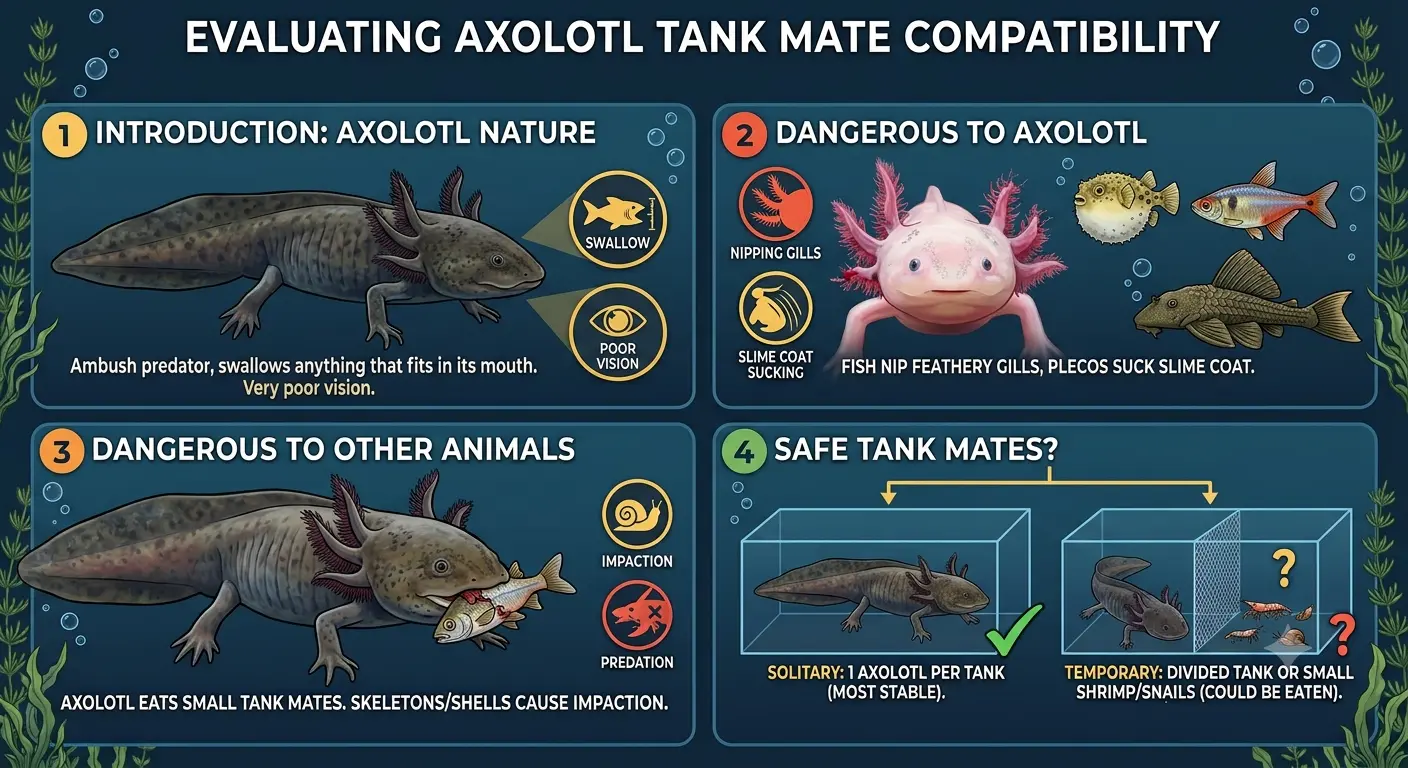
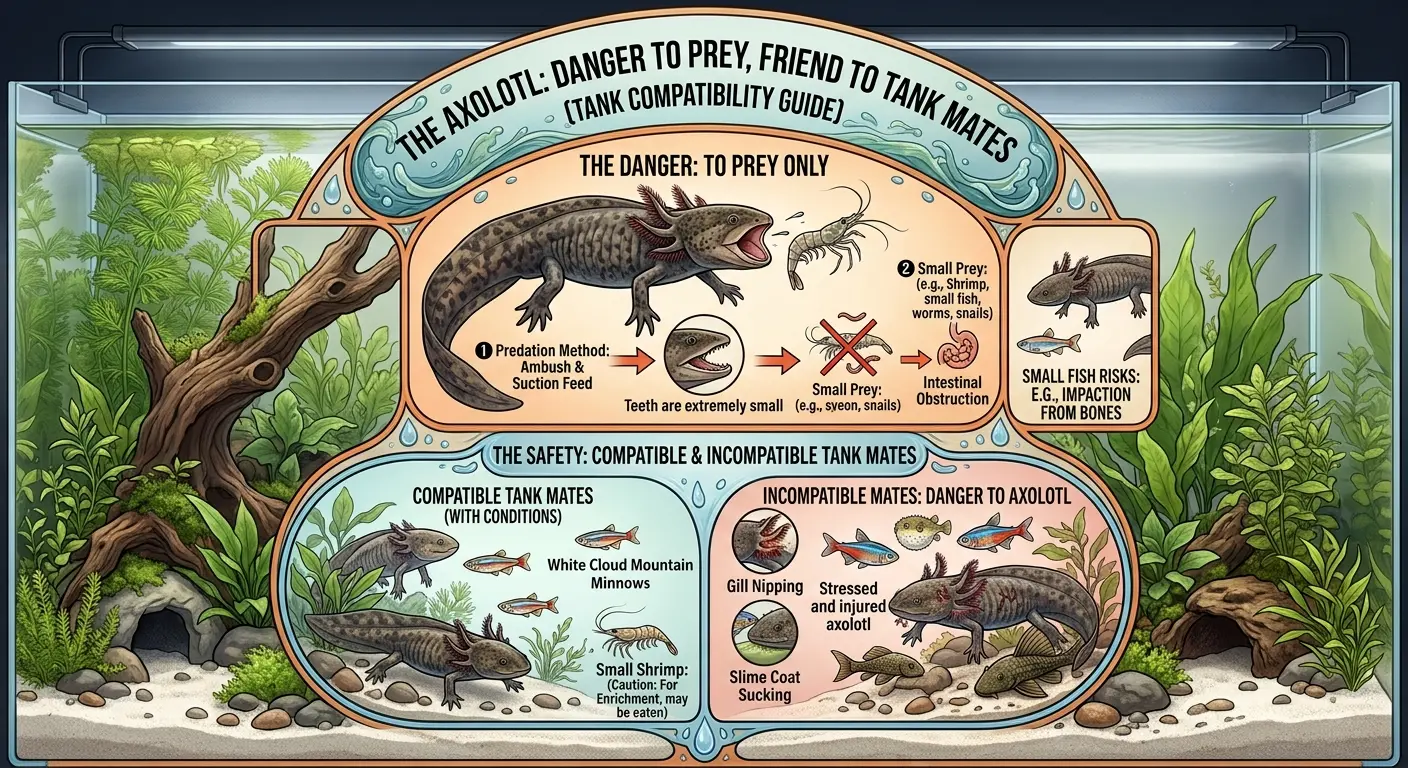
While humans can rest easy, the answer changes dramatically when evaluating how these peaceful looking predators interact with other aquatic species. They are strict, opportunistic carnivores that utilize a unique vacuum feeding mechanism called suction feeding to swallow prey whole. In a shared ecosystem, any creature small enough to fit inside the wide maw of a mature salamander will eventually be viewed as a potential meal. This instinctive feeding drive makes them highly incompatible with traditional community aquarium fish, which frequently fall victim to nocturnal hunting.
Conversely, keeping active fish species with your salamander can also introduce significant physical danger to your prized amphibian companion. Aggressive or nippy fish, such as nippy tetras or barbs, are naturally drawn to the bright, fleshy filaments of the external gills. Constant nipping from aggressive tank mates causes severe stress, physical trauma, and secondary fungal infections that can quickly turn fatal. Therefore, keeping them in a dedicated single-species environment remains the absolute safest approach for all parties involved.
If you are determined to build a diverse aquatic community, selecting compatible tank mates requires extreme caution and meticulous planning. Before adding any new aquatic life to your setup, make sure to read our detailed compatibility guide: Are axolotls dangerous to other animals.
Are Axolotl Dangerous to Dogs and Cats?
When managing a home filled with multiple pet varieties, understanding cross-species dynamics is crucial for preventing tragic domestic accidents. Under all normal domestic conditions, an aquatic amphibian living safely behind thick glass poses no direct threat to free-roaming mammals. Because they require strictly monitored underwater environments to breathe, they will never voluntarily interact with your curious dogs or cats. However, biological risks can rapidly manifest if an adventurous amphibian manages to escape the tank due to a lack of a secure lid.
If a dog or cat discovers an escaped amphibian on the floor, their natural predatory drive may lead them to mouth or ingest it. While the amphibian does not produce inherent defensive poisons, consuming a raw amphibian can cause severe gastrointestinal distress in domestic mammals. This sickness is typically caused by the sudden ingestion of complex aquarium water treatments, slime coat protectants, and standard tank bacteria. Ensuring your aquarium features a heavy, locked mesh lid completely mitigates the structural risks of cross-species encounters.
Protecting your diverse animal family requires setting up physical barriers and understanding how land predators view aquatic life. Discover how to keep both your aquatic and land pets safe by reading our comprehensive cross-species safety blueprint: Are axolotl dangerous to dogs.
The Hidden Struggles of a Coldwater Sanctuary
Three years ago on a humid Tuesday afternoon, my journey with these mesmerizing amphibians took an incredibly stressful turn. I brought home a gorgeous wild-type juvenile named Ridley, confident that my decades of caring for bearded dragons and geckos had prepared me for anything. My initial approach involved building a beautiful, heavily planted community aquascape filled with peaceful neon tetras, assuming everyone would get along smoothly. Oh, how mistaken I was; within forty-eight hours, two tetras vanished completely without leaving a single trace behind.
Panic immediately gripped me as I sat staring at Ridley’s slightly bloated belly, realizing my massive mistake. I tried fixing the problem by adding dense floating artificial plants to separate the swimming zones, but the clever little hunter still managed to catch another fish by morning. The frustration was real, and my anxiety spiked every time the room lights turned off. It became painfully clear that traditional community advice failed to address the raw, opportunistic predatory nature of these unique creatures.
The turning point arrived completely by accident when I finally committed to setting up a dedicated, chilled bare-bottom tank solely for Ridley. Stripping away the excess community elements allowed me to closely monitor feeding behaviors while keeping stress levels at absolute zero. Watching those magnificent external gills flourish in a safe, isolated sanctuary brought a profound sense of relief. It taught me that successful keeping isn’t about forcing diverse species together, but rather about humbling oneself to respect the specialized biological boundaries that nature intended.
Understanding the Safety Risk Matrix
To accurately visualize potential hazards within your home aquarium, evaluating specific risks through an organized matrix can streamline your management decisions. Many beginners mistakenly assume that size or color determines aggression levels, but their behavior remains remarkably consistent across all color morphs. By analyzing potential interactions systematically, you can implement targeted safety protocols to keep your environment completely stable. Let us break down the standard risk profiles associated with these unique amphibians.
| Interaction Category | Primary Risk Identified | Severity Level | Prevention Strategy |
|---|---|---|---|
| Human Keepers | Salmonella from tank water | Very Low | Wash hands before and after tank maintenance. |
| Small Aquarium Fish | Accidental predation / Suction feeding | High | Maintain a dedicated single-species tank. |
| Household Cats & Dogs | Ingestion after tank escape | Moderate | Install a heavy-duty, locking aquarium lid. |
| Conspecifics (Same Species) | Nipping limbs due to overcrowding | Moderate | Provide at least 20 gallons of space per individual. |
As clearly outlined in the matrix above, proper environmental management and structured planning eliminate nearly every common household hazard. Recognizing that these animals act purely on primitive survival instincts allows you to structure their habitat defensively. By ensuring they are kept away from nippy fish and curious mammals, you create a peaceful sanctuary where they can thrive for years. This strategic approach proves that asking if are axolotl dangerous depends entirely on your management style.
The Paradox of the Blind Predator
One of the most fascinating aspects of their behavior is the extreme contrast between their poor eyesight and their efficient hunting capabilities. Because they rely heavily on lateral line systems and chemical cues to navigate their surroundings, they do not recognize shapes or friendly figures. Anything moving rapidly in front of their face triggers an automatic, rapid-fire snap response before they even realize what occurred. This explains why they occasionally nip at their own tank mates’ limbs during chaotic group feeding sessions.
This poor vision makes them completely incapable of malicious aggression, as they never intentionally attack other animals out of anger or territorial spite. When injuries occur within a crowded enclosure, it is invariably the direct result of mistaken identity during a frantic search for food. Providing multiple feeding stations and dropping pellets at opposite sides of the tank keeps individuals safely separated during meal times. Understanding this sensory limitation helps keepers design safer feeding routines that protect the physical integrity of their pets.
For more critical safety insights regarding handling protocols and understanding the biological limits of their delicate, scaleless bodies, explore our specialized analysis: Are axolotls poisonous to touch. According to the professional veterinary guidelines published by the Association of Reptile and Amphibian Veterinarians (ARAV), minimizing physical handling is the single most effective way to prevent illness and maintain optimal long-term health.
Conserving a Rare and Fragile Treasure
It is incredibly ironic that a creature frequently researched for its potential household dangers is actually one of the most threatened species on the planet. In their native wild habitats of Lake Xochimilco near Mexico City, these unique amphibians are fighting a losing battle against rapid extinction. The introduction of aggressive, non-native predatory fish like African tilapia and carp has utterly decimated the fragile wild populations over recent decades. These invasive species actively consume the defenseless juvenile salamanders and outcompete adults for limited food resources.
Consequently, while millions of individuals thrive safely in global pet trade inventories and scientific research laboratories, wild specimens are heartbreakingly rare. This critical status reminds us that the true danger in the amphibian world stems from human environmental destruction rather than the animals themselves. As responsible hobbyists, our primary focus should center on preserving their genetic heritage through ethical husbandry practices. Supporting certified conservation initiatives ensures that future generations can enjoy these miraculous smiling water dragons safely.
To fully understand their global conservation status and learn how modern captive breeding programs differ from wild populations, take a moment to explore our comprehensive review: Are axolotl rare. Delving into their evolutionary history reveals why these creatures deserve our utmost protection and respect within the modern exotic pet community. Furthermore, the aesthetic appreciation of their unique traits raises another common query, which you can read about here: are axolotl cute.
Frequently Asked Questions (FAQs)
No, they are completely safe and non-hazardous pets, though they require dedicated care regarding water temperature and filtration. They pose no physical danger to humans, making them excellent choices for responsible beginners who can maintain cold water conditions.
You will feel a minor, soft pinching sensation accompanied by a sudden vacuum suction. Their tiny vestigial teeth are completely incapable of breaking through human skin, drawing blood, or injecting any form of venom.
Experienced keepers recommend single-species isolation to protect both the amphibian and other fish. Isolation prevents the salamander from eating smaller tank mates and protects its own delicate external gills from being nipped by faster fish. For direct community stories, check our hub: Are axolotl dangerous reddit.
They do not possess any toxic or venomous skin secretions whatsoever. However, touching them strips away their vital, protective slime coat, leaving the animal highly vulnerable to dangerous bacterial infections.
Conclusion
When providing a final assessment of these magical creatures, the evidence clearly demonstrates that worrying whether are axolotl dangerous is entirely unnecessary for human keepers. They possess no chemical weapons, physical weaponry, or aggressive behaviors capable of disrupting the safety of your modern household. Any potential risks they introduce are entirely confined to smaller aquarium species that naturally fall within their instinctual predatory diet. By designing a secure, single-species habitat with robust filtration, you can enjoy the peaceful presence of these incredible aquatic treasures completely worry-free.