
Is your scaly companion leaving mysterious gifts in their enclosure that make you pause and question everything about their recent diet? Spotting an unexpected color shift in the terrarium can trigger instant panic for any devoted reptile keeper striving for optimal pet wellness.
Understanding these subtle physical changes empowers you to identify minor husbandry mistakes before they escalate into serious health emergencies. Dive into our ultimate breakdown below to master every shade and safeguard your pet’s metabolic well-being effectively.
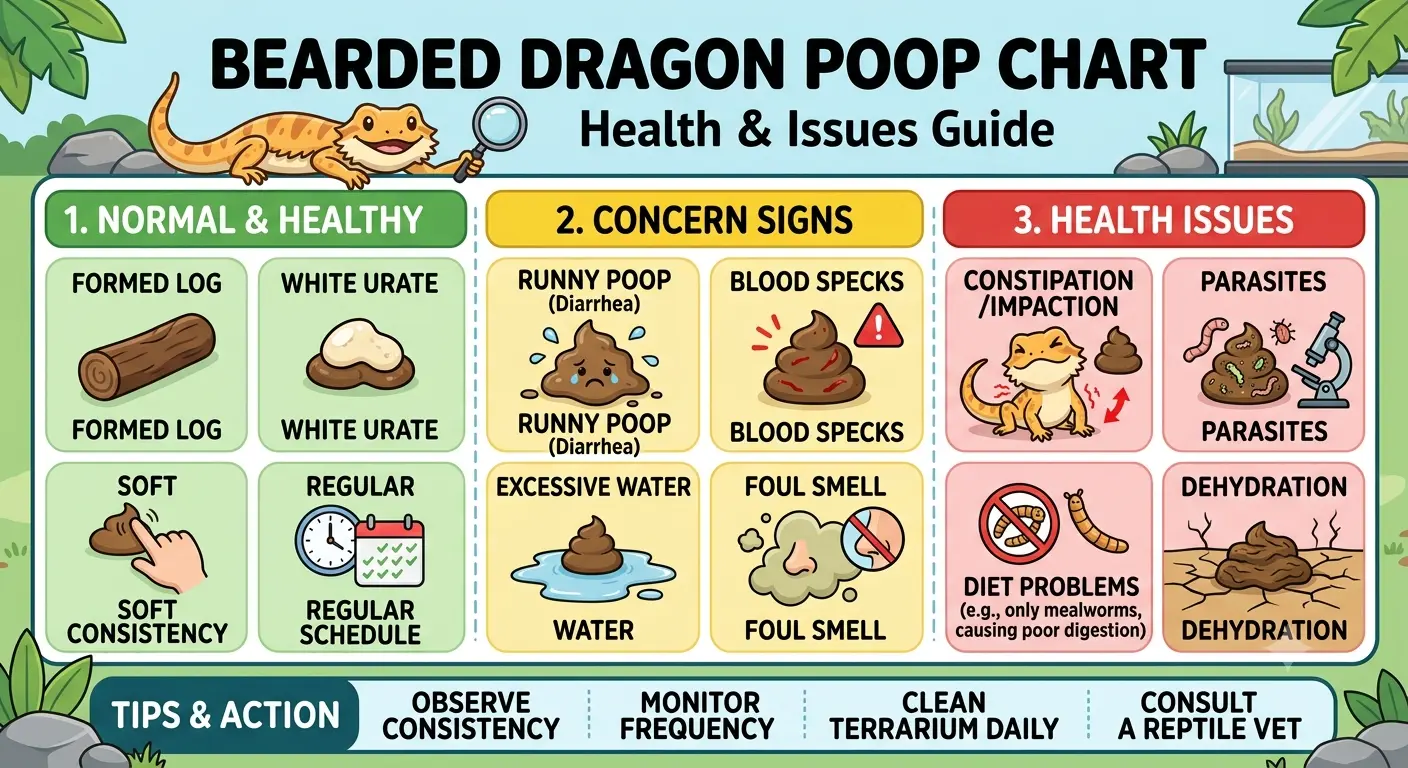
Monitoring daily digestive output serves as your single most effective window into your pet’s internal health and vitality. Because reptiles instinctively mask symptoms of illness, examining waste patterns offers vital clues about hydration levels, liver function, calcium absorption, and parasite loads. Referring consistently to a bearded dragon poop chart allows owners to separate harmless dietary visual quirks from severe clinical health alerts.
Understanding Healthy Digestion and Baseline Colors
Before evaluating abnormal waste shades, you must establish what healthy waste looks like in a thriving lizard. Typical waste consists of a dual-part structure produced simultaneously through the cloaca during regular elimination cycles.
Fecal matter should be dark brown, well-formed, and soft yet solid enough to hold shape without dissolving into liquid. The second part consists of urates, which are crystallized uric acid waste excreted instead of liquid urine to conserve water efficiently.
Using a bearded dragon poop chart as your primary reference helps you quickly verify whether your pet’s baseline output matches normal parameters. Soft, manageable waste indicates ideal digestive motility and appropriate dietary fiber balance.
For a foundational understanding of daily cleaning schedules and overall enclosure hygiene routines, check out our comprehensive bearded dragon waste guide to keep your habitat sterile and odor-free.
Chalky, Solid White Waste: Calcium Excess and Dehydration
Noticing hard, chalky, or completely white deposits within the terrarium is a frequent concern among keepers. While white urates are entirely natural, extremely hard, chalky, or enlarged white deposits signal underlying metabolic or nutritional adjustments.
The primary driver behind chalky white deposits is hypercalcemia or excessive supplementation. Dusting insects with calcium powder at every single feeding without proper balance often leads to unused minerals being excreted through urates.
Consulting a bearded dragon poop chart helps clarify whether your supplementation schedule needs immediate modification. Over time, these hard deposits cause painful cloacal passings or constipation if left unaddressed.
Dehydration heavily compounds this issue. When body fluid levels drop, urates harden inside the kidney tubules, creating gritty chalk-like masses. To reverse this trend, adjust your dusting schedule to match age-specific guidelines and offer weekly shallow warm water baths.
Dark Green or Yellowish-Green Waste: Dietary and Hepatic Causes
Discovering green or yellowish-green waste can be alarming, yet the underlying causes range from basic vegetable consumption to serious internal infections. Green leaf pigments frequently pass through the digestive tract largely intact when transit time accelerates.
- Dietary Pigmentation: High consumption of dark leafy greens like collard greens, dandelion leaves, or mustard greens naturally dyes waste a muted forest green.
- Rapid Transit Time: Diarrhea caused by watery foods like cucumber or iceberg lettuce forces waste through the gut rapidly before green pigments break down.
- Biliary and Liver Issues: Bilirubin and biliverdin pigments secreted by the liver aid fat breakdown; severe hepatic disease or prolonged anorexia can cause dark green excretions.
- Parasitic Loads: Intestinal parasites like Coccidia or Flagellates irritate gut walls, causing green slimy loose stools accompanied by foul odors.
When analyzing green waste, checking a bearded dragon poop chart lets you differentiate between harmless greens intake and parasite indicators. If green loose stools persist for more than 48 hours after removing high-moisture vegetation, consult an experienced exotic veterinarian.
Yellow Urates: Calcium Overload and Metabolic Impact
A sudden shift from pristine white urates to bright yellow or butter-colored deposits signals metabolic changes requiring attention. Bright yellow urates represent a clear indicator of metabolic stress or early dehydration.
Excessive vitamin dust containing synthetic D3 often forces kidneys to flush unused water-soluble pigments, tinting urates yellow. Furthermore, persistent mild dehydration concentrates uric acid crystals, deepening their color from off-white to dark yellow.
Reviewing yellow urates highlighted on any comprehensive bearded dragon poop chart ensures you catch early renal strain before permanent damage occurs. Review supplement dosages, improve ambient humidity, and introduce gut-loaded feeder insects to restore natural white urate production.
Identifying Severe Intestinal Bleeding vs. Benign Red Dyes
Few sights panic a keeper faster than seeing red streaks in the terrarium. Distinguishing between harmless food dyes and acute internal gastrointestinal bleeding is vital for immediate care and accurate treatment planning.
Ingesting bright red items like raspberries, red bell peppers, beets, or commercial red pellets commonly results in harmless red tinges. These botanical dyes do not break down fully during digestion, passing intact into the waste matter.
Conversely, true intestinal bleeding presents as distinct bright red blood drops, dark blood clots, or completely tarry black feces. Tarry black waste indicates upper gastrointestinal bleeding, whereas fresh bright blood signifies lower intestinal trauma caused by sharp substrate ingestion or severe parasite loads.
Recognizing red tinges noted in a standard bearded dragon poop chart helps you stay calm when feeding colored botanicals. If you suspect true blood rather than food dyes, secure a fresh sample in a sealed container and seek urgent veterinary intervention immediately.
Orange Waste: Carotenoid Foods and Substrate Staining
Orange coloration in fecal matter or urates usually correlates directly with dietary choices or habitat enrichment items. Carotenoids—natural pigments found abundantly in specific vegetables—are the main source of orange waste.
Feeding foods rich in beta-carotene, such as carrots, pumpkin, butternut squash, or sweet potatoes, readily alters waste coloration. These pigments pass safely through the digestive tract without harming metabolic processes.
Additionally, keeping animals on crushed orange calcium sand or dyed play sand leads to accidental ingestion during feeding. The fine substrate particles dye the fecal coating, appearing bright orange upon elimination.
Reviewing orange shades categorized within a reliable bearded dragon poop chart clarifies whether your orange waste stems from squash meals or loose substrate ingestion. Transitioning to safe non-particle substrates like slate tile or paper towels eliminates substrate risks entirely.
Visual Reference Matrix
This practical bearded dragon poop chart summary table breaks down every common shade, its primary underlying trigger, and the recommended action step for home keepers:
| Waste Shade | Primary Triggers | Action Step |
|---|---|---|
| Dark Brown & White | Ideal balance of insects, greens, and hydration. | Maintain current husbandry schedule. |
| Solid Chalky White | Dehydration, excessive calcium powder dusting. | Increase oral hydration, recalibrate supplements. |
| Dark or Yellowish-Green | Leafy greens, rapid transit, Coccidia parasites. | Adjust watery greens; test fecal sample if loose. |
| Bright Yellow Urates | Vitamin D3 overload, early renal strain. | Reduce multivitamin frequency, offer soaking baths. |
| Bright Red or Tarry Black | Beets/berries or internal intestinal bleeding. | Isolate food dyes; seek immediate vet care if blood. |
| Vibrant Orange | Carrots, squash, colored sand substrate ingestion. | Switch to tile substrate, moderate beta-carotene foods. |
A Keeper’s Personal Breakthrough with Baffling Waste Color Shifts
Last spring, my two-year-old rescue, Spike, suddenly started passing loose, pale yellowish-green waste every three days inside his 120-gallon tank. Panic set in immediately. I spent hours reading conflicting forum posts, convinced he was suffering from end-stage liver failure or an untreatable internal infection.
I rushed to implement standard internet fixes. I soaked him twice daily in lukewarm water, blasted his basking spot temperature up to 110 degrees, and completely eliminated all leafy greens overnight. Nothing worked. In fact, his waste became messier, and his appetite plunged. He just sat under his log, ignoring fresh dubia roaches completely.
The breakthrough happened entirely by accident during an overhaul of his feeding routine. While reviewing my notes, I realized I had switched to a new brand of gut-loading chow for my cricket colony two weeks prior—one packed with synthetic yellow food dyes and high-moisture squash meal. The crickets were effectively overloading his digestive tract with artificial pigments and excess moisture! I swapped back to plain oats and carrots for the feeder insects, and within five days, Spike was back to passing perfectly firm, normal waste. It was a profound lesson in looking at the whole ecosystem rather than jumping to panic conclusions.
When to Consult an Exotic Veterinarian
While occasional color shifts stem from benign dietary changes, specific warning flags demand professional veterinary diagnosis. Early intervention prevents minor digestive issues from progressing into systemic metabolic diseases.
Schedule a professional evaluation if you observe persistent watery diarrhea lasting over three days, complete absence of waste production for more than a week, severe lethargy, black tarry waste, or visible straining accompanied by cloacal prolapse. Bringing a fresh waste sample wrapped in a damp paper towel within a sealed baggie assists your vet in conducting precise diagnostic testing.
Keeping a printed bearded dragon poop chart near your enclosure ensures you can quickly note changes before vet visits. According to clinical guidelines provided by the Association of Reptilian and Amphibian Veterinarians (ARAV), annual fecal parasite screenings are recommended for all captive reptiles regardless of apparent health status.
Frequently Asked Questions
Adult reptiles typically pass waste anywhere from 1 to 3 times per week depending on age, basking temperatures, diet composition, and activity levels. Young juveniles excrete much more frequently, often 1 to 2 times daily due to rapid metabolic growth rates.
Yes, environmental stress from relocation, improper basking temperatures, handling frequency, or nearby pets can accelerate gut motility. This rapid transit leads to loose, watery waste even if the overall diet remains completely balanced.
Undigested insect parts indicate insufficient basking temperatures or severe internal parasite burdens. Ensure basking surface temperatures reach 100-105 degrees Fahrenheit so digestive enzymes can break down tough chitin exoskeletons properly.
A small pool of clear liquid surrounding fresh waste is completely normal and indicates excellent hydration levels. Excess water ingested during baths or high-moisture salad meals is safely excreted alongside regular urates.
Why keeping a bearded dragon poop chart handy matters is simple: proactive observation protects your pet and guarantees a long, thriving life in captivity.