
Discovering an unusual dropping in your pet’s enclosure can immediately trigger alarm, leaving you wondering if a silent health issue is developing. Healthy stool is one of the most reliable indicators of internal wellness in small insectivorous mammals. Quick health monitoring using a targeted diagnostic reference helps owners interpret subtle physical indicators before severe symptoms manifest.
A standard healthy droppings profile features a dark brown to black color, firm tubular consistency, and a slightly shiny exterior due to digested insect exoskeletons. Any sudden transition toward green, yellow, black-tarry, or watery stool signals digestive distress, bacterial imbalance, dietary stress, or parasitic infection needing immediate care.
Monitoring your pet’s daily waste offers a direct window into their gut motility, hydration status, and hepatic health. Using a visual reference like a comprehensive hedgehog poop chart allows pet owners to decode subtle digestive clues before minor issues become veterinary emergencies.
Understanding Healthy vs Unhealthy Hedgehog Poop
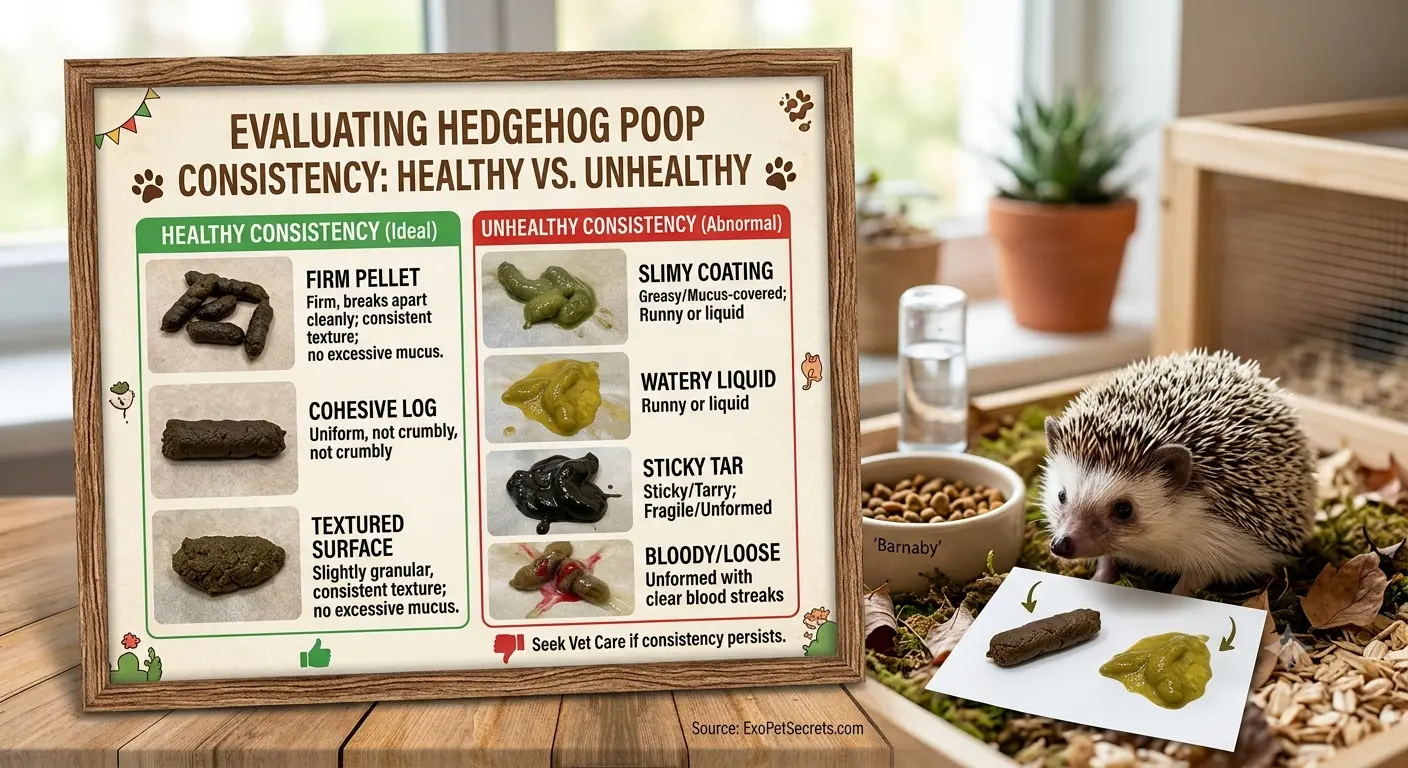
Distinguishing between healthy and abnormal stool requires inspecting color, moisture level, and structural integrity daily. Normal droppings should be soft enough to break apart under pressure without crumbling into dust, yet firm enough to hold a cohesive cylindrical shape. They should never appear runny, slimy, or excessively watery.
Healthy droppings typically display a dark brown or near-black hue. This deep coloration stems from high-protein animal diets enriched with chitin from feeder insects like mealworms, dubia roaches, and black soldier fly larvae. A slight sheen on the outer surface is entirely normal for insectivores.
In contrast, unhealthy stool manifests in various distinct variations. Bright green slimy droppings, yellow runny liquid, or dark tarry feces indicate physiological strain. Identifying these discrepancies early allows keepers to adjust diet, reduce stress, or seek immediate veterinary intervention.
Deciphering Color Variations with a Hedgehog Poop Chart
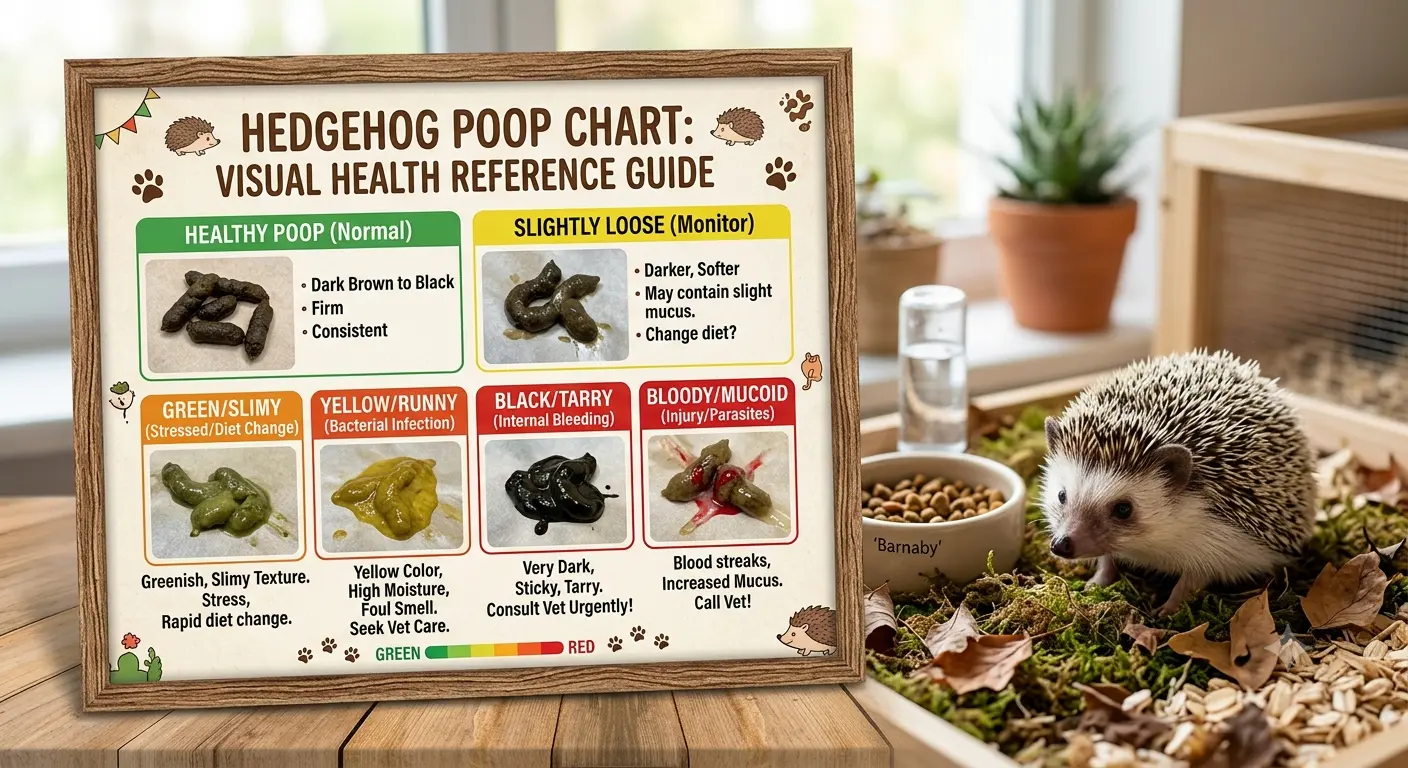
Color shifts in fecal matter serve as an immediate diagnostic marker for internal metabolic processes. A practical hedgehog poop chart categorizes these color shifts to help pet parents quickly identify potential health complications.
Green stool is one of the most frequent abnormalities reported by owners. It typically occurs when bile passes through the gastrointestinal tract too rapidly without being properly reabsorbed, a phenomenon known as rapid gut transit time. Stress, sudden dietary changes, or intestinal infections usually trigger this reaction.
Black, tarry stool (melena) represents a serious medical concern indicating digested blood originating from the upper gastrointestinal tract. Conversely, bright red streaks signal fresh bleeding in the lower bowels or rectum, often caused by hard stool tearing delicate mucosal linings or severe inflammation.
| Stool Appearance | Potential Causes | Urgency Level |
|---|---|---|
| Dark Brown / Black & Firm | Normal healthy diet, optimal digestion | Low (Normal) |
| Bright Green & Mucus-covered | Stress, rapid transit, bacterial overload | Medium (Monitor closely) |
| Yellow & Soft / Watery | Hepatic issues, severe dysbiosis, parasites | High (Vet consultation) |
| Tarry Black (Melena) | Upper GI bleeding, internal ulceration | Critical (Immediate Vet) |
| Red Streaks | Lower GI inflammation, rectal tearing | High (Vet consultation) |
Analyzing Hedgehog Poo Size, Shape, and Texture
While color provides essential clues, evaluating physical dimensions offers valuable context regarding gastrointestinal health. Understanding normal variation in hedgehog poo size ensures you can differentiate between routine dietary output and intestinal blockages.
Standard droppings measure roughly one to one and a half inches in length and about the thickness of a standard pencil. The ends are often slightly tapered, and the shape remains uniform throughout the entire piece. Minor size variations occur naturally based on individual body weight and daily caloric intake.
Abnormally small, dry pellets suggest dehydration, inadequate food intake, or partial intestinal obstruction. Conversely, massive unformed masses or liquid diarrhea point toward acute dietary intolerance, toxicity, or severe pathogenic infections disrupting fluid absorption in the colon.
Common Causes of Digestive Distress in Insectivores
Small exotic mammals possess highly sensitive digestive systems that react strongly to environmental changes. Stress is a primary catalyst for gastrointestinal upset; rehoming, loud noises, improper ambient temperatures, or excessive handling can trigger stress-induced diarrhea within hours.
Dietary indiscretion also frequently causes abnormal waste. Feeding low-quality cat kibble packed with fillers, high-fat treats, or sudden diet switches can disrupt gut microflora. Additionally, lactose intolerance is widespread in these animals, meaning dairy products must be strictly avoided.
Infectious agents such as Salmonella, Clostridium, or internal parasites like coccidia and roundworms directly impair bowel function. For comprehensive medical guidelines on exotic pet diseases, consult the Association of Exotic Mammal Veterinarians to understand professional clinical protocols.
A Keeper’s Field Notes: An Unexpected Encounter with Green Droppings
Last autumn, on a cold Tuesday night, I noticed my exotic spiny friend, Barnaby, acting unusual. During his nightly wheel routine, he suddenly stopped, huddled in the corner, and left behind a wet, bright green mess. I panicked instantly, assuming the absolute worst.
My knee-jerk reaction was to jump straight to aggressive remedies. I scrambled to offer hand-feeding formula and added pumpkin puree to his bowl, hoping the extra fiber would magically solidify his gut overnight. That was a big mistake. The extra sugar and sudden food introduction only irritated his digestive system further, making the consistency even looser by Thursday morning.
Frustrated and anxious, I spent hours re-evaluating his enclosure setup bit by bit. That is when I noticed the real culprit purely by accident: his heating pad’s thermostat probe had slipped off center, causing the enclosure ambient temperature to dip to 64 degrees Fahrenheit overnight. His body was slowing down its metabolic processes, causing severe gut hypomotility and green bile passage. Once I recalibrated his ceramic heat emitters back to a stable 76 degrees and kept his diet strictly plain, his stool returned to normal firm dark cylinders within 48 hours.
Comparing Healthy vs Unhealthy Hedgehog Poop Profiles
To summarize physical differences effectively, visual inspection must be paired with consistent record-keeping. Comparing healthy vs unhealthy hedgehog poop characteristics helps keepers act decisively when abnormal signs appear.
Healthy stool remains dry to the touch on the outside while maintaining internal moisture, leaving minimal residue on cage substrate. Unhealthy waste often coats the tail, hind legs, or wheel, spreading bacteria throughout the habitat and increasing secondary infection risks.
When reviewing a reference guide like a hedgehog poop chart, remember that temporary stool changes lasting less than 24 hours may simply reflect a recent insect meal or mild handling stress. Persistent changes lasting over two days require diagnostic testing by an exotic veterinarian.
For a complete breakdown of dietary management, habitat temperature control, and preventive care routines, read our extensive hedgehog poop guide to keep your pet’s digestive system in peak condition.
When to Seek Immediate Veterinary Attention
Not every digestive anomaly demands emergency clinical care, but certain warning signs indicate critical internal distress. Knowing when to act swiftly can save your pet’s life during severe illness.
- Stool that is completely liquid or watery for more than 24 hours.
- Feces containing visible red blood or appearing thick, tarry black.
- Diarrhea accompanied by severe lethargy, loss of appetite, or cold feet.
- Signs of severe straining or vocalization while attempting to defecate.
- Fecal matter coated in thick gelatinous clear or green mucus.
Your veterinarian will likely perform a microscopic fecal float and direct smear to check for protozoa, worm eggs, or bacterial overgrowth. Bringing a fresh stool sample collected within a few hours of your appointment accelerates diagnosis.
Preventive Care and Digestive System Support
Preventing intestinal issues requires maintaining strict husbandry standards. Keep enclosure temperatures consistently between 72°F and 80°F (22°C to 26°C), as thermal drops directly trigger digestive slowdowns and gut dysbiosis.
Offer a high-quality, high-protein staple food paired with gut-loaded feeder insects. Introduce new foods gradually over 7 to 10 days to allow intestinal microflora time to adapt without causing sudden osmotic diarrhea.
Maintain rigorous sanitation by spot-cleaning waste daily and washing running wheels frequently. Clean environments limit bacterial accumulation, ensuring your pet remains active, healthy, and stress-free year-round.
Frequently Asked Questions (FAQs)
Why is my pet’s stool green and slimy?
Green, slimy stool usually indicates rapid gut transit time, where bile passes through the digestive tract too quickly without breaking down completely. Stress, temperature drops, or diet changes are common causes.
How often should my pet defecate?
Most healthy individuals defecate multiple times overnight, especially while exercising on their wheel. A complete lack of stool for 24 hours suggests constipation or an intestinal blockage needing medical evaluation.
What does a hedgehog poop chart show?
A hedgehog poop chart visualizes normal versus abnormal stool colors, textures, and sizes. It serves as a diagnostic tool to help owners identify potential digestive issues like bleeding, stress, or parasitic infections.
Can stress alter stool consistency and color?
Yes, environmental stress from travel, noise, improper temperatures, or excess handling releases cortisol, accelerating bowel motility and causing loose, green, or watery droppings.
Why does my pet eat its own waste occasionally?
While uncommon, occasional coprophagy can occur due to nutritional deficiencies, stress, or simple curiosity. However, persistent waste eating should be discussed with a vet to rule out dietary imbalances.