
Stepping into the world of exotic pet ownership brings endless joy, whimsical nighttime antics, and an unexpected obsession with your spiky friend’s digestive habits. Inspecting hedgehog poop may not sound like the most glamorous part of your daily routine, but it is undoubtedly one of the most critical windows into your pet’s overall health and physiological well-being.
Because hedgehogs are notorious for masking signs of illness, subtle changes in their waste are frequently the very first warning sign that something is amiss. Understanding what is normal, what signals a veterinary emergency, and how to maintain proper hygiene will keep your quilled companion thriving for years to come.
What Does Healthy Hedgehog Poop Look Like?
A healthy African Pygmy hedgehog typically produces dark brown or nearly black waste that maintains a consistent cylindrical shape. The texture should be relatively firm yet soft enough to hold its structure without crumbling into dry dust or smearing uncontrollably into a mushy paste.
In terms of size, normal droppings generally range from half an inch to an inch in length, closely resembling small cat kibble or dark pellets. Because hedgehogs process high-protein diets rapidly through a short digestive tract, their droppings are produced frequently throughout their active nighttime hours. If you want a complete breakdown of daily waste volume and frequency, check out our guide on how often hedgehogs poop and if they poop a lot.
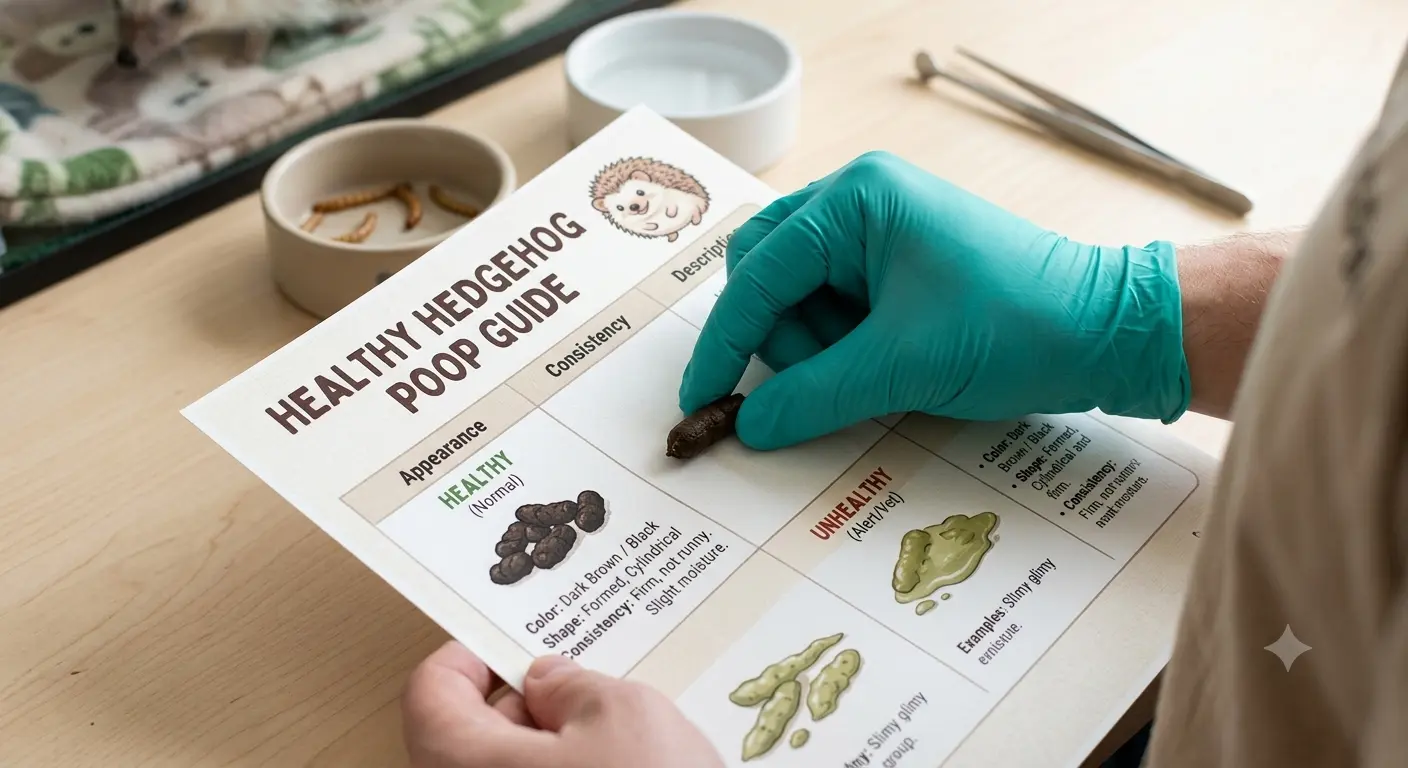
Slight variations in color can occasionally happen based on specific ingredients in their staple kibble or treats like mealworms. However, consistent uniform dark pellets always signify a well-balanced digestive system and proper hydration levels.
Hedgehog Poop Chart: Colors, Consistency, and Causes
To help you quickly evaluate what you are seeing during daily cage spot-checks, this visual reference table breaks down common visual characteristics, their underlying causes, and the recommended actions you should take immediately. For a more detailed visual guide and size breakdown, refer to our comprehensive hedgehog poop chart and size comparison guide.
| Appearance | Potential Cause | Action Required |
|---|---|---|
| Dark Brown / Black & Firm | Healthy, normal digestion | Maintain current diet and care |
| Bright Green & Slimy | Stress, rapid transit, gallbladder bile | Monitor closely, reduce stress, see vet if persistent |
| Soft, Watery Diarrhea | Bacterial infection, parasite, sudden diet change | Seek immediate veterinary care to prevent dehydration |
| Black, Tarry, or Sticky | Upper gastrointestinal internal bleeding | Emergency veterinary visit required immediately |
| Contains White/Yellow Spots | Undigested fat or potential internal parasites | Collect sample for a veterinary fecal test |
Why Is My Hedgehog Poop Green or Slimy?
Green waste is one of the most common issues reported by pet owners, and it almost always signals that food is moving through the digestive system far too quickly. When gut motility speeds up, green bile produced by the liver does not have sufficient time to break down fully, resulting in a vibrant green hue.
The primary culprit behind this sudden change is environmental stress, such as moving into a new home, exposure to loud noises, or drastic temperature changes. Diet transitions that happen too quickly without a gradual mixing period can also irritate the intestinal lining, producing a mucosal coating along with green droppings. Read more about managing hedgehog poop smell and underlying health concerns to keep your cage environment fresh.
If your pet appears active, continues eating normally, and the green color resolves within twenty-four hours, simple stress is the likely cause. However, if green waste persists alongside lethargy or loss of appetite, an underlying infection or parasitic overload must be ruled out by a qualified exotic veterinarian.
Hedgehog Poop Boots: Causes and Prevention
If you have spent any time watching your pet run on their exercise wheel, you are likely familiar with the dreaded phenomenon known as poop boots. Because hedgehogs naturally defecate while running at full speed during the night, their feet repeatedly stomp over fresh waste on the running track, creating hardened caked-on boots around their tiny toes.
Allowing these hardened crusts to remain on their feet can trap bacteria against the skin, leading to painful irritation, fungal infections, or torn toenails. Learn the safest step-by-step method for removing these crusts in our deep dive on how to clean hedgehog poop boots and safely soak feet.
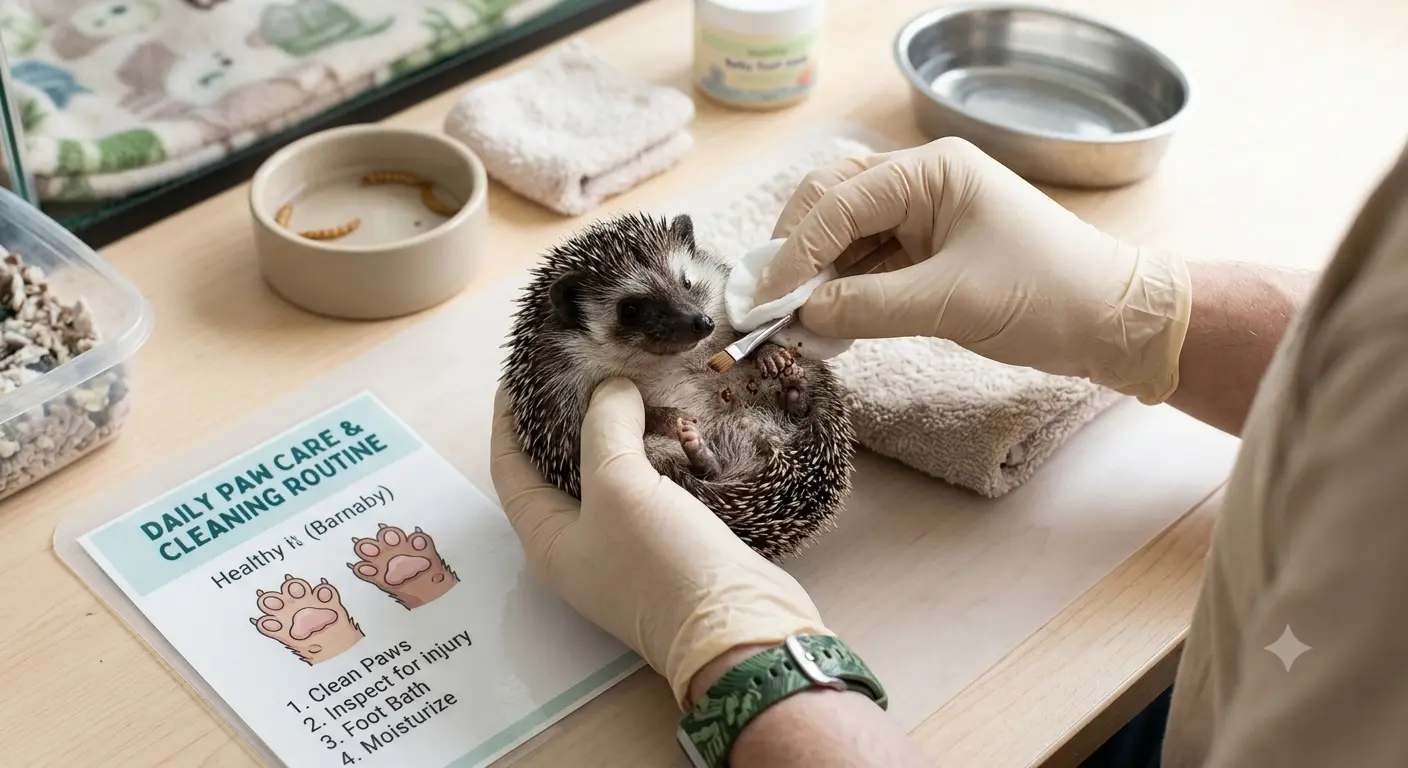
To minimize the severity of this issue, select solid-surface exercise wheels that feature textured, non-porous materials rather than wire mesh or ridged tracks. Cleaning the wheel track every single morning prevents heavy overnight accumulation and keeps your pet’s feet clean and healthy.
Is Hedgehog Poop Dangerous to Humans?
Like many small mammals and reptiles, hedgehogs naturally carry bacteria such as Salmonella within their digestive tracts without necessarily showing outward signs of illness. Consequently, contact with contaminated bedding or cage accessories can pose potential health risks to human caretakers if basic hygiene is neglected.
Always wash your hands thoroughly with antibacterial soap and warm water immediately after handling your pet, cleaning their enclosure, or washing their exercise wheel. Young children, elderly individuals, or immunocompromised family members should exercise extra caution and avoid handling unwashed cage items.
For more detailed medical information regarding zoonotic diseases in exotic species, review guidelines from accredited bodies such as the Association of Exotic Mammal Veterinarians. Adopting proper sanitation habits virtually eliminates health risks while keeping your home environment fresh and odor-free.
Hands-On Keeper Secrets: Lessons from the Animal Room
Last autumn, during a routine evening round in the animal room, I noticed something distinctly off with Barnaby, my four-year-old rescued spiny friend. His exercise wheel was coated in a strange, pale fluid rather than the typical dry droppings I was accustomed to seeing every morning.
Panic immediately set in. I assumed he had caught a severe bacterial strain overnight. I rushed to swap out his kibble brand, mixed in expensive probiotics I had sitting on the shelf, and isolated his cage in a dark room. It was a complete disaster; the sudden dietary upheaval made his digestion ten times worse within forty-eight hours.
Feeling thoroughly defeated, I took a step back and evaluated the subtle environmental shifts. It turned out the drafty window right above his enclosure had developed a slight seal failure, dropping his cage ambient temperature by just four degrees. His body was subtly attempting to enter a dangerous torpor state, shutting down normal digestion entirely. A simple ceramic heat emitter placement restored his gut health overnight. Sometimes the most dramatic physical symptoms stem from the simplest husbandry details.
How to Clean and Manage Hedgehog Poop Effortlessly
Establishing an efficient cleaning schedule makes maintaining a clean enclosure straightforward and stress-free. Daily spot-cleaning should focus on removing waste from the exercise wheel, litter trays, and main sleeping hideouts before it hardens. For a complete walkthrough on safe detergents and odor removal, follow our full tutorial on how to clean hedgehog poop from cages and carpets.
Utilize pet-safe, non-toxic enzymatic cleaners or a simple half-and-half solution of warm water and distilled white vinegar to break down organic matter without releasing harsh chemical fumes. Using fleece cage liners instead of loose wood shavings makes spot-cleaning significantly faster and allows you to notice subtle changes instantly.
Deep-clean the entire cage, wash all fabric liners in hot water, and sanitize all plastic accessories on a weekly basis. Consistent sanitation not only neutralizes unpleasant odors but also protects your spiky companion from respiratory irritants and skin infections.
Why Does My Hedgehog Poop on Me?
It can be disheartening when your beloved pet defecates on your lap during bonding time, but this behavior is rarely intentional or aggressive. The combination of your warm body heat, the gentle motion of being held, and muscle relaxation naturally stimulates their bowel movements.
Furthermore, young or nervous animals often defecate as a defensive reflex when feeling overwhelmed by unfamiliar smells, sudden movements, or loud domestic sounds. Discover actionable techniques and warning signs in our guide explaining why your hedgehog poops on you and how to prevent lap accidents.
To prevent accidents during lap time, wait ten to fifteen minutes after your pet wakes up before picking them up. Giving them time to run around their cage, drink water, and clear their digestive tract first ensures a much cleaner and enjoyable bonding session for both of you.
Frequently Asked Questions
How often do hedgehogs poop a day?
Hedgehogs typically defecate multiple times throughout their active night hours, often producing dozens of small droppings while running on their exercise wheel or exploring their enclosure.
Why is my hedgehog’s poop sticky or soft?
Soft or sticky droppings are usually triggered by mild dietary indiscretions, high-fat treats, or minor environmental stress. If soft waste continues for more than two days, consult an exotic veterinarian.
Can you litter train a hedgehog?
Yes, many hedgehogs can be partially litter trained by placing a low-profile litter tray directly beneath their exercise wheel, as they naturally eliminate while running.
Final Thoughts on Hedgehog Digestive Care
Monitoring hedgehog poop might seem like a minor detail, but it remains one of your most powerful diagnostic tools as an attentive owner. By staying observant, maintaining high sanitation standards, and acting quickly upon noticing persistent abnormalities, you ensure your pet lives a happy, vibrant, and healthy life.