
Nothing disrupts a peaceful home faster than discovering your pet reptile had an unexpected mess on your living room floor. Mastering how to clean bearded dragon poop off carpet efficiently while eliminating deep lingering smells is a top priority for every dedicated keeper.
To learn how to clean bearded dragon poop off carpet effectively, lift all solid matter immediately using paper towels, spray a dedicated enzymatic pet cleaner generously over the fibers, let it soak for 15 minutes, and blot firmly using a microfiber cloth.
However, simple surface cleaning will not remove underlying bacteria or stubborn waste odors completely. Read on to discover professional sanitation workflows, carpet stain recovery techniques, and proven odor elimination steps that keep your home clean and your reptile healthy.
Understanding Reptile Waste and Fiber Stains
Reptile waste consists of two distinct components: firm dark digested organic matter and soft white urates. Knowing these structural properties helps when figuring out how to clean bearded dragon poop off carpet without causing permanent rug discoloration.
The brown solid portion contains organic proteins, fiber bits, and natural gut bacteria such as Salmonella. Meanwhile, chalky white urates contain concentrated uric acid salts that bind quickly with synthetic carpet strands if handled improperly during spot extraction.
Furthermore, waste compounds produce sharp volatile odors upon air contact. Leaving organic residues untreated allows deep bacteria growth, causing foul room smells to persist across surrounding living spaces for weeks.
Veterinary-Grade Sanitation Protocols for Enclosures
Maintaining a hygienic habitat prevents waste tracking onto household rugs. The Association of Reptile and Amphibian Veterinarians (ARAV) recommends strict cleaning routines to maintain animal health and sanitary living conditions.
Daily enclosure maintenance requires non-toxic disinfectant sprays or veterinary-grade solutions like F10 SC or Chlorhexidine. Bleach solutions require a precise 1:32 dilution ratio and thorough water rinsing to protect delicate reptile lungs.
Soak basking slates, climbing branches, and plastic plants in warm soapy water bi-weekly. Scrub accessories thoroughly using stiff brushes, rinse well, and dry completely before placing them back inside the terrarium.
Substrate choices directly influence overall cleanliness. Non-porous surfaces like ceramic tile allow quick wiping, whereas loose sand absorbs moisture instantly, making regular habitat sanitation significantly harder to maintain.
How to Clean Bearded Dragon Poop Off Carpet: Step-by-Step Method
Speed is essential when dealing with soft floor accidents. Allowing fresh waste to sit on rug fibers causes liquid pigments to penetrate deep into underlying carpet backing and padding materials.
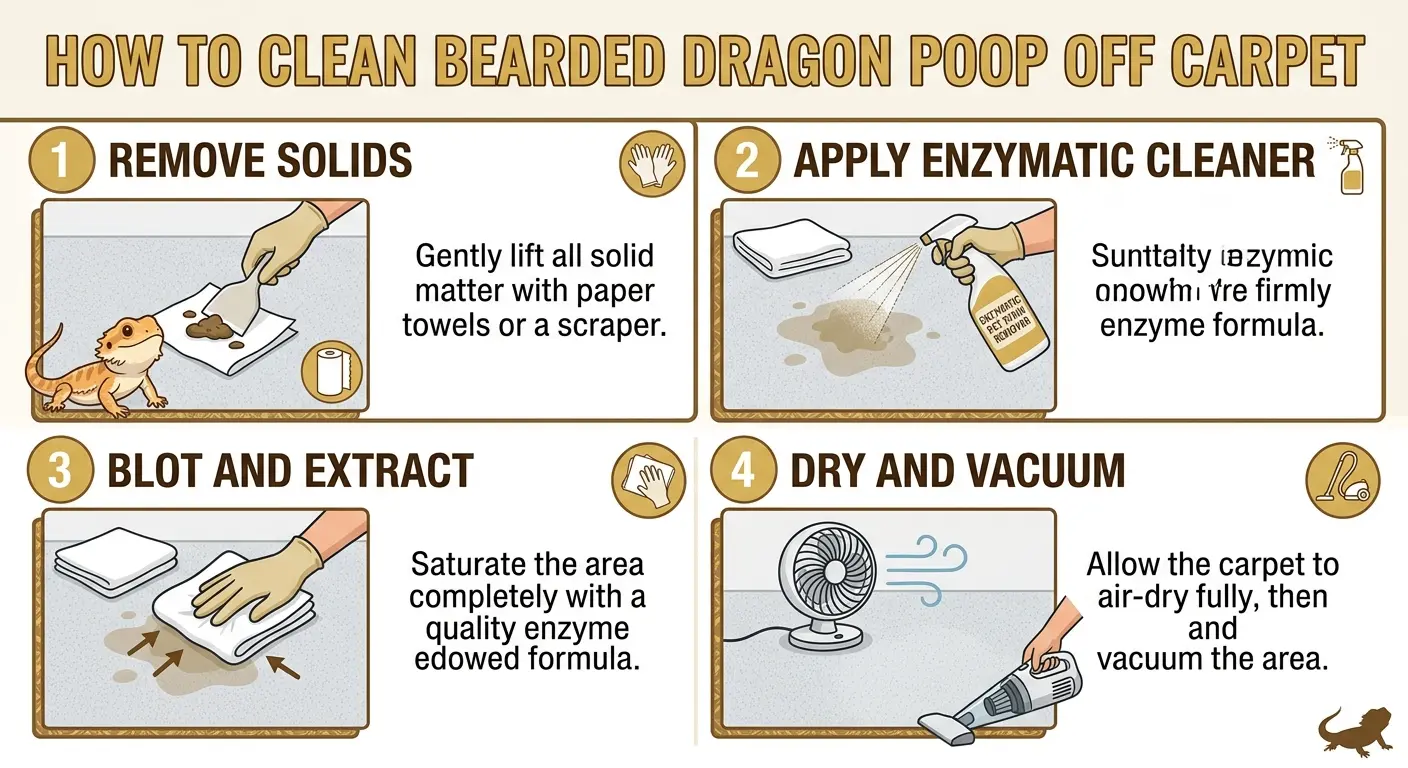
Follow this exact structured protocol when executing how to clean bearded dragon poop off carpet to safely extract stains while eliminating unwanted bacterial growth:
- Solid Matter Removal: Gently lift solids using thick paper towels without pressing down into the carpet pile.
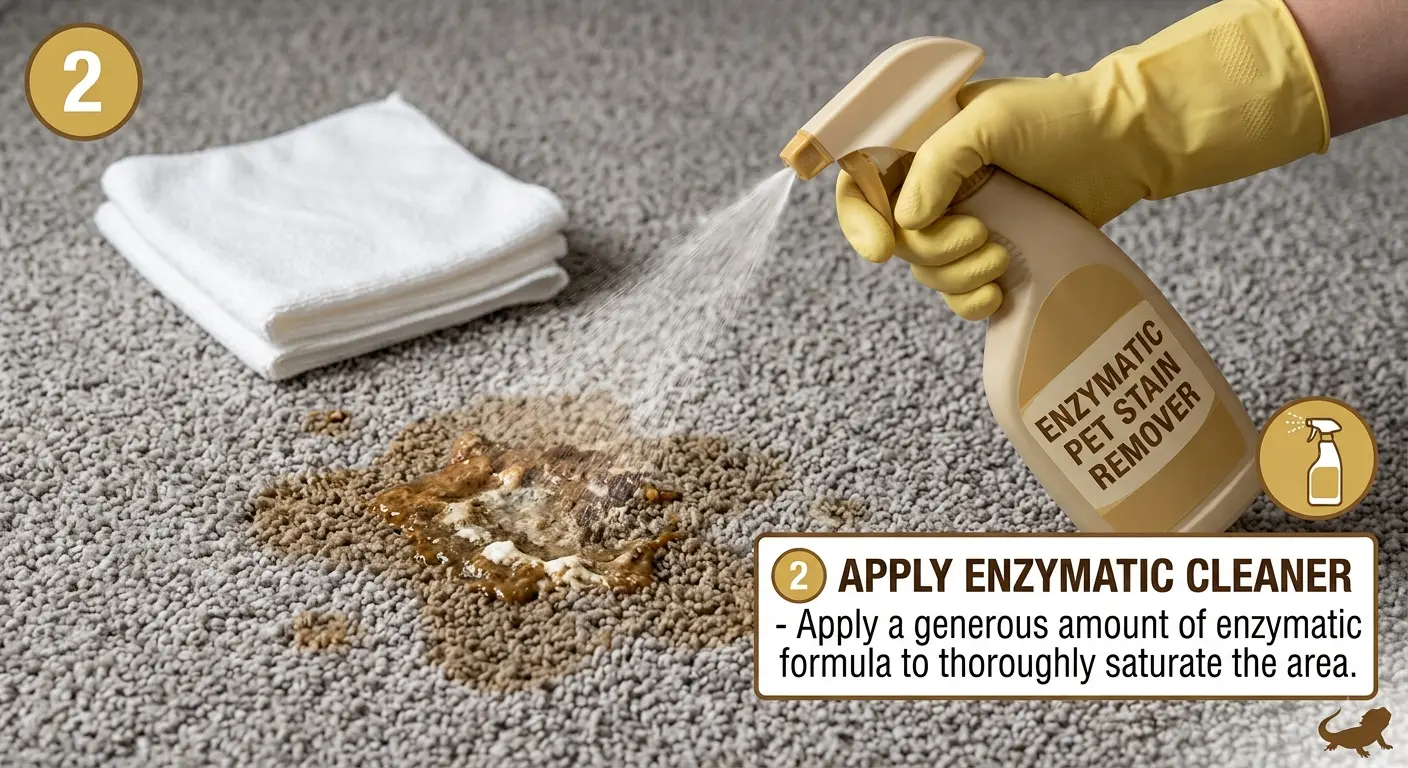
- Enzyme Application: Apply a high-quality enzymatic cleaner generously to break down tough uric acid proteins.
- Dwell Window: Allow the enzymatic solution to rest on the damp fibers for 10 to 15 minutes undisturbed.
- Blotting Action: Press dry towels firmly against the spot to absorb lifted liquid from the outside edges inward.
- Rinse & Dry: Dab the carpet with a damp cloth, then let the rug air-dry completely.
Neutralizing Sharp Waste Smells from Home Spaces
Removing visible marks is only half the battle. Neutralizing persistent waste smells requires target solutions rather than perfumed room sprays that simply mask underlying odors.
Pure baking soda serves as an outstanding natural odor absorber. Once your enzymatic carpet cleaner dries completely, dust a liberal layer of baking soda directly over the affected carpet area.
Allow the baking soda to sit for 4 to 6 hours to absorb deep-seated odors and residual moisture. Vacuum the section thoroughly with a HEPA-filter vacuum, or run a carbon-filter air purifier nearby for optimal room freshness.
A Keeper’s Personal Breakthrough: Trial, Error, and Lessons Learned
Last spring, while letting Norbert roam on my beige living room rug, disaster struck. I turned my head for two seconds, and there it was—a fresh, messy pile right in the middle of the floor. My initial instinct was pure panic.
Naturally, I grabbed hot soapy water and a scrub brush, scrubbing furiously back and forth. Big mistake! That aggressive scrubbing only smeared the dark waste deeper into the carpet base, turning a tiny spot into a massive six-inch brown stain that stank up my entire apartment for days.
Desperate, I tried vinegar sprays, steam wands, and regular laundry soap, but the faint yellow mark and damp odor simply would not leave. It was only after chatting with a veteran breeder that I learned hot water actually cooks organic proteins directly into synthetic rug strands, locking them in permanently!
Switching to a dedicated cold-water enzymatic soak changed everything completely. Letting the liquid sit motionless did all the hard work for me, lifting the old stain without any intense scrubbing required. Lesson learned the hard way: patience and correct chemistry beat muscle power every single time.
Sanitation Product Comparison Matrix
Understanding which products work best on carpet versus hard surfaces ensures effective results without harming your pet or home furnishings:
| Cleaner Category | Carpet Safe? | Pathogen Kill Rate | Reptile Safety | Primary Best Application |
|---|---|---|---|---|
| Enzymatic Cleaner | Yes (High) | Moderate | High (When dry) | Organic carpet stains & odor breakdown |
| F10 SC Veterinary Disinfectant | No (Hard surfaces) | Extremely High | Extremely High | Glass tanks, resin decor, slate tiles |
| Dilute Bleach Solution (1:32) | No (Discolors fibers) | High | Moderate (Requires rinse) | Deep enclosure disinfection |
| Distilled White Vinegar | Yes (Moderate) | Low | High | Removing glass water spots & light wiping |
Preventing Rug Accidents During Free-Roaming
Preventing carpet accidents is much simpler than cleaning them up. Understanding digestive timing helps you anticipate when your pet needs to go, reducing floor mess significantly.
Reptiles usually eliminate within 1 to 2 hours following morning basking and feeding sessions. Wait until your pet clears their gut before allowing free-roam exercise on soft living room carpets.
Giving your pet a warm bath (95-100°F) in a plastic basin acts as a gentle digestive stimulant. Once they pass waste in the water, clean up is effortless, leaving you free to enjoy floor playtime worry-free.
For additional details regarding stool consistency, fecal health, and proper diet management, read our complete bearded dragon poop guide to keep your pet healthy.
Frequently Asked Questions
Does steam cleaning work for how to clean bearded dragon poop off carpet?
No, avoid applying steam or hot water directly to fresh waste stains. High heat bakes organic proteins into synthetic carpet fibers, permanently fixing stains and odors into the carpet weave.
Is reptile waste dangerous to human health?
Yes, reptiles can carry Salmonella bacteria in their intestinal tracts without showing illness. Always wear gloves, wash your hands with soap, and disinfect cleaned carpet zones thoroughly.
Why does my pet’s waste smell so foul?
Unusually strong waste smells often indicate high protein intake or gut parasites like coccidia. If severe odors continue despite regular cleaning, consult a qualified exotic veterinarian for a fecal examination.
Can I use human spot removers on carpet stains?
Many household carpet cleansers contain harsh chemicals and heavy fragrances that irritate reptile lungs. Stick to pet-safe enzymatic solutions when applying techniques for how to clean bearded dragon poop off carpet safely.