
As a dedicated bearded dragon owner, the most critical job you have is mimicking the harsh Australian outback inside a small glass enclosure. Creating this wild, sun-drenched environment from scratch requires precision, patience, and a deep understanding of your pet’s biological demands.
The absolute heart of this captive setup is managing the proper Bearded Dragon Basking Temp daily. When the thermal gradient is poorly calibrated, your reptile’s entire physiological survival starts to break down quickly.
If the heat parameters are wrong, your central bearded dragon cannot properly digest food, which quickly leads to severe systemic health issues. In this comprehensive expert guide, we will break down exactly what temperatures you need to maintain.
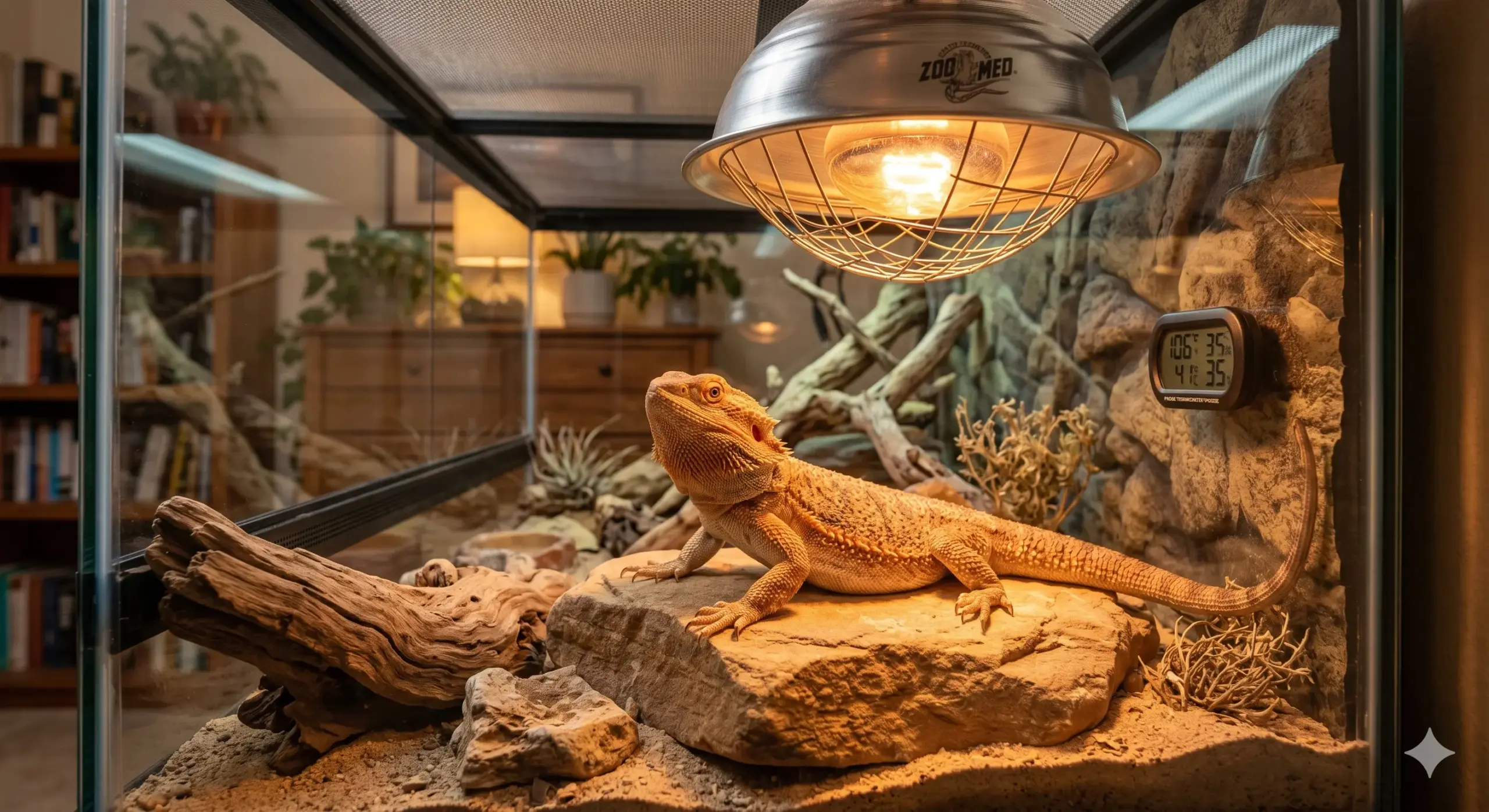
Why is the Bearded Dragon Basking Temp So Important?
Bearded dragons are strict ectotherms, meaning they rely entirely on external environmental heat to regulate their core body temperature. Without an external heat source, their internal organs slow down and eventually cease to function properly.
Efficient digestion is heavily reliant on heat, as they require high thermal energy to break down complex insect proteins and fibrous plant matter. Without a proper Bearded Dragon Basking Temp, food will literally rot inside their stomach, causing fatal toxicity.
A correct metabolic rate is also triggered by specific temperature thresholds, keeping their immune response sharp and active over their lifetime. Conversely, a cold reptile becomes a dangerously lethargic, unhappy creature that refuses to eat or interact with its surroundings.
The Human Experience: A Keeper’s Devotion
I still vividly remember my first winter as a reptile keeper. My juvenile dragon, Spike, stopped chasing his crickets and just sat shivering in a dark corner of his vivarium. I panicked completely. My heart sank as I realized his cheap thermometer was lying to me about the actual thermal heat.
Fixing that bulb changed everything. Watching him crawl back onto his rock, close his eyes in pure bliss, and soak up the warmth taught me what patience really means. It is a quiet, rewarding bond built on invisible waves of infrared heat.
Ideal Bearded Dragon Basking Temp by Age
Not all bearded dragons need the exact same amount of thermal energy to thrive in captivity. Younger, rapidly growing reptiles require significantly higher localized heat zones than their fully matured, older counterparts.
To ensure your habitat meets these precise developmental needs, consult our comprehensive comparison matrix below to adjust your daily thermostat settings properly.
| Age Group | Basking Spot Temp | Ambient (Warm Side) | Cool Side Temp |
|---|---|---|---|
| Baby (0-6 Months) | 105°F – 110°F | 90°F – 95°F | 75°F – 80°F |
| Juvenile (6-12 Months) | 100°F – 105°F | 90°F | 75°F – 80°F |
| Adult (Over 1 Year) | 95°F – 105°F | 85°F – 90°F | 75°F – 80°F |
Always provide a distinct thermal gradient across the entire horizontal length of the enclosure to ensure proper self-regulation. Your pet must be able to move freely from the intense Bearded Dragon Basking Temp to a much cooler zone.
Maintaining a dedicated cool zone of 75°F to 80°F prevents dangerous systemic overheating and chronic dehydration over time. This basic environmental division allows your lizard to safely control its metabolic cycles as needed throughout the day.
How to Measure Temperatures Correctly
This critical step is precisely where many beginner reptile hobbyists fail, unknowingly putting their pets at severe physical risk. You absolutely cannot guess the surface temperature by simply touching the outside glass or using cheap, analog stick-on dials.
Digital thermometers equipped with physical wire probes are highly recommended for tracking continuous ambient shifts inside the enclosure. For the best accuracy, place the sensor probe directly onto the hottest point of the elevated basking surface.
An infrared temperature gun is arguably the single best tool any modern exotic pet keeper can own. Simply point the laser at the primary basking rock or driftwood branch to get an instant, highly accurate surface reading.
Choosing the Right Basking Surface
The physical composition of the surface your dragon sits on matters just as much as the overhead heating bulb itself. Selecting materials that mimic natural geology will ensure optimal heat transfer and long-term comfort for your scaly companion.
The best choices are always natural slate rocks, dense flagstone, or thick pieces of specialized hardwood driftwood. These organic materials are excellent because they absorb overhead energy cleanly and hold a stable Bearded Dragon Basking Temp for hours.
Avoid commercial heat mats, under-tank heating pads, or electronic hot rocks at all costs during your initial setup phase. These outdated devices are notorious for causing horrific, fatal belly burns because lizards lack proper belly heat receptors.
Bearded dragons possess a specialized parietal eye on top of their heads, meaning they only process heat coming from above. They will sit on a scorching hot rock until their skin blisters, completely unaware that they are burning from below.
Common Signs Your Basking Temp is Wrong
Monitoring your lizard’s daily body language is the easiest way to determine if your thermal levels are poorly adjusted. When your habitat falls below the required parameters, your pet will exhibit highly visible signs of physical distress.
If the Enclosure is Too Cold:
- Your dragon is constantly hiding in the artificial caves or buried deep under the substrate.
- They completely stop eating greens or lose all interest in chasing live insect prey items.
- Their stool consistently contains fully undigested insects, proving their digestive enzymes have shut down completely.
If the Enclosure is Too Hot:
- Gaping: You will frequently see your dragon sitting with its mouth wide open like a dog panting.
- While occasional gaping is normal thermoregulation, constant gaping means they are severely stressed by an extreme Bearded Dragon Basking Temp.
- They spend all of their available energy pacing the cool side or frantically trying to dig out of the tank.
Emergency: What if the Basking Bulb Burns Out?
High-wattage reptile light bulbs always seem to fail at the absolute worst possible times, like late at night or during holidays. Because your pet cannot survive long without structural heat, you must act decisively to keep the Bearded Dragon Basking Temp safe.
For a temporary replacement, locate a standard, old-school household incandescent bulb rather than an energy-efficient LED or CFL variant. A simple 60-watt or 75-watt incandescent bulb can generate an impressive amount of focused thermal energy for a short duration.
Alternatively, utilize the practical rice sock method by filling a clean cotton sock with raw, dry cooking rice. Microwave it for roughly thirty seconds, verify it is comfortably warm to the touch, and place it near your dragon.
In extreme winter emergencies, you can safely utilize your own natural body heat to stabilize an endangered, freezing lizard. Holding your pet securely against your warm chest allows your consistent body heat to keep them away from dangerous hypothermic levels.
Crucially, completely avoid feeding your pet any food items while your primary heating system is entirely offline. Without an optimal Bearded Dragon Basking Temp, they cannot process nutrients, which rapidly leads to fatal intestinal impaction.
Summary for Responsible Owners
Consistently maintaining the perfect Bearded Dragon Basking Temp is the ultimate difference between a lizard that merely survives and one that truly thrives. Do not cut corners when it comes to replicating their natural Australian home environment.
Invest in high-quality overhead heating elements and a professional infrared temperature gun today. For additional expert insights on specialized reptile welfare standards, check out the scientific guidelines available via the Association of Reptile and Amphibian Veterinarians (ARAV).
Next Step for Your Dragon’s Health: Now that you have successfully mastered their daily heat configurations, ensure you are not making critical mistakes with their ongoing hydration needs. Learn the absolute best hydration practices in our detailed guide: How Often Should You Soak Your Bearded Dragon?