
As winter approaches, many bearded dragon owners notice a dramatic change in their pet’s daily behavior. They become incredibly sluggish, stop eating entirely, and hide in the coolest corner of their tank for weeks on end. This sudden shift isn’t necessarily a reason to panic or rush to the emergency clinic.
Instead, it is highly likely that your reptile is entering a natural biological process called Bearded Dragon Brumation. Understanding this specific reptilian version of winter hibernation is absolutely essential for every responsible owner seeking to keep their pet safe.
During these colder months, navigating their care routines can feel overwhelming, especially for beginners facing this deep sleep cycle for the first time. This comprehensive guide will walk you through every critical aspect of managing this fascinating phase successfully.
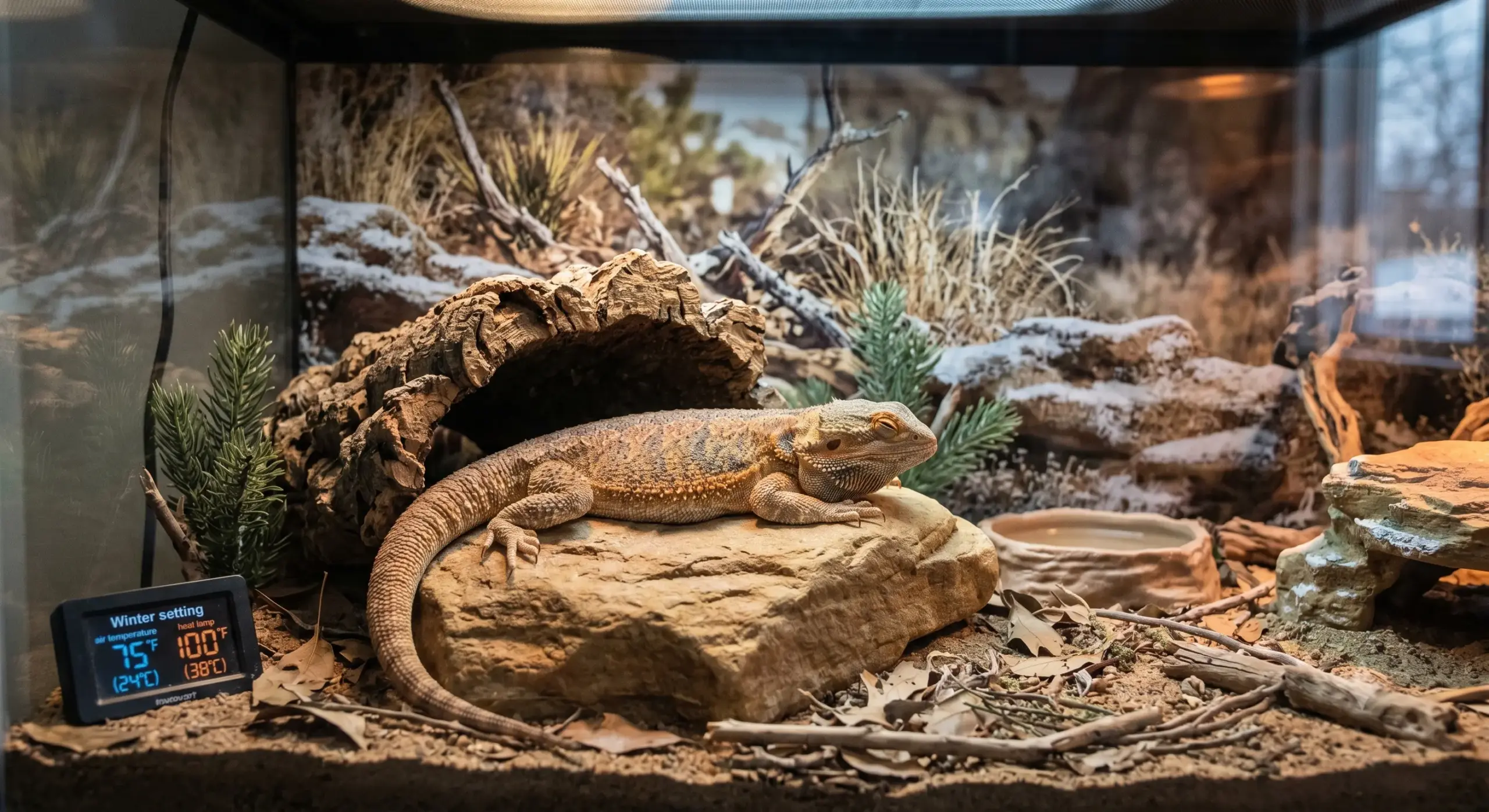
1. What is Bearded Dragon Brumation?
Brumation is a natural dormant period that cold-blooded reptiles undergo to survive freezing winter temperatures and shorter daylight hours in the wild. In their native Australian outback, this survival mechanism prevents reptiles from freezing or starving when resources become scarce.
Even when kept in a controlled, perfectly heated indoor terrarium, your pet’s ancient internal biological clock can still trigger this cycle. The subtle shifts in atmospheric pressure and ambient room temperature are often enough to signal that winter is arriving.
It is important to recognize that Bearded Dragon Brumation is not identical to mammal hibernation. While mammals fall into a deep, uninterrupted sleep, brumating reptiles experience periods of dormancy punctuated by brief moments of waking up to drink water.
Their metabolic rate drops to a tiny fraction of its normal speed during this time. This allows them to sustain life for months without consuming heavy meals, relying instead on stored fats and minimized energy expenditure.
2. Common Signs of Brumation
How exactly do you know if your scaly companion is safely entering this dormant state? Recognizing the early behavioral shifts helps you adjust your husbandry parameters and prevents unnecessary stress for both you and your pet.
Long Periods of Deep Sleep
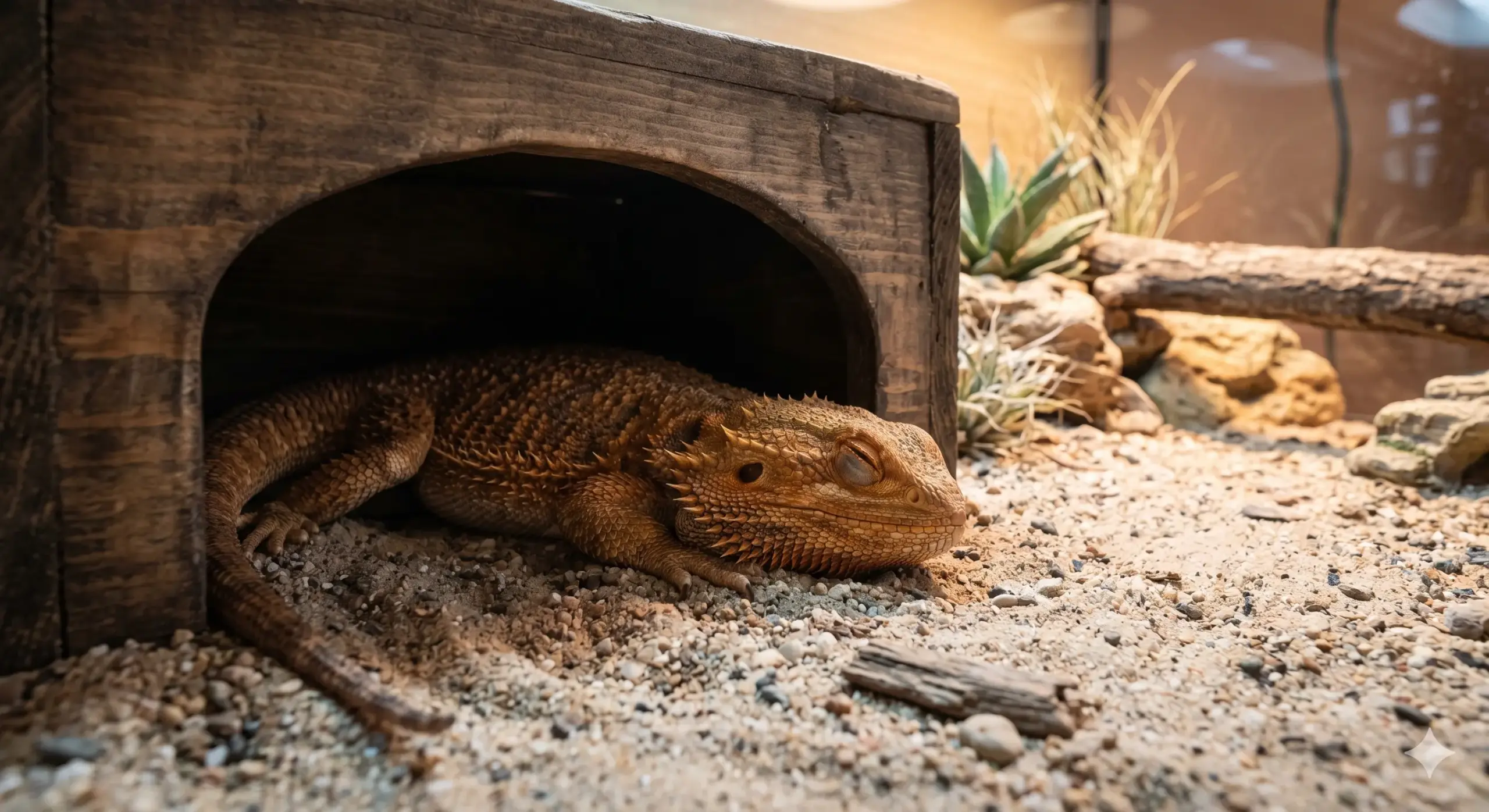
Your dragon may stay completely asleep for several consecutive days or even weeks at a time without moving. You will notice they ignore their usual morning basking routine under the heat lamp, preferring to remain tightly curled up in their favorite dark hide box.
Complete Lack of Appetite
They will suddenly show zero interest in live insects, crunchy roaches, or fresh leafy greens. Their digestive tract slows down to a near-halt, making food consumption unnecessary and dangerous during this period.
Persistent Hiding Behavior
Seeking out the darkest, coolest spots in the enclosure becomes their primary daily mission. They will actively bury themselves under loose substrate or wedge themselves deep behind rock formations to escape any artificial light sources.
Significantly Reduced Bowel Movements
Since they are no longer consuming food, their bodies stop producing waste regularly. Do not expect to see normal daily droppings, as their entire gastrointestinal system has safely paused to conserve vital bodily fluids and energy.
3. The Human Experience: A Keeper’s Quiet Winter
The terrarium went completely silent last November. My heart sank instantly. Seeing that empty basking spot made the living room feel incredibly cold and lonely. I remembered staring at his motionless, scaly body tucked away deep inside the wooden log, terrified by the stillness. Was he breathing?
Gently touching his tail gave me a tiny, reassuring twitch. I breathed again. Weeks bled into months of anxious waiting, quiet mornings, and empty salad bowls. It taught me real patience. Our bond isn’t just about active feeding frenzies; it is about respecting these quiet, ancient natural rhythms of life.
4. Brumation vs. Illness: How to Tell the Difference
This is undoubtedly the most critical part of mastering proper Bearded Dragon Brumation care. Because an ill reptile and a dormant reptile share overlapping symptoms, distinguishing between them is vital to ensure you don’t overlook a severe medical emergency.
According to clinical guidelines from the Association of Reptile and Amphibian Veterinarians (ARAV), diagnostic testing via fecal sampling is highly recommended before letting a reptile sleep, ensuring hidden pathogens aren’t allowed to multiply over the winter.
| Physical Marker | Healthy Brumation State | Potential Illness / Parasites |
|---|---|---|
| Overall Body Weight | Maintains stable weight with minimal loss. | Rapid, drastic weight loss with visible fat pad depletion. |
| Physical Responsiveness | Wakes up slightly and opens eyes when gently nudged. | Completely limp, unresponsive, or extremely lethargic when handled. |
| Hydration Levels | Skin remains relatively elastic and eyes look clear. | Sunken eyes, wrinkled skin, and thick sticky saliva in mouth. |
| Tail Base and Fat Pads | Plump, firm tail base and healthy fat reserves. | Thin, bony tail base and severely sunken head pads. |
A healthy dragon entering this phase should absolutely NOT lose significant amounts of body mass. If your pet begins to look visibly thin, emaciated, or wasted, they are likely suffering from an underlying parasitic infection that requires immediate veterinary intervention.
Alertness levels also serve as an excellent indicator of underlying health. A dormant dragon will still display clean, basic reflexes when gently stimulated, whereas a sick animal will remain completely floppy, weak, or physically incapable of lifting its head.
5. How to Care for a Brumating Dragon
Proper husbandry management during these cold weeks ensures your reptile passes through their dormant cycle safely. Your primary objective shifts from interactive feeding to careful environmental monitoring and stress reduction.
Absolutely Do Not Force Feed
Because their core metabolism has slowed down to a crawl, forcing food into their mouth is highly dangerous. Undigested insects or greens can literally sit inside their stomach and rot, leading to fatal bacterial infections or severe gut toxicity.
Prioritize Consistent Hydration
Dehydration remains one of the biggest risks during extended periods of sleep. Offer a quick, gentle soak in lukewarm water once every week to allow them to drink or absorb moisture, then immediately place them back into their dark hide.
Carefully Monitor Environmental Lights
Keep your terrarium lighting schedule highly consistent or slightly reduced to mimic natural winter daylight hours. Never turn off your essential basking heat sources entirely unless specifically instructed to do so by an experienced exotic veterinarian.
Conclusion
In summary, navigating a cycle of Bearded Dragon Brumation is a natural, healthy, and deeply rewarding part of your exotic reptile’s lifecycle. By staying calm, tracking their physical weight weekly, and ensuring adequate hydration, you help your scaly companion wake up refreshed for spring.