
Buying the right bulb is only half the battle. Knowing how to perform a proper bearded dragon UVB light setup is what actually protects your pet from health issues. If the light is too far, it’s useless; if it’s too close, it can cause severe eye damage. In this comprehensive guide, we will walk you through the perfect installation process to ensure your reptile companion thrives for years to come.
Reptile husbandry requires precision, patience, and a solid understanding of environmental physics. In the wild, these magnificent lizards bask under the intense Australian sun, absorbing unfiltered radiation daily. In captivity, we must perfectly replicate this energy using specialized indoor lighting systems.
Without the correct radiation wavelengths, your pet cannot perform basic biological functions, leading to lethargy and structural decay. Let us dive deep into the specific steps required to establish a flawless light configuration in your enclosure.
Understanding the Biological Need for Ultraviolet Radiation
Before mounting your fixtures, it is essential to understand why a specialized Bearded Dragon UVB Light is absolutely non-negotiable for your pet’s survival. Ultraviolet B radiation acts as a primary catalyst in the pre-vitamin D3 synthesis process within the reptile’s skin layers.
Once synthesized, this vitamin allows their digestive tract to successfully absorb calcium from their daily diet of insects and greens. Without this metabolic pathway, a lizard’s body will systematically strip calcium directly from its own skeletal framework to maintain vital organ functions.
This systemic depletion leads directly to Metabolic Bone Disease, a painful and completely preventable condition characterized by soft bones, tremors, and severe physical deformities. By installing a high-quality Bearded Dragon UVB Light, you create a safe microclimate that actively prevents structural deterioration.
It is important to remember that standard household lightbulbs, LED strips, and generic plant grow lights do not produce any usable ultraviolet radiation. Only purpose-built, high-output reptile lamps can deliver the precise wavelengths required to maintain metabolic equilibrium over long periods.
Step 1: Choose Your Mounting Style
There are two main ways to handle your bearded dragon UVB light setup, and each method has distinct advantages depending on your specific enclosure parameters. Choosing the incorrect mounting style can drastically reduce the amount of beneficial radiation that actually reaches your lizard’s body.
Option A: Inside the Tank Installation (Highly Recommended)
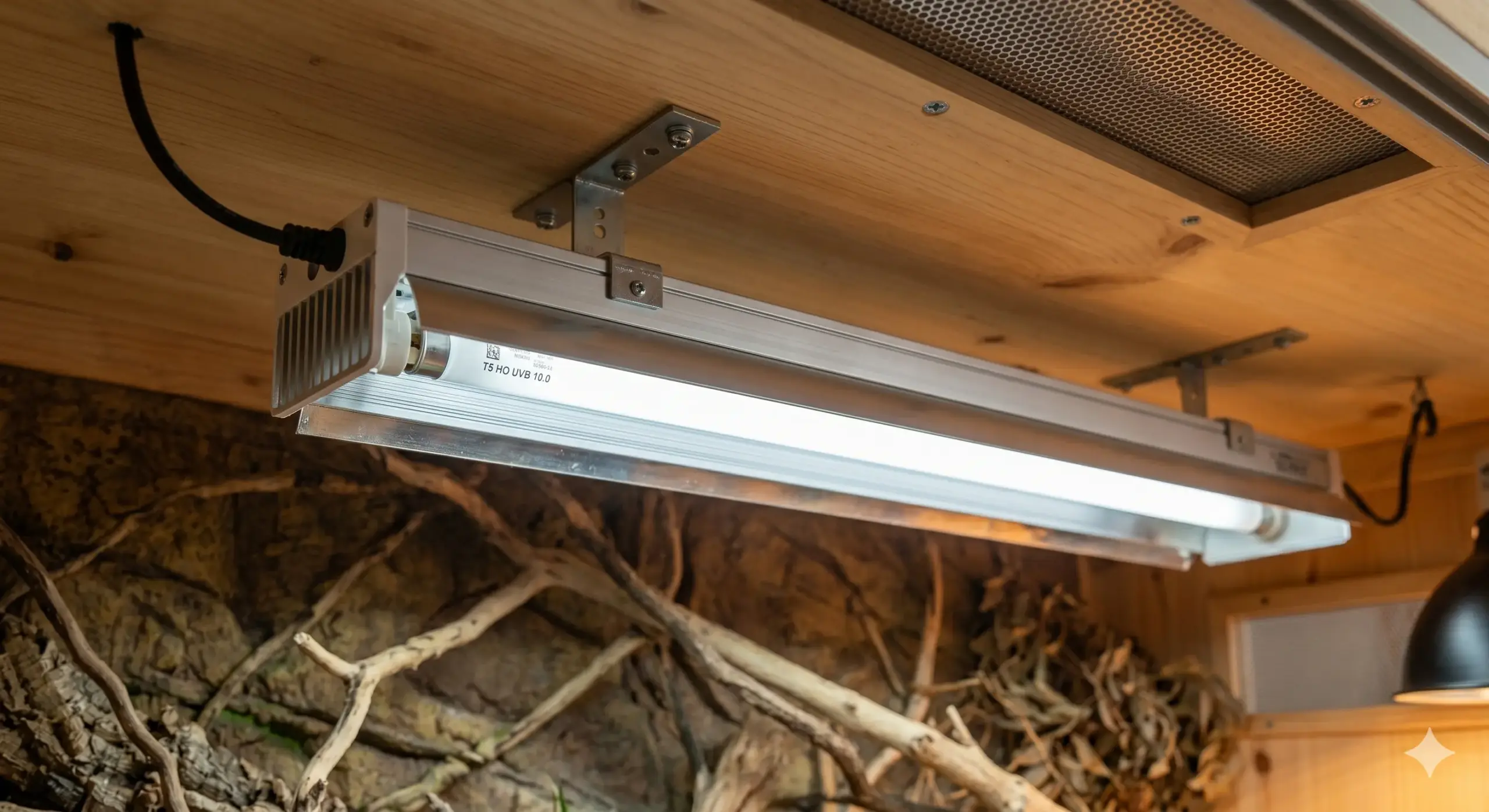
Mounting the fixture inside the tank is widely considered the gold standard for most modern reptile enclosures. This specific orientation is absolutely vital if you are utilizing standard T8 fluorescent bulbs, which possess a much weaker output than their modern counterparts.
Inside mounting is also necessary if your enclosure features a very fine mesh screen top, as dense wire weaves can easily block or deflect up to fifty percent of beneficial ultraviolet rays. To complete this safely, you can secure the lightweight fixture directly to the inner ceiling frame using heavy-duty plastic zip ties.
Alternatively, many advanced hobbyists utilize industrial-strength magnetic mounts or heavy-duty mounting tape designed to withstand high ambient humidity and heat. Ensuring the fixture is anchored firmly prevents accidental falls that could injure your pet or shatter the glass bulb.
Option B: On Top of the Mesh Screen Installation
Placing the light fixture directly on top of the mesh screen is only recommended if you are utilizing highly powerful T5 High-Output bulbs. These advanced lamps generate a significantly stronger radiation field capable of penetrating structural barriers effectively.
When selecting this method, you must inspect the structural layout of your screen top very carefully. Ensure that the mesh ventilation holes are large enough to let the crucial ultraviolet rays pass through without creating excessive shadow patterns or structural filtration.
If your screen features exceptionally small, restrictive punctures, you should modify the top or transition to an internal mounting style to guarantee your lizard receives adequate exposure. Never place regular glass or plastic panels between the lamp and your pet, as these materials block all ultraviolet radiation completely.
Step 2: Positioning the Light for Optimal Exposure
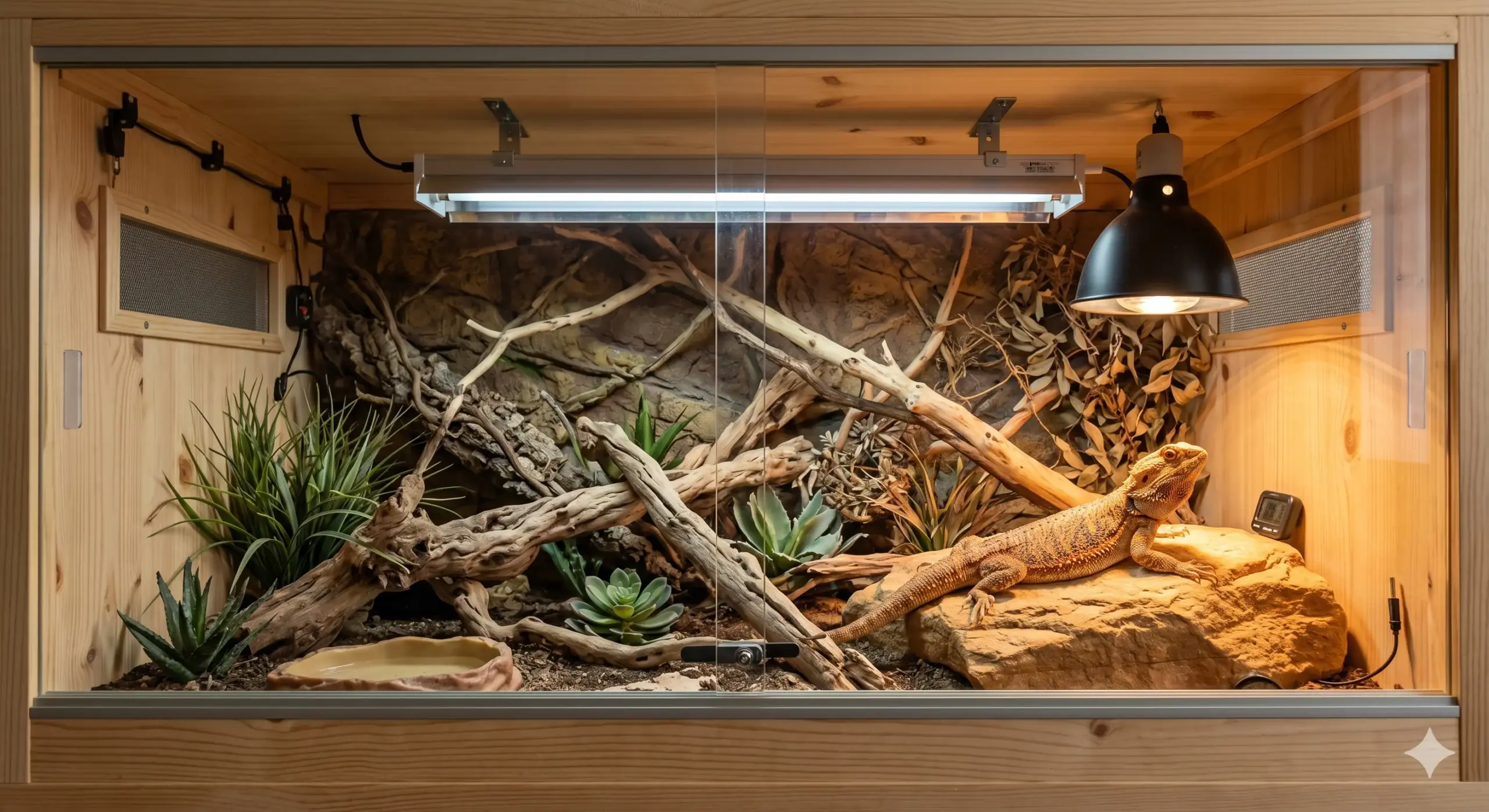
Your specialized Bearded Dragon UVB Light should not cover the entire length of the tank under any circumstances. Creating a distinct environmental gradient is critical for allowing your reptile to self-regulate its daily exposure levels naturally.
The Crucial Rule of Two-Thirds
To establish a functional gradient, your primary light fixture should span approximately one-half to two-thirds the total length of the enclosure. This intentional layout creates a highly active zone on one side of the tank and a completely shaded retreat on the opposite side.
Reptiles are highly intuitive creatures that know exactly when their bodies require radiation and when they need to escape it. By leaving one-third of the enclosure free from direct ultraviolet rays, you allow your pet to cool down and rest without continuous metabolic stimulation.
A common mistake is purchasing a bulb that spans from wall to wall, forcing the lizard into a perpetual state of radiation exposure. This structural flaw can lead to chronic stress, dehydration, and eventual dermal damage over time.
Overlapping the Ultraviolet Source with Heat Lamps
For the absolute best results, you must place the primary ultraviolet bulb on the exact same side as your dedicated basking heat lamp. In nature, heat and intense ultraviolet radiation are fundamentally inseparable, arriving simultaneously from the sun.
By overlapping these two distinct energy sources, you successfully create a highly concentrated “patch of virtual sunlight” within the enclosure. Your lizard can then conveniently absorb thermal energy and synthesize vital D3 vitamins at the exact same moment, maximizing biological efficiency.
This concentrated zone encourages natural behaviors, as your pet will willingly spend hours lounging on their favorite rock or branch. Ensuring these elements align perfectly mirrors the natural wild environment, keeping your companion highly active and beautifully colored.
Pro Tip for Mastering Thermal Management:
Achieving the perfect balance between ultraviolet exposure and ambient temperature is the secret to successful long-term care. To ensure your enclosure reaches the ideal thermal metrics alongside your lighting configuration, make sure to thoroughly read our comprehensive bearded dragon basking temp guide to eliminate all guesswork.
Step 3: Measuring the Safe Distance with Precision
This is undeniably the most critical part of managing a successful configuration. Maintaining an inaccurate distance can lead to catastrophic failure, either rendering the Bearded Dragon UVB Light completely useless due to dissipation or causing irreversible cellular damage due to proximity.
As radiation travels away from its source, its structural intensity decreases exponentially according to the inverse-square law. Therefore, adjusting the physical distance between your lizard’s highest basking point and the bottom of the glass tube is a fundamental requirement for safety.
Different types of bulbs produce vastly different output signatures, meaning you must carefully tailor your measurements to the specific technology installed inside your reptile room. Let us examine the precise boundaries required for both major bulb categories used today.
| Bulb Type & Technology | Recommended Mounting Location | Safe Target Distance to Basking Spot | Expected Operational Lifespan |
|---|---|---|---|
| T5 HO (High Output) 10.0 / 12% | On Mesh Screen or High Internal | 12 to 15 Inches (30-38 cm) | 12 Months of Daily Use |
| T8 Standard Output 10.0 / 10% | Must Be Inside Enclosure Only | 6 to 10 Inches (15-25 cm) | 6 Months of Daily Use |
| Mercury Vapor Bulb (MVB) | Vertical Over Mesh Screen Only | 12 to 18 Inches (30-45 cm) | 8 to 12 Months of Daily Use |
Specific Guidelines for Modern T5 HO Bulbs
When utilizing a highly advanced T5 HO Bearded Dragon UVB Light, you must maintain a strict distance of 12 to 15 inches from the primary basking spot. Because these high-output tubes emit an incredibly intense field of radiation, placing them closer can result in severe photokeratitis, an incredibly painful eye condition.
If your specific enclosure configuration requires you to mount the T5 fixture underneath the mesh screen without any structural barrier, you may even want to extend that safe distance to 14 or 16 inches. This extra clearance provides a reliable buffer zone against accidental overexposure.
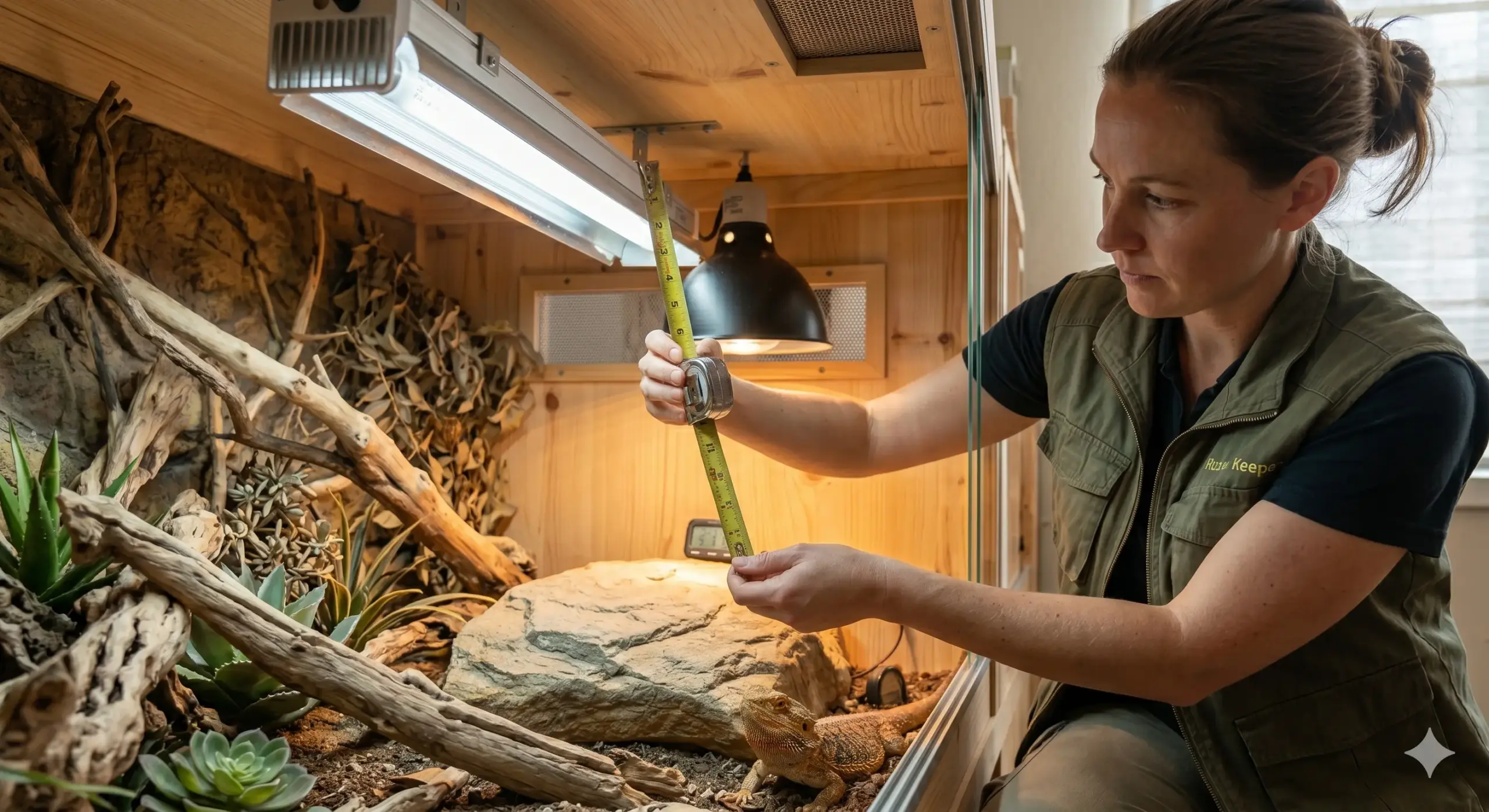
Always verify these distances using a physical measuring tape rather than guessing by eye. Visual estimations are notoriously inaccurate and can inadvertently put your beloved companion at serious risk of chronic neurological or ocular irritation.
Specific Guidelines for Standard T8 Bulbs
For older, traditional T8 bulbs, you must maintain a much closer distance of 6 to 10 inches from the animal. These standard-output tubes possess a much shorter effective reach, meaning their beneficial rays dissipate entirely if placed too far above the basking platform.
Because their output is fundamentally milder, a T8 bulb must always be mounted completely inside the enclosure to avoid being rendered entirely useless by a mesh screen top. If placed on top of a screen, practically zero usable radiation will manage to reach your pet’s skin.
Keep in mind that while T8 bulbs are highly affordable initially, their lower output requires more frequent monitoring and much tighter spatial constraints. Ensuring your lizard can physically sit within that narrow 6-to-10-inch sweet spot is critical for preventing systemic vitamin deficiencies.
Crucial Measurement Note: Always measure the distance from the absolute bottom of the physical glass bulb directly to the highest point of your lizard’s back while they are fully extended on their basking platform. Never measure simply from the top of the cage to the floor of the tank.
I still vividly remember the cold winter evening when I rescued Apollo, a neglected reptile whose bones had turned as soft as sponge due to a completely improper lighting setup. His original owner had placed a weak, worn-out bulb nearly two feet above the cage floor. It did absolutely nothing. Watching him struggle to lift his tiny head toward a heat lamp that provided warmth but zero vital radiation broke my heart completely. It took four long months of careful rearranging, precise measuring, and daily syringe feedings to see him take his first strong, confident steps across the wooden branch. The sheer joy of watching him successfully hunt a cricket on his own for the first time is a feeling I will cherish forever; it proved to me that a few inches of spatial adjustment can quite literally rewrite an animal’s destiny.
Step 4: Setting the Timer and Simulating Natural Photoperiods
Establishing a highly stable, predictable day and night cycle is essential for maintaining your reptile’s internal biological clock and emotional well-being. In the wild, changing seasonal shifts dictate their natural activity levels, mating drives, and energy conservation phases.
To replicate this seamlessly, connect your specialized Bearded Dragon UVB Light and your primary heat sources to a high-quality programmable digital timer. Set your automated system to provide 12 to 14 hours of continuous operational runtime during the bright summer months.
As the winter season approaches, you can gradually reduce this cycle down to 10 or 12 hours of operational illumination to mimic natural astronomical patterns. This subtle environmental shift helps your pet enter a natural, healthy state of rest or light brumation safely.
Most importantly, ensure total, absolute darkness throughout the entire night. You must avoid utilizing gimmicky “night lights,” red bulbs, or ceramic moonlights, as these artificial sources severely disrupt your pet’s sleep patterns, leading to chronic immune suppression and behavioral issues.
Important Maintenance and Scheduled Bulb Replacement
One of the most dangerous traps an exotic pet owner can fall into is relying entirely on a visual inspection to determine if an ultraviolet lamp is functioning correctly. Fluorescent tubes will continue to emit bright, visible white light for years, long after their internal chemical coatings have stopped producing usable ultraviolet radiation.
Over time, the specialized phosphors inside the glass tube degrade permanently due to constant electrical current. As a strict rule of thumb, standard T8 bulbs must be replaced every 6 months, while high-quality T5 HO bulbs should be completely swapped out every 12 months without exception.
To maintain absolute accuracy, you can purchase a dedicated digital radiometer to physically measure the specific UV Index at the basking site. According to professional veterinary guidelines established by the Association of Reptile and Amphibian Veterinarians (ARAV), a healthy target UV Index for these desert lizards falls squarely between 3.0 and 5.0 in the primary basking zone.
Conclusion
A correct bearded dragon UVB light setup ensures that your dragon can synthesize Vitamin D3 and stay active throughout its long life. By choosing the right mounting style, maintaining perfect overlapping alignment with your thermal sources, and respecting the laws of radiation distance, you create a beautiful sanctuary where your pet can truly flourish.
Take a few minutes to double-check your current distances today with a physical tape measure. Remember, a few inches can make a world of difference in your pet’s long-term health, happiness, and skeletal integrity. Your reptile companion relies entirely on your precision to survive.