
Is your scaly friend leaving messy, runny droppings all over their enclosure instead of clean, well-formed logs? Discovering bearded dragon diarrhea can trigger immediate panic for any dedicated reptile keeper, leaving you wondering whether it is a minor dietary mistake or a major health emergency.
Bearded dragon diarrhea is typically caused by overfeeding high-water fruits, husbandry stress, sudden temperature drops, or internal parasite infections such as coccidia. Most mild cases can be successfully managed by adjusting diet, optimizing tank temperatures, and managing hydration, though severe infections require veterinary care.
Let us dive straight into the subtle root causes, critical hydration signals, and practical steps you must take to restore your reptile’s gut health and overall well-being today!
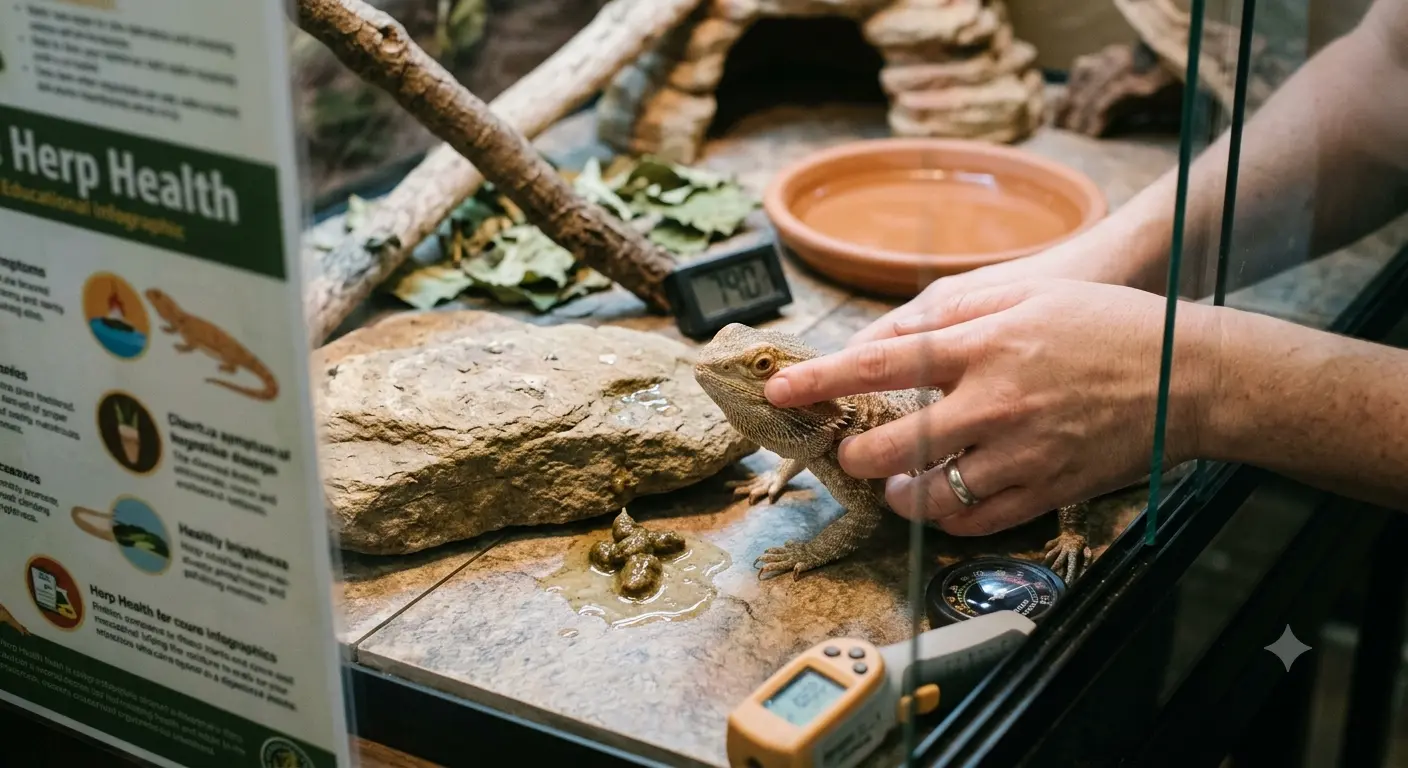
Understanding the Root Causes of Runny Waste in Bearded Dragons
Finding watery feces in the vivarium is always a signal that something inside your reptile’s digestive tract has lost its natural balance. While an occasional loose stool is completely normal, persistent runny waste demands systematic investigation into your daily husbandry practices.
One primary culprit is overfeeding high-water content fruits and vegetables like watermelon, cucumber, or lettuce. These foods overload the gut with excess fluid, leading directly to temporary bearded dragon diarrhea rather than solid, healthy droppings.
Pathogenic bacterial blooms and parasitic overgrowths also disrupt normal gut flora significantly. Microscopic parasites like pinworms or coccidia multiply rapidly when the immune system weakens, damaging the intestinal lining and preventing liquid absorption.
Finally, environmental and husbandry stress plays a massive, underrated role in gastrointestinal health. Relocating your pet, improper lighting schedules, or cool basking zones slow down digestive enzymes, allowing food to ferment and turn liquid.
Recognizing Dehydration Through Urate Consistency
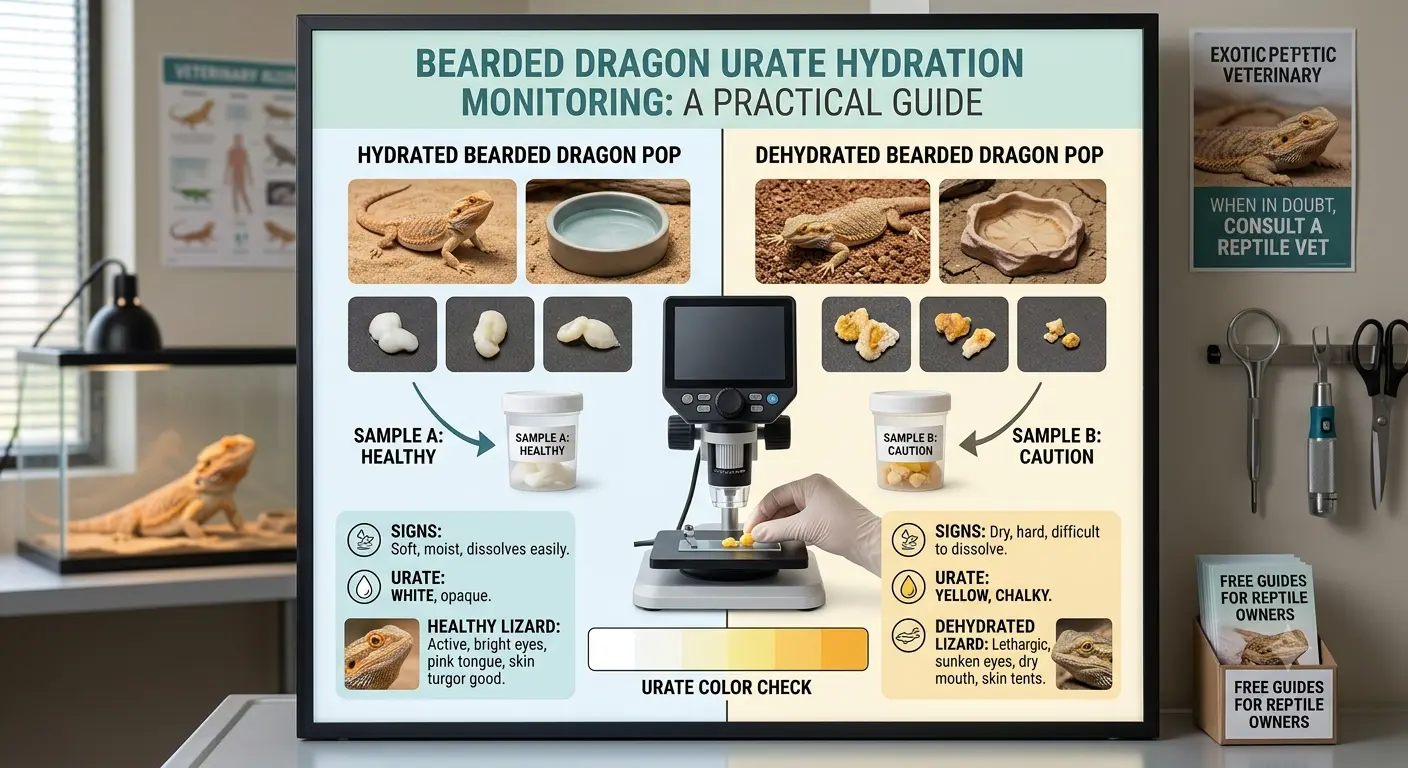
Monitoring your pet’s hydration requires looking closely at the urate, which is the white, chalky portion of their normal elimination process. Unlike mammals, reptiles excrete nitrogenous waste as solid uric acid to conserve vital bodily water.
When a reptile suffers from chronic fluid loss, its body pulls water directly from the kidneys and cloaca. This leaves behind hard, rubbery, or chalky urates that signal a dehydrated bearded dragon poop state clearly.
In severe cases, these hardened urates become difficult to pass, causing pain, straining, and dangerous cloacal impaction. You may observe your pet lifting its tail awkwardly or showing visible distress during bowel movements.
To accurately assess your pet’s overall bowel health and normal waste composition, consult our comprehensive bearded dragon poop guide for detailed visual comparisons.
Symptoms of Overhydration and Watery, Formless Waste
While dehydration is a frequent concern, overhydration presents its own distinct set of visible symptoms inside the enclosure. Excessive fluid intake causes hyper-frequent, completely formless waste surrounded by large pools of clear water.
An overhydrated bearded dragon poop often lacks any solid brown structure whatsoever, floating in liquid rather than maintaining a clear sausage-like shape. This occurs when keepers force-feed water or offer overly wet leafy greens daily.
While occasional fluid flushes are harmless, chronic overhydration strips essential electrolyte reserves out of the bloodstream. This rapid electrolyte wash out causes lethargy, muscle weakness, and loss of normal appetite over time.
Differentiating true illness from simple liquid overload requires eliminating high-water treats for 48 hours. If the waste remains loose after dietary correction, parasites or bacterial issues are almost certainly present.
Diagnosing Poor Gut Motility and Undigested Food
Passing completely unabsorbed or whole mealworms and crickets is a clear sign of severe digestive failure. Seeing a bearded dragon undigested poop indicates that items moved through the gastrointestinal tract without breaking down.
The primary driver behind poor gut motility is inadequate basking temperature. Reptiles rely entirely on external thermal heat to trigger metabolic stomach acids; without a 100°F to 108°F surface, food rots internally.
Inappropriate feeder size also contributes heavily to poor nutrient absorption and rapid gut passage. Feeder insects larger than the space between your pet’s eyes cause intestinal blockage and force rapid clearance of unabsorbed matter.
Chronic low-grade stress from noisy rooms, improper cohabitation, or lack of proper UVB lighting further paralyzes normal gut contractions. Resolving these environmental flaws usually restores natural digestion within days.
A Keeper’s Journey Through Digestive Troubleshooting
Last winter, my five-year-old rescue, Spike, suddenly started leaving watery messes every single morning across his basking slate. I panicked instantly. My mind rushed straight to parasitic infections, so I spent nights reading alarming forum threads while feeling completely helpless.
I rushed out and started offering warm baths three times a day, thinking hydration was the magic fix. It made things infinitely worse. His enclosure turned into a soggy swamp, his appetite dropped to zero, and the mess became entirely liquid without any solid shape.
The breakthrough happened when I systematically re-checked my equipment instead of blindly guessing. My digital probe thermometer had drifted out of calibration, and the basking spot had quietly dropped by ten degrees. Once I replaced the bulb and dial-in precise heat, his digestive system bounced back perfectly within forty-eight hours.
Comparing Stool Types, Causes, and Immediate Actions
Identifying the specific visual traits of your pet’s waste allows you to take targeted action before minor issues escalate into severe medical conditions. Use this quick reference matrix to evaluate recent tank findings.
| Waste Appearance | Primary Suspected Cause | Hydration Status | Recommended Action |
|---|---|---|---|
| Watery, formless brown mass | Dietary excess, parasites | Varies / Fluid loss | Cut watery foods, get fecal test |
| Solid brown with hard chalky urate | Chronic water deficit | Severely Dehydrated | Offer oral drops, warm bath |
| Clear pools with disintegrating waste | Excess fruit / watery greens | Overhydrated | Switch to fibrous greens |
| Visible intact insect parts | Low basking heat, large prey | Normal / Compromised | Verify surface heat with temp gun |
When to Seek Professional Veterinary Assistance
While mild cases of bearded dragon diarrhea clear up with simple husbandry tweaks, certain red flags demand immediate intervention from an exotic veterinarian certified by organizations like the Association of Reptile and Amphibian Veterinarians (ARAV).
If loose waste persists for longer than three consecutive days despite diet correction, schedule a professional fecal exam. Bring a fresh sample sealed in a clean plastic bag to identify underlying microscopic pathogens.
Immediate emergency care is mandatory if you notice dark red blood, black tarry waste, extreme lethargy, or sunken eyes. These symptoms point toward severe internal hemorrhaging, advanced organ dysfunction, or dangerous intestinal impactions.

Step-by-Step Recovery Protocol for Reptile Gut Health
Restoring stability to a disrupted digestive tract requires a structured, patient approach. Follow these daily practical steps to help your scaly companion recover quickly and comfortably.
- Dietary Reset: Strip away all fruits, hornworms, and watery vegetables immediately. Feed only staple fibrous greens like collard greens, mustard greens, and properly dusted dubia roaches.
- Thermal Audit: Check basking surface temperatures using an infrared temperature gun. Ensure the hot zone reaches 100°F–108°F for adults and ambient sides stay around 80°F.
- Hydration Balance: Offer water drop-by-drop onto your pet’s snout using a syringe. Avoid prolonged force-soaking, which induces intense stress and worsens watery waste.
- Sanitation Blitz: Clean waste instantly using reptile-safe disinfectants to prevent re-infecting your pet with parasite eggs or bacterial spores spread during loose movements.