
Creating the perfect environment is the single most critical task for any reptile keeper. In their natural habitat, these magnificent creatures thrive across the rugged, arid expanses of the Australian outback. Replicating this unique ecosystem inside your home requires deep knowledge, precision engineering, and specialized equipment.
This comprehensive guide delivers an advanced, step-by-step masterclass on building a pristine environment. By optimizing your system, you support metabolic health, behavioral expression, and longevity. Let us dive deep into the ultimate requirements for a successful Bearded Dragon Habitat Setup.
1. Finding the Ideal Enclosure: Size and Material Standards
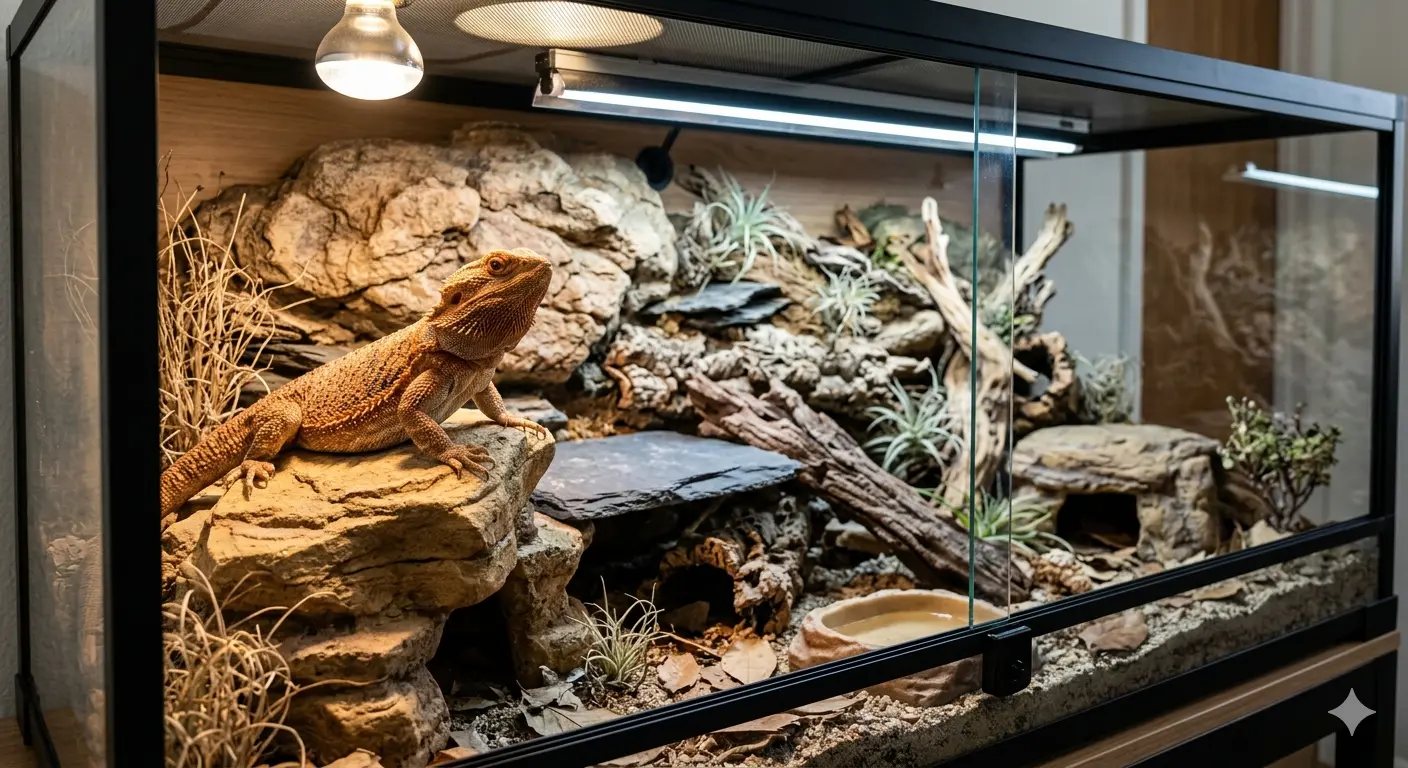
When engineering a premium Bearded Dragon Habitat Setup, space is your ultimate foundation. Juvenile reptiles can survive temporarily in smaller tanks, but they grow at an astonishing rate. Housing a rapidly growing juvenile in a restrictive environment stunts growth and induces severe chronic stress.
For adult reptiles, a 120-gallon enclosure measuring 4x2x2 feet is the definitive, non-negotiable industry standard. This explicit footprint provides ample horizontal room for exploration, foraging, and essential physical exercise. Furthermore, these dimensions are critical for establishing a functional thermal gradient that allows proper self-regulation.
Front-opening wooden or PVC enclosures are vastly superior to traditional glass fish tanks. Wood offers exceptional thermal insulation, while PVC provides outstanding durability and humidity resistance. Front doors also prevent the fear response caused by reaching in from above, which mimics aerial predators.
2. Lighting Engineering: Harnessing the Power of UVB
Without proper lighting, your Bearded Dragon Habitat Setup will fail, resulting in devastating health consequences for your pet. Desert reptiles require intense ultraviolet radiation to synthesize Vitamin D3 properly in their skin. This vitamin is the biological key that allows their digestive tract to absorb calcium from their diet.
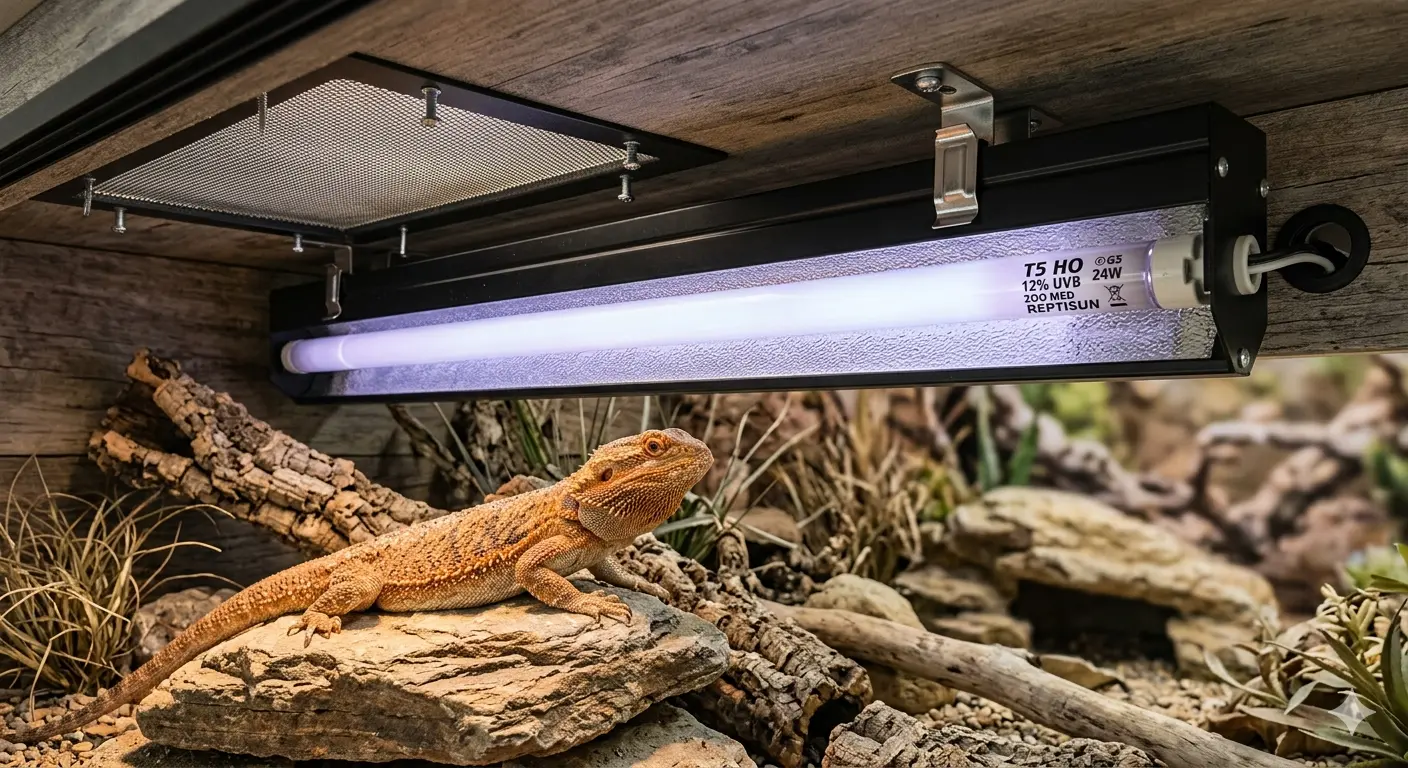
Inadequate UV exposure leads directly to Metabolic Bone Disease, a painful, degenerative condition causing fractures and deformities. To prevent this, you must avoid compact coil bulbs, which fail to emit a sufficient distribution of rays. Instead, invest exclusively in a high-quality T5 High Output (HO) linear UVB tube companion.
The linear fixture must span roughly half to two-thirds the total length of your enclosure. Position the tube carefully on the warm side, overlapping directly with the designated basking zone. This strategic configuration allows your reptile to absorb maximum ultraviolet radiation while simultaneously warming its body core.
UVB Degradation and Maintenance Realities
It is vital to understand that ultraviolet output decays steadily over time, long before the bulb stops emitting visible light. A bulb might look perfectly bright to human eyes while producing absolutely zero beneficial radiation. Therefore, meticulous tracking of your equipment lifespan is necessary for continuous safety.
Replace your T5 HO linear tubes reliably every 6 to 12 months without exception. Utilizing a dedicated solar meter helps measure exact output, ensuring your pet never suffers from invisible degradation. Proper planning ensures your Bearded Dragon Habitat Setup remains medically safe and highly effective year-round.
3. Advanced Thermal Dynamics: Master the Temperature Gradient
Reptiles are ectothermic organisms, meaning they rely entirely on external environmental sources to regulate internal body temperatures. Your enclosure must offer a distinct thermal gradient, featuring a scorching hot zone and a distinctly cooler retreat. This dual-zone system lets your pet move freely to warm up or cool down as needed.
The hot basking spot requires a heavy-duty, dimmable incandescent halogen flood bulb to generate deep infrared heat. Avoid colored night bulbs or ceramic emitters as primary basking sources, because visible white light stimulates natural basking behaviors. Mount the heat source securely directly above your main basking platform.
To accurately monitor these crucial zones, avoid inaccurate analog plastic dial thermometers. Install digital thermometers equipped with dual probes alongside an infrared temperature gun for instant, precise surface readings. Maintaining perfect control over these ranges prevents thermal shock, digestive failure, and systemic lethargy.
| Enclosure Zone | Target Temperature (Celsius) | Target Temperature (Fahrenheit) | Primary Equipment Needed |
|---|---|---|---|
| Basking Surface | 38°C – 42°C | 100°F – 108°F | Dimmable Halogen Flood Lamp |
| Warm Ambient Side | 32°C – 35°C | 90°F – 95°F | Ambient Heat Dissipation |
| Cool Ambient Side | 24°C – 27°C | 75°F – 80°F | No Direct Lighting / Shaded Area |
| Nighttime Minimum | 18°C – 21°C | 65°F – 70°F | Ceramic Heat Emitter (Only if below 15°C) |
4. The Substrate Debate: Choosing a Safe Foundation
Selecting the material for the floor of your Bearded Dragon Habitat Setup is a highly debated topic. For young, growing juveniles, completely avoid loose options like commercial walnut shells, calcium sand, or fine play sand. Young reptiles are clumsy hunters and frequently swallow substrate, causing fatal intestinal impactions.
Safe, beginner-friendly options include premium paper towels, untextured slate tiles, or high-quality solid reptile ceramic liners. These materials eliminate impaction risks entirely while making daily spot-cleaning incredibly fast and simple. Paper towels are particularly excellent for quarantining new animals, allowing clear monitoring of health and waste.
If you prefer a natural aesthetic, natural slate tiles stand out as an exceptional permanent choice. They retain heat beautifully from overhead lamps, creating an secondary under-belly warming effect. Furthermore, the rough texture naturally files down your reptile’s sharp claws, saving you from stressful manual trimming sessions.
5. Environmental Enrichment: Decor, Climbing, and Mental Health
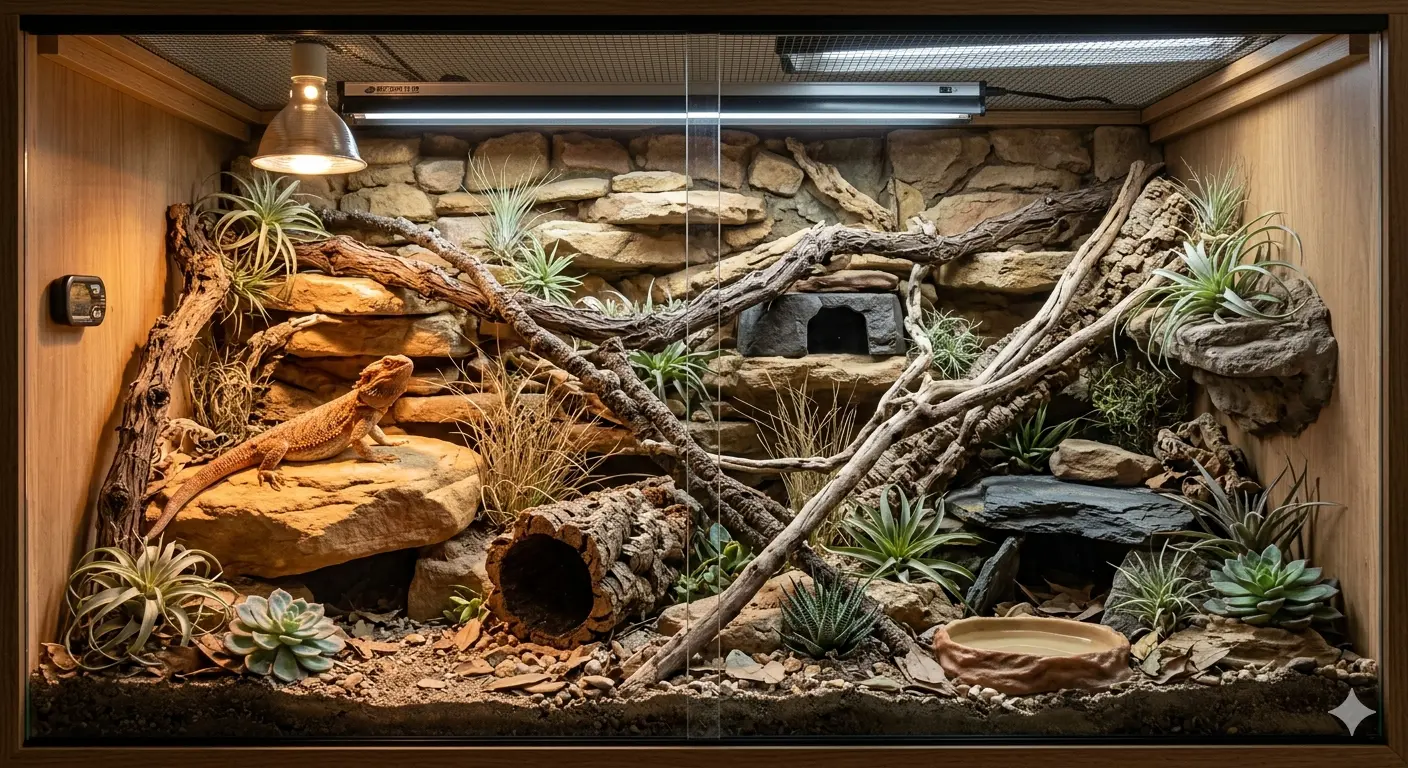
An empty, barren enclosure is a primary catalyst for severe chronic stress and psychological depression in captive reptiles. To build a truly enriching Bearded Dragon Habitat Setup, you must introduce a complex three-dimensional landscape. Incorporate structural elements that encourage natural climbing, hiding, basking, and scouting behaviors safely.
Provide a sturdy, wide basking platform directly beneath the primary heat source, utilizing natural flagstone or thick grapevines. Additionally, include at least two distinct hide boxes: one positioned on the hot side and another on the cool side. This ensures your pet can hide comfortably without sacrificing its thermal biological needs.
Introduce robust climbing branches, synthetic non-toxic desert plants, and smooth rocky structures to maximize available vertical space. This layout encourages physical exercise, building muscle tone and joint health as they navigate their territory. Designing an interactive, stimulating landscape turns a simple glass box into an active, healthy sanctuary.
6. Microclimate Control: Managing Humidity and Hydration
Because these reptiles originate from arid Australian deserts, keeping humidity levels low is critical for their health. The ambient relative humidity within your Bearded Dragon Habitat Setup must remain consistently between 30% and 40%. Excessive moisture trapped in the air quickly breeds dangerous pathogens, leading to severe respiratory illnesses.
Use a reliable digital hygrometer placed on the cool side to track moisture levels accurately throughout the day. Ensure your enclosure features excellent ventilation, utilizing heavy mesh screen tops to promote continuous, fresh air circulation. Avoid placing large, wide water bowls directly under heat lamps, as this creates a disruptive sauna effect.
For official guidance on diagnosing health issues caused by poor climate management, consult the expert resources at the Association of Reptile and Amphibian Veterinarians (ARAV). For proper hydration, provide a small, shallow water dish on the cool side and offer fresh, moisture-rich greens daily. Consistent monitoring keeps the microclimate perfectly balanced, protecting sensitive lungs from long-term damage.
Summary: The True Value of a Perfect Setup
Investing time, effort, and capital into a flawless Bearded Dragon Habitat Setup is the finest decision you can make. Providing high-end lighting, precise heat gradients, and safe substrates saves you from massive vet bills and emotional heartbreak later. A stable, fine-tuned home is the ultimate foundation for a happy, thriving companion.