
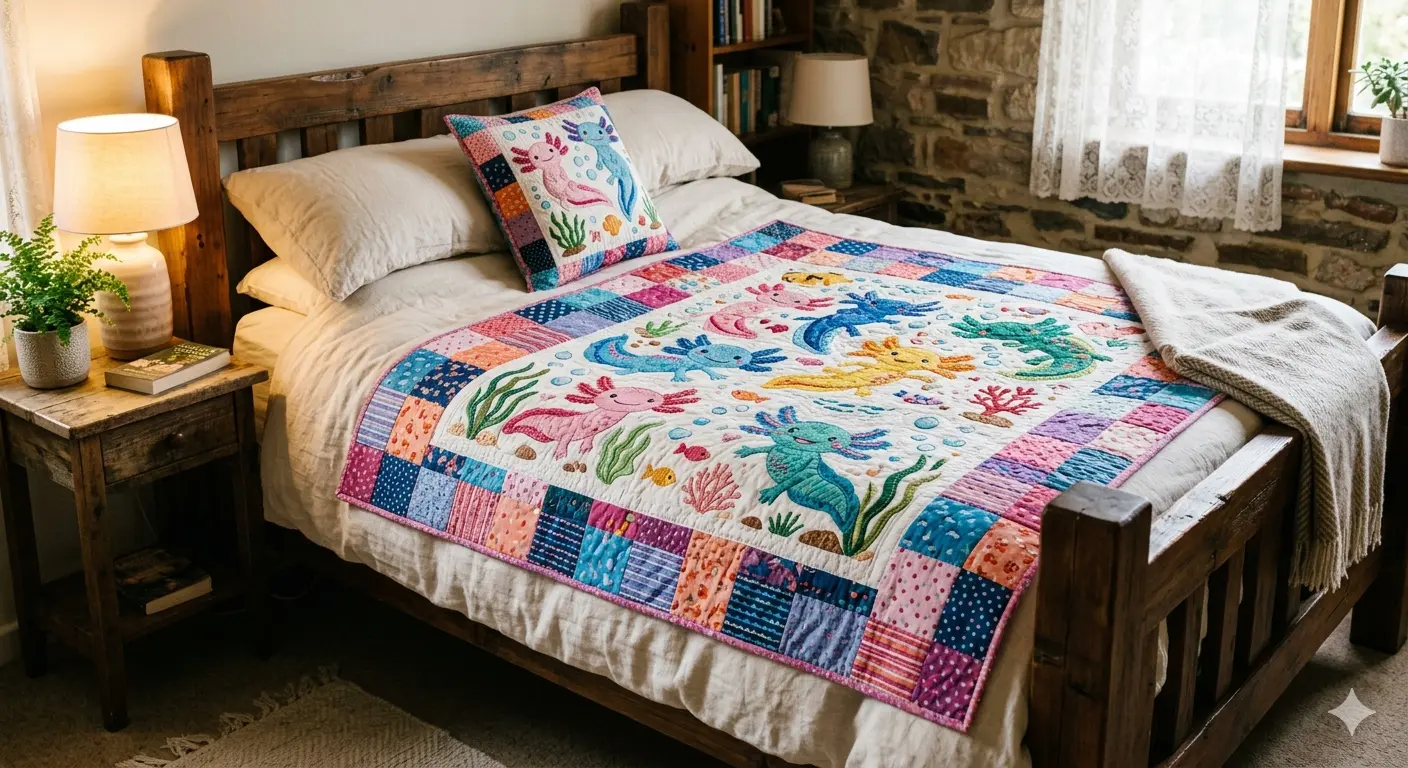
If you are completely obsessed with your aquatic salamander, why not bring that love directly into your home decor? Crafting a custom axolotl quilt pattern is the ultimate way to celebrate these magnificent “walking fish” while creating something unbelievably cozy and unique.
Whether you are an experienced quilter or a passionate beginner, choosing the right artistic design is always the crucial first step to your next fabric masterpiece. This comprehensive guide will take you through every option available for your upcoming sewing project.
We will explore different styles, essential fabric choices, and structural layout methods to ensure your final blanket looks breathtaking. Let us dive deep into the wonderful world of aquatic-themed quilting and unleash your creative potential today.
Why Choose an Axolotl Quilt Pattern?
Axolotls have officially become an absolute global sensation thanks to their permanently smiling faces, feathery external gills, and vibrant pink colors. Incorporating these charming features into your living space brings unmatched warmth and contemporary character.
A specialized blanket featuring them offers incredible advantages over standard textile choices, transforming simple fabric strips into a conversation starter. Here are a few reasons why this specific theme is capturing hearts worldwide:
- Unique Decor: Unlike standard traditional floral patterns or basic stripes, an aquatic amphibian theme effortlessly stands out in any modern room.
- Perfect Personalized Gift: Any exotic pet owner or animal enthusiast would deeply cherish a handmade, thoughtfully constructed blanket.
- Unmatched Creative Freedom: You can boldly utilize bright neon pinks, deep purples, and electric blues to completely match their magical underwater aesthetic.
Furthermore, working on this design allows textile artists to experiment with unconventional color palettes that are rarely utilized in traditional historical quilting circles. It bridges the gap between internet pop culture and timeless needlework traditions.
Top Types of Axolotl Quilt Designs
When searching online or in local crafting boutiques for the absolute perfect axolotl quilt pattern, you must consider several distinct structural styles. Each method requires a slightly different skill set and offers a unique visual finish.
Choosing the correct structural style determines how much time you will spend cutting individual fabric pieces and how the final shape will look. Let us analyze the three most popular options available for makers today.
1. The Paper Piecing Pattern
This technical style allows for incredible, sharp detail, successfully capturing the iconic external gills and wide, joyful smile with absolute geometric precision. Foundation paper piecing is perfect for those who enjoy accuracy.
By sewing fabric directly onto a printed paper guide, you can easily achieve crisp points and complex angles that would be nearly impossible with standard cutting techniques. It beautifully translates the delicate features of amphibians into sharp fabric art.
2. Appliqué Designs
If you honestly prefer a much simpler, faster approach to your project, appliqué designs are your absolute best option. This method involves cutting whole shapes out of chosen fabric and sewing them directly onto a solid background.
This is exceptionally great for beginners who might feel completely overwhelmed by complex piecing steps. It allows you to focus on choosing beautiful textures and practicing basic machine stitching without structural stress.
3. Pixel Art Quilts
Extremely inspired by popular modern sandbox video games like Minecraft, where these creatures are pixelated stars, this specific pattern uses basic small squares. By arranging simple blocks, you build a digital-looking companion.
Grid-based charting makes this style highly predictable and relaxing to assemble, as it relies entirely on straight, traditional seams. It is a fantastic option for younger fans who love modern gaming subcultures.
Comprehensive Style Comparison Matrix
To help you decide which structural path aligns perfectly with your current crafting budget, available time, and skill level, we compiled an analytical table. Review these details before purchasing your next set of templates.
| Quilt Pattern Type | Required Skill Level | Primary Advantage | Estimated Time To Complete |
|---|---|---|---|
| Foundation Paper Piecing | Advanced / Intermediate | Extreme geometric accuracy and hyper-detailed gill representations | High (30+ Hours) |
| Appliqué Methods | Beginner Friendly | Large fabric shapes mean much faster completion times and less cutting | Low (10-15 Hours) |
| Pixel Art Grid Block | Intermediate / Easy | Modern trendy gaming aesthetic that appeals heavily to younger generations | Medium (20 Hours) |
The Human Experience: A Quilter’s Lifelong Journey
My sewing room is a complete mess right now. Pink threads litter the floor like tiny, static-charged worms. Yesterday, I pricked my thumb three times trying to pin the intricate external gills of my very first custom blanket project. I almost cried out loud.
But then I looked at the fabric block resting quietly on the cold table. The little cloth eyes seemed to stare right back into my soul with total, unbothered calm. It reminded me of long nights spent sitting silently in the dark beside the glowing glass tank downstairs, watching my actual pet swim slow loops through green water plants. That tank is a quiet world.
Building things with your bare hands takes an incredible amount of patience, and modern life rarely gives us time to slow down and breathe. Every single stitch I carefully drive into this heavy cotton canvas feels like a permanent physical anchor keeping my chaotic thoughts completely still. It is more than just a hobby; it is a profound way to capture fleeting moments of joy and hold onto them forever.
Where to Display Your Finished Artwork
Once you finally press the final seams and finish binding your gorgeous axolotl quilt pattern, it can easily serve multiple decorative purposes. Do not simply hide your hard work away in a dark bedroom closet!
Consider hanging your textile art proudly on a prominent wall using a sturdy wooden dowel to treat it like a luxury tapestry. Alternatively, drape it elegantly over the back of a neutral sofa to add an immediate splash of vibrant underwater color.
If you have dedicated space, establishing a curated “pet corner” right next to your real aquarium creates an incredible, immersive thematic experience. Visitors will be completely stunned by the dedication shown to your aquatic friends.
Essential Tips for Selecting Premium Fabrics
To make your project truly pop off the surface, look for premium fabrics at a specialized craft shop or a reputable Association of Zoos and Aquariums educational resource partner. High-quality materials make a massive difference.
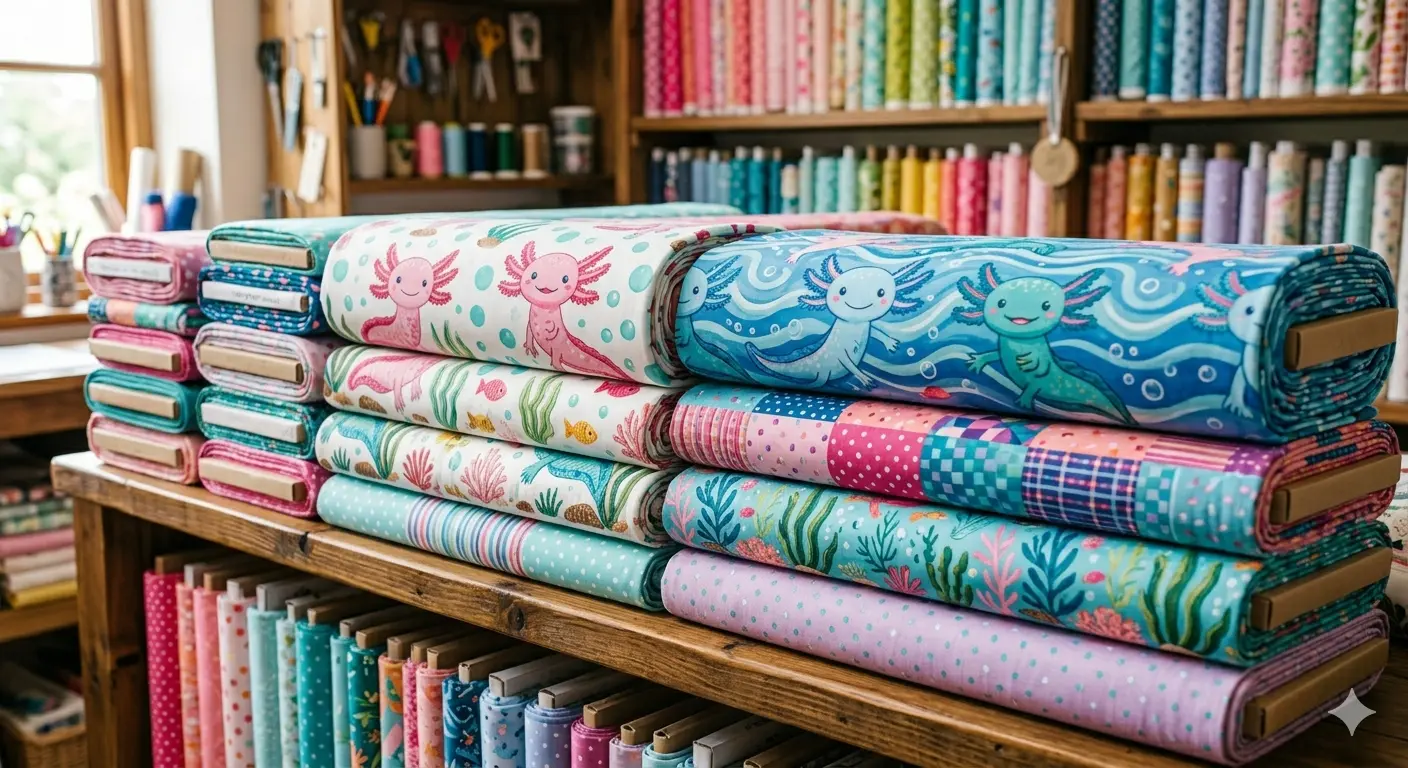
Utilizing 100% premium long-staple cotton ensures your detailed blocks remain incredibly vibrant and structurally sound for decades to come. Avoid thin, cheap synthetic blends that tend to pill or fade rapidly after their very first wash cycle.
Furthermore, try mixing subtle tonal prints, small bubble textures, or soft gradient batiks to simulate the natural movement of fresh water. These artistic choices add beautiful visual depth, making your project look like a true professional gallery piece.
Frequently Asked Questions (FAQ)
What is the best fabric for an axolotl quilt pattern?
We highly recommend using 100% premium quilting cotton for the main body blocks because it holds its shape beautifully and comes in thousands of vibrant shades of pink, purple, and teal. You can also incorporate small touches of minky fabric on the gills for a soft, tactile 3D effect.
Can a complete beginner sew a complex axolotl quilt pattern?
Yes, absolutely! While advanced foundation paper piecing templates can be intimidating, a beginner can easily complete an appliqué or pixel-based grid design. Start with larger fabric squares and take your time matching the seams perfectly.
How do I safely wash and care for my handmade aquatic blanket?
To preserve the delicate colors and detailed stitching, always wash your finished blanket in cold water on a gentle, slow cycle using a mild, dye-free detergent. Toss a couple of color-catcher sheets into the machine drum to prevent dark background blues from bleeding into bright pink pieces, and air dry flat.
Conclusion
In the end, crafting a custom axolotl quilt pattern is far more than just a simple weekly sewing project; it is a heartfelt, artistic tribute to one of the world’s most fascinating and beloved endangered creatures. Grab your cutting mat, choose your favorite shades of thread, and start your creative journey today to bring a magical touch of the underwater world into your home.
Don’t Stop with Quilts—Check Out the Best Axolotl Gear!
Creating a beautiful axolotl quilt pattern is just the magnificent beginning of showing your true love for these amazing creatures. If you want to expand your collection or find the absolute perfect gift for a fellow fan, you won’t want to miss our latest exclusive guide on the Best Axolotl Toys: Top Picks for Owners and Fans in 2026. From ultra-soft plushies to interactive figures, we’ve rounded up the must-have items for every enthusiast!