
Exotic aquatic pets bring unparalleled mystery to home aquariums, yet misconceptions surrounding their biology frequently circulate online. Separating verified scientific facts from common Axolotl Myths is paramount to providing proper husbandry. Many beginner keepers struggle with conflicting care guides, leading to avoidable health crises for these delicate Mexican salamanders.
Understanding the evolutionary adaptations of these unique creatures is the first major step toward proper maintenance. Misinformation often spreads through social media, resulting in poor tank management, incorrect water temperatures, or improper substrate choices. When enthusiast communities rely on unverified assumptions, the animals ultimately pay the price in compromised welfare.
To establish a thriving aquatic environment, we must systematically dissect the most prominent falsehoods regarding these salamanders. This comprehensive guide will analyze biological truths, habitat misconceptions, and feeding realities based on current veterinary consensus. Let us dive deep into the actual science behind their unique physiological requirements.
1. The Immortal Regenerator Falsehood
A widespread assumption asserts that these amphibians possess flawless, infinite healing capabilities that prevent permanent injury or illness. While their cellular regeneration is globally studied by scientists, it operates within strict biological constraints. They cannot magically recover from systemic organ failures caused by poor environmental parameters or chemical toxicities.
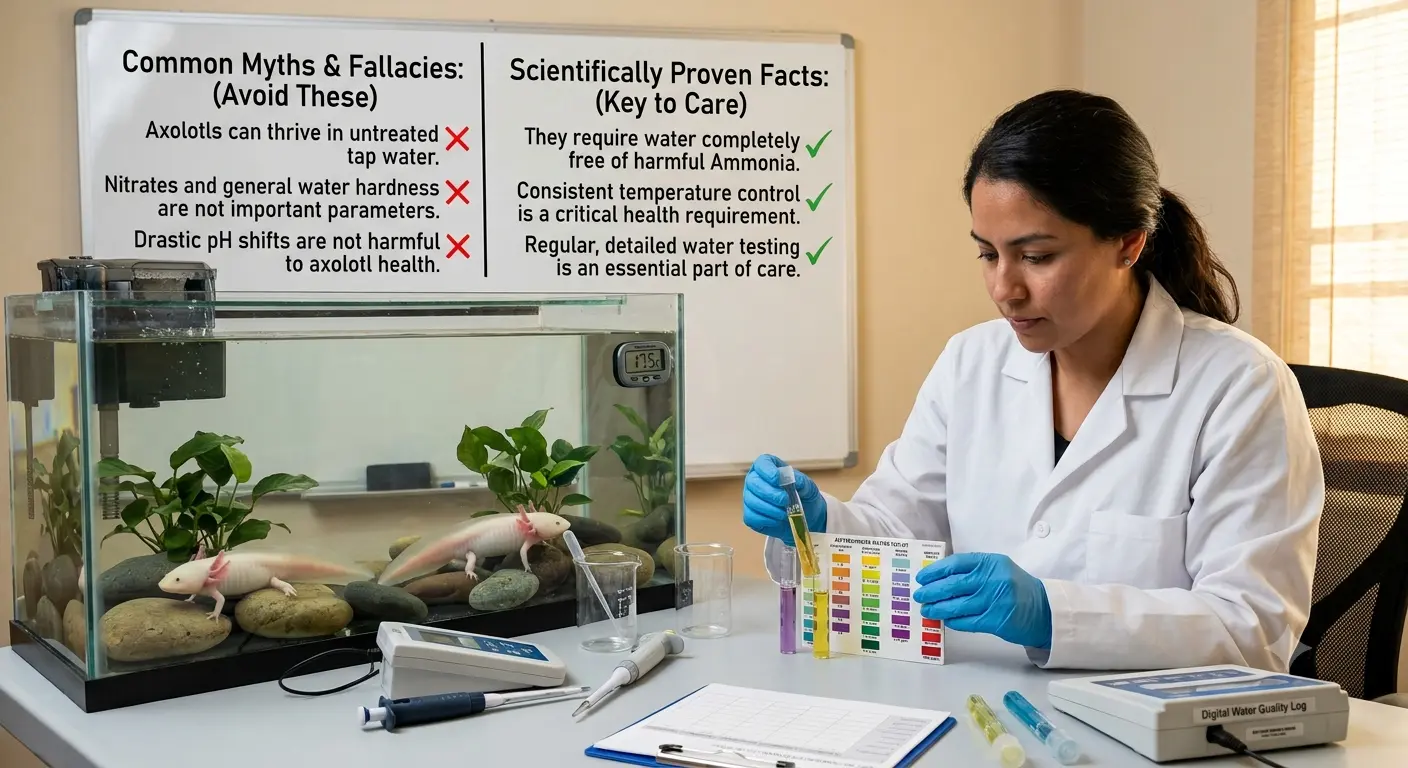
In fact, chronic stress directly inhibits their regenerative pathways, leaving them highly susceptible to opportunistic bacterial infections. Poor water quality, fluctuating pH levels, and elevated ammonia concentrations will overwhelm their immune systems entirely. Believing they are invincible leads to negligent tank upkeep and delayed veterinary interventions.
Furthermore, structural regeneration requires significant metabolic energy, meaning a malnourished animal cannot heal properly. If your pet is constantly fighting poor water parameters, its body prioritizes survival over tissue repair. This biological reality directly refutes the dangerous Axolotl Myths regarding their absolute invulnerability.
2. Habitat Misconceptions and Substrate Safety
Another prevalent error is the belief that these completely aquatic creatures can thrive in small, unfiltered setups without complex management. Some hobbyists assume that because they possess lungs, they can tolerate stagnant, oxygen-depleted environments. In reality, their primary source of oxygen consumption relies entirely on external frilly structures.
When these specialized structures deteriorate due to high nitrate accumulation, keepers often fail to recognize the root environmental cause. For a detailed breakdown of this specific gill health crisis, read our comprehensive analysis on why axolotl gills are shrinking to prevent long-term respiratory damage. Proper water flow management is vital for maintaining healthy gill filaments.
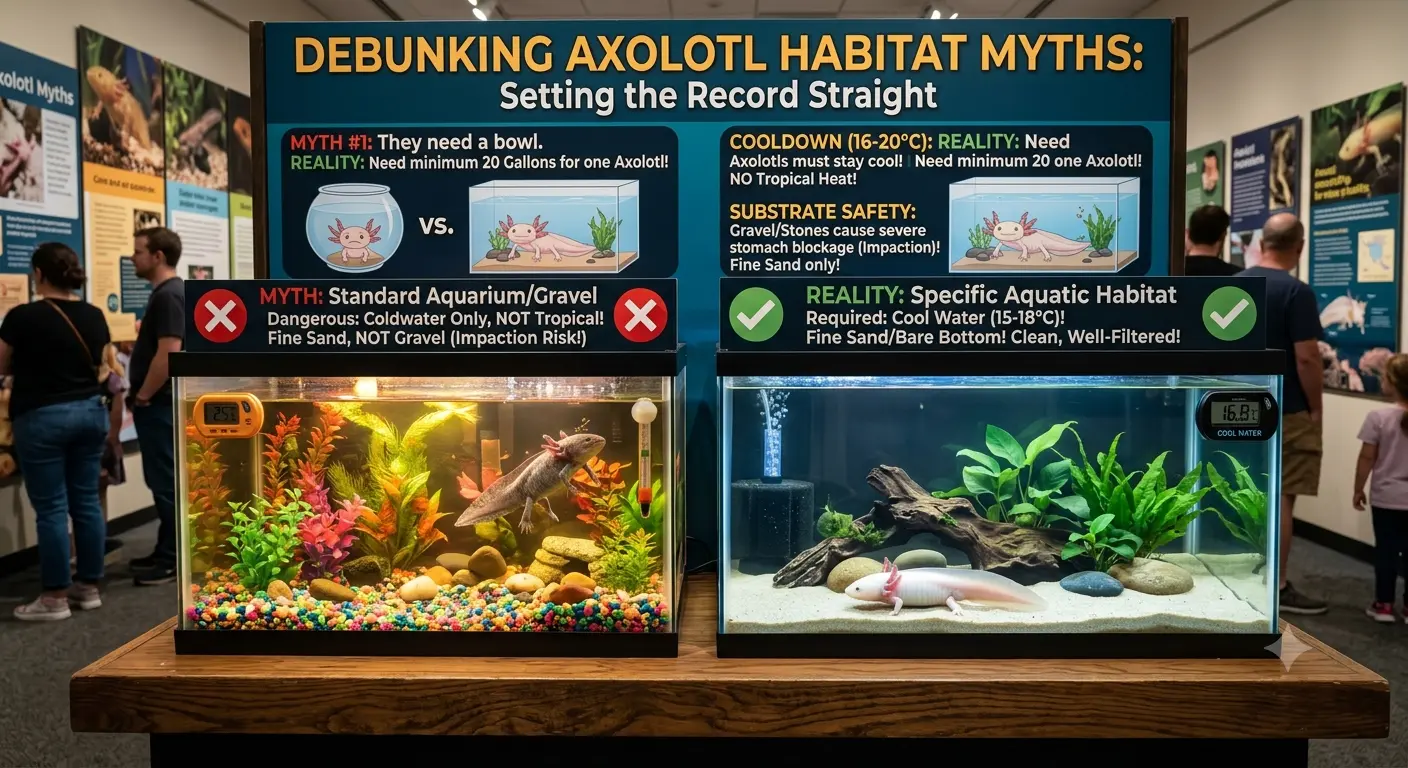
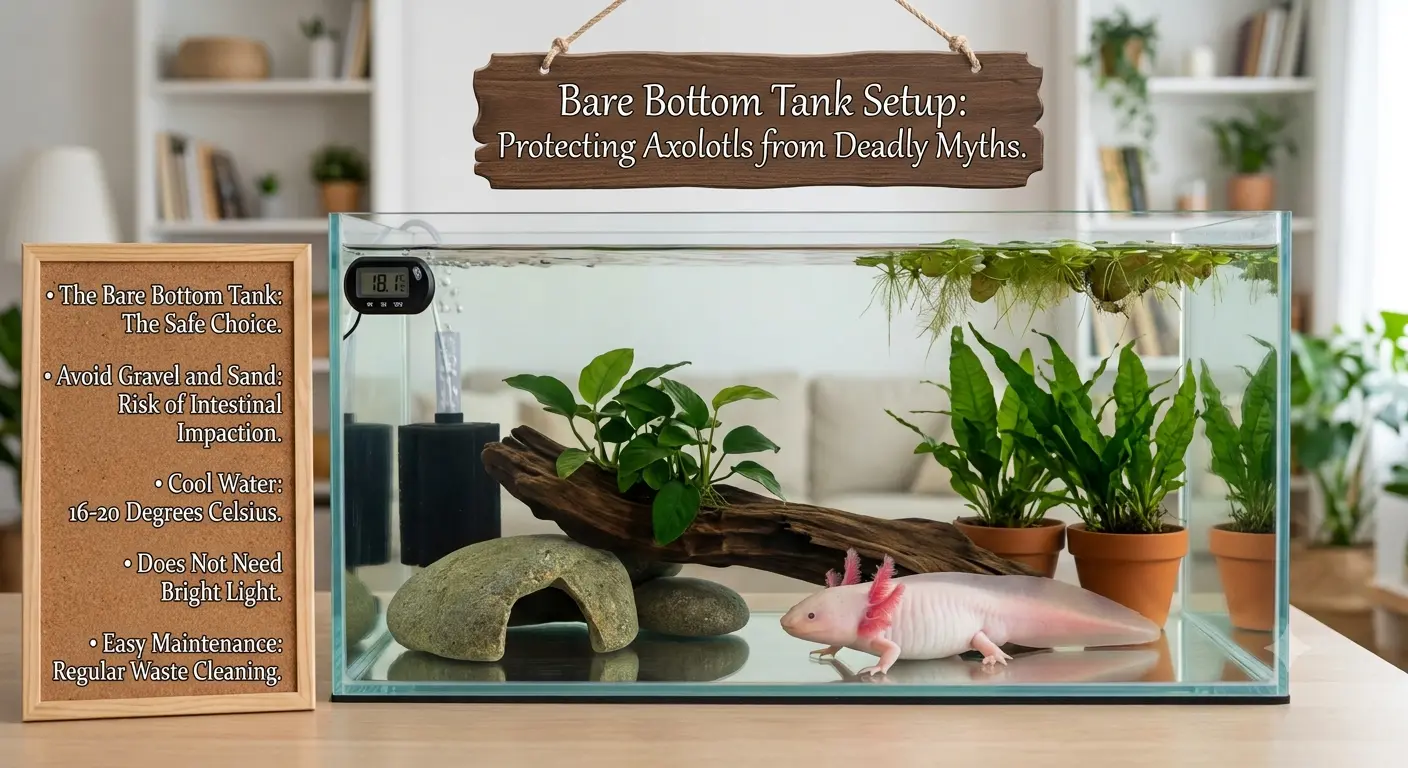
Substrate choices also represent a major area where misinformation causes direct physical harm to captive populations. Gravel, small pebbles, and coarse coral sand are highly dangerous additions that frequently trigger life-threatening gastrointestinal impactions. These predators hunt via a powerful vacuum mechanism, involuntarily swallowing everything directly in front of their mouths.
The Coexistence Misconception
Many novice hobbyists assume these docile salamanders can peacefully share an aquarium with tropical fish species or active invertebrates. This is a severe error, as fish naturally view external gill filaments as highly appetizing food sources to nip at. Constant nipping creates chronic stress, physical trauma, and open wounds prone to fungal attacks.
Conversely, larger salamanders will readily attempt to swallow any tank mate small enough to fit inside their expanding jaws. Fish bones can puncture delicate digestive linings, while certain species carry transmissible parasites. Maintaining a species-only enclosure remains the undisputed gold standard for responsible long-term care.
3. Dietary Realities vs. Common Feeding Legends
Nutritional guidance in community forums is unfortunately filled with unsubstantiated claims and inappropriate dietary recommendations. Some sources suggest that mammalian meat products, like beef heart or chicken pieces, are excellent sources of protein. However, their digestive tracks are completely incapable of processing complex mammalian fats efficiently.
Feeding improper proteins leads directly to hepatic lipidosis, severe metabolic imbalances, and systemic digestive blockages. Their natural diet should consist strictly of high-quality earthworms, nightcrawlers, and specifically formulated sinking aquatic pellets. Relying on freeze-dried treats as a staple food source introduces severe nutritional deficiencies.
Understanding their low-temperature metabolic rate is equally crucial to preventing chronic overfeeding or food rotting in the tank. Lower temperatures slow digestion significantly, meaning feeding frequencies must be adjusted according to current thermal parameters. Let us compare the accurate scientific realities against the most widespread Axolotl Myths below.
Scientific Analysis: Myth vs. Biological Reality
To help visualize these crucial distinctions, this comparison matrix outlines the data gathered from contemporary veterinary studies.
| Widespread Belief | Biological Reality | Husbandry Impact |
|---|---|---|
| They can live safely on standard aquarium gravel. | Gravel causes severe internal impaction when swallowed. | Requires fine sand or bare-bottom tanks. |
| They thrive comfortably at warm room temperatures. | Temperatures above 20°C trigger severe immune stress. | Requires dedicated cooling fans or water chillers. |
| Regenerative powers eliminate the need for vets. | Infections and severe injuries require professional treatment. | Requires regular water testing and veterinary access. |
| Feeder fish are ideal daily nutritional sources. | Fish introduce parasites and cause physical gill damage. | Earthworms and pellets must remain the primary diet. |
Three years ago, my beautiful leucistic female, Luna, stopped eating entirely on a cold Tuesday morning. Her gorgeous, normally expansive peach-colored respiratory plumes looked slightly pale, and she kept floating awkwardly near the filter return tube. Panic immediately set in because I thought I was doing everything perfectly according to the local pet shop instructions. They had sold me a beautiful river stone substrate, assuring me the heavy pieces were completely impossible to swallow.
I foolishly bought an expensive water clarifying solution, thinking a simple chemical treatment would fix her odd behavior overnight. It did absolutely nothing except make her skin produce excess slime coat protection out of pure irritation. She looked even more miserable by Thursday, her tiny toes curling inward as a classic sign of advanced physiological distress. That was the heartbreaking moment I realized the generic advice I followed was completely flawed.
An emergency x-ray at an exotic clinic revealed two large, smooth river stones wedged deeply inside her stomach. After weeks of careful monitoring in a bare-bottom hospital tub with daily water changes, she finally passed them naturally. That stressful ordeal permanently taught me that visual aesthetic should never override biological safety parameters in an aquarium setup.
4. Environmental Temperature Dynamics
Perhaps the most dangerous Axolotl Myths involve their perceived tolerance for standard tropical aquarium temperatures. Because many pet stores display them alongside tropical species, buyers assume room temperature without cooling is perfectly fine. In reality, these animals are native to high-altitude, cold-water lake complexes in Mexico.
Maintained water temperatures must consistently remain between 15°C and 18°C to ensure optimal metabolic and immune function. Prolonged exposure to temperatures exceeding 20°C rapidly depletes dissolved oxygen levels while multiplying harmful bacterial pathogens. This thermal stress is a primary driver of sudden mortality in amateur collections.
Investing in a high-quality cooling mechanism or a specialized aquarium chiller is often mandatory during warm summer seasons. Relying on temporary ice bottles creates extreme temperature fluctuations that cause severe physiological shock. Consistency in water parameters is always the foundation of successful exotic amphibian keeping.
For authoritative research regarding amphibian health and professional medical standards, consulting international resources like the Association of Reptile and Amphibian Veterinarians (ARAV) provides critical insights. Staying updated with veterinary science ensures your husbandry techniques remain safe and effective.
Conclusion: Cultivating Fact-Based Husbandry
Overcoming the volume of online Axolotl Myths requires a conscious commitment to scientific education and rigorous tank monitoring. Recognizing that these unique amphibians require specialized thermal, nutritional, and environmental parameters ensures their long-term survival in captivity. Never allow convenient assumptions to dictate the daily care routine of your aquatic pets.
By implementing proper filtration, choosing safe substrates, maintaining cold water, and offering proper nutrition, you create a perfect sanctuary. Your pet can enjoy a lifespan of over a decade when protected from widespread internet misinformation. Let us continue advocating for accurate biological facts within the global exotic pet community.