
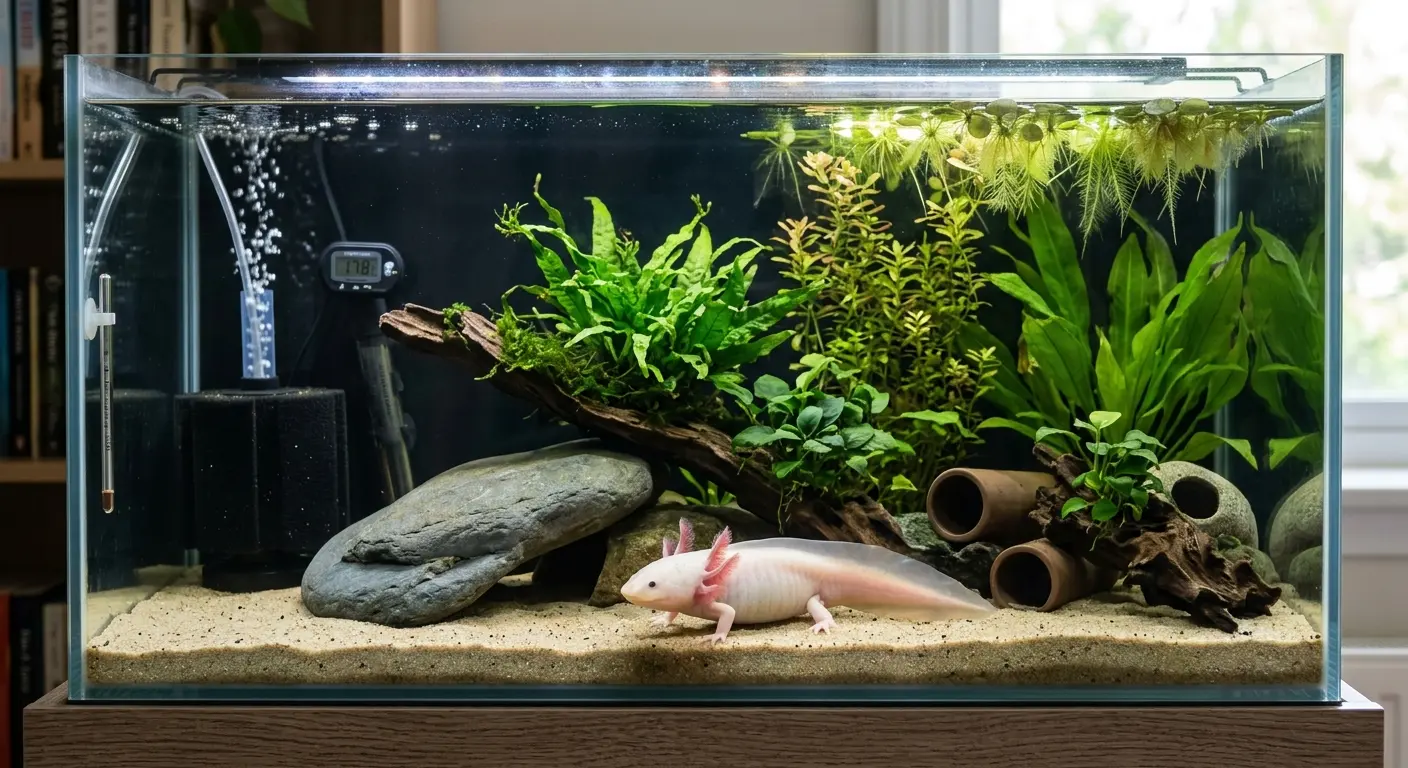
Setting up an environment for a fully aquatic, cold-water salamander requires careful planning and precise execution. An ideal Axolotl Tank Setup relies on providing a minimum 29-gallon long aquarium, maintaining strict cold water temperatures between 60°F and 68°F, using gentle filtration like a sponge filter, avoiding fine gravel, and allowing the nitrogen cycle to fully establish before introducing your pet.
While that quick formula covers the core essentials, keeping these unique creatures thriving for over a decade involves managing crucial biological parameters, choosing safe decorations, and picking the right equipment. Let’s dive deeper into step-by-step instructions, cooling strategies, and long-term care secrets that turn a basic aquarium into a thriving aquatic haven.
Step-by-Step Instructions for a Complete Setup
Building your initial habitat requires methodical organization. Taking shortcuts during assembly often leads to stress, water quality crashes, or physical injury for your salamander. Follow these steps sequentially to build a solid foundation.
- Rinse and Position: Thoroughly wash the glass enclosure and all inert decorations using warm tap water only. Never use soap or household detergents. Place the empty enclosure on a heavy-duty, level stand away from direct sunlight and heat vents.
- Install Substrate and Filtration: If using bare-bottom glass or large river rocks, place them gently. Install your low-flow filtration system, ensuring intake tubes or sponge filters are fully submerged.
- Fill and Condition: Slowly fill the enclosure with cold tap water. Treat the water immediately with a high-quality water conditioner that neutralizes chlorine, chloramines, and heavy metals. Ensure the additive does not contain harmful aloe vera extracts.
- Equip Temperature Control: Attach an accurate digital thermometer. If ambient room temperatures consistently exceed 68°F, install an aquarium cooling chiller or multi-fan cooling array at this stage.
- Run the Nitrogen Cycle: Run the filter and cycle the water using an active beneficial bacteria starter and an ammonia source before adding any live animals.
Determining the Right Tank Size and Volume
Selecting the proper enclosure dimensions directly impacts water stability and waste management. These creatures produce a massive biological load relative to their size, making water volume a vital consideration for every owner.
For a single adult, a 29-gallon long aquarium (approximately 110 litres) serves as the modern standard. While older care sheets recommended a 20-gallon long (75 litres), the additional floor space and water volume of a 29-gallon tank dilute toxic ammonia spikes much more effectively.
When housing multiple individuals, floor surface area matters significantly more than height. Add at least 10 to 15 gallons (38 to 57 litres) of capacity for each additional individual, ensuring each animal has enough room to establish a dedicated hiding spot.
Essential Gear: Filtration, Cooling Chillers, and Lighting
Choosing mechanical and biological equipment requires understanding cold-water aquatic physiology. Standard tropical fish gear often creates conditions that are far too turbulent or warm.
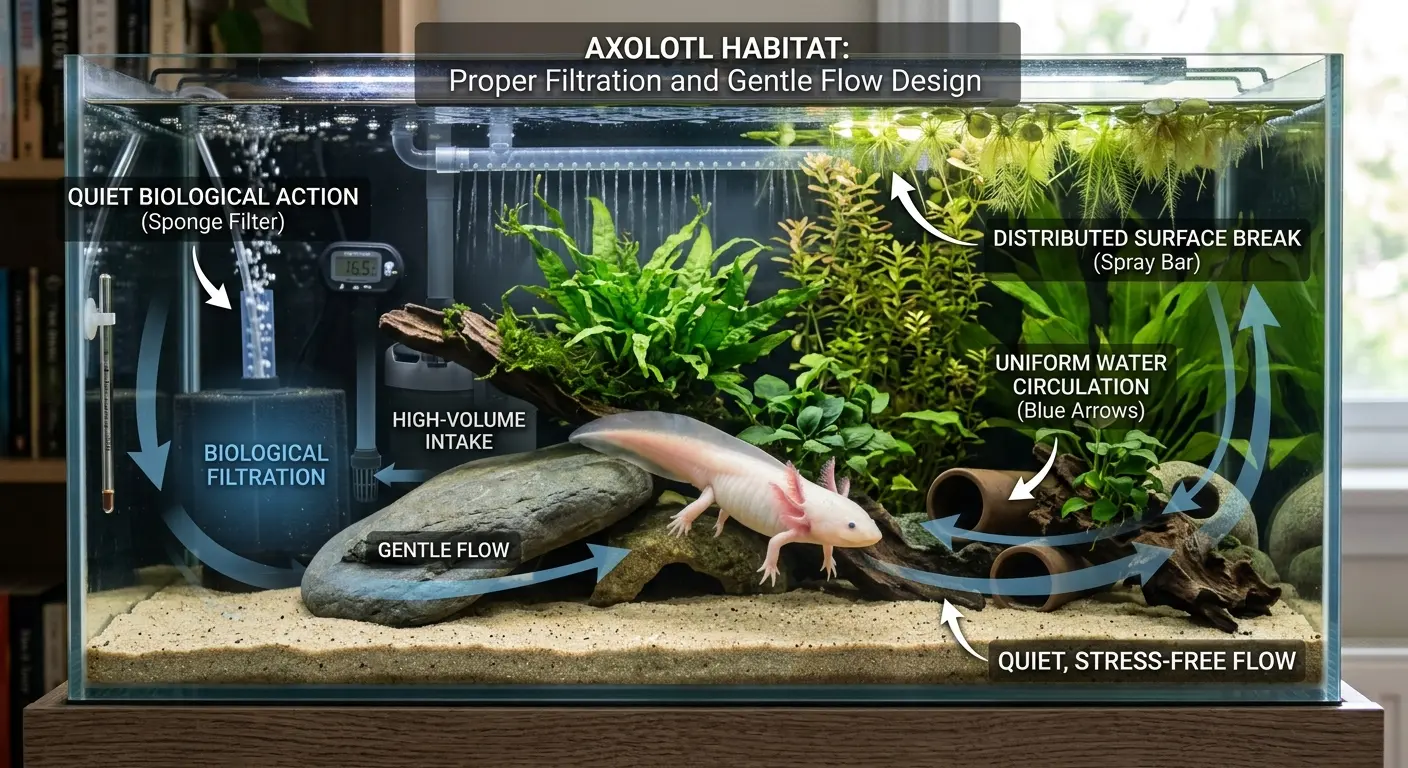
Filtration must balance high biological capacity with extremely low water flow. Dual-sponge filters driven by air pumps or canister filters equipped with spray bars pointed toward glass walls prevent excessive current, which stress these delicate amphibians and cause curled gills.
Cooling equipment is often non-negotiable. Sustained water temperatures above 70°F (21°C) weaken immune systems, causing fungal infections and mortality. Thermoelectric or compressor-based chillers are the most reliable option, while clip-on fan arrays work well in cooler climates via evaporative cooling.
Lighting should remain minimal. Lacking eyelids, these animals prefer dim, ambient lighting. If live cold-water plants like Java Fern or Anubias are included, use low-intensity LED fixtures paired with plenty of shadowy caves.
Selecting Safe Substrates and Decorative Elements
Substrate selection is one of the most critical safety choices you will make. Ingestion of unsafe materials remains a leading cause of fatal intestinal impaction in captive animals.
- Bare-Bottom: The safest option overall. Easy to clean via siphoning, though some owners find it aesthetically plain, and animals may struggle slightly with grip.
- Fine Aquarium Sand: Safe only for individuals longer than 5 to 6 inches. Grain size must be under 1mm so ingested grains pass safely through the digestive tract.
- Large River Stones: Must be significantly larger than the animal’s head (at least 2 to 3 inches in diameter) so swallowing is physically impossible.
- Hides and Decor: Smooth ceramic pipes, terracotta pots, and resin caves provide security. Inspect every item for sharp edges that could tear sensitive skin or external gills.
Understanding Water Parameters and the Nitrogen Cycle
Establishing a robust biological filter before introducing your pet is mandatory. Water quality issues cause the majority of health complications in captive environments.
The nitrogen cycle transforms toxic waste. Beneficial bacteria convert harmful ammonia (from waste and uneaten food) into nitrites, and subsequently into less toxic nitrates. Nitrates are then managed through routine weekly water changes of 20% to 30%.
Ideal parameters must be monitored weekly using a liquid test kit:
- Ammonia: 0 ppm
- Nitrite: 0 ppm
- Nitrate: 5 to 20 ppm
- pH Range: 7.4 to 8.0
- General Hardness (GH): 7 to 14 dGH (120-200 ppm)
- Carbonate Hardness (KH): 3 to 8 dKH
Overview of Compatible Tank Mates and Purchasing Considerations
Co-housing other species with these unique amphibians almost always ends in disaster. Anything smaller than their mouth will eventually be eaten, while larger fish often nip at feathery external gills.
Snails pose severe impaction risks if swallowed and can latch onto skin, causing mucus membrane damage. Fast-moving fish like tetras or barbs harass slow-moving salamanders continuously, leading to severe chronic stress.
The only truly safe companion is another member of the same species of similar size and same sex. Ensure plenty of hides exist to mitigate territorial nipping during feeding times.
A Personal Journey in Cold-Water Care
Back in July 2021, I learned the hard way that guesswork has no place in this hobby. My first rescue, Barnaby, sat in his newly decorated glass enclosure looking thoroughly miserable, his gills pale and listless. I had followed generic pet store advice, using a standard power filter that turned the water into a washing machine turbulence zone.
Frantic, I tried baffling the outlet with cut-up plastic bottles and sponge scraps. It looked messy and barely solved the flow issue. Temperature spikes during an unexpected summer heatwave pushed the water to 74°F, causing visible stress and fungal spots on his gill filaments within forty-eight hours.
I rushed out to source a heavy-duty twin sponge filter and set up a temporary evaporative cooling fan array using computer parts. Watching Barnaby settle into the gentle, cold currents over the next week taught me a lasting lesson about listening to an animal’s subtle behavioral cues rather than relying on cheap equipment shortcuts.
Equipment and Parameters Comparison Matrix
| Category | Recommended Choice | Avoid / Dangerous | Primary Reason |
|---|---|---|---|
| Substrate | Bare bottom or fine sand (<1mm) | Gravel, small pebbles | Prevents fatal intestinal impaction |
| Filtration | Sponge filter or low-flow canister | High-flow power filters | Protects gills from turbulent stress |
| Temperature | 60°F to 68°F (15°C – 20°C) | Above 70°F (21°C) | Prevents fatal fungal and bacterial infections |
| Tank Companions | Same-species (same size/sex) | Fish, snails, plecos | Prevents gill nipping and choking hazards |
Explore Specialized Setup Guides and Related Resources
For more detailed breakdowns on specific topics, explore our detailed guides below:
- Axolotl Tank Dune: Read our complete guide on bare dune sand and substrate safety
- Axolotl Tank Mates: Discover safe companion species and co-housing rules
- Axolotl Tank Setup Kit: Check out the best starter kits and essential equipment checklists
- Axolotl Tank for Sale: Find out how to choose and buy the right aquarium enclosure
- Axolotl Tank Size for 2: Learn the recommended dimensions and volume for co-housing two axolotls
- Axolotl Tank Size Litres: Convert gallons to litres and calculate your ideal water volume
- Axolotl Tank Size for 1: Explore minimum tank size requirements for a single adult axolotl
Maintaining a clean, well-monitored cold-water ecosystem is the ultimate secret to keeping these extraordinary creatures healthy for their entire 10 to 15 year lifespan. According to pet health resources like the Association of Reptile and Amphibian Veterinarians (ARAV), preventative husbandry through pristine water quality solves over 80% of common captive amphibian ailments.
Frequently Asked Questions
Q: How long does it take to cycle an aquarium before introducing an axolotl?
A: Fishless cycling typically takes 4 to 8 weeks. You must verify that your biological filter can fully process 2 ppm of synthetic ammonia into zero ammonia and zero nitrite within 24 hours before adding your pet.
Q: Do axolotls require an aquarium heater?
A: No. They are strictly cold-water amphibians that thrive between 60°F and 68°F. Heaters should never be installed unless your home ambient temperature regularly drops below 55°F.
Q: Can I use live plants in my aquarium?
A: Yes, provided they tolerate low light and cool water temperatures. Java Fern, Anubias, Marimo Moss Balls, and Frogbit are excellent choices that help absorb excess nitrates naturally.
Q: Why is my axolotl swimming frantically or floating?
A: Floating or erratic swimming usually signals high water flow stress, poor water parameters (ammonia/nitrite spikes), or swallowed air/impaction. Test your water parameters immediately and check filter turbulence.