
Welcome to the ultimate guide on setting up a perfect habitat for your exotic pet. Creating a proper Bearded Dragon Enclosure is the single most important step you will take to ensure your reptile lives a long, healthy life.
Many beginners underestimate how much space and specialized equipment these unique central Australian lizards truly require daily. A poorly designed environment directly leads to chronic health issues, metabolic bone disease, and extreme psychological stress.
In this comprehensive architectural breakdown, we will examine optimal tank sizes, advanced heating configurations, specialized ultraviolet lighting arrays, and the safest substrate options available today.
Essential Dimensions for a Proper Bearded Dragon Enclosure
Size matters immensely when housing an active, fully grown adult lizard that can reach up to twenty-four inches in length. A cramped environment restricts natural movement, limits exercise, and makes establishing a proper thermal gradient virtually impossible.
For hatchlings and small juveniles, a twenty-gallon terrarium might suffice for the first few months of development. However, these reptiles grow incredibly fast, meaning you will need an upgrade much sooner than you think.
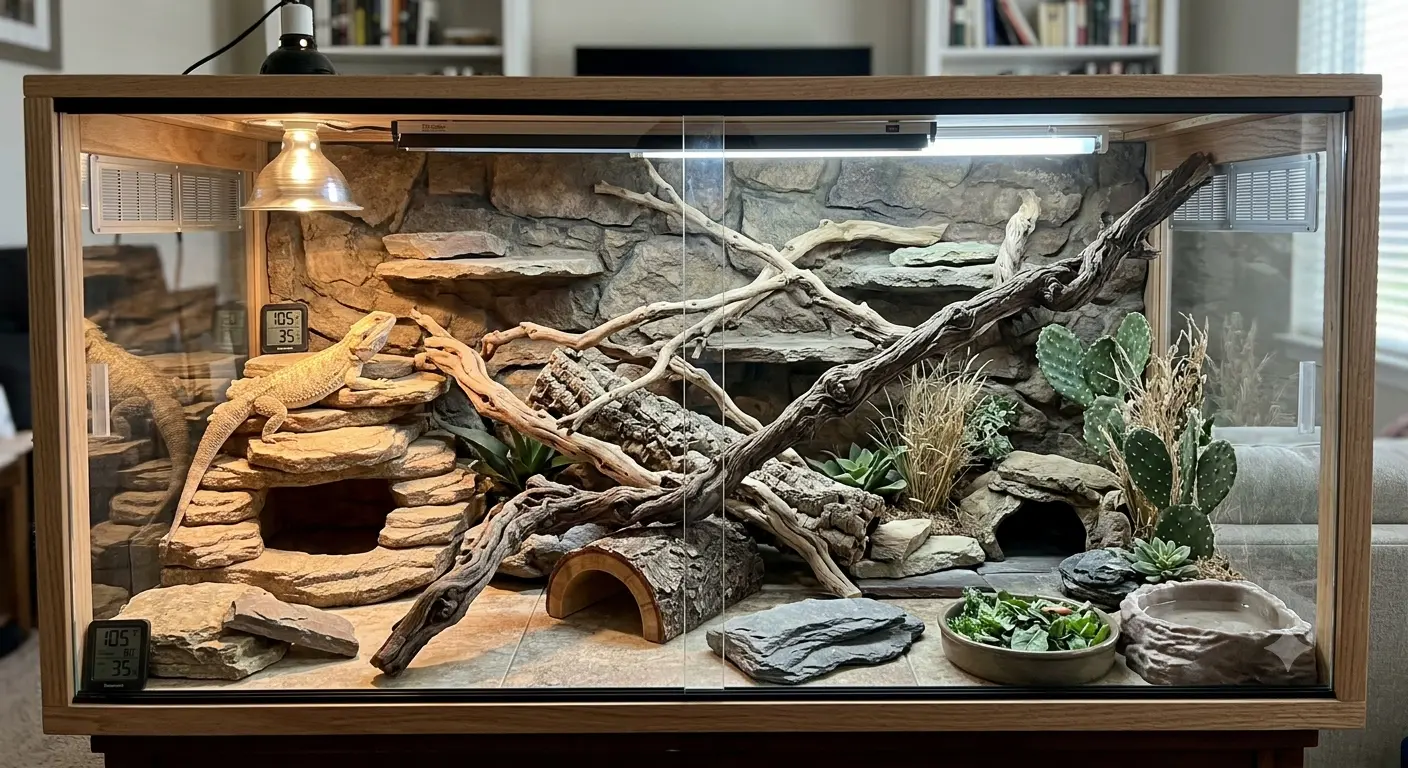
An adult Bearded Dragon Enclosure must measure at least 4x2x2 feet, which translates directly to a volume of 120 gallons. This specific footprint provides ample floor space for roaming and sufficient height for climbing branches.
If you have the physical space and budget, opting for a 150-gallon or 200-gallon habitat is highly recommended. More volume allows for richer environmental enrichment, deeper substrate layers, and a more dynamic living experience.
Thermal Dynamics and Basking Zone Engineering
Reptiles are ectothermic organisms, meaning they rely entirely on external environmental heat sources to regulate their internal core body temperature. Your setup must offer a distinct thermal gradient ranging from a hot side to a cool side.
The high-temperature basking zone requires a heavy-duty halogen heat bulb or a specialized basking spot lamp. This specific focal area must consistently reach surface temperatures between 104°F and 110°F for proper digestion.
Conversely, the cool side of the tank should maintain an ambient temperature range between 75°F and 85°F. This allows your pet to escape the intense heat when their body has warmed up sufficiently.
To accurately monitor these crucial parameters, avoid cheap analog sticker thermometers, which are notoriously inaccurate. Instead, utilize dual digital thermometers with physical probes alongside a handheld infrared temperature gun.
Advanced UVB Lighting Requirements for Bearded Dragons
Without high-intensity ultraviolet radiation, these desert reptiles cannot synthesize critical Vitamin D3 in their skin. A lack of D3 prevents efficient calcium absorption, resulting in painful physical deformities.
Do not use compact, screw-in coil UVB bulbs, as their emissions are too concentrated and degrade rapidly over short distances. Instead, invest in a high-output T5 linear fluorescent tube that spans roughly two-thirds of the tank length.
A 10.0 or 12.0 high-output desert UVB tube is the industry standard for a proper Bearded Dragon Enclosure setup. This fixture must be mounted directly overhead, pointing straight down, rather than at an awkward side angle.
Remember that linear ultraviolet bulbs stop emitting beneficial waves long before the visible light element actually burns out. Mark your calendar to replace your high-output T5 tubes strictly every six to twelve months.
Choosing the Right Enclosure Material
When selecting the physical structure of your habitat, three main materials dominate the modern herpetological market. Glass terrariums are highly accessible and offer excellent visibility, but they fail miserably at retaining ambient heat.
PVC plastic units have become the premium standard for modern keepers due to their lightweight properties and incredible thermal insulation. Wooden vivariums, often crafted from sealed melamine, are exceptionally sturdy but susceptible to moisture damage if unsealed.
Let us closely examine how these popular construction materials stack up against one another in key functional categories.
| Material Type | Heat Retention | Durability | Average Weight | Best Suited For |
|---|---|---|---|---|
| Glass Terrarium | Poor | Fragile | Very Heavy | High Visibility Displays |
| PVC Plastic | Excellent | Very High | Lightweight | Advanced Thermal Control |
| Melamine Wood | Good | High | Heavy | Budget-Friendly DIY Builds |
Substrate Safety: Loose Options vs. Solid Surfaces
The choice of substrate remains one of the most fiercely debated topics within the global reptile keeping community. Loose materials like premium play sand or organic topsoil mixes allow for natural, enriching digging behaviors.
However, loose substrates carry an inherent risk of intestinal impaction if your pet accidentally consumes particles while hunting live prey. This risk increases exponentially if your heating and ultraviolet parameters are sub-optimal.
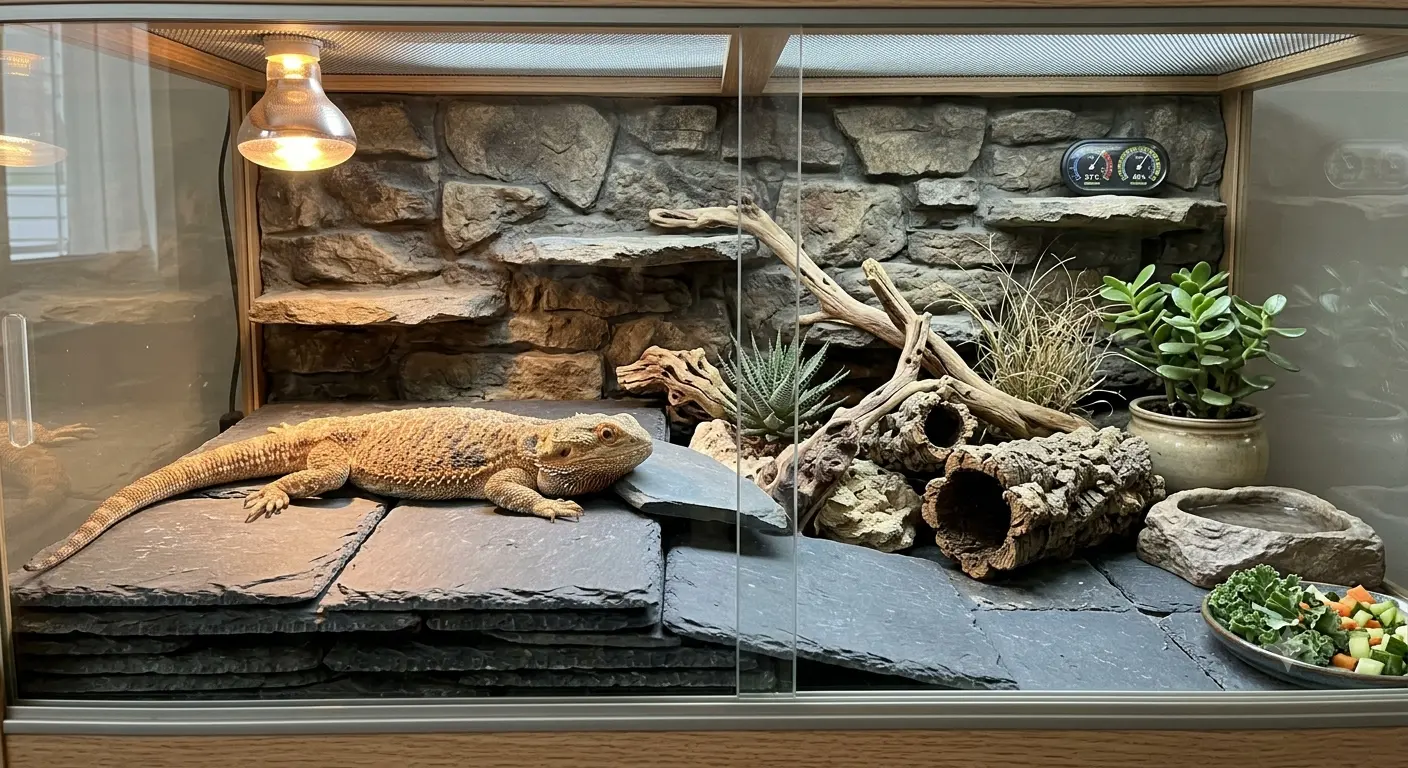
For absolute safety, non-adhesive slate tile, ceramic textures, custom grouted landscapes, or simple paper towels are brilliant alternatives. These solid options are incredibly easy to sanitize and eliminate the risk of impaction entirely.
Never use dangerous materials like calcium sand, walnut shells, cedar shavings, or artificial green reptile carpets. These options trap harmful bacteria, snag fragile claws, or release toxic aromatic oils into the air.
A Journey Through Trial, Error, and Cold Mornings
Three years ago, a tiny, sluggish leatherback hatchling named Winston arrived at my home during a bitter winter storm. I thought I had prepared everything perfectly based on standard care sheets I found online.
Within two weeks, Winston stopped chasing his roaches and spent all his time huddled listlessly in the far corner. The beautiful custom glass tank I bought looked gorgeous in my living room, but it felt like an absolute refrigerator inside.
Desperate, I added a second heat lamp, then a third, but the glass walls radiated the warmth away instantly. My ambient temperatures plummeted every single night, leaving me anxious, exhausted, and constantly checking gauges at 3:00 AM.
The turning point happened when a friend threw out an old sheet of thick industrial insulation board from a construction site. I haphazardly taped those ugly grey panels to the back and sides of the glass out of sheer panic.
The transformation was instant; the internal air locked in the warmth, and my little companion woke up energized the next morning. That stressful experience taught me that proper environmental stability requires structural insulation, not just adding more high-wattage bulbs.
Humidity Control and Essential Ventilation Systems
While these central Australian lizards thrive in arid landscapes, they still require a baseline level of atmospheric moisture. Ambient humidity levels inside your habitat should ideally hover comfortably between 30% and 40% during the day.
Excessive humidity levels trap stagnant air, quickly leading to dangerous upper respiratory infections or fungal skin diseases. Ensure your setup features a robust, heavy-duty screen top or specialized cross-ventilation side slots to promote airflow.
To help gauge the proper overall balance of your setup, it is vital to know exactly what your animal requires dietarily. For a full breakdown on feeding patterns, read our deep-dive article on bearded dragon how much do they eat to keep them perfectly fueled.
Provide a clean, shallow water bowl on the cool side of the habitat to offer passive hydration without spiking humidity. Wash and sanitize this dish daily, as crickets and loose waste will inevitably contaminate the water supply.
Interior Decoration and Complex Environmental Enrichment
An empty tank leads to a lethargic, highly stressed animal that lacks mental stimulation and critical physical exercise. Incorporate large, sturdy climbing branches, thick cork bark rounds, and heavy natural slate stones under the basking spot.
Always ensure all heavy interior rocks are resting firmly on the bottom floor of the tank, rather than on top of loose sand. This crucial step prevents the heavy elements from shifting and crushing your pet if they decide to dig underneath.
Create at least two distinct hiding areas: one positioned on the hot side and another located on the cool side. This structural layout gives your pet choices, allowing them to feel secure without compromising their thermal regulation needs.
For more advanced husbandry guidelines and veterinary insights, consider consulting official resources provided by the Association of Reptile and Amphibian Veterinarians (ARAV) to optimize health standards.
Frequently Asked Questions About Vivarium Design
Can two adult lizards live together in one Bearded Dragon Enclosure?
No, these reptiles are strictly solitary territorial animals and should never be cohabitated. Housing them together leads to violent fighting, severe injuries, lost toes, dominant bullying, and immense psychological stress.
How often should I completely clean and sanitize the entire setup?
Spot-clean feces, uneaten food, and soiled substrate daily to keep bacterial growth at a minimum. Perform a deep, comprehensive breakdown and sanitize all surfaces with reptile-safe disinfectant every four to six weeks.
Is a night-time heat lamp required for my setup?
A night heat source is only necessary if your indoor home temperatures drop consistently below 65°F. If needed, use a deep heat projector or a ceramic heat emitter that produces zero visible light to protect sleep cycles.