
Mastering a balanced Bearded Dragon Diet is the cornerstone of responsible reptile ownership, ensuring your exotic companion thrives for years.
These fascinating prehistoric creatures require a careful calibration of essential nutrients, live insects, fresh leafy greens, and targeted supplementation to prevent severe metabolic diseases.
Understanding how their dietary requirements shift dramatically from high-protein dependency in their youth to a herbivorous preference in adulthood is absolutely crucial.
This comprehensive blueprint explores advanced nutritional science, proper feeding schedules, and hidden dietary dangers to unlock optimal wellness for your pet reptile.
The Foundational Pillars of a Balanced Bearded Dragon Diet
An optimal feeding strategy relies heavily on duplicating the nutritional variety these lizards naturally encounter throughout their native wild Australian habitats.
Providing a dynamic ratio of live gut-loaded insects alongside nutrient-dense vegetation creates the foundation for standard cellular maintenance and consistent muscular growth.
Achieving this equilibrium requires strict regulation of the calcium-to-phosphorus ratio, which ideally must remain hovering around 2:1 to protect skeletal integrity.
Failing to sustain this balance over extended seasonal periods can result in irreversible systemic degradation and poor biological development.
Age-Specific Nutritional Requirements and Feeding Ratios
The biological framework of these reptiles transitions through distinct metabolic stages that demand structural adjustments to their daily meal composition.
Developing hatchlings and rapid juveniles require massive quantities of clean, easily digestible protein molecules to build up dense skeletal systems.
Conversely, mature adults possess a much slower metabolic rate that favors high-fiber vegetative matter over heavy fats and rich lipids.
Modifying these volumetric ratios precisely prevents systemic hepatic lipidosis and severe obesity in captive environments over long-term timelines.
Juvenile Feeding Protocols (0 to 6 Months)
Young lizards require feeding frequencies ranging between two to three intense live insect sessions distributed evenly throughout the daylight hours.
Their overall intake ratio must contain approximately 80% live feeder insects and a minor 20% allowance of finely chopped daily greens.
Always present fresh vegetables first thing in the morning to encourage early herbivorous curiosity before they become fully saturated on insects.
Sub-Adult Feeding Guidelines (6 to 12 Months)
During this critical developmental bridge, the physiological requirement for heavy animal proteins starts steadily dropping downward toward a balanced state.
Shift the structural meal layout to a clean 50% insect and 50% vegetation strategy while monitoring overall fat reserves.
This phase requires structural vigilance as underfeeding minerals can stunt adult skeletal length and overall physical density maturation.
Adult Maintenance Strategies (12 Months and Older)
Mature individuals require a complete reversal of their youth strategy, relying heavily on a strict 80% vegetarian and 20% insect structure.
Overfeeding live bugs to mature reptiles leads rapidly to serious kidney strain, extreme visceral gout, and rapid arterial cardiovascular damage.
Limit insect feedings to small, measured portions offered only three to four times over the course of a typical calendar week.
Essential Live Insects for High-Quality Protein Delivery
Live prey items must never be viewed as empty calories; they are vectors for delivering critical micronutrients into your reptile’s system.
Prioritize purchasing active, captive-bred insects from certified bio-secure suppliers to eliminate the risk of introducing dangerous wild parasites.
Every insect offered must be significantly smaller than the physical space measured precisely between your specific reptile’s individual eyes.
Feeding oversized prey items regularly creates massive blockages within the digestive tract, leading directly to hind-limb paralysis or sudden death.
| Infect Feeder Type | Protein Content | Fat Content | Calcium-to-Phosphorus | Primary Nutritional Role |
|---|---|---|---|---|
| Dubia Roaches | High (36%) | Low (7%) | 1:3 (Requires Dusting) | Excellent daily foundational staple |
| Black Soldier Fly Larvae | Moderate (17%) | Moderate (9%) | 3:1 (Naturally Perfect) | Superb for skeletal development |
| Crickets | High (21%) | Low (6%) | 1:9 (Poor, Needs Gutloading) | Affordable hydration and activity booster |
| Hornworms | Low (9%) | Very Low (3%) | 1:3 (High Moisture) | Excellent temporary hydration treat |
| Superworms | Moderate (20%) | Very High (17%) | 1:18 (Highly Imbalanced) | Strict occasional treat reward only |
Safe Leafy Greens and Vegetables for Daily Feeding
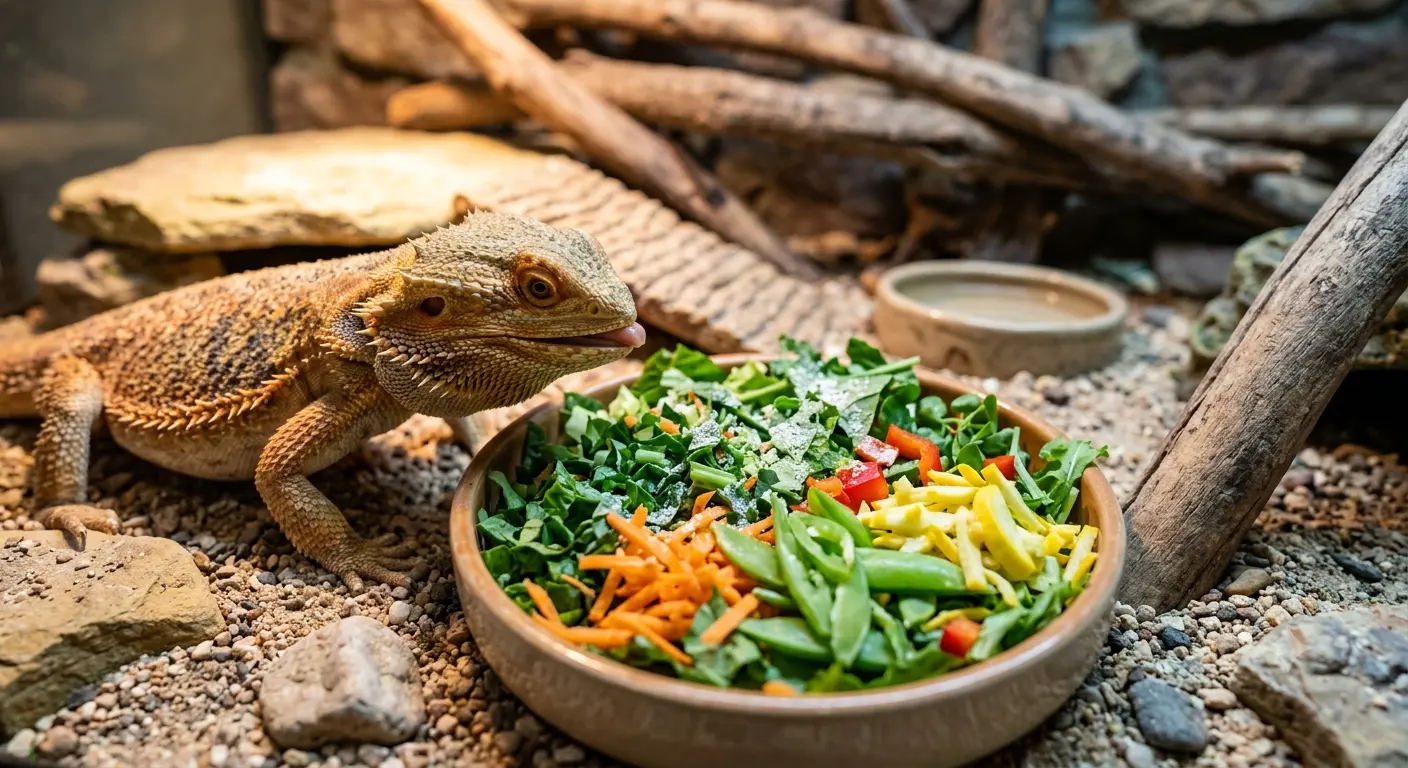
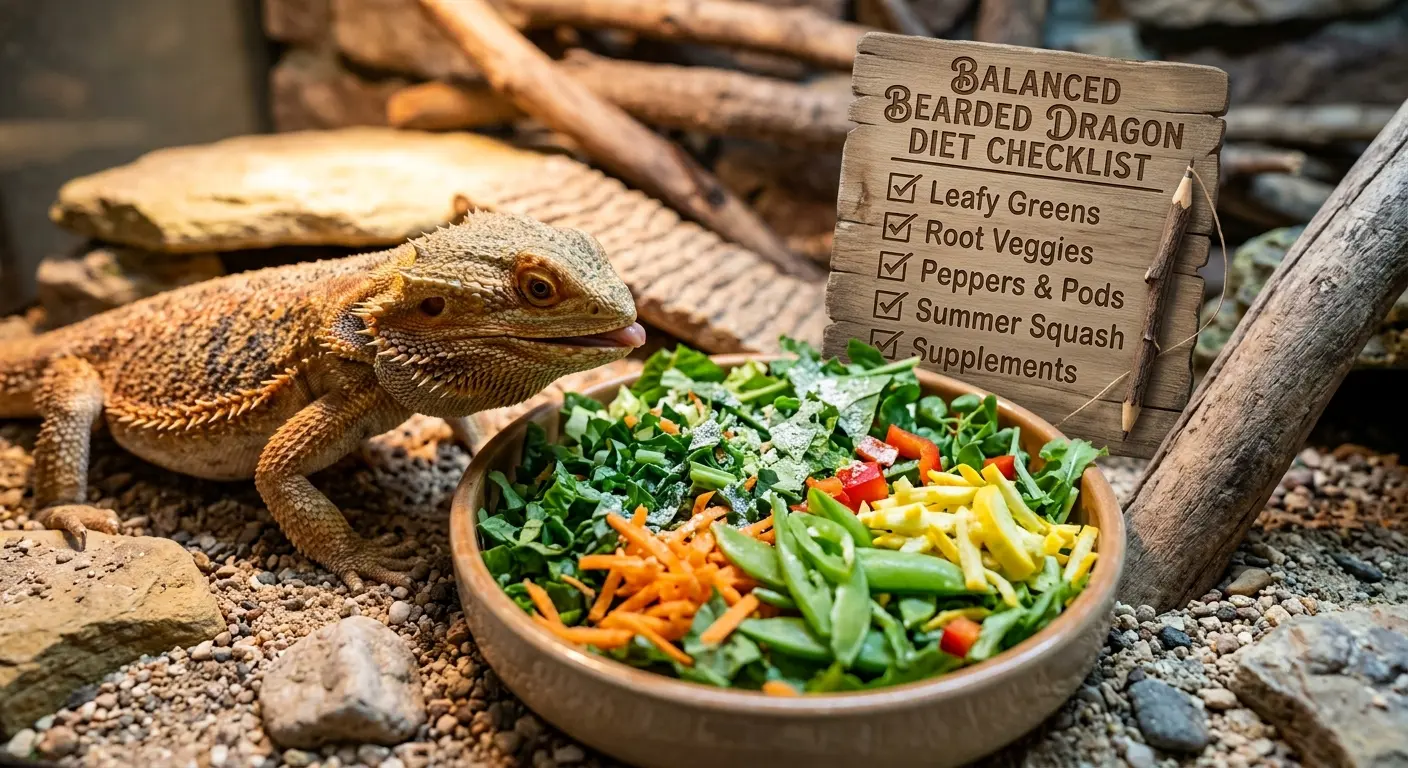
The herbivorous component of a proper Bearded Dragon Diet should emphasize diverse calcium-rich leafy greens over standard low-fiber watery grocery vegetables.
Incorporate stable quantities of organic mustard greens, turnip greens, dandelion greens, endive, and escarole into a finely minced daily salad bowl.
These specific plants provide excellent structural fiber matrices along with bioavailable vitamins that maintain standard intestinal peristalsis and clean digestive health.
Avoid regular use of iceberg lettuce or celery because these options lack real nutritional substance and cause severe chronic diarrhea.
The Dangers of Oxalates and Goitrogens in Reptile Nutrition
Certain common vegetables carry heavy chemical defense mechanisms that directly sabotage your pet’s internal mineral absorption capabilities over time.
Oxalic acid is a highly destructive compound found in plants like spinach and beet greens that permanently binds to dietary calcium molecules.
This chemical binding process creates insoluble calcium oxalates, rendering the crucial mineral entirely useless to the reptile’s biological metabolic pathways.
Similarly, excessive goitrogens found in cabbage and kale can systematically suppress healthy thyroid iodine uptake, causing massive hormonal imbalances.
A Professional Keepers Journey: Surviving the Strike
It was a chilling Tuesday morning in the middle of November when Barnaby completely transformed. My usually energetic companion looked straight at his carefully prepared bowl of fresh turnip greens and butternut squash, lifted his chin in complete defiance, and walked directly into his dark hide box. I felt an immediate spike of internal panic. For three long weeks, this exhausting routine repeated itself without a single change. He completely refused every piece of vegetation I carefully sliced, and his solid weight started to drop slightly.
I tried everything the old books suggested. I blended the greens into a messy puree and attempted to carefully drop it onto his snout, but he simply shook his head violently, splattering green liquid across the glass terrarium walls. Next, I tried hiding tiny pieces of commercial reptile pellets deep inside fresh raspberries. He managed to carefully eat the fruit and spit the pellets clean onto the slate tile below. The level of frustration was truly overwhelming, and I spent late nights staring at online boards looking for answers.
The breakthrough happened entirely by accident during a frantic cage cleaning session. I had placed a few active black soldier fly larvae into a deep, smooth ceramic bowl right next to a fresh, untouched pile of minced dandelion greens. As the larvae wiggled erratically, their energetic movements shifted the light green leaves stacked on top of them. Barnaby noticed the subtle movement from his basking branch, locked his eyes onto the dancing green structure, and struck with full force. He swallowed a massive mouthful of raw greens just to capture the hidden insect beneath, entirely unlocking his natural feeding drive again.
Vitamin and Mineral Supplementation Protocols
Even the most meticulously varied raw menu cannot fully replicate the sheer elemental diversity found naturally within wild topsoils.
Captive reptiles require artificial supplementation consisting of pure calcium carbonate powder, calcium mixed with Vitamin D3, and comprehensive multivitamin formulas.
Lightly dust the daily food items with pure calcium powder three times per week for adult lizards to prevent systemic bone loss.
Utilize calcium with D3 twice a week if your enclosure lacks highly specific, specialized high-output UVB lighting arrays.
Hydration Strategies and Digestive Health Linkages
While these desert animals absorb significant ambient moisture through their food, keeping them hydrated requires regular manual misting and soaking protocols.
Dehydration quickly leads to severe impaction, as the kidneys draw critical moisture directly out of the colon, creating hard, immovable fecal blocks.
To optimize your pet’s metabolic processes and assist internal digestion, consider learning how to safely soak your bearded dragon on a structured weekly timeline.
Providing this focused external hydration source helps clear out old digestive waste material and keeps the entire intestinal tract functioning seamlessly.
Toxic Foods to Eliminate Completely From the Enclosure
Certain items present in modern households carry extreme toxic profiles that can cause rapid system failure in small reptiles.
Avocados contain highly toxic fatty-acid derivatives called persin, which cause lethal myocardial necrosis and respiratory distress within hours of consumption.
All varieties of citrus fruits must be avoided due to intense citric acid concentrations that cause severe chemical burns to internal stomach linings.
Never harvest wild fireflies or glowing insects, as they contain highly concentrated lucibufagins, a potent cardiotoxin that induces instant cardiac arrest.
For detailed medical lists of dangerous toxic compounds, review the formal clinical guidelines published by the official Association of Reptile and Amphibian Veterinarians (ARAV).
Structuring a Master Feeding Schedule Template
Consistency forms the backbone of domestic reptile care, stabilizing their complex circadian rhythms and metabolic expectations over seasonal shifts.
Always activate your primary basking heat lamps for at least one full hour before offering any physical food items in the morning.
Reptiles require high ambient core temperatures to properly activate essential digestive enzymes hidden inside their stomach linings.
Leave the primary heat sources fully operational for at least two hours post-feeding to avoid dangerous internal food rotting and severe bacterial bloating.
Frequently Asked Questions About Bearded Dragon Diet Setup
How long can an adult reptile safely go without eating greens?
While mature individuals can technically survive without green matter for several days during stubborn strikes, withholding vegetables for more than a week introduces severe risk of dehydration, dangerous vitamin deficiencies, and eventual intestinal impaction issues.
Can I feed my pet wild crickets caught in my backyard garden?
Absolutely not. Wild-caught insects frequently carry highly toxic residual chemical pesticides, dangerous herbicides, and heavy loads of internal parasitic worms that can rapidly compromise your reptile’s delicate immune health.
Why does my lizard keep pooping out completely undigested insects?
This concerning issue usually points directly to improper basking temperatures within the enclosure or feeding insects that are too large. Ensure your hot basking spot consistently reaches between 100°F to 105°F so the digestive tract can function properly.
Is it safe to offer mealworms to young baby lizards as a daily meal?
Mealworms possess a thick, heavy chitinous exoskeleton that is incredibly difficult for young digestive systems to break down safely. Avoid feeding them to small juveniles to prevent the catastrophic risk of internal gut impaction.
Optimizing Long-Term Health Through Balanced Bearded Dragon Diet Choices
Maintaining a flawless Bearded Dragon Diet requires continuous observation, regular dietary adjustments, and a commitment to high-quality whole foods.
By balancing live gut-loaded insects with safe, oxalate-low leafy greens and consistent supplementation, you protect your exotic companion from common metabolic pitfalls.
Stay observant of their stool quality, energy levels, and seasonal weight shifts to ensure your management strategy keeps them thriving perfectly over a lifetime.