
Few experiences jar reptile enthusiasts quite like enjoying a quiet bonding moment on the sofa, only to suddenly feel a warm, damp sensation spreading across their lap. When you ask yourself why does my bearded dragon poop on me, you are confronting a messy yet surprisingly common behavior driven by physiological triggers rather than calculated spite.
Quick Answer: Your reptile companion defecates on you primarily because your body heat warms up their core temperature, accelerating digestive motility and triggering involuntary muscle relaxation while feeling secure in your presence. Secondary factors include handling stress, recent meals, or routine habituation during out-of-tank exercise periods.
While an accidental mess on your shirt is frustrating, the underlying biology offers fascinating insights into reptilian physiology, digestive cycles, and behavioral cues. Understanding these mechanisms helps prevent future accidents while keeping your pet healthy and calm during handling sessions.
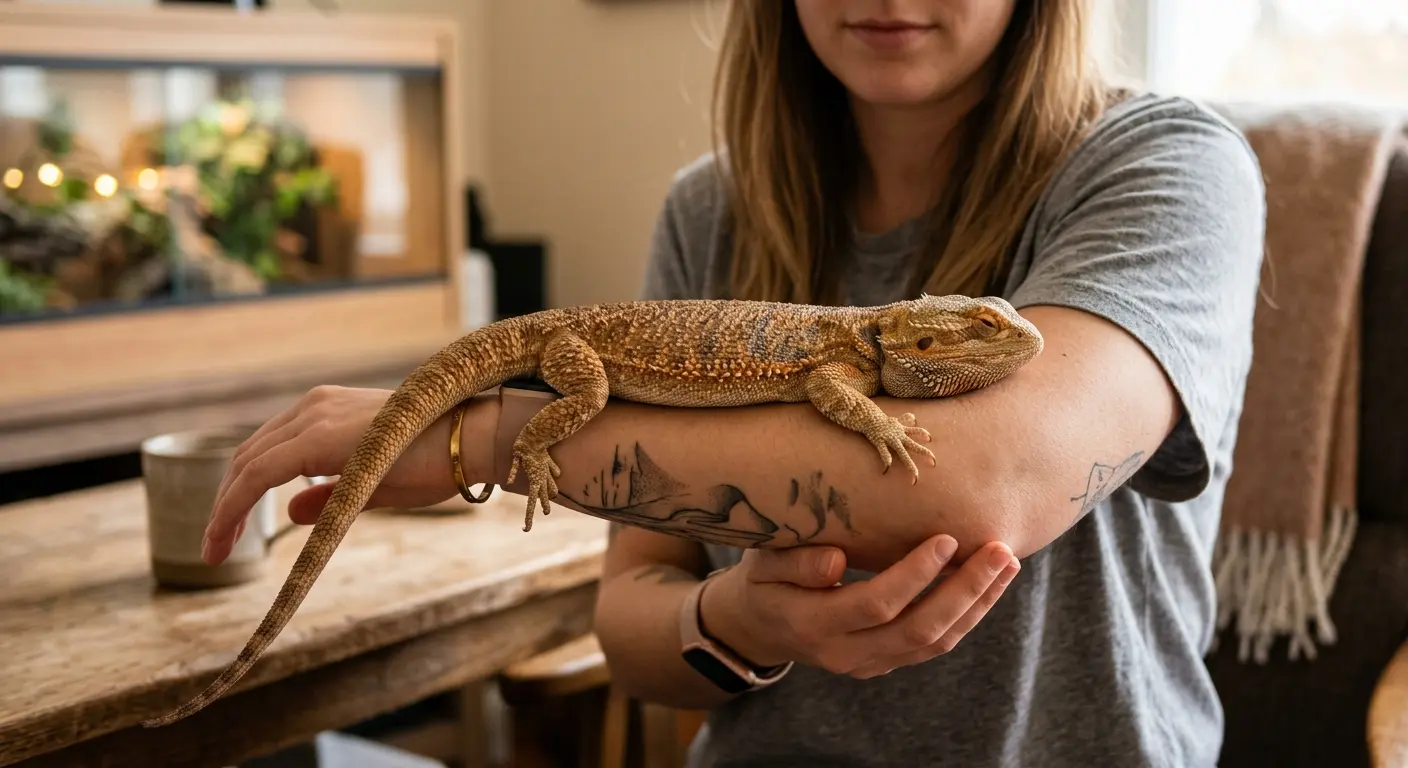
Physiological Drivers Behind Defecating on Owners
Reptiles rely completely on external sources of thermal energy to regulate their internal bodily functions, including their gastrointestinal tract. When you lift your pet out of their enclosure, your body acts as a giant, living heat pad that instantly alters their metabolic processes.
Human skin surface temperature usually hovers around 91°F to 98°F (33°C to 37°C). This warmth penetrates the belly scales of a resting reptile, stimulating peristalsis and loosening internal sphincters that were previously inactive under cooler ambient room air.
Understanding these biological triggers helps clarify why personal handling often ends in an unexpected cleanup session during warm lounge time.
Body Heat Acceleration
Warmth speeds up enzyme production within the digestive tract, encouraging rapid bowel movements. When placed against warm skin or a fleece blanket on your chest, muscles in the lower digestive tract relax significantly.
This relaxation often forces accumulated waste outward. If your pet recently basked under their heating bulb before handling, your personal warmth completes the physiological sequence necessary for elimination.
Handling Stress and Fear Reactions
Handling stress can also cause sudden gut evacuations in nervous or young reptiles. Unfamiliar movements, loud environmental noises, or improper handling techniques trigger a fight-or-flight release of stress hormones.
When frightened, the body empties its bowels to shed weight rapidly for a quicker retreat. Ensuring proper palm-and-body support helps minimize sudden panic reflexes during floor time.
For a complete breakdown of healthy digestion, fecal consistency, and normal discharge colors, explore our detailed bearded dragon poop guide for essential diagnostic tips.
Analyzing Coprophagy in Captive Reptiles
Discovering that your reptile companion is eating its own waste—a medical condition known as coprophagy—is deeply disturbing for any owner. While common in rabbits or rodents, coprophagy is an abnormal behavior in captive desert lizards that signals underlying husbandry issues.
In wild habitats, desert reptiles rarely encounter their own feces repeatedly due to expansive territories and natural decomposition. Within enclosed vivariums, however, proximity creates opportunities for strange behavioral malfunctions that require immediate attention.
Identifying why a bearded dragon eating poop occurs in captivity allows owners to address root causes before serious health complications emerge.
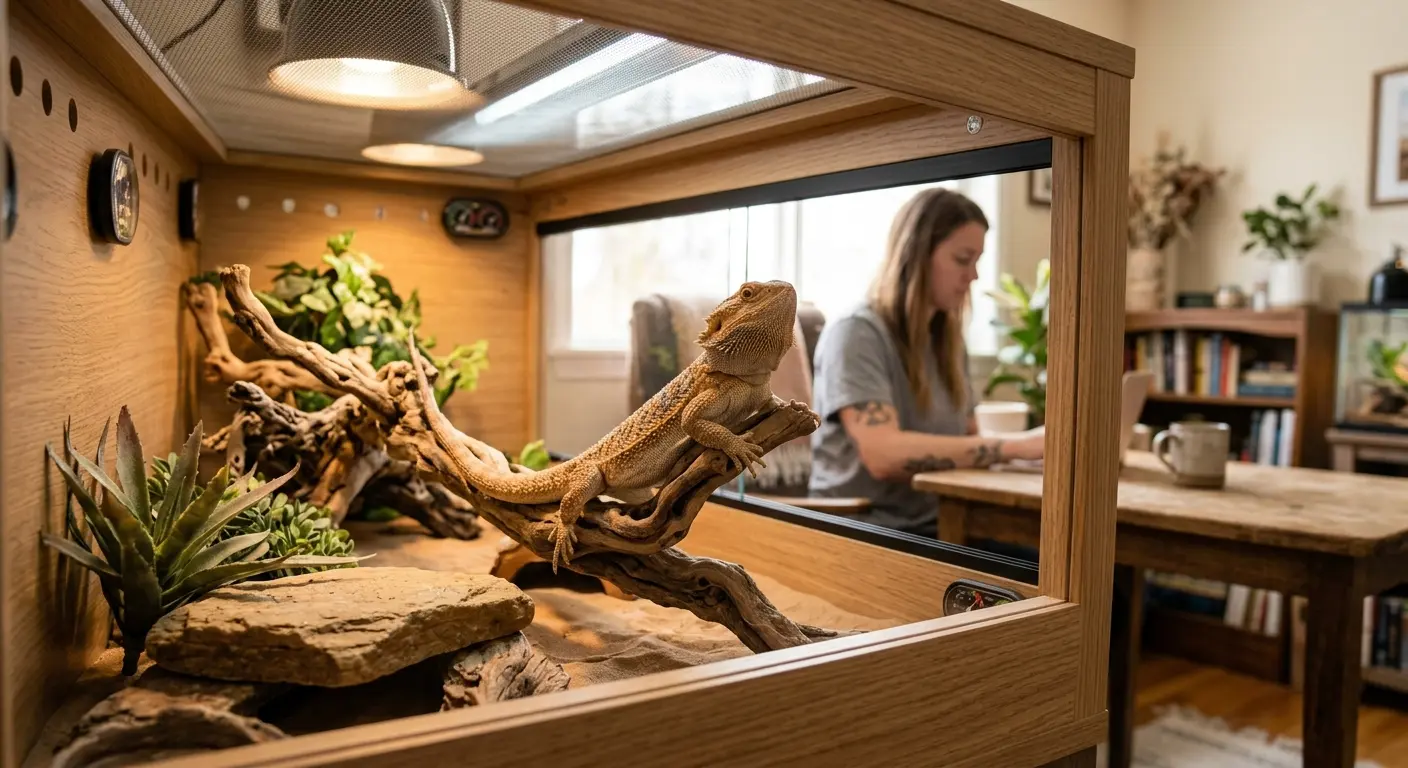
Nutritional Deficiencies and Starvation
Severe nutritional deficits are a leading trigger for coprophagy in domestic settings. When a diet lacks essential calcium, trace minerals, or key vitamins, an animal may attempt to recycle undigested nutrient remnants found in its stool.
Underfed juveniles undergoing rapid growth spurts may also consume waste out of sheer hunger. Ensuring adequate insect protein and mineral dusting prevents this erratic feeding instinct from taking root.
Enclosure Cleanliness and Accidental Ingestion
Dirty substrate and delayed cleaning habits frequently cause accidental consumption. If live feeder insects, such as dubia roaches or crickets, roam freely over dry feces, your pet might target the insect and swallow waste in the crossfire.
In other cases, curiosity or boredom in barren tanks drives lizards to lick objects in their habitat. Regular spot cleaning prevents these accidental oral encounters completely.
Corrective Behavioral Steps and Enclosure Hygiene
Resolving unwanted defecation during handling and eliminating waste-eating habits requires a combination of routine adjustment, improved cage sanitation, and dietary correction. Implementing structural habits reduces accidents while optimizing overall digestive health.
By establishing predictable daily rhythms, you teach your pet to relieve itself in designated areas before handling sessions begin.
- Implement Pre-Handling Baths: Warm water soak sessions (around 95°F / 35°C) encourage immediate bowel clearance inside the tub rather than on your clothing.
- Schedule Handling After Defecation: Wait until your pet completes its morning digestion cycle inside the tank before removing it for extended handling.
- Maintain Immediate Spot Cleaning: Remove fresh waste immediately to discourage waste-eating and prevent parasitic reinfection inside the vivarium.
- Standardize Supplement Routines: Coat daily insect feeders with high-grade calcium carbonate and multivitamin powders to remove nutritional hunger triggers.
Comparative Analysis of Digestive Behavior Triggers
The following comparison table breaks down common behavioral issues, their underlying causes, and practical corrective measures for reptile keepers.
| Behavioral Issue | Primary Cause | Physiological Trigger | Recommended Solution |
|---|---|---|---|
| Defecation on Owner | External body heat | Muscle relaxation & peristalsis | Warm bath soak prior to handling |
| Consuming Own Feces | Nutritional deficiency | Mineral craving & hunger | Upgrade calcium powder dusting |
| Stress Evacuation | Handling fear | Adrenal flight response | Support belly; reduce handling time |
| Accidental Ingestion | Dirty enclosure | Misdirected prey strikes | Remove uneaten live insects daily |
A Keeper’s Perspective: Resolving Unpredictable Handling Accidents
Last spring, my rescue central bearded dragon, Norbert, developed a terrible habit of ruining our evening television routines. Every single time I pulled him out around seven in the evening to sit on my woolen sweater, five minutes would pass smoothly before utter disaster struck.
Frustrated by the constant laundry loads, I initially assumed he was territorial or angry at my shirt color. I tried swapping his basking logs and tweaking his heat lamp wattages for two weeks, yet the unpleasant evening surprises continued without missing a beat.
The solution surfaced quite unexpectedly during a routine vet check-up when Dr. Harrison pointed out how warm my lap felt compared to his cool-end enclosure temperatures. I began giving Norbert a ten-minute shallow warm soak in a dedicated plastic basin every afternoon right after his midday salad, letting him drain his gut completely before lounge time. The messy sweater incidents vanished overnight, transforming our handling sessions back into peaceful bonding moments.
Veterinary Health Cues and Parasite Prevention
While occasional elimination on an owner is normal, chronic digestive irregularities indicate potential medical issues that demand professional evaluation. Intestinal parasites, such as coccidia or pinworms, disturb normal bowel patterns and cause runny, highly foul-smelling discharges.
According to clinical resources maintained by the Association of Reptilian and Amphibian Veterinarians (ARAV), routine fecal examinations are essential for detecting microscopic internal pathogens before severe weight loss or dehydration occurs.
If bowel movements remain watery, frequent, or discolored despite optimized terrarium temperature gradients, schedule a health checkup with a licensed exotic veterinarian promptly.
Frequently Asked Questions
Summary
Deciphering why does my bearded dragon poop on me comes down to understanding thermal biology, gut relaxation, and handling dynamics. By managing basking temperatures, utilizing pre-handling warm baths, and keeping enclosure substrate immaculate, you eliminate messy accidents and protect your pet from abnormal behaviors like coprophagy. Consistent husbandry ensures a healthy digestive system and enjoyable bonding sessions for years to come.