
So, you have brought home your brand new scaly companion, but a massive mystery remains unsolved. Is your small prehistoric reptile a handsome prince or a lovely princess? Determining the sex of your reptile is a fundamental milestone for every dedicated reptile keeper.
Identifying whether you have a Bearded Dragon Male or Female is not as straightforward as it appears on the surface. Hatchlings look completely identical to the untrained eye, leaving many keepers utterly confused for months.
In this comprehensive, expert-verified guide, we will break down the precise biological techniques utilized by professional herpetologists. You will learn how to accurately decipher the subtle physical anatomical markers and nuanced behavioral cues in minutes.
The Biological Significance of Reptile Sexing
Before diving into the actual tests, it is critical to understand why this distinction matters so immensely for your husbandry. Reptiles do not exhibit external genitalia in the manner mammalian pets do, which requires an investigative approach.
The morphological variations between a Bearded Dragon Male or Female develop gradually as the animal approaches sexual maturity. Forcing an early diagnosis without structural data often leads to complete misidentification and inappropriate environmental planning.
By learning the distinct physical evolutionary traits of each gender, you protect your companion from common preventable management mistakes. Let us explore the exact anatomical steps required to solve this mystery with absolute scientific certainty.
1. The Tail Flip Test (The Ultimate Accuracy Benchmark)
The absolute most accurate and reliable method practiced globally by exotic veterinarians is the manual visual inspection of the sub-caudal region. This simple technique requires you to carefully look at the underside of the tail base, located immediately above the cloacal vent.
To perform this, place your lizard on a secure, flat surface such as a table or your lap. Gently and slowly lift the tail upward at a steady 90-degree angle relative to the spine while supporting the body.
Never force the tail beyond its natural flexibility, as this can cause severe spinal trauma or muscle damage. Look closely at the soft area directly above the vent where the tail connects to the torso.
What a Male Looks Like
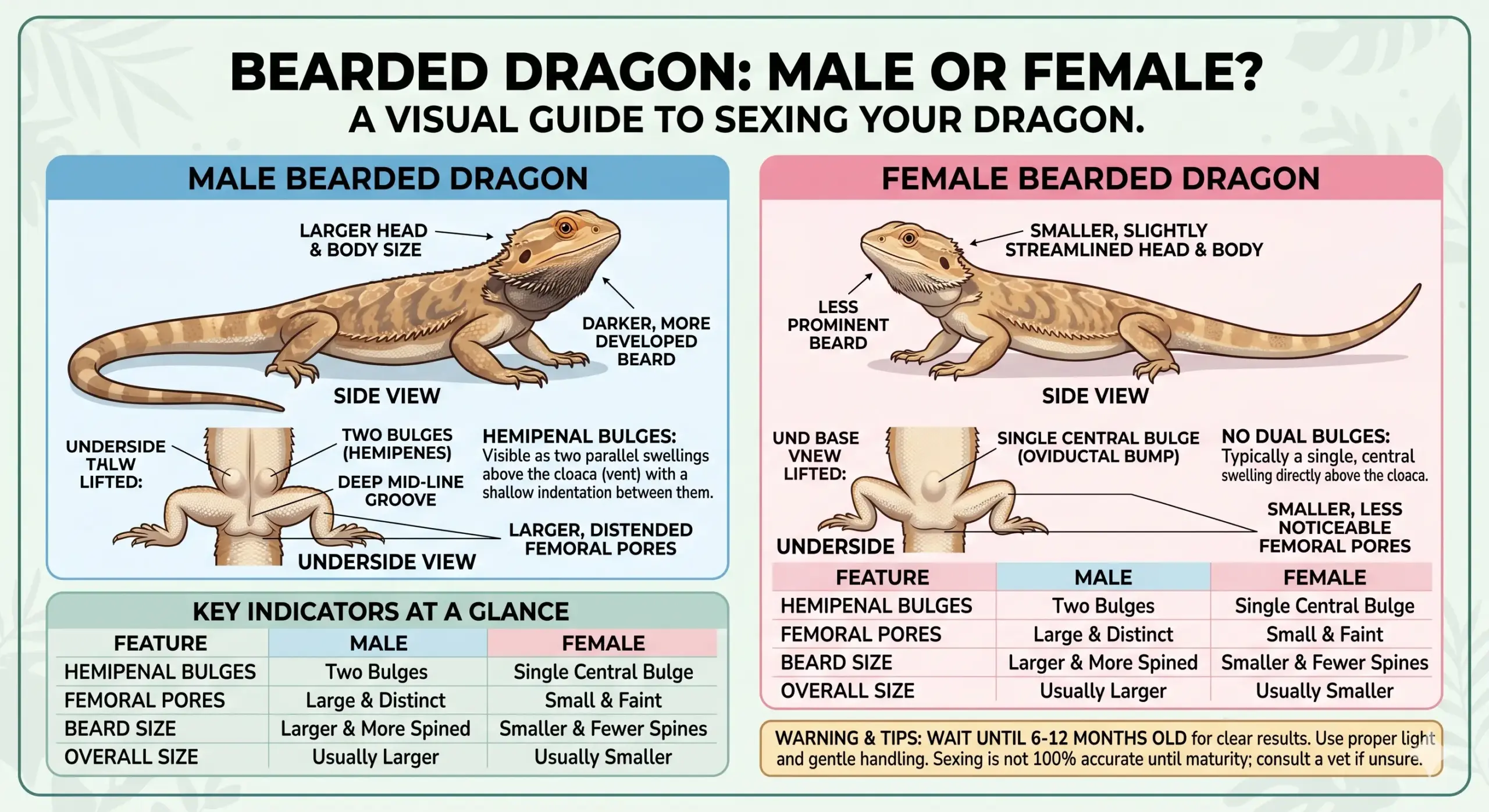
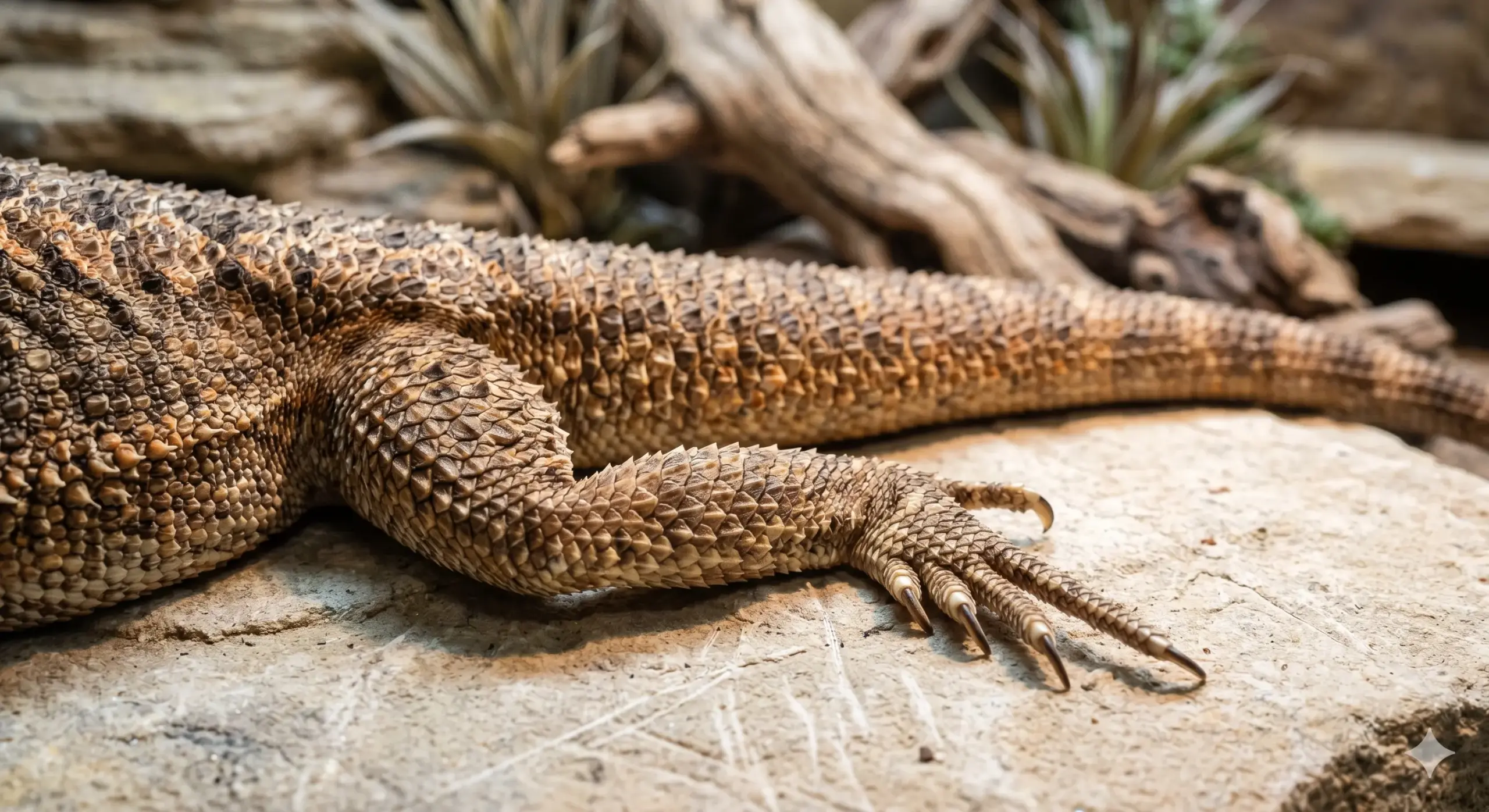
If your companion is a male, you will clearly observe two distinct, distinct vertical bulges running parallel along the sides. These dual symmetrical bumps represent the hidden hemipenes, which are the internal reproductive organs of the male lizard.
The center of the tail base between these two parallel vertical columns will look relatively indented or concave. This specific dual-bulge layout is a definitive visual signature when verifying a Bearded Dragon Male or Female structure.
What a Female Looks Like
If your lizard is a female, the sub-caudal layout will look completely different to your eyes. You will observe only one single, subtle bulge centered right in the middle, directly above the edge of the cloacal vent.
Alternatively, the entire area might appear completely flat and uniform without any structural vertical columns whatsoever. This absence of dual pocket formations confirms the specimen is female without a doubt.
2. The Flashlight Test (The Advanced Candling Method)
If the visual inspection leaves you slightly uncertain, do not worry at all. The revolutionary flashlight test, frequently referred to as “candling” by top breeders, provides an incredible X-ray view of internal tissue.
This ingenious technique works exceptionally well on younger animals whose external skin definitions are still developing. You will need a high-powered, bright smartphone flashlight and a completely dark room to achieve perfect results.
Turn off all the ambient room lights until the environment is fully dark. Turn on your mobile flashlight and gently position the bright light against the top side of the tail base.
Shine the light directly downward through the scales while observing the translucent underside of the tail from below. The intense light will easily illuminate the internal structures, revealing the presence or absence of reproductive tissue pathways.
When analyzing a Bearded Dragon Male or Female via illumination, the internal shadows tell the entire story instantly. Look closely for dark, dense tissue blockages blocking the red light transmission through the tail base skin.
Illumination Patterns to Watch For
In a male, the downward light will cast two highly visible, dark vertical shadows representing the dense hemipenal organs. These shadows will look like two opaque lines running parallel along the outer edges of the tail interior.
In a female, the light will shine cleanly through the center, producing a bright, beautifully uniform pink or red glow. There will be no dual dark blockages along the sides, though a tiny central shadow might occasionally appear.
3. Femoral Pores (The Subtle Micro-Clues)
Another incredible anatomical indicator requires you to carefully inspect the interior underside of your reptile’s rear thighs. Flip your lizard over gently to expose the long horizontal line of scales running from knee to knee.
You will notice a distinct, organized string of small circular structures known as femoral pores. These specialized pores play a critical role in wild communication by secreting waxy, pheromone-rich substances onto rocks.
When comparing a Bearded Dragon Male or Female, the size and development of these pores diverge heavily during growth. Males rely heavily on these secret signals to establish dominant territory lines in the wild landscape.
Males possess large, deep, highly prominent femoral pores that feel bumpy and look like dark, wax-filled circles. They form a very obvious, raised line that is incredibly easy to spot with simple macro vision.
Females possess incredibly small, shallow, faint pores that often look like tiny, barely visible pinpricks on the skin surface. In many female specimens, these pore lines are so completely underdeveloped that they are nearly impossible to find.
The Human Experience: A Keeper’s Journey of Patience
I still remember the chilly autumn afternoon I brought home my very first hatchling, a tiny energetic ball of scales I named Cooper. Love at first sight. The reptile store clerk told me confidently it was a baby boy, but deep down, I always felt a strange lingering doubt about that hasty guess. Months crawled by like slow molasses.
I watched every single daily feeding session with intense, absolute fascination. The bond grew deeper. Then came the unexpected morning around the ten-month mark when I walked into the room and discovered a clutch of round white eggs buried in the corner sand. Total shock! My handsome little prince was actually a beautiful, healthy princess. Nature possesses a wonderful, humbling way of throwing magnificent surprises directly into our structured lives, teaching us the true meaning of patience and unconditional care.
4. Behavioral Differences (The Personality Matrix)
While physical anatomy remains the absolute gold standard for accuracy, behavioral tendencies offer fantastic supplementary clues for daily tracking. Observation of your pet’s social reactions can reveal fascinating insights into their hormonal programming over time.
It is vital to state that behavioral evaluation is never 100% definitive on its own. Certain individual animals routinely defy typical gender stereotypes, but observing multiple combined traits helps form a highly accurate picture.
When assessing a potential Bearded Dragon Male or Female via daily actions, look closely at how they interact with their surrounding environment. Hormonal surges trigger specific movement patterns that are highly characteristic of wild reproductive instincts.
Dominance vs. Submission Patterns
Males are naturally wired to exhibit intense dominance displays, which manifests as rapid, aggressive, jerking head-bobbing motions. Additionally, the large scale area under their chin, known as the beard, will frequently turn a dramatic, jet-black color.
Females are generally much calmer and routinely display submission by executing a slow, beautiful, circular front-arm waving motion. While females can head-bob, their movements are significantly slower and rarely accompanied by a completely blackened beard display.
Comprehensive Identification Matrix
To help you synthesize all this detailed herpetological information easily, I have constructed an organized comparison matrix. This table highlights the primary visual and behavioral differences to consider during your inspection.
| Anatomical Feature | Male Characteristics | Female Characteristics |
|---|---|---|
| Sub-Caudal Bulges | Two distinct vertical bulges along the tail sides | One single central bulge or entirely flat area |
| Flashlight Candling | Two clear dark parallel shadows visible | Uniform translucent pink/red glow throughout |
| Femoral Pores | Large, dark, prominent, and filled with wax | Tiny, faint, shallow, and difficult to observe |
| Head Morphology | Broad, thick, muscular, and wider jawline | Narrower, streamlined, and more delicate profile |
| Dominant Behavior | Frequent rapid head-bobbing with jet-black beard | Rare, slow bobbing; primarily slow arm waving |
At What Age Can You Safely Verify the Gender?
While it is completely natural to feel incredibly curious the exact moment you bring home a tiny baby lizard, patience is paramount. Attempting to identify the sex of an early-stage hatchling is notoriously difficult, even for seasoned professional breeders.
Before sexual differentiation occurs, the physical reproductive organs are completely hidden and microscopic inside the pelvic cavity. Forcing an early diagnosis using visual tests frequently results in complete error and false expectations.
The vast majority of exotic veterinarians recommend waiting until your companion is at least six months old. Alternatively, wait until the body reaches approximately 8 to 10 inches in total length from the snout to the tip of the tail.
By reaching this developmental milestone, the structural characteristics like hemipenal pockets and femoral pores are mature enough to analyze clearly. Utilizing the flashlight or tail-flip test at this stage ensures a highly successful, permanent identification.
Why Correct Gender Identification is Crucial for Health
Accurately identifying your reptile’s gender is not merely a fun exercise for picking out a perfect royal name. Knowing whether you own a Bearded Dragon Male or Female is absolutely vital for making life-saving husbandry choices.
The first critical factor involves cohabitation and territorial safety limits. You must absolutely never house two male individuals inside the same enclosure together under any circumstances, as they will fight viciously.
These intense territorial battles invariably lead to horrific missing limbs, deep lacerations, extreme psychological stress, or immediate death. Females can also exhibit territorial traits, making individual solo housing the global gold standard for welfare.
The second major factor involves managing the unique biological reproductive demands of mature female lizards. Intriguingly, female reptiles are fully capable of developing and laying large clutches of eggs without ever being near a male companion.
These infertile eggs must be laid safely inside a specialized, moist “dig box” filled with loose soil or sand substrate. Without a proper digging spot, a female may retain the eggs internally, causing a fatal medical crisis known as egg-binding.
Furthermore, egg-producing females require massive amounts of dietary calcium supplementation to construct healthy eggshells safely. If their vitamin levels are insufficient, their bodies will rapidly strip calcium directly from their own skeletal bones, causing Metabolic Bone Disease.
Common Questions About Reptile Sexing (FAQ)
Conclusion: Embracing Your Dragon’s Identity
Accurately identifying your companion’s gender becomes significantly easier once they cross the threshold of six months of age. Before that developmental milestone, attempting to navigate the subtle physical markers can easily confuse even highly experienced keepers.
Whether your investigation reveals a magnificent king or a stunning queen, your primary daily mission remains exactly the same. Providing flawless radiant heat, high-output UVB lighting, pristine hydration, and balanced insect nutrition is what truly guarantees a thriving life.
Take your time, practice the tests with extreme gentleness, and enjoy the wonderful journey of understanding your unique exotic pet. By mastering these herpetological identification skills, you elevate your husbandry standards and ensure your scaly friend lives their absolute best life by your side.