
Welcoming a new baby bearded dragon into your home brings an unparalleled sense of wonder. These miniature prehistoric creatures possess immense charm, captivating reptilian enthusiasts worldwide with their curious head tilts and expressive eyes.
However, managing a juvenile hatchling requires strict dedication and precise husbandries. Because their bodies grow exponentially during the initial months, any environmental misstep can severely impact their development and skeletal structure.
Understanding the delicate biological baseline of a baby bearded dragon is paramount for long-term health. This complete blueprint breaks down ultimate care protocols, baseline parameter requirements, and foundational habitat adjustments.
Decoding the Ideal Temperature Gradient for Your Baby Bearded Dragon
Reptiles rely entirely on external thermal heat sources to drive internal biochemical functions. Since a baby bearded dragon has a very low body mass index, it absorbs and loses thermal radiation rapidly.
Creating a reliable gradient allows your reptile to move freely between high-heat zones and cool retreat spaces. This behavioral thermal regulation supports cellular metabolism, circulatory performance, and everyday vitality.
The Basking Zone Requirements
The designated high-temperature area must reach between 40°C to 43°C (104°F to 110°F) consistently. This elevated focal range triggers critical gastric enzymes required to break down dense chitinous insect prey elements.
Utilize a high-range digital thermometer equipped with a physical wire probe resting directly over the basking platform. Avoid cheap stick-on ambient dials, as they often record structural glass metrics rather than surface temperatures.
Cool End and Nighttime Drops
The opposite parameter node of your enclosure must maintain a steady cool zone around 24°C to 27°C (75°F to 80°F). Without this ambient reduction, the delicate hatchling risks systematic heat stress and dehydration.
During evening cycles, maintain ambient dark parameters above 18°C (65°F) safely. If your regional household baseline dips below this threshold, integrate a lightless ceramic heat emitter regulated by an active proportional thermostat.
Managing Enclosure Humidity and Respiratory Health
While native wild wildlands exhibit arid characteristics, ambient hydration remains incredibly vital for a young baby bearded dragon. Striking an authentic balance keeps shedding continuous and prevents serious internal ailments.
Improper target values can induce hidden stress vectors that gradually weaken systematic immune defense mechanisms. Regular observation via calibrated digital instruments ensures your terrarium remains safely inside the appropriate thresholds.
The Ideal Target Percentages
Maintain the relative digital hygrometer calculations strictly between 30% and 40% inside the primary living environment. This modest window supports fluid metabolic hydration while keeping local mold spores from proliferating.
Excessive moisture retention above 50% often breeds structural bacterial growth, leading directly to opportunistic respiratory infections. Conversely, single-digit percentages will quickly complicate skin sloughing cycles across tiny structural extremities.
Mitigating Stuck Shed Vulnerabilities
When atmospheric ambient moisture remains chronically low, old epidermal layers dry out completely and cling to growing skin. This often manifests as restrictive bands around fragile toe spaces or tail tips.
To safely resolve localized constriction zones, introduce a shallow lukewarm soaking treatment or fine structural misting. For verified clinical insights into underlying handling safety protocols, consult the authoritative reptilian literature hosted by the Association of Reptilian and Amphibian Veterinarians.
The Essential UVB Lighting Framework
Providing high-output ultraviolet light is a completely non-negotiable component of raising a vibrant baby bearded dragon. Synthetic bulbs act as an artificial sun, sparking internal synthesis of vital vitamin compounds.
Without adequate specialized exposure, young reptiles cannot synthesize calcium isotopes correctly, regardless of heavy powder supplementation. This physiological breakdown leads directly to structural deformities and systemic failure.
Critical Behavioral Warning Signs
If you notice your little juvenile display a darkened throat or showing strange structural positions, check out our diagnostic analysis on Why is My Bearded Dragon’s Beard Black? to comprehensively decode their unique communicative signs.
Selecting High-Output T5 Linear Tubes
Avoid regular compact coil bulbs because their focused output beams decay quickly and fail to span wide territories. Instead, install a high-output T5 linear tube light, specifically a 10.0 or 12% desert spectrum variant.
The fixture should cover roughly two-thirds of the structural cage length, overlapping directly with the primary basking area. Position the tube carefully to ensure an unobstructed path down to the animal’s main perching zone.
The Human Experience: A Keeper’s Private Reflection
I remember the quiet panic of that first frosty winter evening. My little hatchling sat frozen on a gray slate slab, completely motionless. My heart raced as I checked the digital readout over and over again. Was he breathing? Minutes felt like hours in the dim room light. I gently offered a single tiny cricket, watching his eyes slowly track the movement. Then, a sudden lightning-fast strike. Relief washed over me like a warm wave, breaking the heavy silence. That quiet, fragile moment forged a deep, unspoken bond between us. It taught me the raw patience needed to nurture such a delicate life.
Daily Care, Feeding, and Structural Enclosure Scaling
The metabolic demands of a rapidly growing baby bearded dragon are surprisingly vast compared to an adult specimen. Managing their intensive schedule demands structured routines and highly balanced insect choices.
Maintaining clean dietary setups prevents internal impaction risks while maximizing steady physical growth. Consistently logging your daily care habits allows you to notice subtle trends in development before issues emerge.
Aggressive Feeding Schedules and Ratios
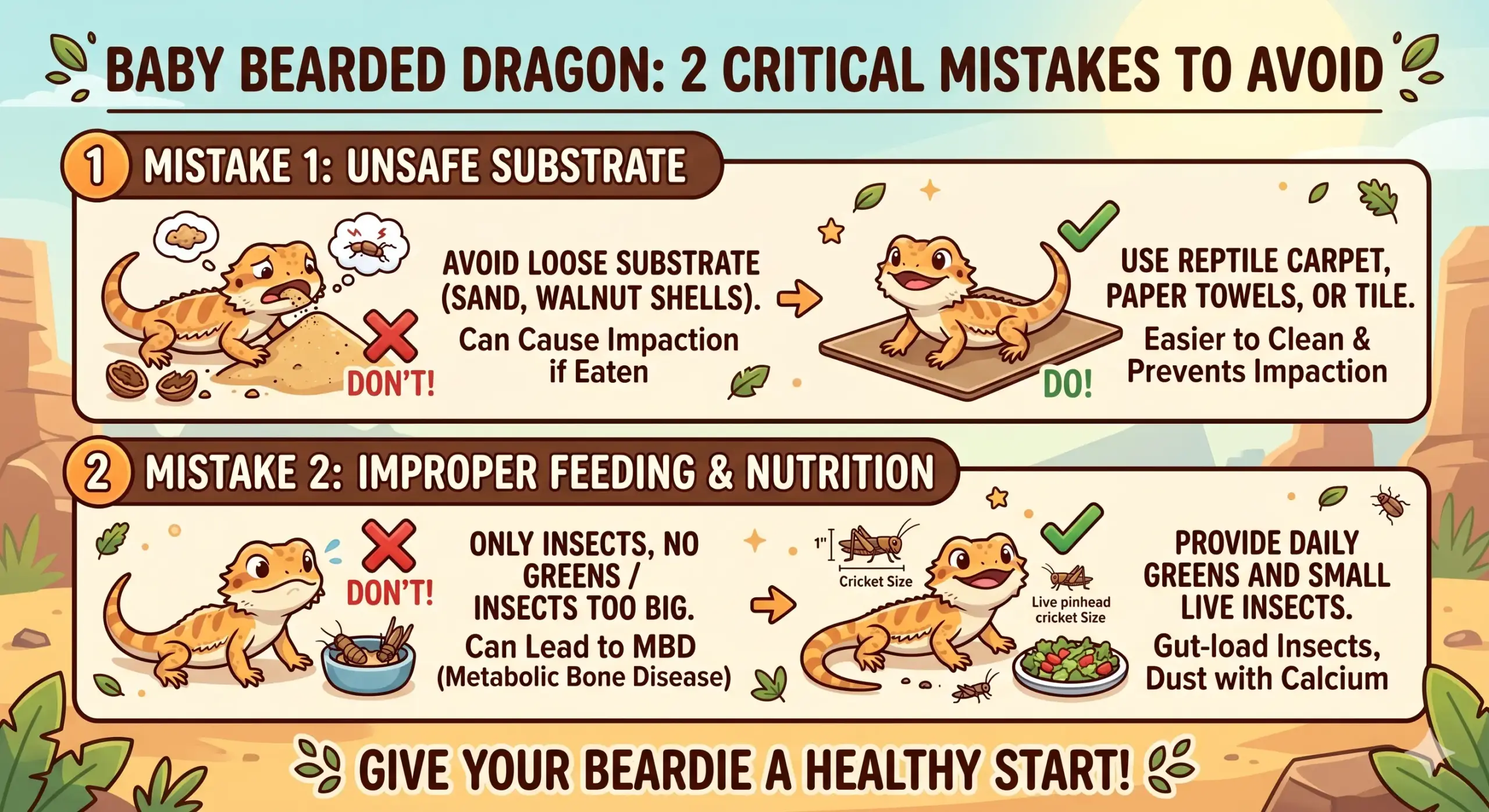
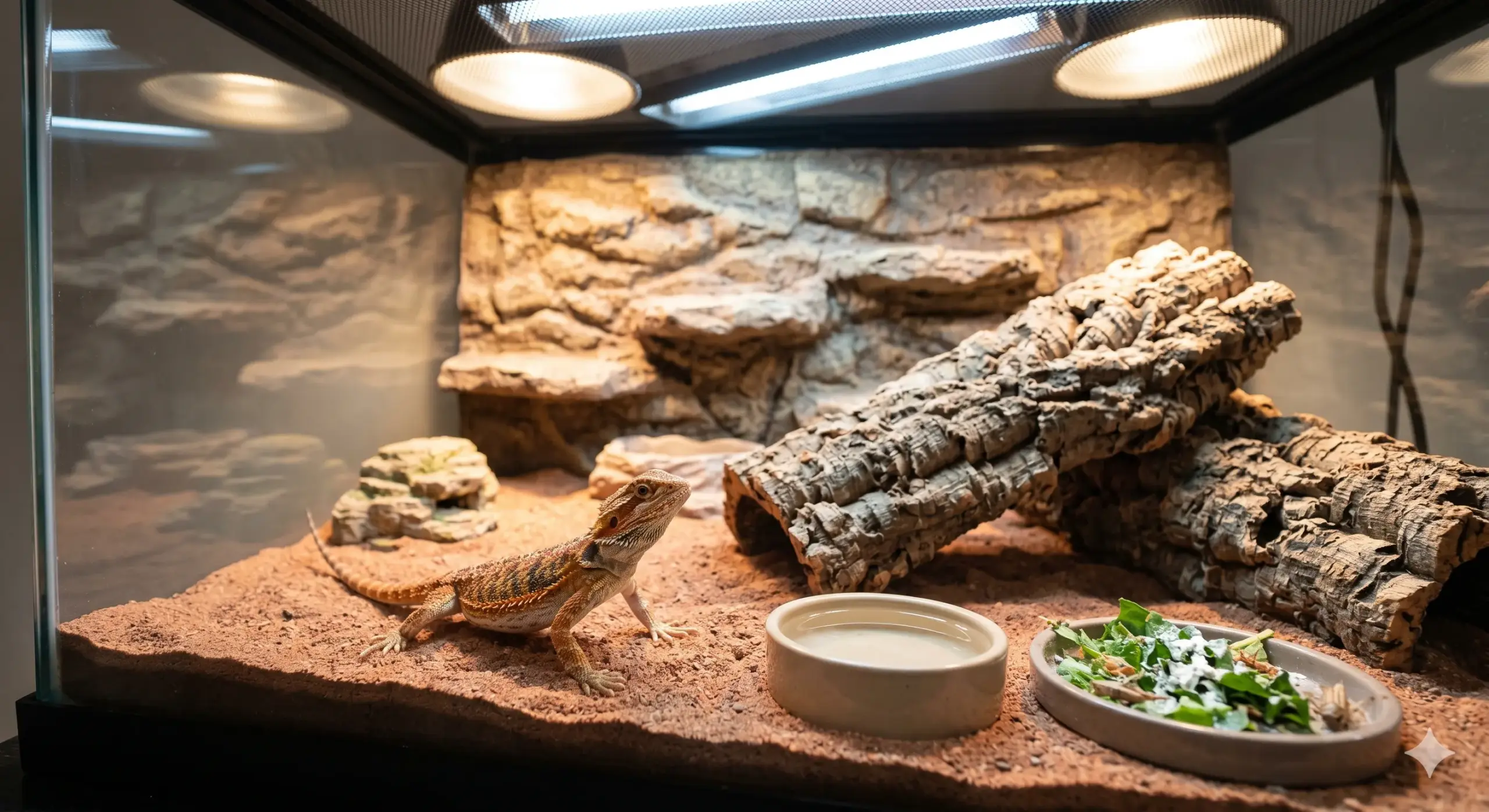
Hatchlings require live insect feedings two to three times every single day within a dedicated timeframe. Their nutritional breakdown must favor 80% small live insects and 20% finely chopped gut-loaded leafy greens.
Offer appropriate prey items like small dubia roaches or active crickets no wider than the structural space between the dragon’s eyes. Dust meals regularly with pure calcium carbonate formulations to boost skeletal mineralization.
Enclosure Sizing Matrix
While starting a fragile baby bearded dragon in a massive enclosure can sometimes complicate their microclimate hunting, they outgrow small tanks rapidly. Preparing your budget for regular upgrades is central to proper planning.
Review the comprehensive developmental framework below to match your lizard’s age with appropriate structural parameters:
| Dragon Life Stage | Approximate Age | Minimum Tank Volume | Primary Dietary Target |
|---|---|---|---|
| Hatchling / Early Baby | 0 – 2 Months | 20 – 40 Gallons | 80% Micro Insects / 20% Greens |
| Juvenile / Older Baby | 2 – 6 Months | 40 – 75 Gallons | 70% Small Insects / 30% Greens |
| Sub-Adult Transition | 6 – 12 Months | 75 – 120 Gallons | 50% Medium Insects / 50% Greens |
| Full Mature Adult | 12+ Months | 120+ Gallons | 20% Large Insects / 80% Greens |
Environmental Management Summary
Raising a thriving baby bearded dragon requires balancing accurate heating gradients, proper linear UVB exposure, and strict hydration monitoring. By mastering these variables early, you build a foundation for an incredibly rewarding companion.
Stay proactive by checking your diagnostic instruments daily and adjusting positions as your lizard grows. Dedication during these formative initial months ensures your exotic pet enjoys a long, resilient life.
Frequently Asked Questions (FAQ)
Q: Can I use loose sand substrate for a baby bearded dragon?
A: No, loose sand poses a severe risk of accidental impaction for hatchlings. Use safer, solid alternatives like textured slate tiles, unprinted paper towels, or specialized reptile mats instead.
Q: How often should I mist my young baby bearded dragon for proper hydration?
A: Lightly misting their habitat walls or offering shallow lukewarm baths 2 to 3 times a week works beautifully. This process provides ambient hydration support without spiking overall enclosure moisture parameters dangerously.
Q: Why is my baby bearded dragon refusing to eat its daily greens?
A: Young hatchlings are naturally driven by a high-protein instinct to fuel rapid growth phases. Continue offering finely chopped greens like mustard greens early in the morning before serving live insects to encourage healthy habits.
Q: Should I leave unconsumed crickets inside the tank overnight?
A: Never leave live insects in the enclosure after dark. Hungry crickets can bite and chew on a sleeping baby bearded dragon, causing superficial skin lesions, stress, and secondary infections.