
Urban Wildlife Conservation: The Garden as a Critical Refuge
Wildlife in cities is no longer an ecological footnote — it is one of the most important conservation stories of our time, and your backyard is at the center of it.
Industrial farmland, with its pesticide-saturated monocultures and compacted soils, offers little more than a biological desert to most species. Residential yards, by contrast, are ecological patchworks.
According to research published in Frontiers in Ecology and the Environment, urban gardens can host up to 50% more bee species and significantly higher reptile diversity than nearby intensively managed farmland.
That gap matters enormously when native habitats continue to shrink at an accelerating rate. Residential yards are far more than decorative green space.

They function as connective tissue between fragmented wild areas, offering shelter, food, and breeding opportunities to species that would otherwise vanish from the landscape.
The US Forest Service recognizes urban environments as increasingly critical zones for sustaining native wildlife populations — a position that would have seemed radical just two decades ago.
What’s emerging now is a deliberate practice: designing habitats for small and exotic species directly into the urban fabric. Rather than leaving biodiversity to chance, homeowners can make intentional choices.
By focusing on strategic plant selection, water features, and structural complexity, we enhance urban ecosystems. This concept of “designing wildlife” into a yard transforms passive green space into active refuge — and it draws heavily on the same principles used in specialized animal husbandry.
Understanding how thermal gradients, microhabitats, and refuge structures work is the natural next step to build an effective sanctuary.
Applying Terrarium Principles to the Backyard
Reptile keepers already understand something most gardeners don’t: wildlife doesn’t just need food and shelter — it needs the right thermal environment to survive.
That expertise translates directly to rewilding cities, one backyard at a time. The same logic behind a well-designed terrarium can be successfully recreated outdoors.
By mimicking layered heat gradients, secure hiding spots, and regulated humidity using nothing more than rocks, logs, and leaf litter, you create what ecologists call a micro-refugium.
This small-scale habitat patch allows ectothermic species like lizards, slow worms, and native snakes to regulate their body temperature and complete their life cycles within an urban setting.
According to research published in the Journal of Urban Ecology, creating these micro-refugia enables ectotherms to thermoregulate effectively and survive harsh winter freezes.
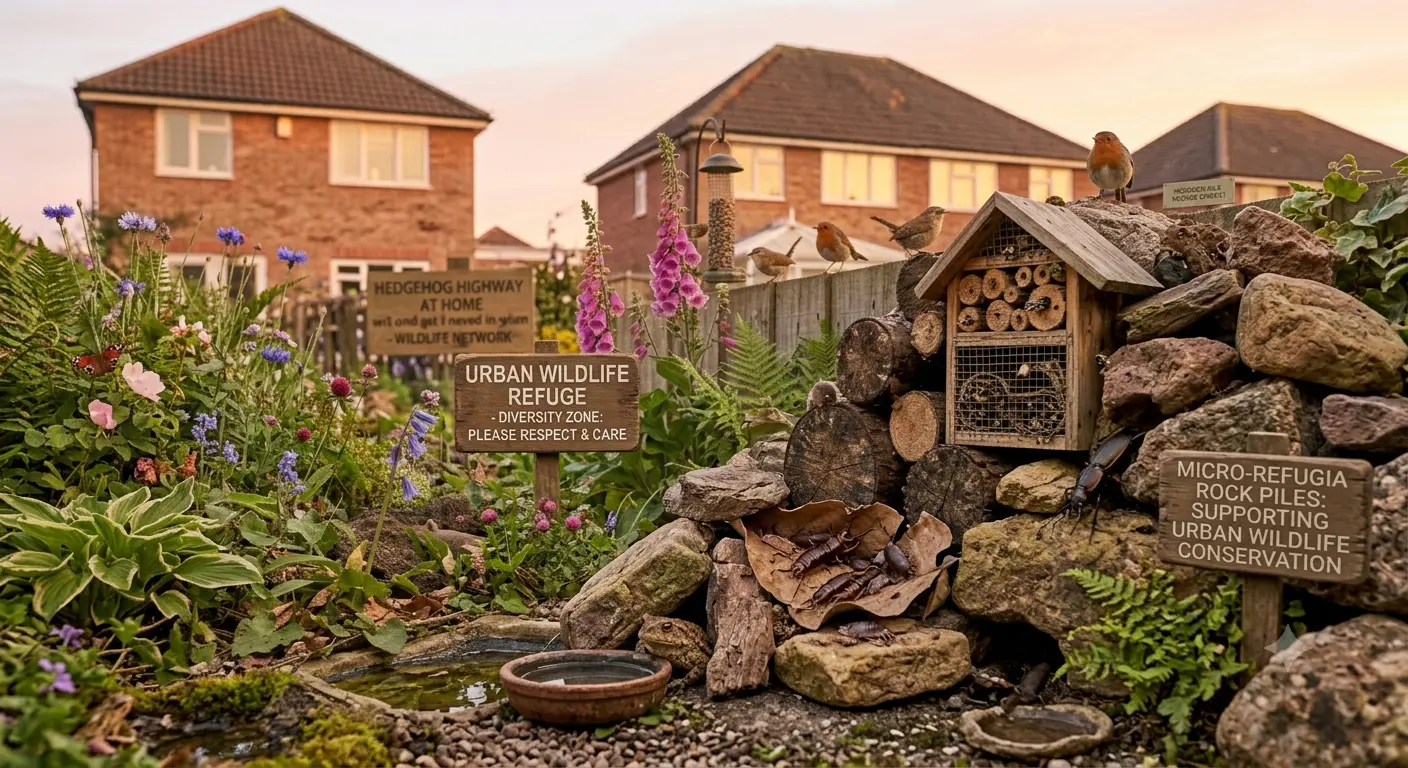
Building effective outdoor thermal gradients mirrors terrarium design more closely than most people expect. Three major habitat features do the heavy lifting:
- Rock piles and stone clusters: Absorb solar heat during the day and release it slowly at night, mimicking basking surfaces.
- Deep leaf litter and brush piles: Provide insulating cool zones for retreat during peak heat, replicating the cool end of a vivarium.
- Hibernacula: Partially buried log piles or stacked stones with soil coverage that create frost-protected overwintering chambers.
If you already monitor temperature gradients for your reptile, you have a genuine head start on understanding why these structures matter outdoors.
The key insight is that no single element works in isolation. Just as a terrarium fails without a proper layout, a garden micro-refugium needs layered complexity to function.
A solitary rock achieves little; a connected network of stones, log piles, and dense ground cover creates a genuinely functional habitat corridor.
This points naturally to why how these patches connect to neighboring gardens matters just as much as what you build in your own space.
Bridging the Gap with Hedgehog Highways
Urban wildlife conservation faces a challenge that goes beyond food and shelter — isolated animal populations trapped between roads, walls, and solid fencing are quietly losing their genetic diversity.
When small mammals like hedgehogs can’t move freely between green spaces, they breed only within their immediate territory, weakening the local gene pool over generations.
Fragmentation is the silent killer of urban wildlife, and the fix is often simpler than most homeowners expect. Supporting local initiatives can dramatically accelerate wildlife recovery.
“The ‘fragmentation’ of urban landscapes is the greatest threat to small mammals; creating ‘Hedgehog Highways’ — 13cm gaps in fences — is the single most effective community action for genetic health.” — Hedgehog Street (British Hedgehog Preservation Society)
A 13cm gap cut at the base of a garden fence costs nothing and requires only a jigsaw and five minutes. Yet it connects your yard to a neighbor’s, threading together a vital corridor.
If you’re already thinking about establishing a sustainable hedgehog conservation zone in your backyard, this structural addition is the piece that makes everything else meaningful.
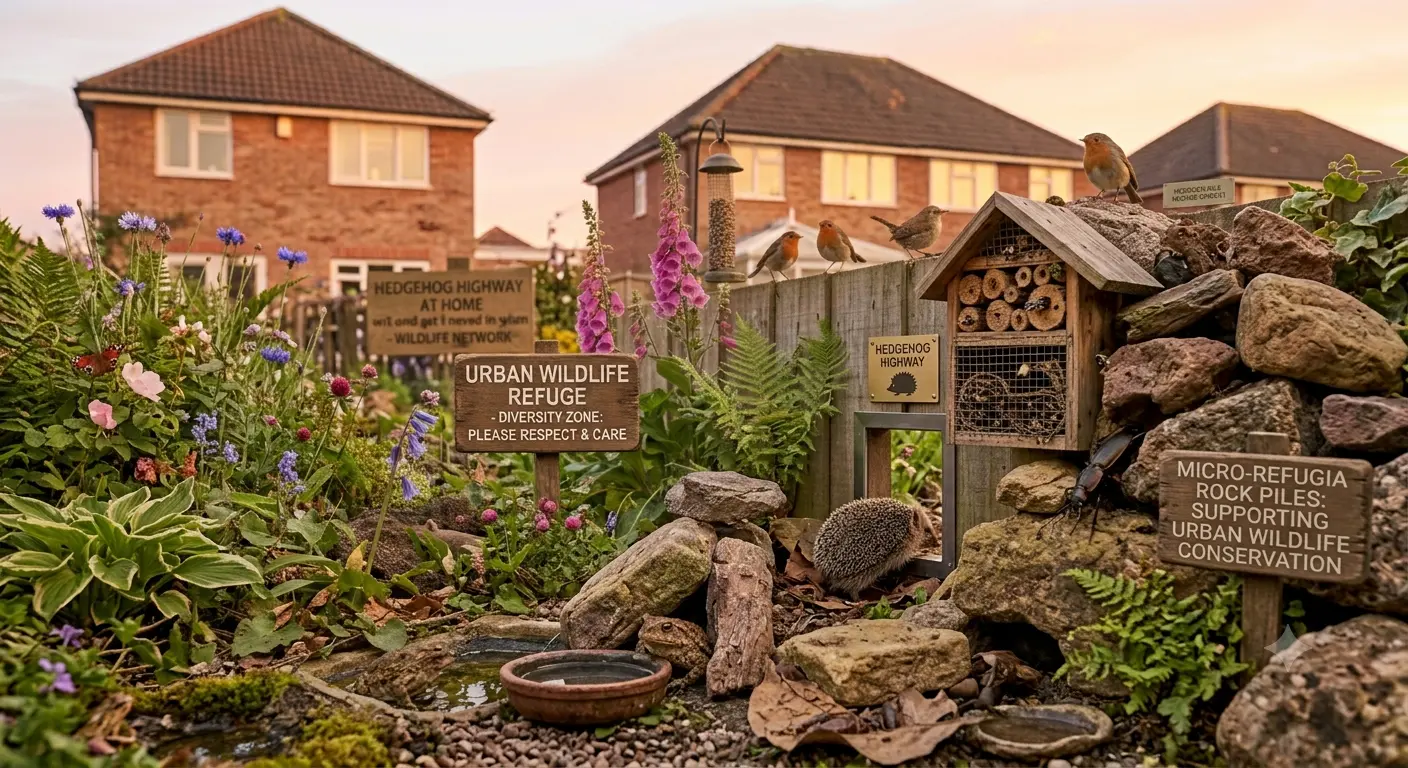
The real power here is collective. One gap helps; a dozen gaps coordinated across neighboring properties creates a highly functional migration route across an entire block.
Community groups have mapped entire neighborhoods using free online tools, demonstrating that street-level coordination drives the fastest habitat recovery.
That same community-first thinking applies equally in North American suburbs, where solid privacy fencing has become one of the most overlooked barriers to small mammal movement.
Creating corridors is foundational work — but it’s only part of what wildlife needs to survive lean seasons, which brings us to the equally contested question of supplemental feeding.
The Ethics and Science of Supplemental Feeding
Feeding garden wildlife responsibly is one of the most direct ways urban residents contribute to conservation — but doing it wrong can cause serious harm.
Supplemental feeding matters most when natural food sources collapse. Research from the University of Reading and the Mammal Society found that human-provided food accounts for up to 75% of winter diets in some suburban areas.
During late autumn and early spring — when insects are scarce and hibernation windows are tight — a reliable food station can genuinely tip the survival odds in a hedgehog’s favor.
The nutritional details are where many well-meaning gardeners go wrong. Bread and cow’s milk are among the most commonly offered foods, yet both are toxic or empty calories.
Milk causes severe digestive upset because hedgehogs are lactose intolerant, while bread provides empty calories that displace the essential protein they actually need.
Understanding the fundamentals of exotic animal nutrition reveals how species-specific dietary needs can be surprisingly easy to get wrong without scientific guidance.
| Safe Foods to Offer | Dangerous Foods to Avoid |
|---|---|
| Plain cooked chicken (unseasoned) | Cow’s milk (causes severe digestive issues) |
| Meat-based cat or dog food (no fish flavors) | Bread (provides empty calories) |
| Fresh, clean water in shallow dishes | Grapes, raisins, onions, and salted foods |
One practical caveat worth noting: consistent feeding can draw hedgehogs back to the same garden repeatedly, which makes structural safety a genuine concern.
Hazards like uncovered drains, netting, and steep-sided ponds become far more dangerous when visitor foot traffic increases — a topic that requires immediate hazard management.
Garden Safety and Veterinary Intervention
A wildlife-friendly garden can quickly become a death trap without deliberate hazard management — and knowing when to act could save an animal’s life.
Common garden hazards cause more wildlife casualties than most people realize. Netting left low to the ground entangles small mammals and reptiles overnight.
Steep-sided ponds with no exit ramp drown visiting mammals. Slug pellets containing metaldehyde are acutely toxic to hedgehogs and native slow-worms or lizards.
Safer alternatives — such as copper tape, wildlife-safe pellets, or organic traps — efficiently protect both your plants and your wild visitors.
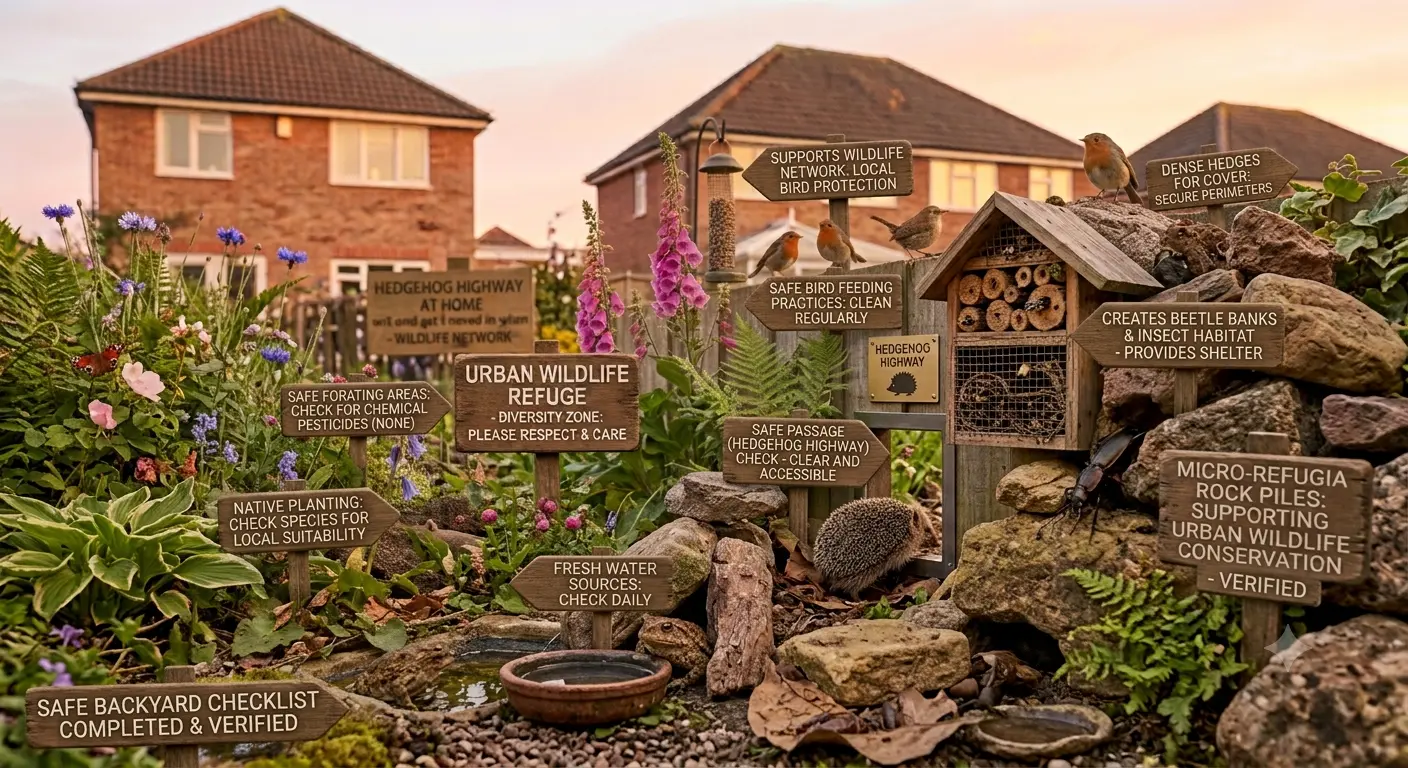
Be sure to run a regular safety checklist to keep your micro-refugium completely hazard-free:
- Raise netting at least 12 inches off the ground at night.
- Fit a gentle ramp or rough stone exit in any deep backyard pond.
- Replace metaldehyde slug pellets with safe ferric phosphate alternatives.
- Cover open drains and check compost bins before turning them.
Recognizing an animal in distress is equally important. According to veterinary guidance, hedgehogs are strictly nocturnal; daytime activity is a major red flag.
Any hedgehog active during daylight hours is almost certainly suffering from dehydration, starvation, or a severe infection requiring immediate medical attention.
If you encounter a distressed animal, use thick gardening gloves to place it gently into a cardboard box lined with a towel, add a warm water bottle, and contact a local wildlife rescue or exotic vet immediately.
The Bottom Line: Your Role in Urban Rewilding
Urban rewilding succeeds not through isolated perfect gardens, but through connected networks of small, structurally rich habitats that collectively sustain local wildlife populations.
The most powerful shift you can make is prioritizing connectivity over perfection. A single manicured garden offers limited value compared to interconnected wild grids.
When neighboring yards link together — sharing fence gaps, overlapping foraging corridors, and continuous water sources — they form a functional landscape that displaced species can actually navigate.
Resisting the urge to tidy up removes the one thing most urban spaces lack: safe, layered cover. Rocks, rotting wood, and undisturbed corners provide unrivaled natural thermal regulation.
Conclusion: From Pet Keeper to Conservationist
Urban spaces are the new frontier for wildlife conservation — and every backyard, balcony, and garden bed is a piece of that puzzle.
The evidence is clear: cities are capable of supporting vulnerable species when humans make intentional, biology-driven structural choices.
What bridges exotic pet knowledge and wild animal health is the same core logic: species thrive when their specific microclimatic needs are precisely met.
The nutrition protocols you apply to a captive reptile or the shelter requirements you engineer for an amphibian translate directly into how you manage a wild sanctuary.
By bridging the gap between biological research and practical ownership, we empower keepers to provide optimal environments for all exotic species — inside and outside the home.
The call to action here is simple: start where you are. Apply what you already know about exotic animal welfare to the wildlife passing through your garden today.