
Are axolotls dangerous to other animals? Directly stated, yes, axolotls pose a significant threat to small fish, snails, and aquatic invertebrates due to their vacuum-like suction feeding mechanism. Furthermore, their delicate, exposed external gills make them highly vulnerable targets for aggressive fish, making species-only setups the safest option.
Keeping exotic aquatic pets requires a thorough understanding of ecosystem dynamics. While Mexican walking fish look sweet and docile with their tiny smiling faces, housing them with roommates often leads to severe injuries or fatal accidents inside the aquarium habitat.
In this comprehensive guide, we will analyze predatory instincts, physical vulnerabilities, water parameter conflicts, and why cohabitation frequently fails in home aquariums.
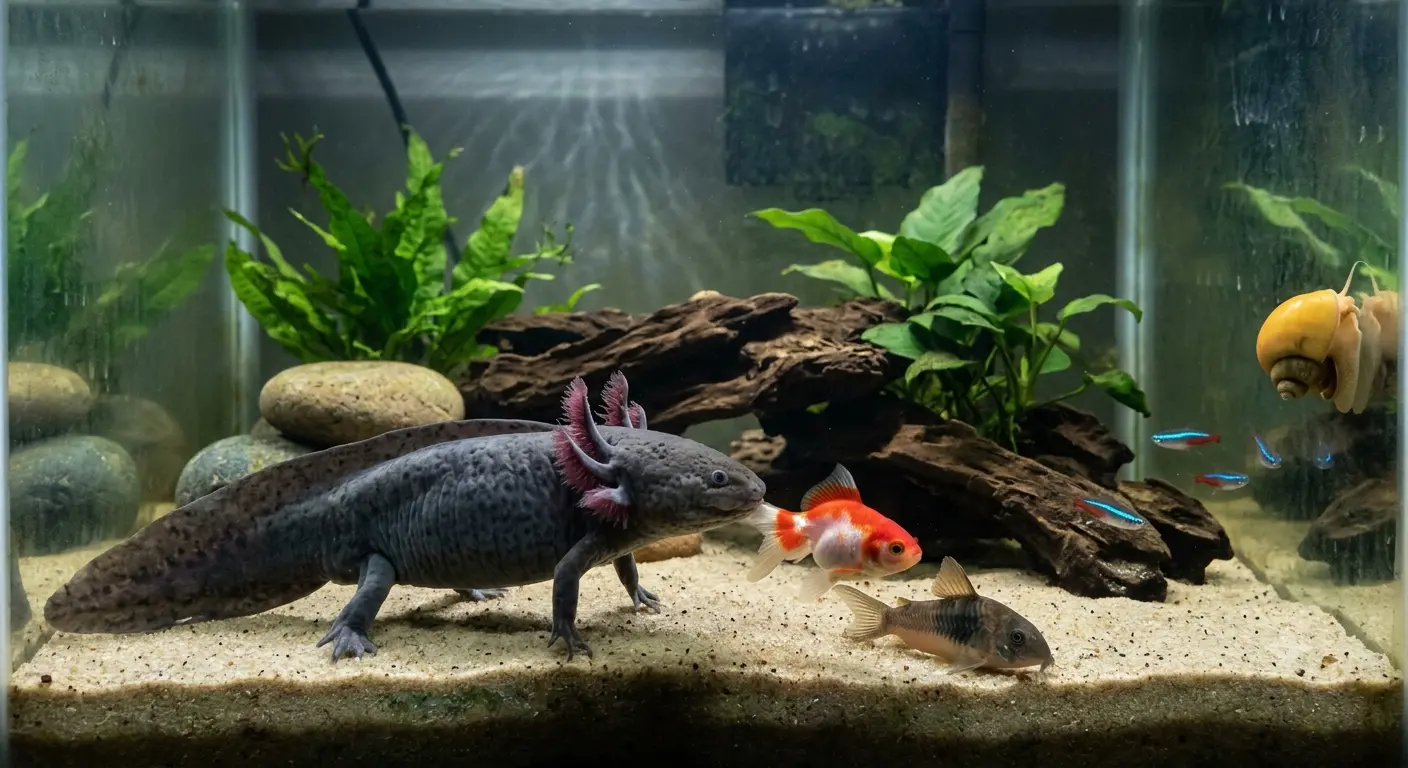
Understanding Axolotl Feeding Habits and Predatory Instincts
To evaluate whether are axolotls dangerous to other animals, one must first look at how these creatures hunt in the wild. Axolotls are obligate carnivores that consume almost anything smaller than their own heads.
Unlike predatory fish equipped with sharp teeth, salamanders use a specialized suction-feeding technique. When prey passes nearby, they instantly snap open their mouths, creating a powerful vacuum that swallows victims whole without chewing.
This means tiny tank mates like neon tetras, guppies, and cherry shrimp rarely survive long term. Even if an axolotl appears slow, its rapid striking speed during feeding hours catches unsuspecting swimming companions off guard repeatedly.
Consequently, placing small aquatic creatures alongside them usually results in an expensive snack rather than a peaceful community tank environment.
Why Fish Pose a Hazard to Axolotls
When considering are axolotls dangerous to other animals, people often forget that the danger runs in both directions. Fish frequently harass, nip, and damage delicate amphibian skin.
The feathery branchial filaments that make up an axolotl’s external gills resemble delicious bloodworms to curious fish. Species like cichlids, barbs, and even friendly goldfish regularly pick at these fluffy red structures.
Nibbled gills lead to chronic stress, loss of oxygenation capacity, secondary fungal infections, and severe blood loss. Once the protective mucous coat tears, opportunistic bacteria quickly colonize the open tissue wounds.
For additional insights on health risks, reviewing our guide on understanding axolotl behavior and safety risks will provide deeper clarity regarding physiological stress signs.
The Hidden Threat of Snails and Invertebrates
Aquarium snails are frequently introduced as tank cleaners, but they represent a dual hazard when housed with benthic salamanders. Big freshwater snails can accidentally trap hungry amphibians under their heavy shells.
Small snails, on the other hand, are routinely swallowed during bottom-foraging trips. Because their hard calcified shells cannot digest, they cause life-threatening intestinal impactions inside the digestive tract.
Additionally, large mystery snails or apple snails have been documented rasped onto resting amphibians at night, consuming their protective slime coat while they sleep deeply on the substrate floor.
Similarly, freshwater crabs and crayfish feature sharp claws capable of slicing through soft limbs or piercing fragile abdomens instantly during territorial disputes.
Water Parameter Conflicts in Community Tanks
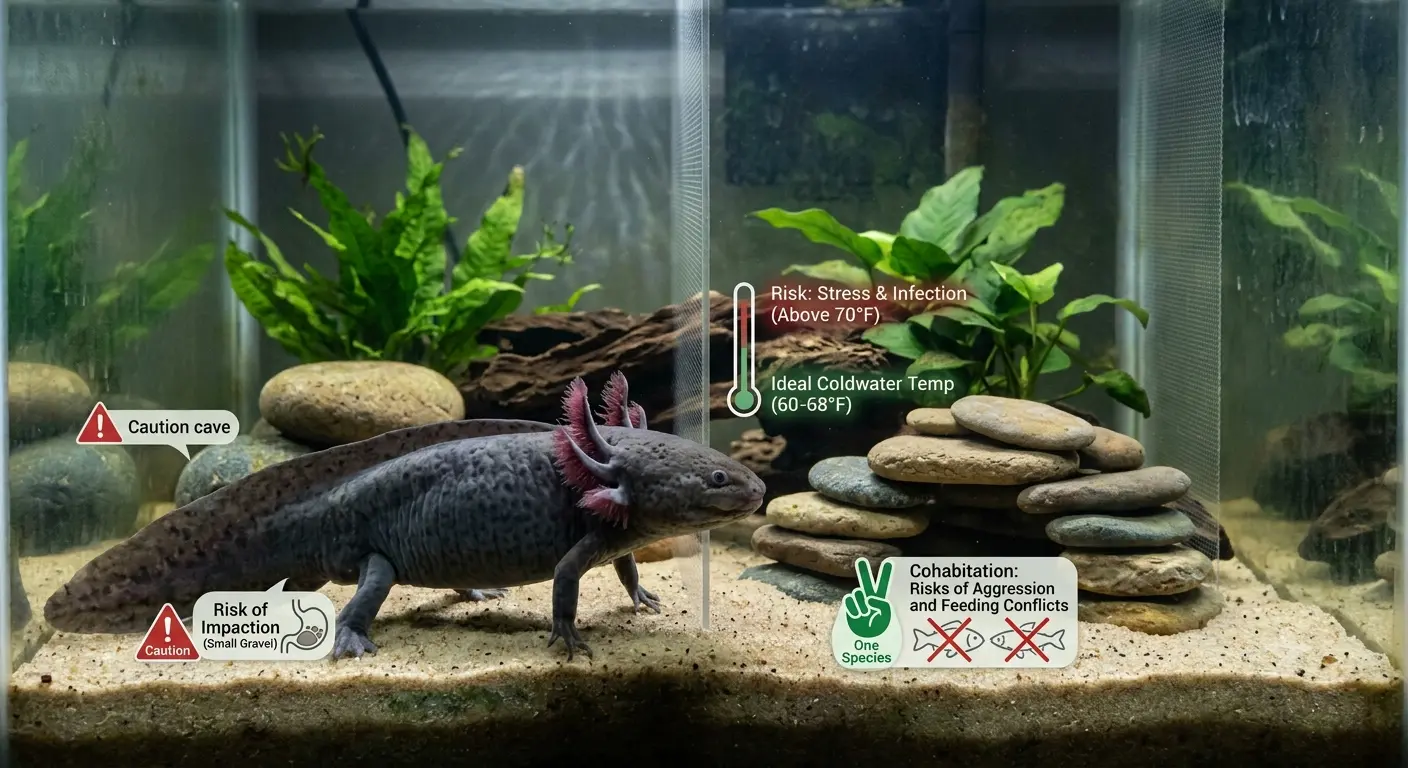
Beyond physical aggression, water chemistry creates an invisible barrier preventing successful multi-species housing. Salamanders require cold water conditions ranging strictly between 60°F and 68°F (15°C–20°C).
Most popular tropical freshwater fish require temperature ranges between 74°F and 82°F. Keeping cold-water amphibians in warm tropical water speeds up their metabolic rate dramatically, leading to organ failure and immune collapse.
Conversely, forcing tropical fish into cold water suppresses their immune system, leaving them prone to Ich, velvet, and fungal outbreaks that quickly spread throughout the entire aquarium.
Maintaining biological balance requires respecting these strict environmental parameters, as verified by veterinary experts at the Association of Reptilian and Amphibian Veterinarians (ARAV).
Comparing Potential Tank Companions
Many beginners hope to find at least one compatible companion species. The following comparison matrix evaluates common options based on safety, temperature compatibility, and risk factors:
| Companion Candidate | Temperature Match | Threat Level to Axolotl | Threat Level from Axolotl | Overall Compatibility |
|---|---|---|---|---|
| Neon Tetras | No (Requires Warm) | Low (Harmless) | High (Eaten) | Unsafe |
| Goldfish | Yes (Coldwater) | High (Nips Gills) | Medium (Choking Hazard) | Unsafe |
| Corydoras Catfish | Partial | High (Sharp Spines) | High (Swallowed/Stuck) | Extremely Dangerous |
| Mystery Snails | Yes | High (Eats Slime Coat) | High (Causes Impaction) | Unsafe |
| Ghost Shrimp | Yes | Low | High (Eaten Quickly) | Conditional (Live Food Only) |
The Danger of Co-Housing Same-Sex or Mixed-Age Axolotls
Even when keeping a single-species tank, asking are axolotls dangerous to other animals extends to members of their own kind. Cannibalism is widespread among young juveniles under six inches in length.
Growing juveniles instinctively bite at moving limbs, often severing toes, feet, or entire gill branches from their siblings during chaotic feeding frenzies in crowded setups.
Adults of vastly different sizes should never share space. A large ten-inch adult will easily view a smaller five-inch youngster as manageable prey, snapping it up without hesitation.
Housing males and females together also presents health dangers. Males will incessantly harass females to breed, causing exhaustion, weight loss, and premature death from continuous egg production stress.
A Keeper’s Journey: The Lesson Learned with Bubbles
Early on in my animal care journey, I mistakenly believed my spacious 40-gallon low tank was big enough to foster harmony between species. I had a leucistic juvenile named Bubbles who seemed remarkably calm, spending his days floating near a piece of drift wood.
Thoughtful intentions led me to add three tiny feeder shrimp, assuming they would quietly clean up leftover pellets on the bare-bottom glass without causing commotion.
That evening, everything appeared completely peaceful. I woke up at 3:00 AM to grab a glass of water, decided to check on the tank using a dim flashlight, and noticed Bubbles thrashing wildly against the side glass wall in total distress.
One of the larger shrimp had retaliated during an attempted snap, lodging its stiff tail inside the corner of his delicate mouth while he frantically tried to dislodge it against a smooth ceramic cave ornament.
Heart pounding, I scrambled for my fine-mesh net and rubber-tipped tweezers, spent forty grueling minutes carefully stabilizing him under dim light, and finally managed to extract the obstruction before any permanent internal tissue tearing occurred.
It was a terrifying wake-up call that taught me a lasting lesson about unpredictable interactions. Since that nerve-wracking night three years ago, Bubbles has lived entirely alone, thriving in a tranquil, stress-free cold-water environment designed solely for his needs.
How to Ensure a Safe and Enrichment-Rich Solitary Habitat
Providing a safe environment does not mean your pet has to live a dull life. Solitary animals thrive when given appropriate environmental enrichment within their dedicated living space.
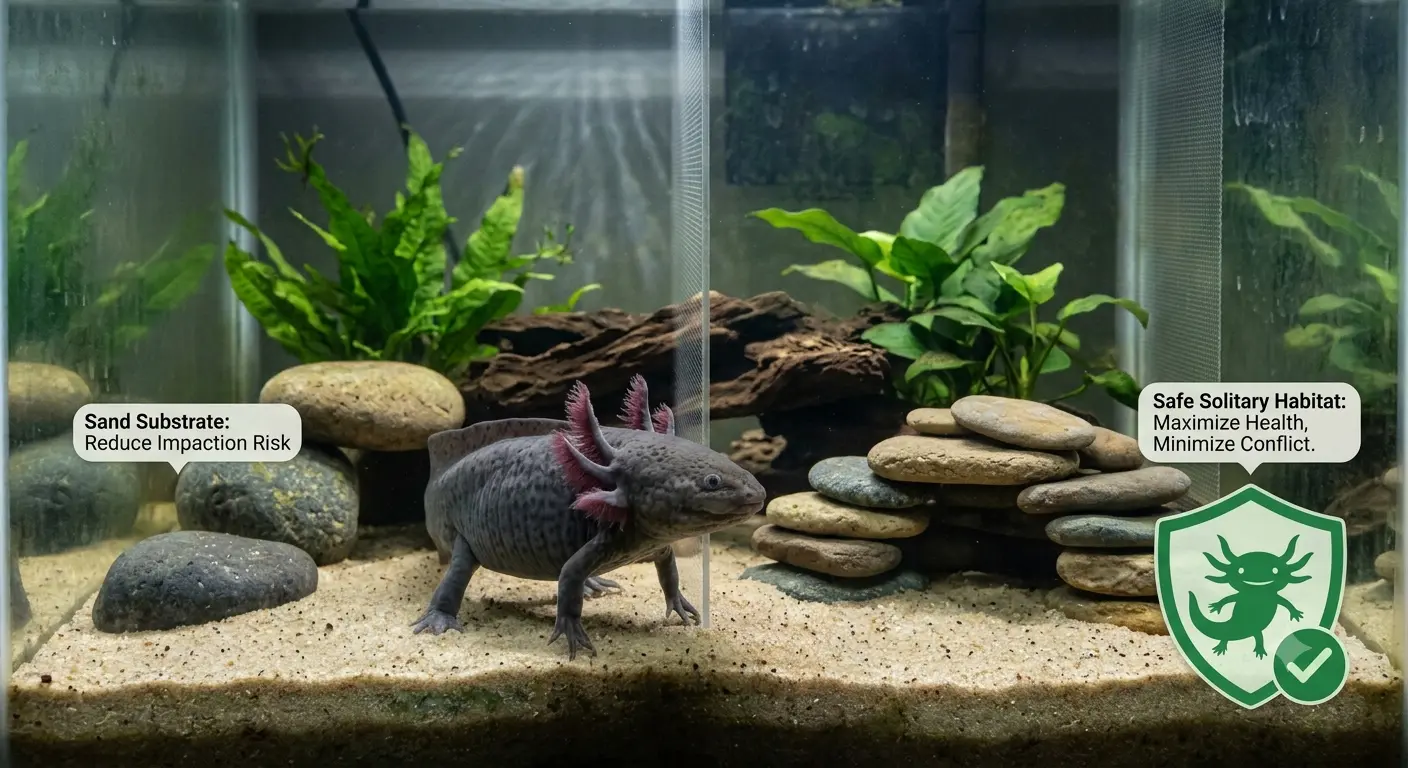
Incorporate smooth river stones larger than their heads, hollow ceramic hides, and silk or live cold-water plants like Java Fern and Anubias to create exploration zones.
Low lighting is crucial, as lacking eyelids makes them exceptionally sensitive to bright overhead aquarium lights. Floating plants help diffuse light effectively across the upper water column.
Focusing on water quality, gentle filtration flow, and low temperatures yields a healthy, long-lived aquatic pet that feels completely secure in its surroundings.
Frequently Asked Questions (FAQs)
Can axolotls live with small fish if well fed?
No. Feeding frequency does not suppress wild predatory reflexes. Even well-fed individuals will snap at swimming fish out of instinct whenever an opportunity presents itself.
Why are Corydoras catfish especially hazardous?
Corydoras possess sharp, venomous defensive spines along their dorsal and pectoral fins. When swallowed, these spines lock open, trapping the fish in the amphibian’s throat, which frequently leads to fatal injuries for both animals.
Are ghost shrimp completely safe to introduce?
Ghost shrimp are generally safe from a toxicity standpoint, but they are viewed purely as live food rather than peaceful tank mates. They will be hunted down and eaten quickly.
Yes, provided they are the exact same sex, similar in size, and given at least 20 to 30 gallons of tank volume per individual along with plenty of hides to break line-of-sight.
Final Thoughts on Axolotl Tank Safety
In summary, understanding why are axolotls dangerous to other animals helps prevent avoidable tragedy in the freshwater hobby. Their combination of suction hunting, predatory habits, and extreme physical vulnerability makes community tanks a recipe for disaster.
By prioritizing single-species housing, maintaining cold water parameters, and enriching their solitary environment, you ensure your unique aquatic companion enjoys a safe, healthy, and stress-free life for years to come.