
Are you staring at empty glass enclosures online, wondering how to secure the perfect housing for your aquatic monster without overspending? Finding the ideal enclosure can feel overwhelming when balancing aquarium safety, proper dimensions, and strict budget constraints. Choosing the right display space is the absolute foundation of long-term amphibian health and stress prevention.
To secure a safe, high-quality axolotl tank for sale, purchase a long 29 to 40-gallon glass enclosure either from reputable big-box pet retailers during seasonal sales or through verified local hobbyist groups. A new unit guarantees leak-free silicone seals and pristine structural integrity, while a carefully inspected pre-owned enclosure cuts setup expenses by up to sixty percent.
Keep reading to discover step-by-step seal safety checks, detailed cost breakdowns, and vital equipment requirements that ensure your aquatic pet thrives in a perfectly tailored habitat!
Why Tank Dimensions Matter for Axolotl Health
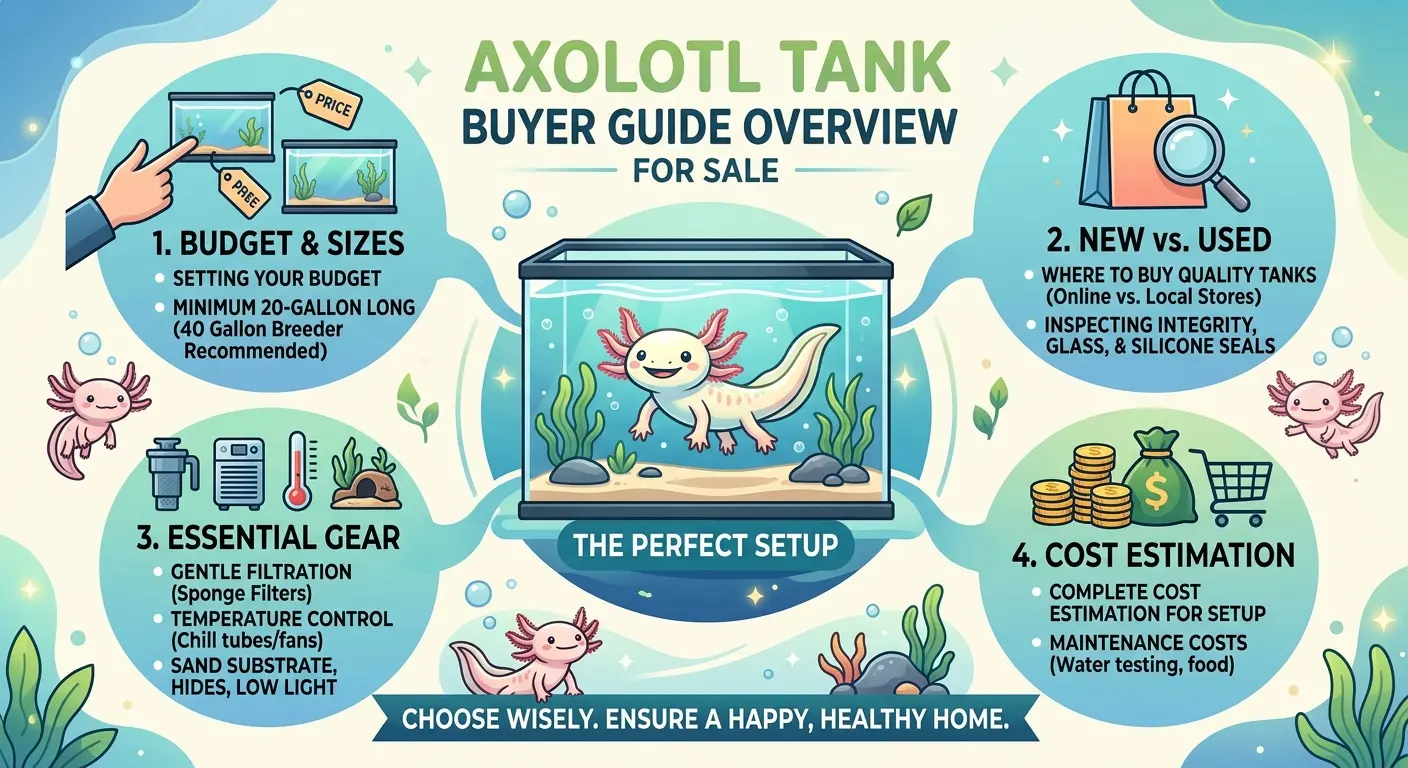
Axolotls are strictly bottom-dwelling aquatic salamanders that rely heavily on horizontal floor space rather than water depth. When hunting for an enclosure, prioritizing floor footprint over height is essential for natural foraging behaviors and activity. Tall, narrow enclosures restrict physical movement and make parameter management significantly more challenging.
A standard 20-gallon long aquarium serves as the absolute bare minimum for a single adult amphibian. However, upgrading to a 30 or 40-gallon breeder size provides superior water volume stability and floor surface area. Greater water volume buffers against harmful ammonia spikes and drastic water temperature fluctuations.
When searching for an axolotl tank for sale, always check physical dimensions rather than relying solely on gallon capacity labels. Look for wide, low-profile designs that maximize floor footprint. Adequate space also allows you to add smooth river rocks, terracotta hides, and low-light live plants without crowding the aquatic environment.
Buying New vs. Used Axolotl Enclosures
Choosing between brand-new glass and second-hand equipment involves weighing cost savings against structural peace of mind. Both purchasing paths offer distinct advantages depending on your technical comfort level and total startup budget. Understanding these trade-offs helps prevent costly home water damage and aquatic pet stress.
Brand-new glass enclosures from commercial manufacturers offer guaranteed structural integrity and fresh factory silicone seals. Buying new eliminates worries regarding previous chemical exposures, copper treatments, or hidden micro-fractures in the glass. Most retail units also come backed by manufacturer warranties protecting against early structural defects.
On the other hand, sourcing a pre-owned display allows hobbyists to acquire large, high-capacity enclosures at a fraction of retail prices. Budget-conscious keepers searching for a pre-owned axolotl tank for sale frequently find complete setups including heavy-duty stands and accessories for minimal expense. However, second-hand units require rigorous safety inspections and thorough cleaning before holding water.
How to Inspect a Pre-Owned Aquarium Safely
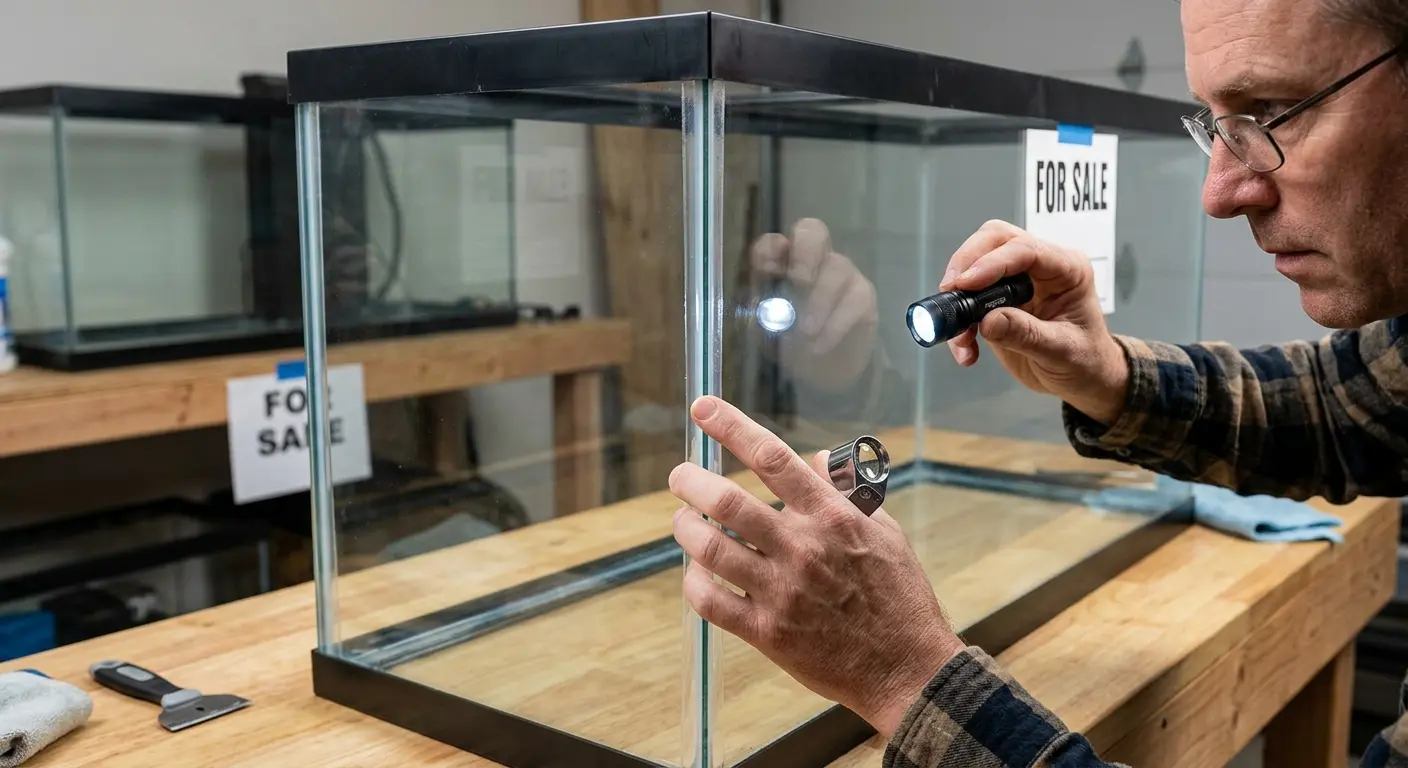
Never purchase a second-hand glass enclosure without conducting a meticulous physical examination. Start by carefully inspecting all four corner seams and bottom joints where silicone seals connect the glass panels. The silicone rubber should feel soft, rubbery, and firmly bonded without peeling, fraying, or discoloration.
Examine every glass pane under bright lighting to identify deep scratches, chips, or spider fractures. Minor cosmetic surface scratches are generally harmless, but deep gouges or corner chips compromise structural stability under water pressure. Pay extra attention to bottom glass corners where weight distribution creates maximum physical stress.
Always perform a mandatory 48-hour leak test outdoors or in a garage before bringing used equipment inside. Fill the enclosure completely with tap water on flat ground over dry cardboard to detect subtle leaks immediately. Once verified, clean surfaces using diluted plain white vinegar rather than harsh household chemical cleaners.
Where to Find Quality Axolotl Enclosures
Finding a reliable axolotl tank for sale requires knowing where to search both locally and across verified digital marketplaces. Major pet supply retailers host popular annual “Dollar-per-Gallon” or half-off aquarium sales that lower new glass costs significantly. Timing your purchase around these seasonal retail promotions yields huge financial savings on pristine factory hardware.
Local fish stores and specialized aquatic shops are excellent resources for custom glass dimensions and heavy-duty rimless options. Store staff possess direct knowledge regarding water parameters, custom drilling, and sturdy display stands. Furthermore, supporting local businesses builds connections with experienced regional hobbyists and reliable local breeders.
For pre-owned enclosures, monitor local online marketplaces, hobbyist forums, and local aquarium society listings for any quality axolotl tank for sale. Always ask sellers if the glass held water recently or if it housed copper-treated fish remedies. If you need complete advice on filter selection and temperature maintenance, check out our comprehensive axolotl tank setup guide to complete your system perfectly.
Comparison: Buying New vs. Pre-Owned Enclosures
To help streamline your buying decision, review this detailed comparison matrix highlighting key factors between factory-new and second-hand options:
| Factor | Buying Brand New | Buying Pre-Owned |
|---|---|---|
| Average Cost | Higher ($80 – $250+ for 30-40 gal) | Significantly Lower ($30 – $100) |
| Silicone Integrity | Factory fresh, soft, high elasticity | Varies; requires rigorous physical inspection |
| Chemical Risk | Zero contamination risk | Possible past exposure to copper or soap |
| Warranty Coverage | Includes manufacturer warranty | No warranty protection; sold as-is |
| Included Gear | Usually glass panel only | Often includes lids, stands, or filters |
Complete Setup Cost Estimation & Gear Breakdown
Budgeting for an aquatic amphibian setup extends well beyond finding a reliable axolotl tank for sale. Specialized water quality equipment, substrate choices, and temperature control mechanisms represent significant portions of your overall initial investment. Preparing a comprehensive financial plan prevents mid-setup surprises and secures essential filtration hardware.
Temperature management represents a critical hardware cost because these amphibians require cold water between 60°F and 68°F (15°C to 20°C). Depending on ambient household climate, cooling fans or specialized thermoelectric chillers become non-negotiable health gear. Additionally, gentle sponge filtration systems are required to prevent strong water currents that cause chronic physical stress.
For comprehensive financial planning, consult trusted health resources like the Association of Reptile and Amphibian Veterinarians (ARAV) to understand veterinary standards for housing aquatic species. Below is a complete cost estimation breakdown covering essential hardware ranges:
- Glass Enclosure (30–40 Gallon Long): $50 – $200 (depending on sales or used condition)
- Gentle Filtration (Dual Sponge Filters + Air Pump): $25 – $45
- Water Temperature Control (Cooling Fans or Chiller): $30 – $350
- Substrate & Decor (Fine Sand, Hides, Driftwood): $35 – $70
- Water Care & Parameter Testing Kit (API Freshwater Master Kit + Dechlorinator): $45 – $60
- Total Estimated Startup Cost: $185 – $725+
Lessons From My Own Hobbyist Journey
Late one rainy Tuesday evening back in October, I noticed tiny drops pooling beneath my primary display stand. Barnaby, my leucistic amphibian, was floating calmly near his favorite terracotta arch, completely oblivious to the slow structural failure unfolding below his gills.
Panic set in immediately. I rushed out to grab cheap silicone sealant from a local hardware store, thinking a quick patch would fix the corner leak without tearing down the entire ecosystem. That hasty decision failed miserably by Thursday morning, soaking my hardwood floor and forcing me into an emergency tubbing routine.
I ended up driving two hours to pick up a heavy breeder glass frame from an old breeder who taught me how proper seam pressure and leak testing actually work. Patience and proper hardware preparation save you from middle-of-the-night disasters every single time.
Essential Equipment for a Safe Habitat
Once you secure your preferred glass vessel after viewing an axolotl tank for sale, equipping it with species-specific accessories is the next priority. Axolotls have extremely delicate skin, fragile external gill filaments, and soft underbellies that are easily damaged by sharp decorations or rough substrate. Every item introduced must serve a distinct functional or safety purpose.
Substrate selection requires extreme caution due to accidental ingestion risks during vacuum-style feeding mechanics. Bare-bottom glass floors or ultra-fine aquarium sand (less than 1mm grain size) are the only safe choices. Standard aquarium gravel, small pebbles, or coarse stones cause fatal gastrointestinal impaction if swallowed during feeding.
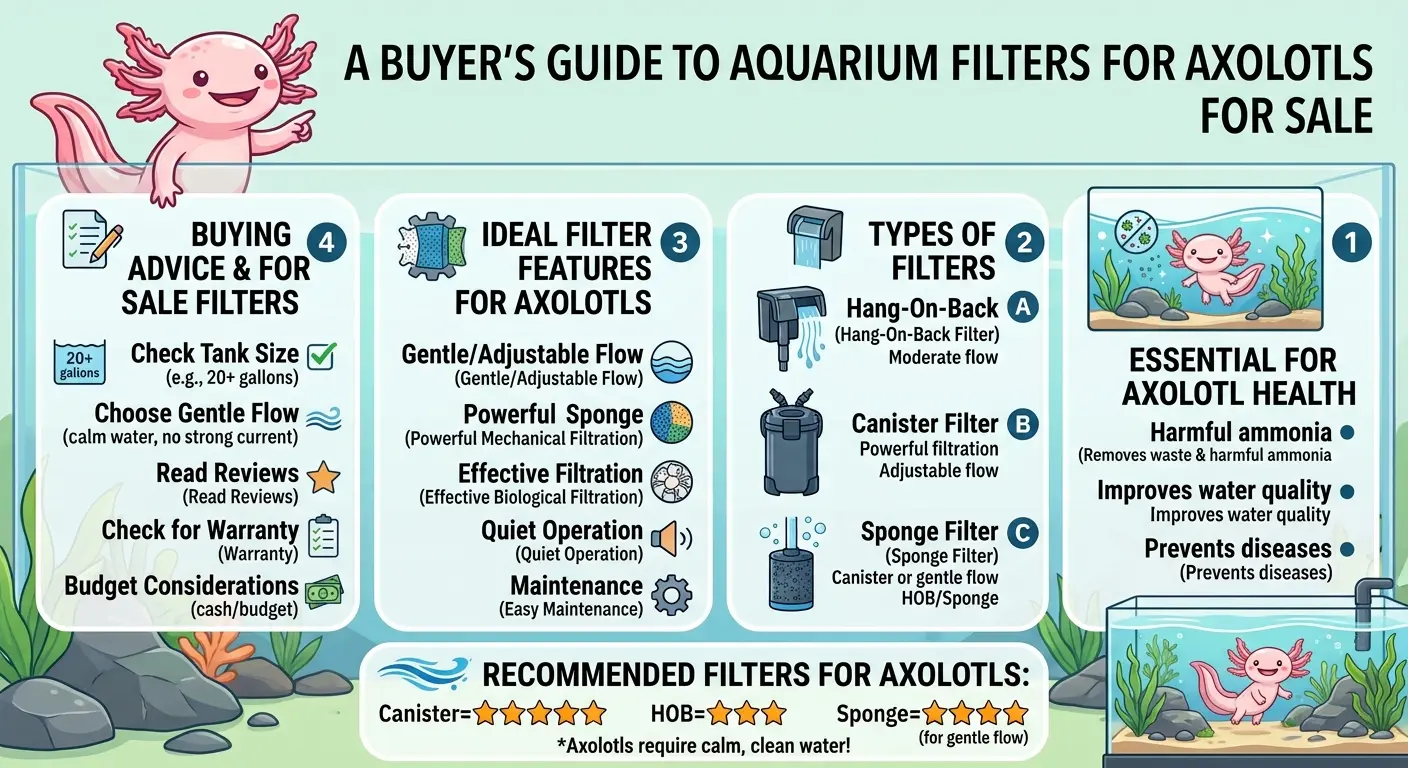
Lighting should remain minimal or completely indirect, as these creatures lack eyelids and are highly sensitive to bright illumination. Provide multiple smooth hides such as PVC pipes, dark ceramic caves, or hollow driftwood logs. Low-light aquatic plants like Anubias, Java Fern, or floating Frogbit enhance visual aesthetics while absorbing excess nitrates naturally.
Final Checklist Before Bringing Your Axolotl Home
Before introducing your new aquatic pet to its permanent home, complete a thorough safety verification check. Ensuring every technical system operates correctly prevents unnecessary physiological stress and bio-filter crashes during initial acclimation. Take your time verifying parameters rather than rushing the setup process.
First, verify that your nitrogen cycle is fully established using a reliable liquid water testing kit. Zero ammonia, zero nitrites, and low nitrates indicate healthy beneficial bacteria colonies are actively processing liquid waste. Running a complete cycle typically takes four to six weeks prior to animal arrival.
Second, double-check water temperature stability over a continuous 72-hour monitoring window. Confirm that cooling fans or chillers hold water temperatures reliably below 68°F throughout peak afternoon household temperatures. Once equipment testing passes, your axolotl tank for sale investment is officially ready for its new inhabitant!
Frequently Asked Questions
What size enclosure is best when looking for an axolotl tank for sale?
A 30 to 40-gallon breeder size is ideal for an adult axolotl when evaluating an axolotl tank for sale. While a 20-gallon long unit works as a bare minimum, larger capacities provide better floor space and maintain stable water parameters effortlessly.
Can I keep two axolotls together in a standard tank?
Yes, but you need at least a 40-gallon breeder or 50-gallon long enclosure for two adults. Ensure both animals are the same sex and size to prevent territorial aggression or accidental breeding.
Is an acrylic aquarium better than glass for axolotls?
Glass is generally preferred because acrylic scratches extremely easily during routine algae cleaning. However, acrylic offers superior thermal insulation, which can help maintain cooler water temperatures slightly better.
How do I disinfect a used aquarium safely before use?
Clean all internal surfaces using plain white vinegar and warm water, scrubbing gently with a soft sponge. Rinse thoroughly multiple times with tap water and allow the vessel to air-dry completely in sunlight before filling.