
The Biological Reality of Life Cycle Management
Hedgehog care and exotic pet longevity don’t depend on luck — they rely on care plans that evolve. Longevity and life cycle management are inseparable: an animal’s needs at six months bear almost no resemblance to what it requires at six years, and static husbandry quietly shortens lives.
Life cycle management means systematically adapting an animal’s environment, diet, and healthcare to match each developmental stage — juvenile growth, sexual maturity, middle age, and senior decline. It’s the difference between reacting to illness and engineering conditions where illness rarely takes hold.
Life cycle management means systematically adapting an animal’s environment, diet, and healthcare to match each developmental stage — juvenile growth, sexual maturity, middle age, and senior decline. It’s the difference between reacting to illness and engineering conditions where illness rarely takes hold.
The potential is measurable. According to the Association of Reptilian and Amphibian Veterinarians, bearded dragons in captivity can live up to 15 years with proper husbandry — significantly longer than wild counterparts, where predation and resource scarcity cut lives short.
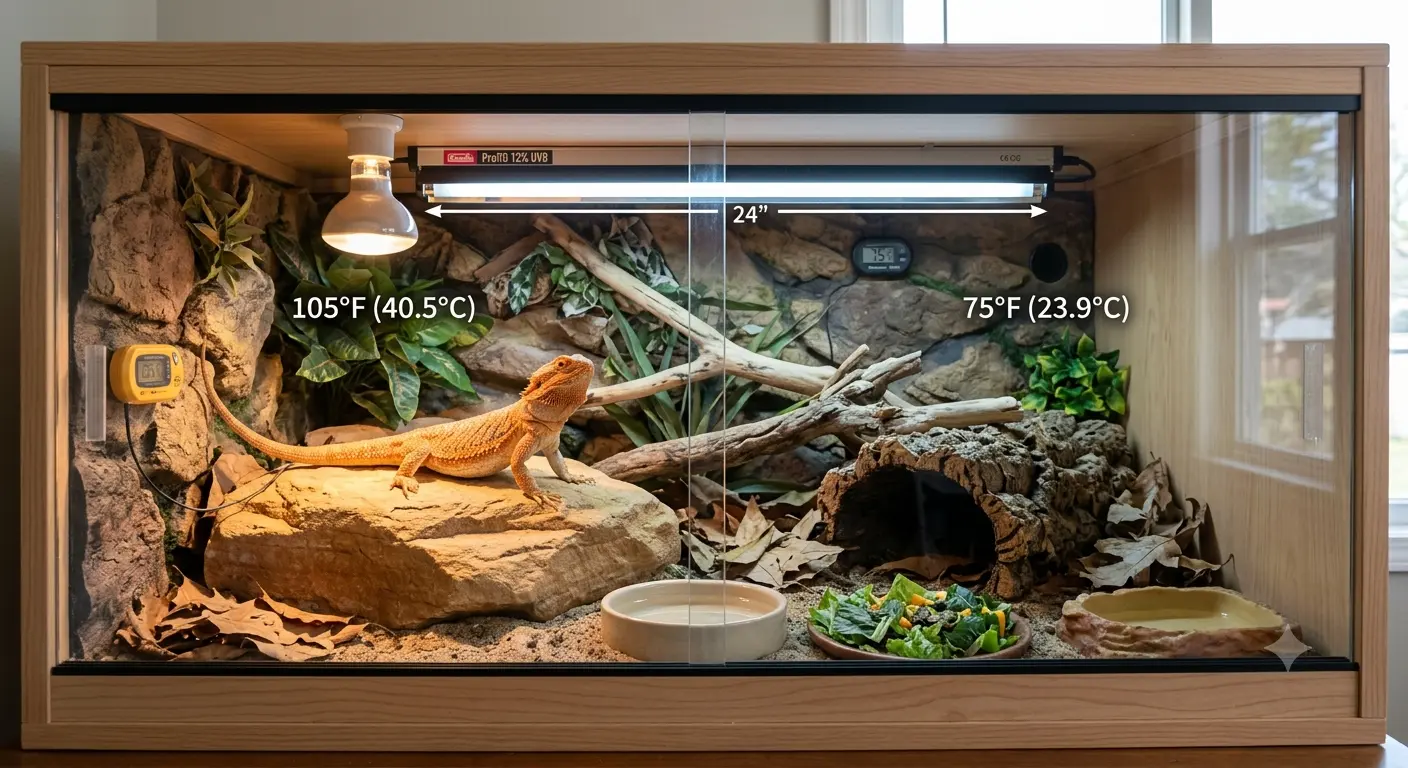
Managed care removes those environmental pressures, but only when the care itself keeps pace with the animal’s changing physiology. A juvenile basking schedule, for example, becomes metabolically inappropriate for a senior dragon prone to conditions like metabolic bone disease if temperatures aren’t recalibrated over time.
“Set it and forget it” habitats fail because aging animals experience measurable shifts in thermoregulation efficiency, immune function, and nutritional absorption. A setup that once thrived becomes a slow liability. The real secret isn’t a single technique — it’s four interconnected pillars of proactive husbandry that work together across every stage of life.
The 4 Pillars of Exotic Pet Longevity
Extending hedgehog lifespan — or that of any exotic companion — comes down to four interconnected systems that must function together, not in isolation.
Thermal Stability is the foundation. Reptiles and small exotics are ectothermic or highly temperature-sensitive, meaning their digestion, immune response, and neurological function depend on precise ambient gradients. A basking zone that runs 5°F too cool doesn’t just cause discomfort — it suppresses enzyme activity and slows metabolic throughput at a cellular level. Environmental engineering means designing enclosures with measurable thermal gradients, not guessing.
Metabolic Precision covers nutrition and UV access as a single, inseparable system. According to the Journal of Herpetological Medicine and Surgery, Metabolic Bone Disease (MBD) remains the most common preventable cause of premature death in captive reptiles — and it stems almost entirely from calcium-phosphorus imbalance compounded by inadequate UVB exposure. Understanding how MBD develops in practice is essential before symptoms ever appear.
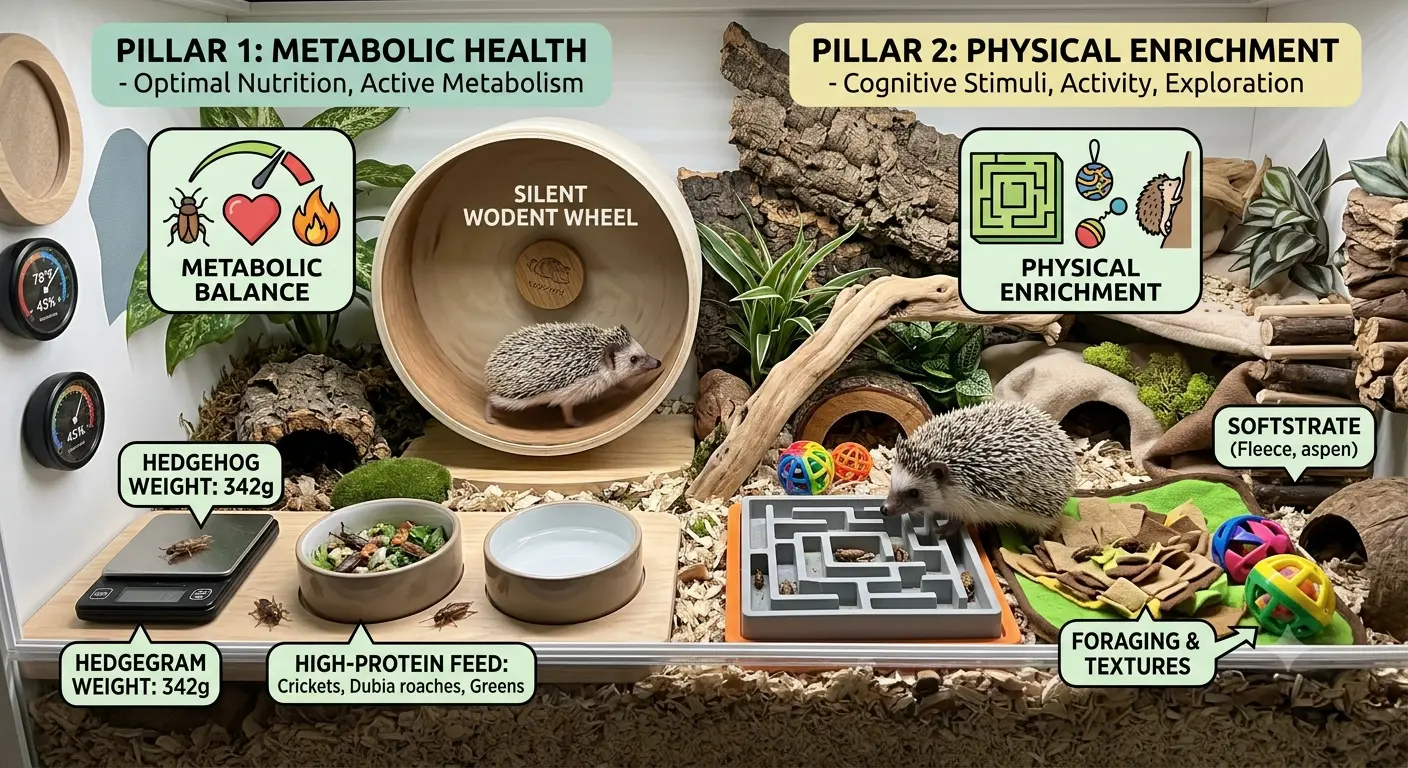
Cognitive and Physical Enrichment is consistently underweighted by owners focused solely on enclosure temps and feeding schedules. Chronic understimulation elevates cortisol, suppresses immune function, and accelerates behavioral decline — particularly in intelligent species like African pygmy hedgehogs and monitor lizards.
Proactive Diagnostic Screening closes the loop. Annual bloodwork, fecal panels, and weight trending catch metabolic drift months before clinical signs surface. The animals that live longest aren’t the luckiest — they’re the most consistently monitored.
These four pillars matter at every life stage, but they apply differently depending on where your animal sits in its biological timeline — which is why the juvenile phase, explored next, demands its own focused strategy.
Juvenile Growth: Investing in Skeletal Integrity
The first 12 to 24 months of an exotic pet’s life are the most consequential — decisions made here echo through every year that follows. Whether you’re raising a bearded dragon, a ball python, or a hoglet, the juvenile phase is when skeletal architecture, immune function, and metabolic baseline are permanently established.
Get it right, and you’re building a resilient animal. Get it wrong, and no amount of corrective care in adulthood fully undoes the damage.
UVB exposure and vitamin D3 synthesis aren’t optional accessories for juvenile reptiles — they’re foundational to reptile life cycle management. Without adequate UVB wavelengths, reptiles cannot synthesize D3, and without D3, calcium absorption collapses.
As noted in the Journal of Herpetological Medicine and Surgery, MBD is directly linked to inadequate lighting and diet during the juvenile growth phase — a finding that underscores how preventable this condition actually is.
For hedgehog owners, the parallel concern is nutritional density: hoglets fed low-protein or adult-formula diets during rapid growth often develop musculoskeletal weaknesses that only become visible months later. To understand their unique needs from the start, a comprehensive wild hedgehog guide can provide foundational context regarding natural foraging and behaviors.
Common juvenile feeding mistakes follow a predictable pattern: oversized prey items that stress the digestive tract, calcium-to-phosphorus ratios that skew dangerously wrong, and supplementation schedules applied inconsistently.
Understanding how much food a juvenile truly needs is as critical as knowing what to feed. MBD prevention means proactive supplementation — not waiting for tremors or soft jaw tissue to signal a crisis already months in the making. A closer look at which foods disrupt calcium balance reveals that even well-intentioned treats can quietly undermine skeletal health over time.
This investment phase sets the stage for what comes next: managing an adult animal whose body is now shaped by the choices made in those early months.
Adulthood and Reproductive Risk Management
Sexual maturity is where the longevity economy of exotic pet care gets complicated — and where owners who coasted through the juvenile phase often encounter their first serious crisis.
The shift from growth-focused to maintenance-focused nutrition is one of the most consequential and most overlooked transitions in exotic pet ownership. During the juvenile phase, high-protein, calorie-dense diets fuel skeletal development. In adulthood, that same caloric load becomes a liability.
Overfeeding adult reptiles and hedgehogs accelerates organ stress, promotes obesity, and ironically undermines the metabolic bone disease prevention work done in earlier months. Getting calcium-to-phosphorus ratios right matters just as much at age three as it does at three months — the formula simply shifts.
For female reptiles especially, adulthood introduces a risk that’s almost invisible until it becomes life-threatening. Follicular stasis — where eggs develop internally but are never laid — is a direct consequence of failing to provide appropriate nesting environments.
The Merck Veterinary Manual notes that approximately 70% of captive female green iguanas will develop egg binding when proper nesting conditions aren’t met. That statistic reframes environmental enrichment entirely: a laying box isn’t a luxury, it’s a longevity requirement.
What typically happens in practice is that owners recognize the physical symptoms — lethargy, appetite loss, distended abdomen — only after the condition has progressed significantly. Proactive habitat management, not reactive veterinary intervention, is the actual solution.
As your pet moves deeper into adulthood, watch for early behavioral shifts that signal the transition toward senior needs — which brings its own distinct set of challenges worth preparing for.
Navigating the Senior Years: WHS and Mobility
Senior exotic pet care is one of the most overlooked exotic pet health pillars — and for hedgehog owners specifically, the stakes become highest between ages two and three.
Wobbly Hedgehog Syndrome (WHS) is a progressive demyelinating neurological disease that typically manifests between 2 and 3 years of age, according to VCA Animal Hospitals. It begins as subtle hind-limb weakness and advances into full paralysis over months. There’s no cure, which makes early screening essential rather than reactive.
Early gait screening is the practical answer here. In practice, owners who observe their hedgehog on a flat, hard surface weekly are far more likely to catch the asymmetrical stumbling or leg-dragging that signals WHS onset. Catching it early doesn’t stop progression, but it does allow owners to restructure the habitat before injury compounds the condition.
Habitat modifications for senior hedgehogs should include:
- Removing ramps and multi-level platforms to eliminate fall risk
- Switching to soft substrate such as fleece liners to cushion compromised mobility
- Lowering food and water stations so the animal doesn’t strain to reach them
- Widening the thermal window slightly — aging metabolisms regulate heat less efficiently, making consistent ambient temperature more critical than ever
The same principle applies broadly: as exotic pets age, their environment must evolve to compensate for what their biology can no longer manage independently. Bone density changes that begin with early dietary choices can compound into mobility challenges in senior animals across many species, not just hedgehogs.
Understanding what the senior phase demands brings the entire life cycle picture into focus — and that’s exactly where the real takeaways begin.
The Bottom Line: What You Need to Know
African Pygmy hedgehog health — and exotic pet longevity broadly — is never the product of a single good decision; it’s the cumulative result of life cycle management executed across every stage.
The sections above make one pattern unmistakably clear: each phase of an exotic pet’s life creates conditions that either support or undermine the next. Juvenile nutrition isn’t a starter topic you graduate from — it’s the structural foundation that determines skeletal integrity for years ahead.
Poor calcium-to-phosphorus ratios during growth don’t just cause short-term deficiencies; they set the stage for painful bone complications that surface long after the juvenile phase ends.
Environmental stability is the second pillar that owners consistently underestimate. Temperature swings, humidity fluctuations, and disruptive light cycles aren’t minor inconveniences — they trigger metabolic stress and reproductive crises that compress lifespan. Consistent husbandry removes the physiological burden of constant adaptation from an animal’s system.
By the senior years, proactive habitat modification shifts from optional to essential. Neurological conditions like Wobbly Hedgehog Syndrome demand enclosure changes before mobility deteriorates — not after. Exopetsecrets’ 5 Proven Pillars bridge exactly this gap, translating veterinary science into daily husbandry decisions owners can actually implement.
| Life Cycle Phase | Primary Health Risk | Core Husbandry Intervention |
|---|---|---|
| Juvenile Growth | Metabolic Bone Disease (MBD) | Precision UVB lighting & precise Calcium:P ratios |
| Adulthood | Obesity & Follicular Stasis | Caloric restriction & dedicated nesting boxes |
| Senior Decline | WHS & Mobility Degradation | Single-level habitat modifications & thermal padding |
- Longevity = life cycle management, not isolated care moments
- Juvenile nutrition builds the skeletal foundation everything else depends on
- Environmental consistency prevents metabolic and reproductive emergencies
- Senior habitat modification protects neurological health proactively
Understanding these pillars as a connected system — rather than separate checklists — is what separates owners who react to health crises from those who prevent them. That systems-level thinking is exactly what the next section pulls together.
Planning for a Lifetime of Exotic Care
Exotic pet longevity isn’t a destination — it’s a discipline practiced across every stage of your animal’s life. The owners who see the best outcomes are those who develop what might be called “longevity literacy”: a working understanding of how nutritional needs, environmental demands, and health risks shift as their pet ages.
Whether you’re optimizing bearded dragon longevity through proper UVB lighting protocols or adjusting a hedgehog’s diet in its senior years, the skill set is the same — observe, adapt, and act before problems escalate.
Your pet’s life is a series of evolving needs, not a static checklist. A juvenile’s requirements look nothing like a geriatric animal’s, and treating them as equivalent is one of the most common mistakes exotic owners make.
In practice, the owners who build the longest relationships with their animals are those who revisit their husbandry routinely — not just when something goes wrong. As the ARAV notes, proper life cycle management is the primary driver for reaching upper age limits in captive settings. That’s not a peripheral concern; it’s the entire game.
Husbandry is the best insurance policy available to any exotic pet owner — no supplement or veterinary intervention replaces the baseline protection that consistent, species-appropriate care provides. If this article has reinforced one thing, let it be that every daily decision compounds over a lifetime. Explore the species-specific care guides at Exopetsecrets to translate that principle into practical, stage-by-stage action for the animal in your care.