
As a dedicated reptile enthusiast, keeping a watchful eye on your pet’s daily waste might not sound like the most glamorous part of reptile keeping. However, evaluating what ends up on your terrarium substrate is easily one of the most effective ways to monitor internal health, gut motility, and hydration status in real time.
Many beginner keepers feel a wave of anxiety when inspecting their enclosure for the first time, unsure whether a sudden change in shape or moisture signals a dietary hiccup or an urgent medical emergency. Learning how to read your pet’s droppings provides immense peace of mind and allows you to catch digestive issues before they escalate.
Ready to master the art of reptile health inspection? Let’s dive deep into visual anatomy, texture tests, hydration markers, and key indicators every responsible reptile owner must know.
Visual Anatomy of Healthy Bowel Movements
Understanding normal bearded dragon poop requires looking closely at how desert-dwelling reptiles process food and liquid waste simultaneously. Unlike mammals, reptiles expel both digested matter and nitrogenous renal waste through a single anatomical opening called the cloaca.
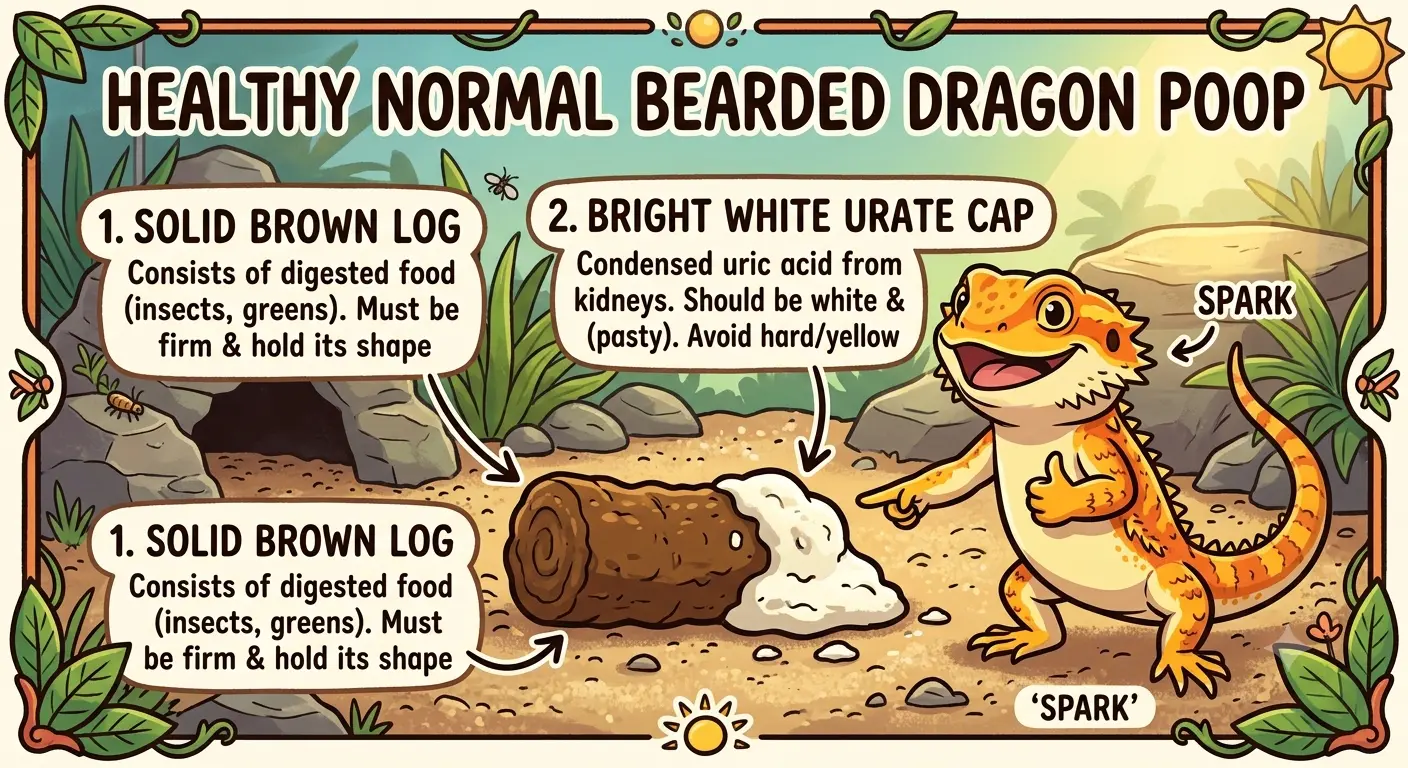
A healthy bowel movement is structurally divided into two prominent, easily identifiable components. The main section is the fecal log, which represents processed insects, greens, and plant matter. This portion should be uniform in color, typically ranging from dark brown to deep brown-black, with a defined, cylindrical structure that holds together well.
The second component is the urate cap. Because bearded dragons evolved in the dry scrublands of Australia, their body conserves water by converting liquid urine into insoluble uric acid paste. This urate cap attaches neatly to one end of the fecal log, appearing bright white, smooth, and slightly damp upon passage.
When observing fresh droppings inside the terrarium, both sections should remain distinct yet firmly connected. An intact structural division confirms that your dragon’s gastrointestinal tract and renal system are operating in perfect harmony.
Ideal Physical Texture and Firmness: The Clay Standard
Visual appearance alone tells only half the story; evaluating physical firmness provides essential clues regarding intestinal transit time and dietary balance. When assessing normal bearded dragon poop, herpetologists often compare the ideal texture to soft, pliable modeling clay or fresh Play-Doh.
When pressed gently using a disposable scoop or paper towel, the brown fecal log should retain its cylindrical shape without crumbling into dry dust or dissolving into a runny liquid puddle. It needs to be firm enough to resist immediate flattening, yet yielding enough to show slight flexibility under pressure.
Similarly, the white urate cap should feel soft, smooth, and pasty to the touch. It ought to compress easily under light pressure without feeling gritty, chalky-hard, or rubbery. Hard urates often point toward chronic dehydration, whereas overly watery urates hint at potential kidney stress or parasitic imbalances.
Consistently checking waste texture allows you to fine-tune environmental parameters such as basking temperatures, ambient humidity, and daily dietary fiber intake before minor digestive snags become serious health hurdles.
Proper Hydration Indicators and Moisture Rings
Maintaining proper fluid balance in desert reptiles can be surprisingly challenging for new keepers. Because bearded dragons rarely drink standing water from a bowl, their daily waste serves as a direct window into total body hydration levels.
Hydration levels directly influence normal bearded dragon poop by ensuring waste moves smoothly through the colon without absorbing excessive intestinal fluids. When your dragon defecates, a subtle, clear ring of moisture should saturate the surrounding substrate or tile floor immediately around the freshly deposited waste.
A light, wet perimeter surrounding fresh droppings is entirely healthy and expected. This moisture ring demonstrates that the colon retained sufficient fluid during digestion to pass waste comfortably while maintaining body hydration reserves.
However, if fresh droppings exhibit no moisture ring whatsoever and the urate cap appears dull or yellowed, your pet is likely suffering from mild dehydration. Offering water via oral droppers, misting daily salads, or feeding gut-loaded, water-rich feeder insects can swiftly restore optimal fluid levels.
My Journey with Bartholomew: Lessons from the Substrate
Back when I brought home my first central bearded dragon—a fiery citrus morph named Bartholomew—I was obsessive about every tiny detail in his enclosure. I spent hours tweaking heat lamps, measuring humidity gauges, and weighing salad greens on a digital scale. Yet, nothing prepared me for the sheer panic I felt during his second month with me.
One chilly Tuesday morning, I noticed Bartholomew had stopped passing waste altogether for four consecutive days. Frantic, I read contradictory forum posts advising everything from heavy olive oil drops to aggressive, hot soak sessions. I panicked. I immediately plunged poor Bartholomew into a plastic tub of lukewarm water, expecting instant results.
It was a total mess. Instead of helping, the sudden stress caused him to puff his beard pitch black, thrash around, and refuse dubia roaches for two straight days. I felt terrible.
It turned out I had accidentally set his basking spot temperature three degrees too cool after swapping light fixtures, slowing down his gut motility naturally. Once I bumped his basking tile back up to 105 degrees Fahrenheit, nature took its course within twenty-four hours without any need for stressful bath sessions. That stressful week taught me that patience and proper husbandry parameters matter far more than quick, reactionary fixes.
Differentiating Normal Droppings from Unhealthy Waste
Spotting abnormal waste quickly allows you to correct environmental errors or seek timely veterinary care before minor issues turn severe. Comparing healthy waste attributes to problematic markers clarifies why normal bearded dragon poop serves as the ultimate barometer for overall reptile health.
When inspecting the terrarium, look for sudden deviations in color, consistency, and frequency. Soft, watery stools that completely lack structure often signal intestinal parasites like coccidia or pinworms. Conversely, rock-hard, dark waste accompanied by chalky yellow urates points straight toward severe dehydration or impaction risk.
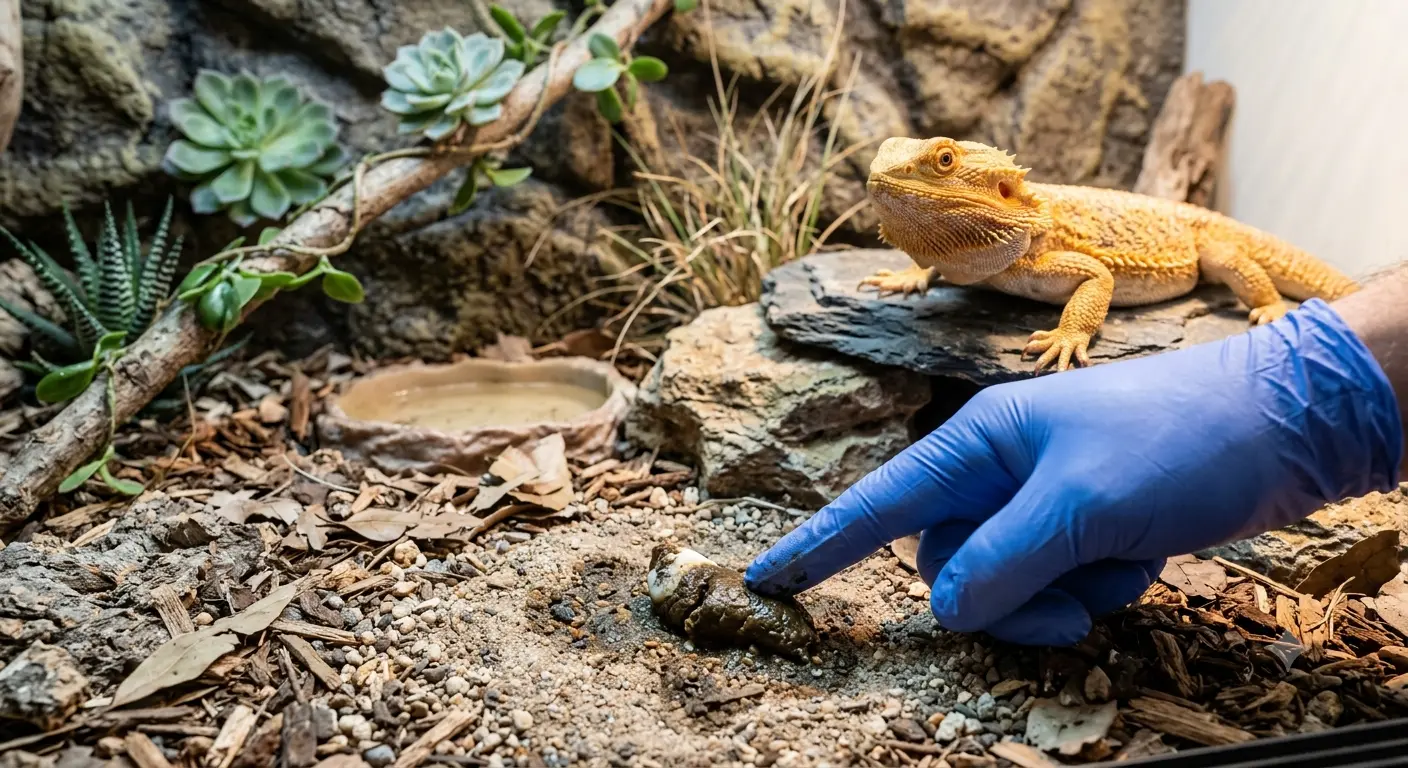
To help you evaluate your pet’s droppings during daily enclosure maintenance, review the comparative matrix below:
| Waste Attribute | Normal & Healthy Droppings | Abnormal Waste Indicators | Potential Health Root Cause |
|---|---|---|---|
| Color Profile | Dark brown log with bright white urate cap | Bright red, yellow, dark green, or jet black slurry | Bacterial infection, internal bleeding, or liver stress |
| Physical Texture | Soft modeling clay consistency; holds shape | Liquid runny puddle, unformed mush, or hard pebble | Intestinal parasites, extreme dehydration, or impaction |
| Odor Level | Mild, earthy, manageable scent | Foul, pungent, room-filling stench | Coccidia, pinworm infestation, or gut dysbiosis |
| Moisture Ring | Light, clear wet ring around fresh waste | Massive liquid pool or bone-dry substrate drop | Diarrhea from over-hydration or severe water loss |
| Frequency | 1–7 times per week (age dependent) | No waste for 10+ days (outside brumation) | Basking temp too low, lack of exercise, or impaction |
Regularly inspecting normal bearded dragon poop gives reptile owners the confidence needed to spot dietary imbalances early. For a complete breakdown of fecal anomalies, color changes, and diagnostic steps, explore our comprehensive bearded dragon poop guide.
If you ever notice persistent blood in the stool or chronic diarrhea lasting more than two consecutive days, consult a qualified exotics veterinarian listed through the Association of Reptile and Amphibian Veterinarians (ARAV) immediately.
Frequently Asked Questions About Normal Bearded Dragon Poop
Here are clear, direct answers to common questions regarding reptile digestion and waste characteristics:
Defecation frequency depends heavily on age and dietary composition. Young juveniles consuming high-protein feeder insects usually defecate 1 to 2 times daily due to rapid metabolic rates. Healthy adults consuming a vegetable-heavy diet typically pass waste 1 to 3 times per week. As long as your dragon exhibits high energy and a strong appetite, individual schedules can vary naturally.
A hard or yellowed urate cap is a classic sign of mild dehydration or excess calcium supplementation. When fluid levels drop, uric acid crystallizes tightly, hardening into a chalky mass that can cause discomfort during bowel movements. Increasing hydration through daily salad misting or offering water-dense veggies like cucumber usually resolves this issue quickly.
While fresh droppings carry a slight earthy odor, normal bearded dragon poop should never smell overwhelmingly foul or unbearable. A pungent, rotten stench that fills the entire room usually indicates an overgrowth of intestinal parasites like coccidia, flagellates, or pinworms. Scheduling a routine fecal test with an exotics veterinarian is highly recommended if bad odors persist.
Yes, diet plays a major role in temporary visual variations. Consuming foods rich in beta-carotene, such as squash or carrots, can give the fecal log a slight orange tint. Similarly, heavy leafy greens like mustard or dandelion greens may brighten stool color slightly. However, true normal bearded dragon poop should always maintain its firm, clay-like structure regardless of minor vegetable color variations.
Final Checklist for Maintaining Optimal Digestive Health
Monitoring your pet’s waste is an essential habit for responsible reptile husbandry. By understanding the visual anatomy, clay-like firmness, and hydration markers associated with normal bearded dragon poop, you can easily evaluate your dragon’s internal health on a daily basis.
Always ensure your terrarium maintains proper thermal gradients, including a warm basking surface between 100°F and 108°F to fuel digestion. Offer a varied diet of gut-loaded insects alongside fresh, leafy greens, and keep daily hydration steady through light misting.
Consistent observation and proper habitat management ensure your bearded dragon stays active, happy, and thriving for years to come!