
Staring into an aquarium and observing a sweeping underwater desert landscape evokes the feeling of a Sci-Fi epic right inside your home. Building a stunning axolotl tank dune layout gives your aquatic pet an incredible natural habitat, yet every cautious keeper immediately wonders if those soft sand ridges pose hidden health risks to their delicate fully aquatic salamander.
Yes, fine sand is completely safe for adult aquatic salamanders over six inches in length because their digestive tracts easily pass microscopic grains without physical blockages. Achieving a safe axolotl tank dune habitat depends entirely on using pure silica or quartz grains under 1mm while strictly avoiding coarse substrates, crushed coral, and gravel.
Are you ready to build a breathtaking desert landscape without risking your aquatic companion’s life? Let us dive into particle physics, safety parameters, maintenance routines, and practical steps needed to design an impressive axolotl tank dune aquascape with complete peace of mind.
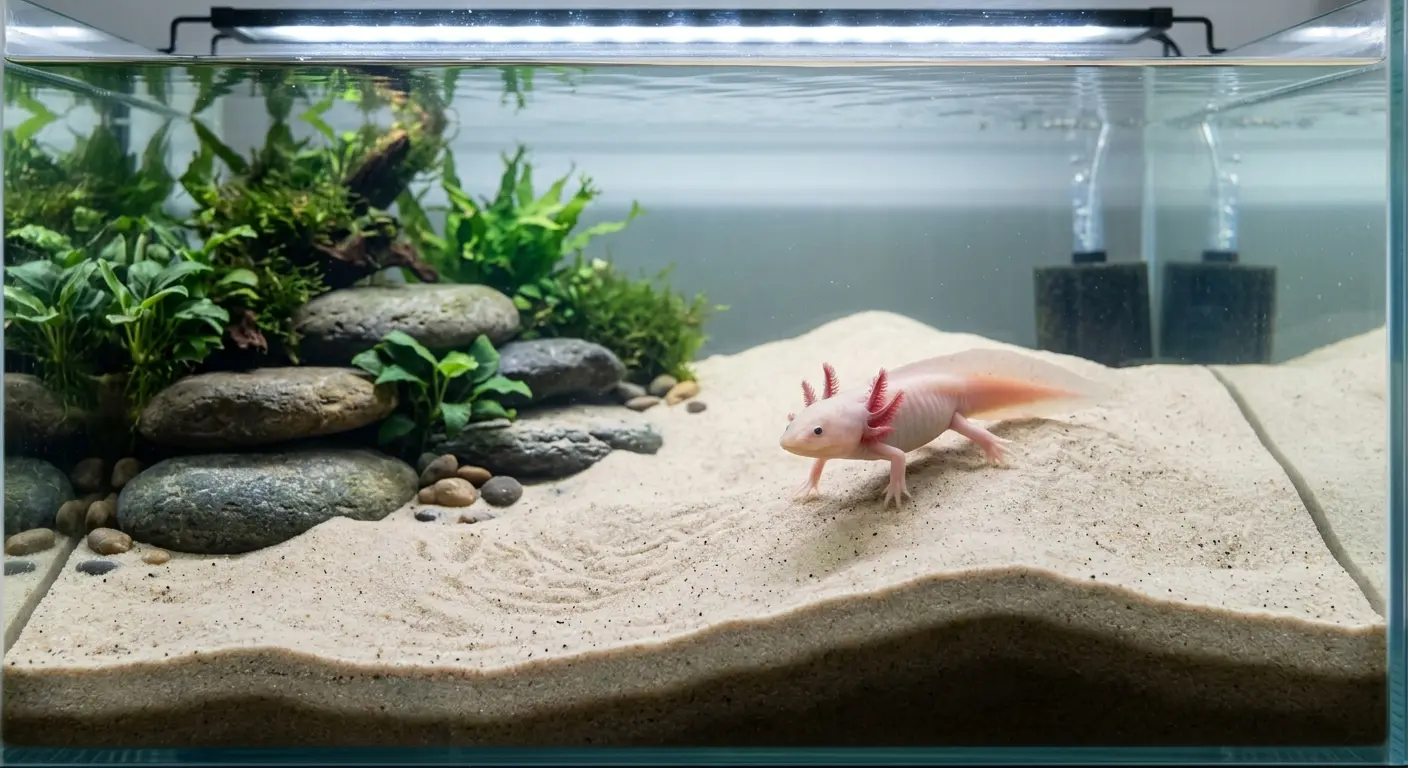
Safety Assessment of Fine Sand Substrates
Aquatic salamanders rely on a distinct vacuum-feeding mechanism, creating intense suction to draw in prey along with surrounding water. During these quick feeding strikes, floor particles inevitably enter the mouth alongside live worms or commercial sinking pellets.
When selecting substrate materials, grain size and edge texture determine overall biological safety. Ultra-fine micro-grains act almost like fluid within the gastrointestinal system, moving smoothly along intestinal walls and exiting effortlessly alongside organic waste material.
Coarse substrates behave very differently during digestion, catching on mucosal linings and obstructing narrow intestinal valves. According to veterinary guidelines on exotic amphibian health published by the Association of Reptile and Amphibian Veterinarians (ARAV), foreign body ingestion remains one of the leading causes of emergency surgeries in captive amphibians.
Developing juveniles measuring under six inches in total length should never be kept on any granular floor. Young amphibians possess narrow intestinal passages that block easily, making bare-bottom enclosures necessary until they reach full adult size.
Evaluating chemical safety is just as crucial as checking grain sizes when designing an axolotl tank dune enclosure. Selecting inert materials ensures that soft water chemistry remains completely stable over long periods without unexpected pH spikes.
Preventing Intestinal Impaction in Axolotls
Intestinal impaction occurs when indigestible debris gets trapped within the gastrointestinal tract, halting normal digestion and waste elimination. Recognizing early warning signs helps keepers intervene before severe internal complications develop.
Typical symptoms include floating tail-first continuously, noticeable abdominal swelling, sudden loss of appetite, lethargy, and a complete absence of waste production over several consecutive days. Unaddressed blockages quickly become life-threatening.
Selecting the right material grade effectively eliminates physical impaction risks. Always verify that your chosen substrate consists of pure silica or quartz featuring smooth, rounded microscopic edges that will not scratch internal tissues.
Avoid calcium-based products, such as aragonite or crushed coral sands intended for marine aquariums. These reactive materials leach minerals into cold freshwater, raising water hardness unnaturally and dissolving inside stomach acids to create dangerous metabolic disturbances.
Feeder dishes provide an extra layer of protection when managing an axolotl tank dune layout. Placing food inside a shallow glass or ceramic bowl keeps live worms from burrowing while minimizing direct contact with sand grains during mealtime.
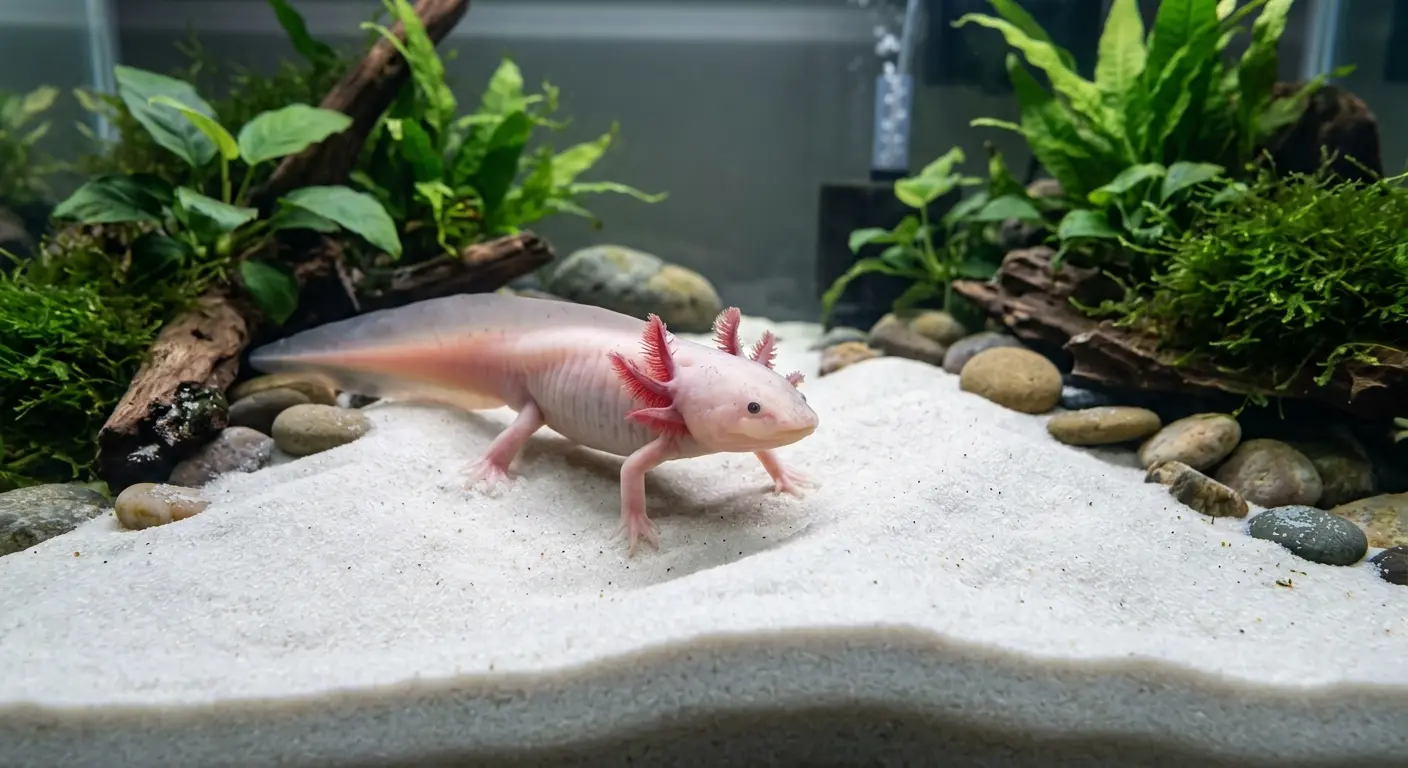
Comparing Substrates for Underwater Landscapes
Designing a safe floor demands balancing biological safety, long-term cleaning effort, and visual appeal. The comparison table below highlights how common aquarium substrates perform under strict amphibian husbandry standards:
| Substrate Type | Grain Size | Impaction Risk | Visual Aesthetic |
|---|---|---|---|
| Ultra-Fine Silica Sand | < 0.5 mm | Extremely Low (Adults) | High (Natural Dunes) |
| Pool Filter Sand | 0.45 mm – 0.55 mm | Very Low (Adults) | Medium (Uniform Riverbed) |
| Coarse Aquarium Sand | 1.0 mm – 2.0 mm | Moderate to High | Low to Medium |
| Aquarium Gravel | > 3.0 mm | Severe / Critical | Unnatural / Poor |
| Calcium/Aragonite Sand | Variable | High (Toxic Leaching) | High (Bright White) |
How to Achieve a Natural Dune Aesthetic Safely
Building an eye-catching axolotl tank dune layout requires careful structural planning combined with proper safety precautions. Simply piling deep sand in open areas creates dense anaerobic zones that can trap toxic hydrogen sulfide gas beneath the surface.
To construct durable, elevated slopes safely, use smooth river stones or slate strips as hidden retaining terraces. These internal supports hold sloped sand in place without requiring dangerous substrate depth across main walking zones.
Aim for a base depth between 1 and 1.5 inches across open floor space. Slope material higher only against back glass panels or behind sturdy rock terraces where your pet cannot easily dig into deep anaerobic layers.
Before adding substrate to your aquarium, rinse it thoroughly in small bucket batches using fresh water. Thorough washing removes fine dust particles that cloud water columns, irritate sensitive external gills, and clog filter media.
If you are planning a complete aquarium redesign, read our detailed guide on axolotl tank setup practices to optimize filtration choices, cold water chilling setups, and hiding spot placements alongside your sand bed.
A well-planned axolotl tank dune design balances natural visual beauty with functional aquatic management. Planning hidden terraces ensures that your underwater landscape maintains its shape over time despite your pet’s daily bottom-walking activity.
Back in November 2024, I decided my mature leucistic named Bubbles needed a complete habitat refresh. I envisioned a sweeping desert landscape with dramatic rolling ridges that would look incredible under dim ambient lighting.
I bought a heavy bag of dark commercial play material from a local hardware shop. Big mistake. Within two days, the heavy grains turned out to be rough, sharp, and far too coarse. Bubbles stopped eating completely and sat stressed in the corner with pale, curled gills.
Panic set in immediately. I spent four painstaking hours scooping out every single specks of dark grit, replacing it entirely with ultra-smooth 0.2mm white quartz granules. I learned the hard way that visual style should never eclipse physical comfort.
Within forty-eight hours on the silky floor, Bubbles snapped up three earthworms eagerly. The transformation was instant. Smooth material saved my sanity and my pet’s health.
Maintaining a Dunescape in Coldwater Aquariums
Keeping a sculpted axolotl tank dune layout clean requires gentle care during routine water changes. Strong siphon tubes will easily pull lightweight sand out of the aquarium if used carelessly near the bottom.
Hover siphon tubes roughly one inch above the sand layer during maintenance. Siphon suction lifts organic debris and uneaten food easily while leaving heavier substrate grains settled undisturbed on the tank floor.
Smooth out flattened mounds during water changes using an acrylic sand flattener or clean aquatic spatula. Gently stir top layers weekly to prevent surface compaction and release small harmless air pockets before gas accumulates.
Low-flow filtration is essential for preserving sculpted slopes over time. Direct spray bars toward glass panels or install flow baffles so strong water currents do not level your carefully crafted sand hills overnight.
Regular maintenance ensures that your axolotl tank dune environment stays visually appealing and biologically balanced. Taking a few extra minutes during water changes preserves delicate terrain features while keeping water conditions ideal.
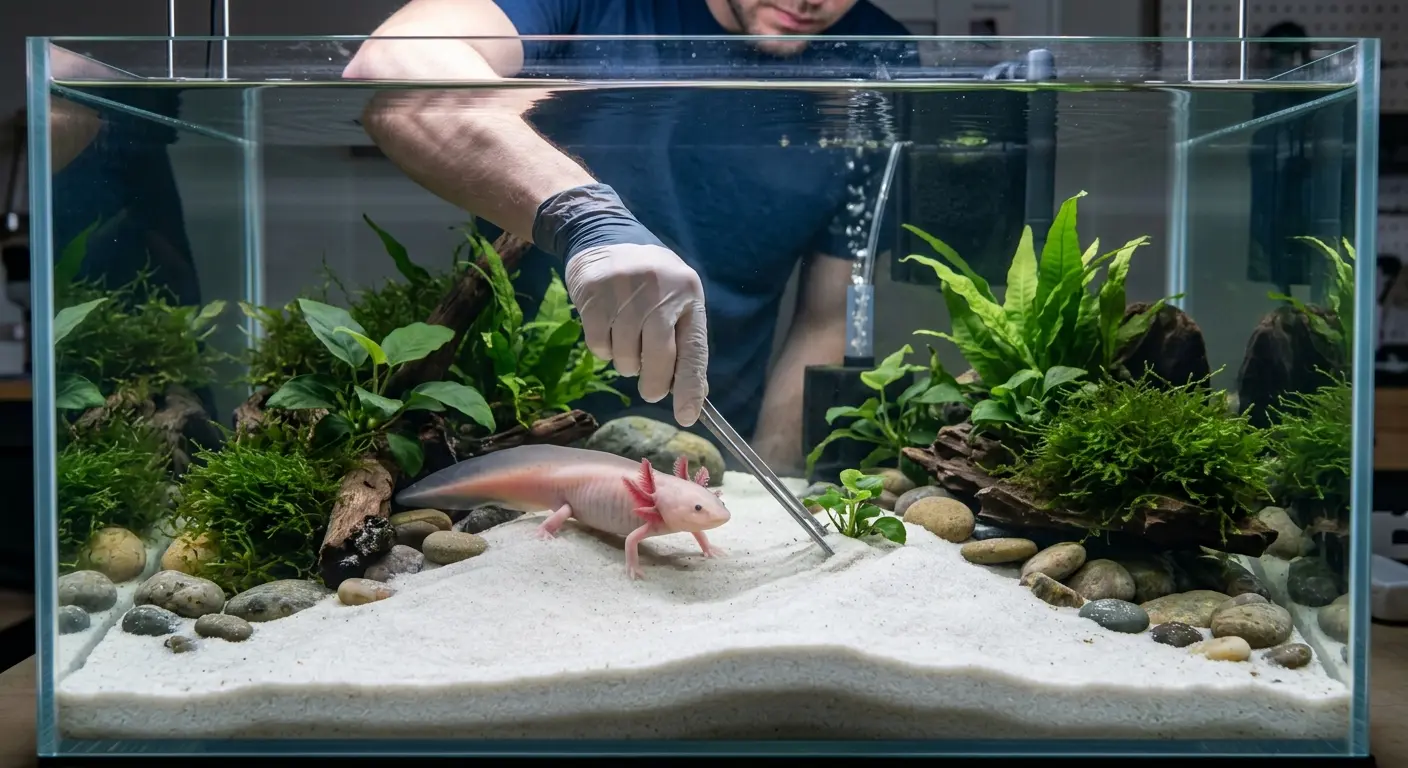
Essential Equipment for Dune Aquascaping
Designing a lasting axolotl tank dune setup becomes much easier when using proper aquascaping tools. Specialized gear speeds up routine maintenance and protects delicate aquatic life during cleaning sessions.
- Stainless Steel Sand Flattener: Perfect for shaping smooth slopes, rebuilding ridges, and tidying disturbed spots after water changes.
- Smooth Terracing Slate: Used to construct hidden retaining walls that stop high sand mounds from collapsing over time.
- Fine-Mesh Siphon Guard: Prevents substrate loss while siphoning debris from shallow floor corners.
- Long Curved Tweezers: Enables precise placement of smooth rocks and cold-water plants like Anubias without disturbing bank slopes.
Step-by-Step Dune Construction Guide
Follow this clear procedural guide to build a safe, stable axolotl tank dune landscape without clouding water columns or causing structural collapses:
- Rinse Material Thoroughly: Wash small substrate batches in a clean bucket until drain water runs crystal clear.
- Position Structural Terraces: Place large, smooth rocks or slate barriers directly on bare bottom glass to anchor future slopes.
- Pour Base Layer: Spread washed material around structural anchors, keeping open walking spaces under 1.5 inches deep.
- Bank Background Slopes: Build higher mounds strictly against rear glass panels behind retaining rocks to enhance depth perception.
- Fill Water Slowly: Place a shallow dish on the floor and pour water directly onto it to avoid disturbing sculpted hills.
Understanding Biological Filtration in Sand Beds
A fine substrate bed in an axolotl tank dune setup acts as a biological filter surface alongside your primary filtration system. Beneficial nitrifying bacteria colonize top substrate layers, helping convert toxic ammonia into nitrite and less harmful nitrate.
Because aquatic salamanders produce substantial organic waste, keeping sand beds clean prevents organic matter from decomposing inside substrate pockets. Excess decaying debris can trigger sudden ammonia spikes that stress sensitive gills.
Light surface raking keeps oxygen flowing through upper sand layers, supporting healthy nitrifying bacteria colonies without disrupting underlying biological filtration. A clean axolotl tank dune setup maintains crystal clear water and stable nitrogen cycles.
Managing Water Flow and Substrate Stability
Water circulation must be managed thoughtfully in an axolotl tank dune aquarium. High flow rates create strong currents that flatten sculpted sand ridges and cause ongoing stress for slow-moving, cold-water amphibians.
Using sponge filters, double-ended air-driven filters, or baffled canister filter outlets distributes water movement evenly across glass surfaces. Soft water movement keeps sand slopes stable while providing optimal oxygenation throughout the enclosure.
Checking slope stability during weekly inspections helps you adjust filter output directions before currents erode your hardscape features. Stable water movement protects both substrate structures and amphibian health.
Frequently Asked Questions
You must proceed with extreme caution. Many commercial black sands consist of crushed slag or copper byproducts with sharp edges that harm internal organs. Only use specialized, non-magnetic, ultra-smooth black quartz sand verified by reputable amphibian breeders.
Keep open floor space between 1 and 1.5 inches deep to prevent anaerobic bacteria build-up. Bank material up to 3 or 4 inches high only when supported behind rock terraces or slate barriers.
Aquatic salamanders must reach at least 6 inches in total length before being introduced to any particulate substrate. Younger individuals possess narrow intestines that suffer impaction easily from micro-particles.
Attach a spray bar spread across the back glass or install a flow baffle over output nozzles. Reducing localized water velocity maintains hardscape contours and prevents stress in coldwater creatures.
Gently turn over top layers every 1 to 2 weeks during water changes. Light stirring prevents compaction, breaks up developing anaerobic pockets, and keeps substrate beds clean and fresh.
Designing an impressive axolotl tank dune aquascape offers a rewarding visual experience while recreating natural riverbed environments. By choosing ultra-fine sand, avoiding hazardous calcium substrates, maintaining gentle filtration, and using smart terracing techniques, you can enjoy a breathtaking underwater desert landscape while keeping your aquatic pet safe, healthy, and thriving.