
Finding suitable axolotl tank mates remains one of the most tricky challenges faced by modern aquatic hobbyists. Selecting potential axolotl tank mates requires a deep understanding of cold-water water parameters, predatory instincts, and vulnerable external gills.
Direct Answer: The absolute safest choices for axolotl tank mates are adult axolotls of identical size and sex, or edible feeder micro-fauna like Ghost Shrimp. Almost all tropical fish and hard-shelled snails are strictly dangerous due to nipping, severe choking, or impaction risks.
Read on to uncover why cohabitation is so risky, which micro-fauna pass the safety test, and how to set up your aquatic home to avoid territorial aggression completely.
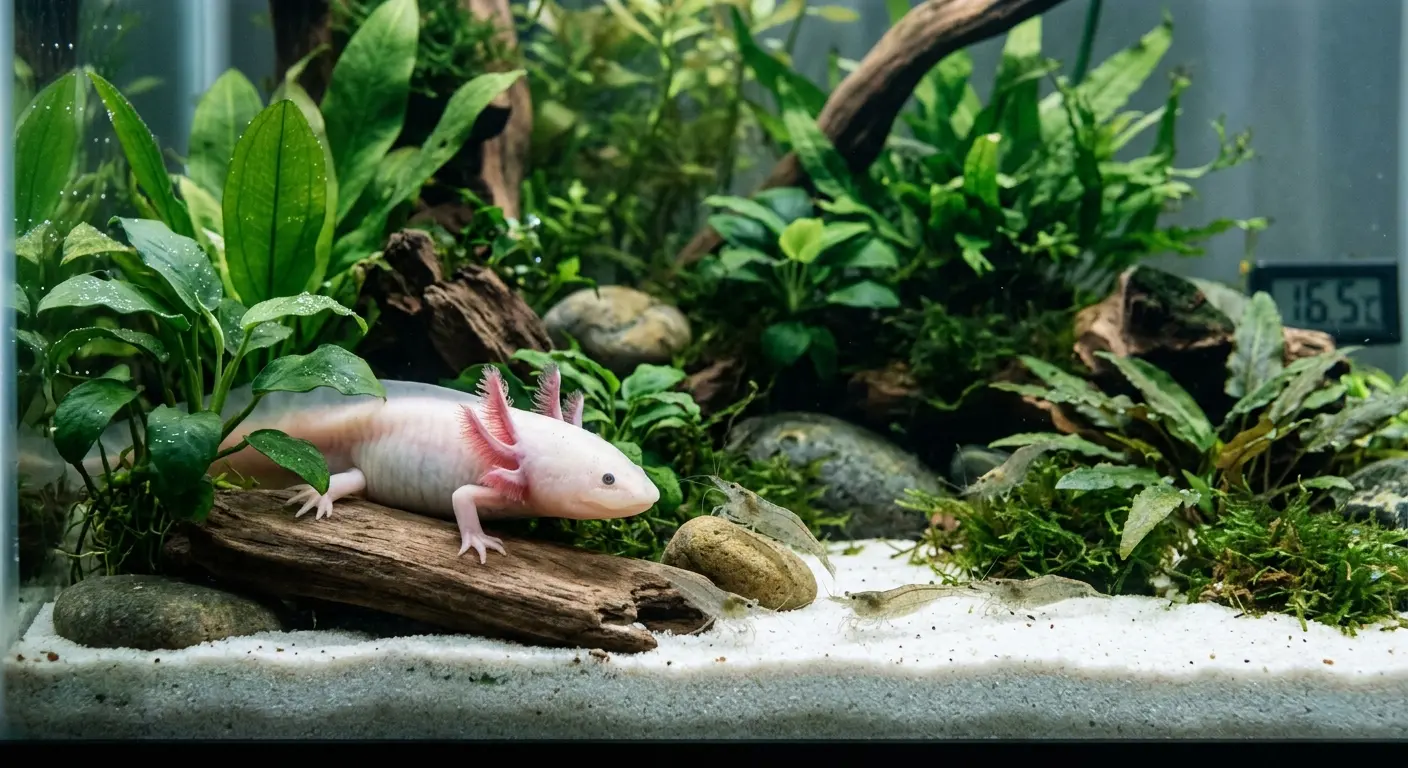
Understanding Instincts, Nipping, and Selecting Axolotl Tank Mates
Axolotls are specialized predators adapted exclusively to ancient freshwater lakes. They rely primarily on movement, chemical cues, and water vibrations to locate potential prey within dark water.
When any smaller creature moves past their head, a reflex triggers an immediate suction bite. This suction mechanism draws in water and anything floating near their mouth.
Because of this vacuum feeding style, small organisms near axolotl tank mates are viewed as food rather than peaceful companions. Anything small enough to fit inside their mouth will eventually be swallowed whole.
Furthermore, axolotls possess delicate, highly waving external gills. Fish frequently misinterpret these feathery gill branches as tasty worms or edible micro-invertebrates drifting through the water column.
This creates a dangerous cycle where fish continuously nip at delicate gill structures. Constant damage leads to severe stress, fungal infections, and eventual physical decline.
Before introducing potential axolotl tank mates, ensure your habitat parameters, chilling systems, and bio-filtration are fully stabilized by reviewing our detailed axolotl tank setup guide.
Anatomy and Biological Vulnerabilities of Cold-Water Amphibians
To understand why most species fail as axolotl tank mates, keepers must examine amphibian physiology. Unlike fish, amphibians possess permeable skin that absorbs dissolved chemicals directly from water.
This permeable skin layer secretes a slippery mucilaginous coating that defends against bacterial infections and regulates osmotic pressure within body tissues.
Many bottom-dwelling fish possess specialized mouthparts that rasp surfaces. These fish often target the nutrient-rich slime coat, stripping away protective layers and leaving raw tissue exposed.
Additionally, axolotls lack hard protective scales. Their soft bodies mean that sharp fins, dorsal spines, or aggressive bumping from active fish can cause serious lacerations.
Their slow metabolism in cold water also means that healing takes significantly longer compared to tropical species. A minor injury from inappropriate companions can linger for months.
According to veterinary research from the Association of Exotic Mammal Veterinarians & ARAV, stress-induced skin breakdown is a primary cause of captive mortality.
The Inherent Hazards of Fish and Snail Cohabitation
Novice aquarists often assume standard community fish make ideal axolotl tank mates. However, mixing tropical freshwater fish with cold-water amphibians usually ends in disaster.
Temperature incompatibility represents a major physiological barrier. Axolotls require cool water temperatures maintained between 60°F and 68°F (15°C to 20°C) year-round.
Most popular aquarium fish require much warmer tropical temperatures. Forcing tropical fish into cold water suppresses immune function, while heating cool water dangerously accelerates amphibian metabolism.
Armored catfish like Plecostomus or Corydoras pose fatal threats as axolotl tank mates. Plecos target the protective slime layer on amphibian skin, actively rasping it away during nighttime hours.
Corydoras catfish possess sharp, rigid pectoral spines. When swallowed during a suction strike, these spiky catfish lock their defensive spines inside the throat, leading to fatal choking.
Aquarium snails also carry hidden hazards. Large species like Mystery Snails present severe impaction risks if swallowed, while smaller snails latch onto skin and rasp delicate tissue layers.
Safe Micro-Fauna and Feeder Options for Axolotl Tank Mates
If you want to add visual variety or cleanup helpers, select disposable micro-fauna that act as temporary tank cleaners or nutritious live snacks.
Ghost Shrimp (Palaemonetes paludosus) rank among the safest temporary options when evaluating potential axolotl tank mates. They are tiny, translucent, and feature soft exoskeletons that cause no digestive blockages.
These energetic scavengers help clean up leftover food particles, plant detritus, and organic waste from tight corners before eventually being hunted down as natural enrichment.
Cherry Shrimp can also function as temporary companions, though their bright red coloration makes them easy targets. Keep in mind that shrimp colonies will eventually be eaten.
Miniscule bladder snails or soft-shelled juvenile Ramshorn snails offer another option. Because their shells are fragile, they break down easily inside the stomach without causing dangerous blockages.
Guppies and White Cloud Mountain Minnows are occasionally used as live feeders. However, all live fish must undergo a strict 30-day quarantine process to prevent transmitting deadly parasites.
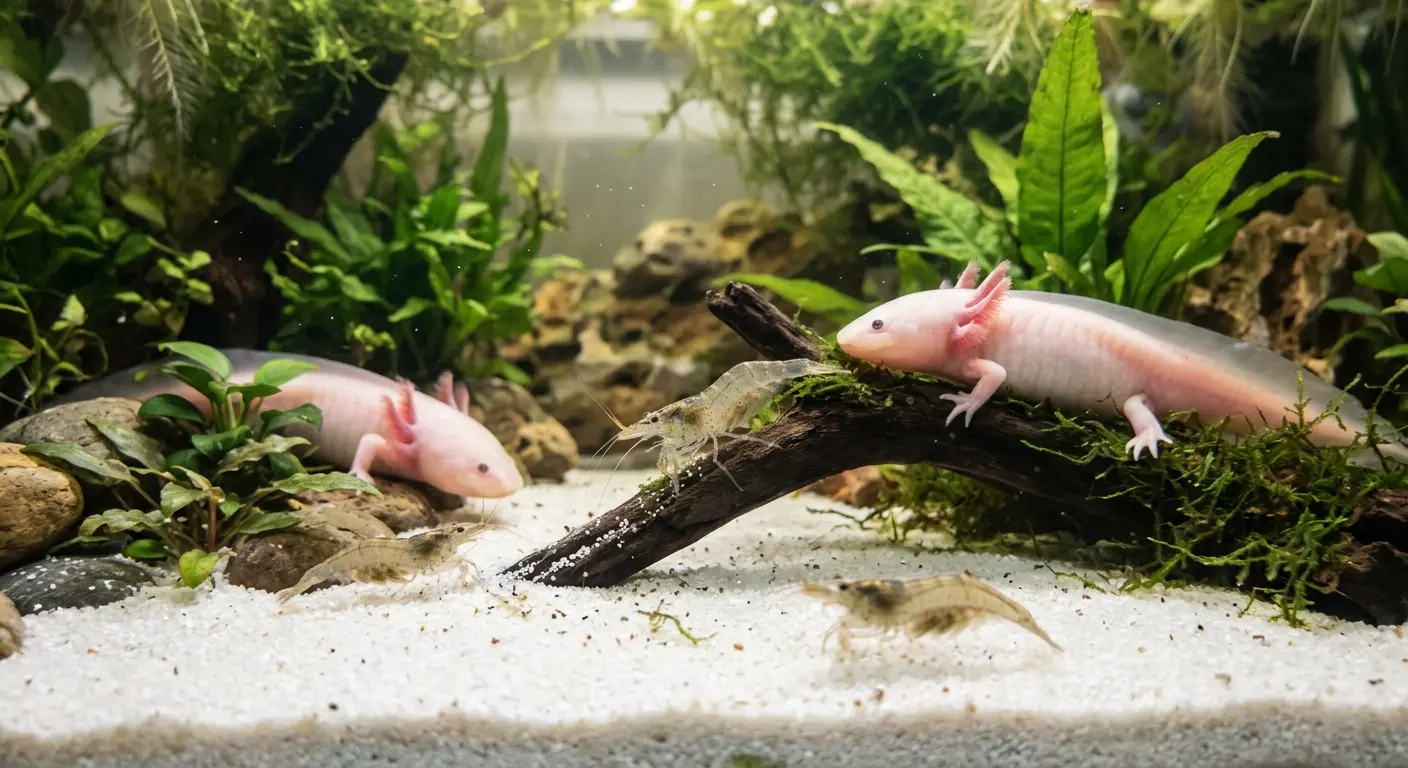
Evaluating Potential Companion Species: Compatibility Matrix
The following detailed comparison chart evaluates common aquatic species based on safety, temperature compatibility, and overall suitability as potential axolotl tank mates.
| Species / Companion | Safety Rating | Temperature Match | Primary Hazard or Benefit |
|---|---|---|---|
| Same-Sex Adult Axolotl | High | Perfect (60-68°F) | Ideal axolotl tank mates if size-matched; zero nipping if fed properly. |
| Ghost Shrimp | Moderate (Safe) | Good | Excellent detritus cleaner; doubles as safe, soft live food enrichment. |
| White Cloud Minnows | Low – Caution | Excellent | Cold-tolerant; potential gill nippers; requires strict 30-day quarantine. |
| Mystery / Apple Snails | Dangerous | Moderate | Severe impaction risk; rasps protective dermal slime coat off skin. |
| Plecostomus / Corydoras | Fatal Risk | Poor | Lethal defensive spines; strips skin layer; causes tragic choking fatalities. |
Same-Species Housing: Keeping Multiple Axolotls Together
Housing multiple members of the same species in a single glass enclosure is popular, but success depends entirely on adherence to strict structural rules.
Never house growing juveniles together in the same tank. Young amphibians possess intense cannibalistic instincts and will aggressively bite off limbs, toes, and external gill structures from siblings.
Only pair fully matured adults that are equal in physical length. A size difference of just two inches allows the larger individual to view the smaller one as easy prey.
Strictly monitor sex ratios within shared enclosures. Housing males and females together results in relentless breeding activity. Male courtship drives females to exhaustion and premature death.
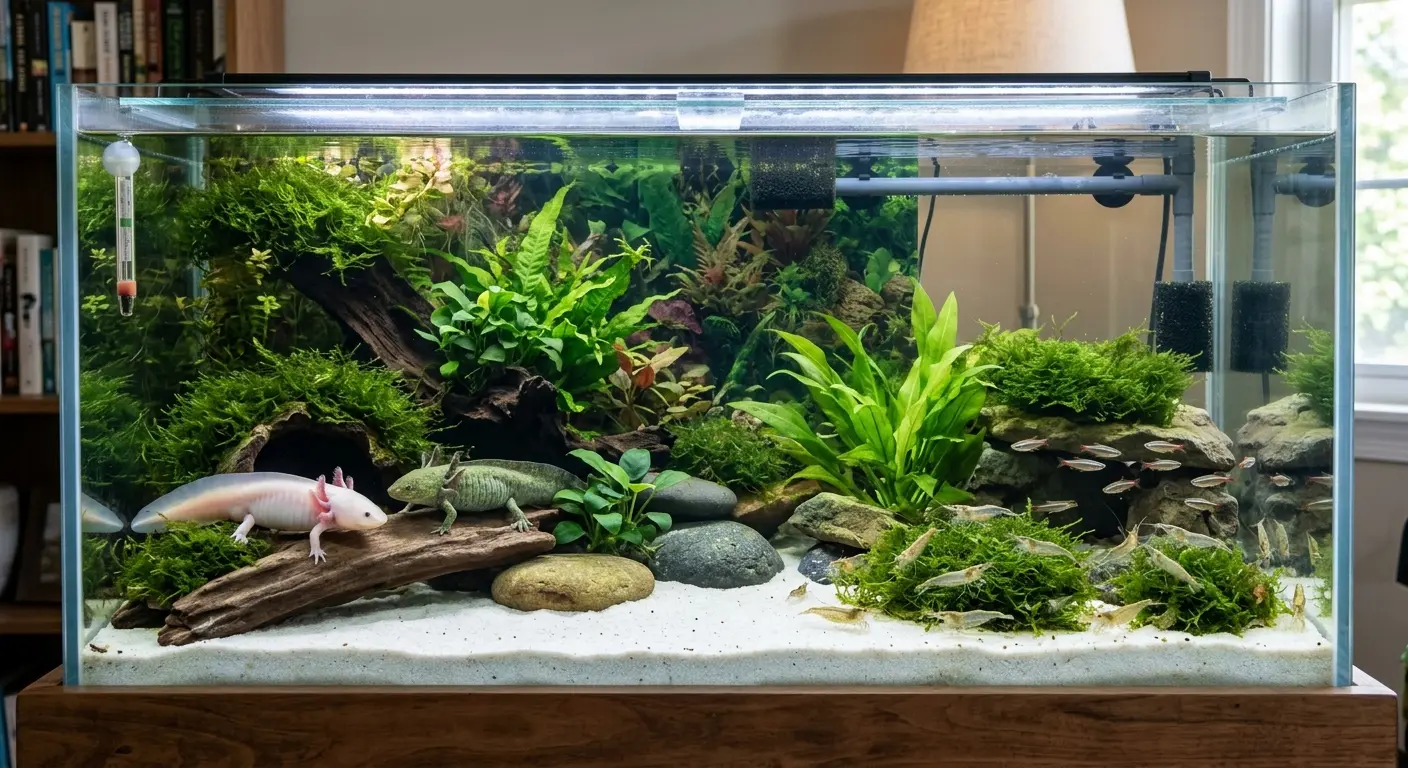
Ensure your setup provides at least 29 to 30 gallons of floor space per adult individual. Abundant hiding caves, terra cotta pots, and dense foliage break line-of-sight and prevent territorial disputes among axolotl tank mates.
A Keeper’s Realization: Lessons in Amphibian Behavior
Back in November 2021, I thought my 55-gallon setup looked oddly empty with just Barnaby, my leucistic male, lounging on the sand bottom. I decided to buy two Apple Snails, assuming their thick shells made them completely invulnerable.
Big mistake. Within forty-eight hours, I noticed Barnaby hovering over the glass corner, his usually pink gills pale with stress. One snail had clamped near his hind leg while the other was small enough to entice a reckless strike.
I panicked! I spent an agonizing hour gently pried the snail off using warm water flushes and clean tweezers, terrified I’d tear his delicate skin tissue. He survived, but his recovery took weeks of isolation and careful monitoring.
That scary evening taught me a permanent lesson. What looks peaceful to us keepers can quickly turn into a silent hazard for these unique creatures.
Water Quality, Filtration, and Bio-Load Management
Adding any companion species increases total bio-load dramatically. Axolotls produce substantial organic waste, requiring robust biological filtration systems.
When housing multiple axolotl tank mates, waste accumulation accelerates, causing rapid spikes in toxic ammonia and nitrites. Biological filters must be fully cycled before stocking.
High nitrate concentrations lead to chronic stress, loss of appetite, and gill deterioration. Weekly water testing and routine partial water changes are mandatory for multi-inhabitant tanks.
Standard power filters often create excessive current that stresses cold-water amphibians. Using double-sponge filters or canister filters equipped with spray bars mitigates water movement.
Proper water chemistry includes maintaining a pH between 7.0 and 8.0, with moderate water hardness to support bone development and skin health.
Enclosure Layout and Environmental Enrichment Strategies
Designing a habitat suitable for multiple axolotl tank mates requires careful spatial planning. Floor space takes precedence over vertical swimming height.
Fine aquatic sand or bare-bottom glass floors are mandatory substrate choices. Coarse gravel or small pebbles cause lethal intestinal impactions if swallowed during feeding.
Incorporate smooth river rocks, artificial silk plants, and soft ceramic structures. Avoid decor with sharp edges or rough surfaces that could scrape delicate skin.
Creating distinct visual barriers using large driftwood pieces allows cohabiting animals to escape line-of-sight view, significantly reducing territorial tension.
Subdued aquarium lighting is essential. Axolotls lack eyelids and prefer dim conditions, so floating live plants like Java Fern or Anubias help shade the environment naturally.
Feeding Protocols to Minimize Territorial Biting
Competition over food is a leading cause of accidental injury among cohabiting animals. Establishing strict feeding routines prevents aggressive encounters.
Feed each individual separately using long aquarium tongs. Placing food directly in front of each mouth prevents animals from snapping at each other’s limbs.
Provide high-protein staple foods like live earthworms, nightcrawlers, and high-quality sinking carnivore pellets. Well-fed animals are far less likely to target axolotl tank mates.
Remove uneaten food within fifteen minutes to prevent water contamination. Spoiled food degrades water parameters, increasing overall stress levels across the entire aquarium.
Feeding schedules should be consistent. Adult specimens typically require feeding every two to three days, while growing individuals require more frequent nutrition.
Long-Term Health Monitoring and Quarantine Protocols
Introducing new animals without strict isolation carries immense risks. Pathogens, fungal spores, and parasites spread rapidly within cold-water systems.
Always maintain a separate quarantine tank for at least 30 days before introducing new axolotl tank mates into your primary display aquarium.
Monitor quarantined specimens daily for signs of illness, including skin lesions, abnormal swimming behavior, loss of balance, or gill deterioration.
If an injury occurs due to territorial biting, immediately isolate the affected individual in a tub filled with clean, cool, dechlorinated water to recover safely.
Maintaining pristine water quality during isolation supports rapid tissue regeneration. Axolotls possess incredible regenerative abilities, provided stress levels remain minimal.
Frequently Asked Questions
Yes, absolutely. They do not possess social needs or feel lonely. In fact, keeping a single individual eliminates all physical injury risks, territorial stress, and accidental breeding issues entirely.
The safest options for axolotl tank mates are Ghost Shrimp. They clean up detritus, pose zero impaction hazard due to soft bodies, and provide beneficial mental enrichment when eventually hunted.
Accidental biting usually stems from hungry animals mistaking movement for live food during feeding sessions, or from keeping juveniles together who harbor intense cannibalistic hunting instincts.
No. Nerite snails have extremely hard, rounded shells. If ingested, they cannot be digested or passed safely, resulting in fatal intestinal blockages or choking emergencies.
Selecting appropriate axolotl tank mates ultimately comes down to prioritizing animal safety over visual variety. By choosing soft micro-fauna or well-matched same-sex adults, you ensure a peaceful, thriving aquatic environment for your pets.