

As a dedicated owner of a bearded dragon (Pogona vitticeps), you likely know that their diet is a crucial pillar of their overall health. Getting the balance right between insects and fresh produce can be tricky. While greens are the foundation of their adult diet, many owners want to treat their “beardies” to a sweet fruit snack. But when it comes to the classic summer treat, can bearded dragons eat strawberries?
The short answer is: Yes, but only in moderation.
Strawberries are not toxic to bearded dragons, and they do offer some nutritional benefits. However, they are also packed with sugar and phosphorous, both of which can be dangerous if fed too frequently. In this definitive guide, we will break down the pros and cons of feeding strawberries, how to serve them safely, and why they should always be treated as a rare luxury.
The Good: Why Bearded Dragons Can Have Strawberries (As a Treat)
Bearded dragons are omnivores, and their diet changes as they grow. While juveniles require 80% insects, adults need 80% vegetables and only 20% insects. While vegetables like collard greens, mustard greens, and acorn squash are daily staples, fruits can be offered occasionally.
Strawberries can offer a few benefits when fed in moderation:
When fed in moderation, adding strawberries to a bearded dragon’s diet can offer several positive health benefits:
Enrichment and Variety: Introducing new vibrant colors and juicy textures offers essential mental stimulation, preventing your dragon from getting bored with their daily stable greens. To understand more about their omnivorous diet and natural habitat, check the official Wikipedia page: https://en.wikipedia.org/wiki/Central_bearded_dragon
Optimal Hydration: Since fresh strawberries consist of about 91% water, they serve as an excellent hydrating snack, especially during hot weather. You can review the full nutritional profile and water content of the fruit on Wikipedia: https://en.wikipedia.org/wiki/Strawberry
Immune System Boost: Although bearded dragons can synthesize their own Vitamin C, the rich nutrient profile of strawberries provides a helpful occasional boost to support their overall immunity.
Healthy Digestion: The natural dietary fiber found in these fruits plays a vital role in maintaining a smooth and efficient digestive tract for your pet.
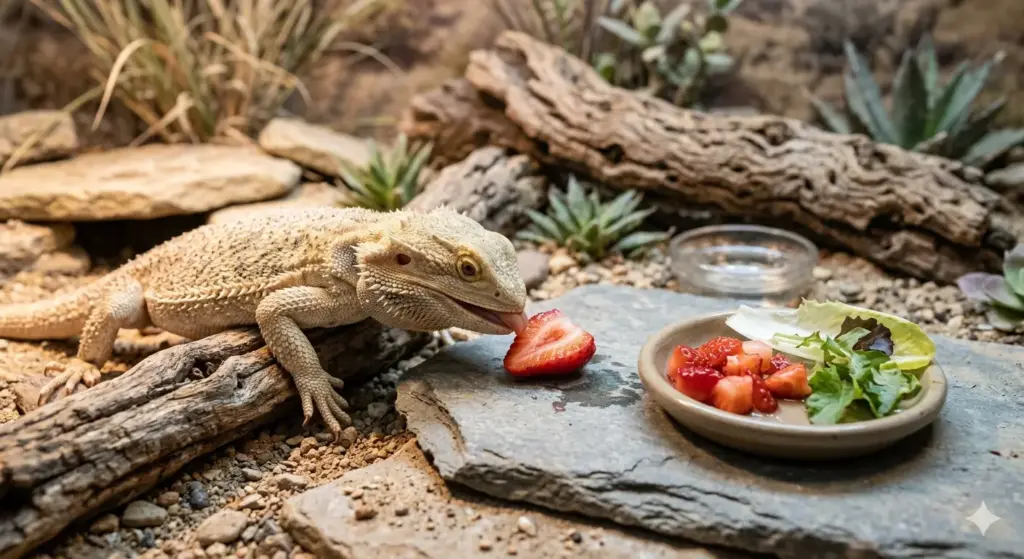
The Bad: Why Strawberries Can Be Dangerous
The key to can bearded dragons eat strawberries lies in understanding the risks of overfeeding. Strawberries should never be more than a tiny portion of their meal, for several critical reasons:
The Critical Calcium-to-Phosphorus Ratio in Bearded Dragon Diets
| Element / Factor | Medical Details & Explanation |
| Ideal Required Ratio | Bearded dragons require a strict 2:1 ratio (twice as much calcium as phosphorus) in their diet. |
| The Danger of High Phosphorus | Phosphorus binds with calcium in the gut, completely preventing the reptile’s body from absorbing it. |
| The Strawberry Problem | Strawberries contain more phosphorus than calcium, making them risky if fed too frequently. |
| The Body’s Defense Mechanism | If a dragon regularly eats high-phosphorus foods, its body will begin leaching calcium from its own bones to compensate. |
| The Resulting Condition (MBD) | This chronic imbalance directly leads to Metabolic Bone Disease (MBD), a terrifying and irreversible condition. |
| Severe Complications | MBD causes severe symptoms including: deformed limbs, soft jaws, bone fractures, seizures, and ultimately death. |
How Often Can Bearded Dragons Eat Strawberries?
Strawberries should be considered a “treat” in the truest sense. An appropriate schedule is offering one or two small pieces of strawberry once every week or two.
They should never be a daily staple. If you offer a variety of fruits (such as apples, blueberries, or melon), alternate them, offering only one type of fruit snack per week. The core of their produce bowl must always be healthy, calcium-rich leafy greens.
How to Prepare Strawberries for Your Bearded Dragon (A Step-by-Step Guide)
If you have decided it is time for a special treat, follow these critical steps to ensure your bearded dragon stays safe:
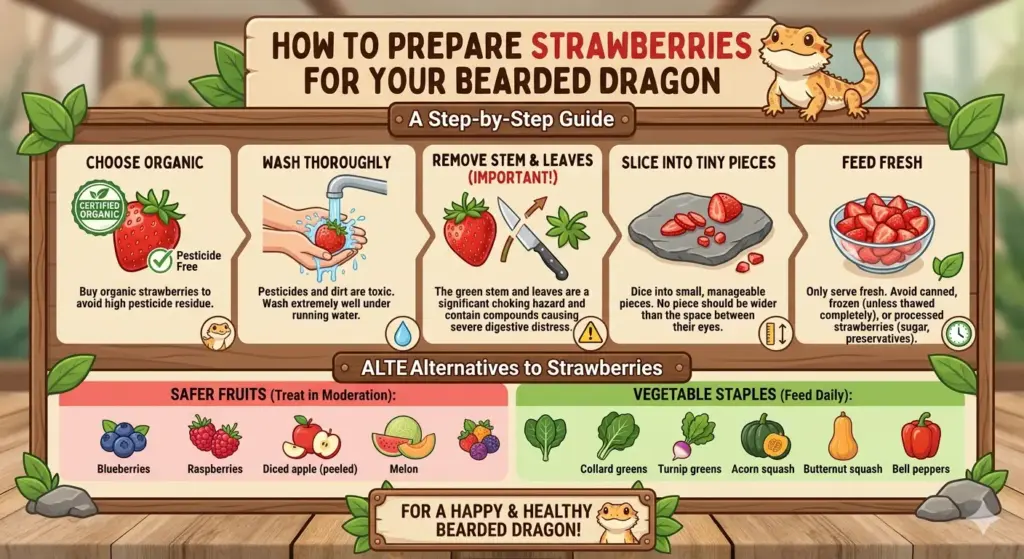
1. Choose Organic
Berries, including strawberries, are notorious for having high levels of pesticide residue. If possible, always buy organic strawberries for your reptile.
2. Wash Thoroughly
Pesticides and dirt can be toxic. Wash the strawberry extremely well under running water, even if it is organic.
3. Remove the Stem and Leaves (IMPORTANT!)
While the strawberry itself is safe, the green stem and leaves are not. They are a significant choking hazard and contain compounds that can cause severe digestive distress. Always slice the entire green top off.
4. Slice Into Tiny Pieces
Bearded dragons can choke easily if their food is too large. A safe rule of thumb is that no food piece should be wider than the space between their eyes. Dice the strawberry into small, manageable pieces.
5. Feed Fresh
Only serve fresh strawberries. Avoid canned, frozen (unless thawed completely), or processed strawberries, as these often contain dangerous added sugars or preservatives.
Alternatives to Strawberries
If you are looking for treats that are safer or offer more nutrition, consider these options:
- Safer Fruits (Still Treat in Moderation): Blueberries, raspberries, diced apple (peeled), and melon (like watermelon or cantaloupe).
- Vegetable Staples (Feed Daily): Collard greens, turnip greens, acorn squash, butternut squash, and bell peppers.
Conclusion
So, can bearded dragons eat strawberries? Yes, you can absolutely offer them a tiny piece of this sweet fruit as a rare treat. When served correctly, they can provide variety and a small boost of hydration. However, the risks of Metabolic Bone Disease from the low calcium-to-phosphorous ratio, along with digestive issues from high sugar, make them unsuitable for regular feeding.
Always prioritize their daily greens, supplement with calcium powder as recommended by a reptile veterinarian, and keep fruits as an occasional delight. A healthy diet is the best secret to a happy and thriving bearded dragon!
From my own experience, I’ve noticed how much my bearded dragon’s eyes light up whenever I introduce a tiny piece of strawberry into his dish. However, as tempting as it is to indulge their sweet tooth, moderation is truly the golden rule. Treating it strictly as an occasional reward, rather than a dietary staple, is the best way to keep your pet both happy and remarkably healthy.
Quick Exotic Pet Safety Tip: While deciphering your hedgehog’s behavior keeps them happy, keeping your other exotic pets safe from dietary dangers is just as critical. If you also own or plan to adopt a lizard, don’t miss our crucial breakdown on the Top 10 Toxic Foods for Bearded Dragons: A Life-Saving Guide to protect your reptile from hidden household hazards!
🚨 Quick Update For Reptile Keepers: But wait, what about those tiny black dots on the fruit’s skin? Before chopping up your next berry, make sure to read our dedicated breakdown on can bearded dragons eat strawberry seeds to ensure absolute digestive safety and prevent sudden impaction risks!
🍼 Are you raising a juvenile reptile? The nutritional rules for younger hatchlings are completely different and much stricter than for full-grown adults.
Read Our Full Guide: Can Baby Bearded Dragons Eat Strawberries?💡 Recommended Companion Guide:
Before adjusting your reptile’s meal plan, check out our comprehensive breakdown on how often can bearded dragons eat strawberries to prevent digestive issues and maintain perfect nutrient balance.