
The world of aquatic exotic pets is filled with vibrant colors and engineered morphs. Yet, looking back at the ancestral roots of these species often reveals a hidden, mysterious beauty. For many enthusiasts, the true essence of nature is captured perfectly in the remarkable Wild Type Axolotl.
Unlike their highly visible pink counterparts bred for captivity, these dark-toned salamanders carry a rich evolutionary legacy. They reflect the raw, ancient aquatic environments of Central Mexico. They represent the authentic form of a species that continues to captivate scientists and hobbyists worldwide.
Introduction: What is a Wild Type Axolotl?
When most people think of an Axolotl, they imagine a pink creature with fuzzy gills. This popular image is dominated by the Leucistic morph, which is widely bred in the pet trade. However, in the canals of Lake Xochimilco, the “original” version looks very different from these captive varieties.
The Wild Type Axolotl is the ancestor of all pet morphs we see today. Every genetic variation, from the bright albino to the shimmering copper, stems directly from this native bloodline. Understanding this ancestral form helps keepers appreciate the true biology and resilience of this unique amphibian species.
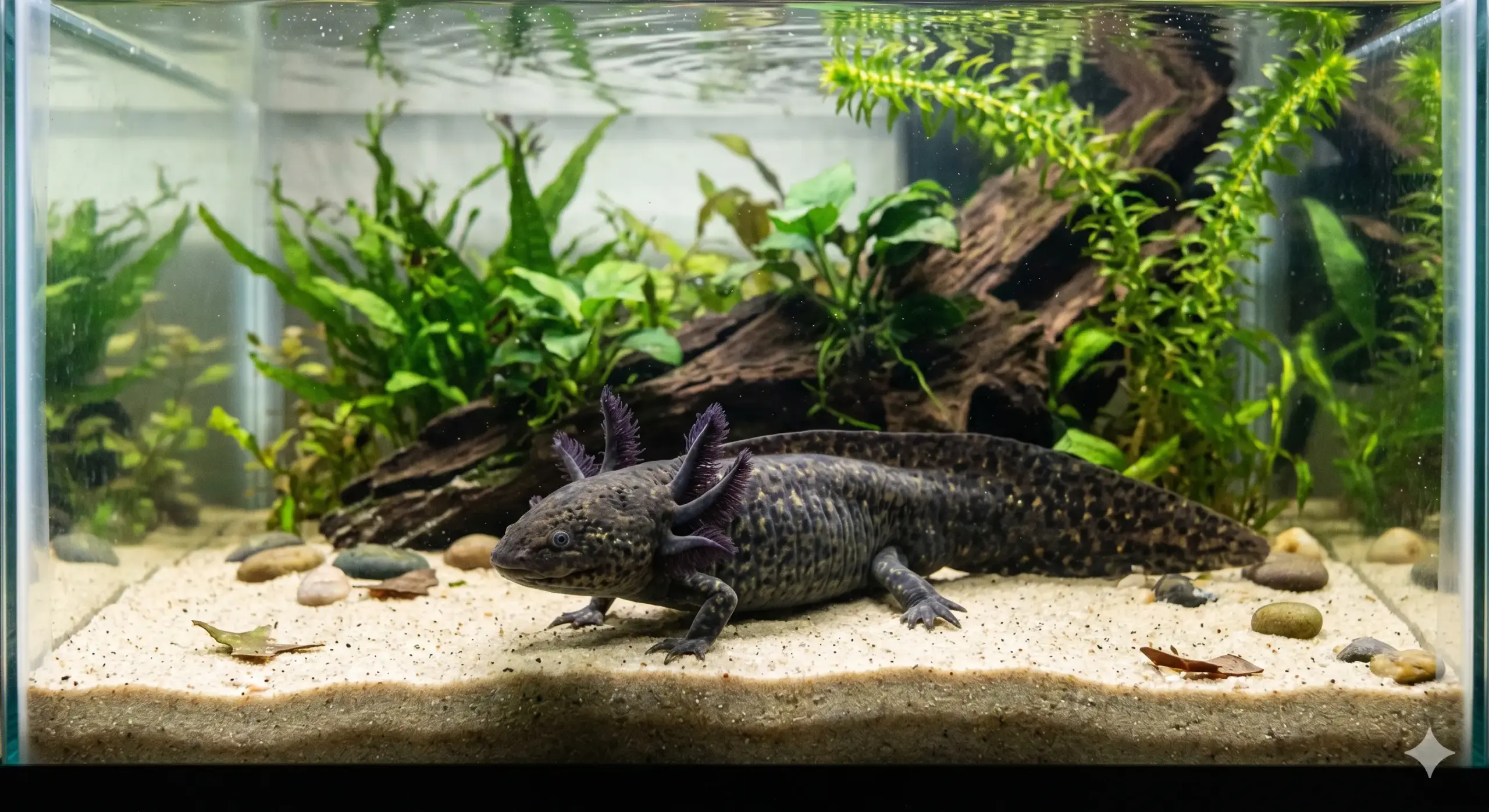
Unlike the captive-bred pink varieties, the Wild Type Axolotl is a master of camouflage. It sports dark, earthy tones that helped it survive for centuries in the wild. These deep colors allowed it to blend into muddy lake beds, avoiding predators while effectively stalking small aquatic prey.
Unfortunately, their natural home in Mexico faces extreme environmental threats. Urban expansion and water pollution have pushed them to the brink of extinction. Exploring the traits of the natural morph helps preserve interest in their wild survival and historical importance.
Appearance: The Beauty of the Dark Morph
The Wild Type Axolotl is often mistaken for the “Black Melanoid,” but it is much more complex. While a melanoid possesses a flat, uniform dark color, the true natural morph displays an intricate pattern. This layered appearance reflects a stunning mix of different pigment cells working together.
When you look closely at their skin, you notice a beautiful mosaic of dark green and brown, providing perfect camouflage in murky water. This base color is never static; it shifts with depth and texture. It mimics the fallen leaves and underwater plant life of their native canals.
The Shimmer of Genetic Diversity
In addition to earthy tones, their skin features gold iridophores, which are tiny shiny spots that glitter under the light. These reflective pigments create a subtle sparkle when the salamander moves through light beams. It gives the creature an quase-metallic look that completely sets it apart from artificial morphs.
Furthermore, black speckles are scattered across the skin and gills, breaking up its visual silhouette. This mottled pattern ensures that the animal remains virtually invisible against a riverbed. It is a stunning visual display engineered entirely by natural evolutionary forces over thousands of years.
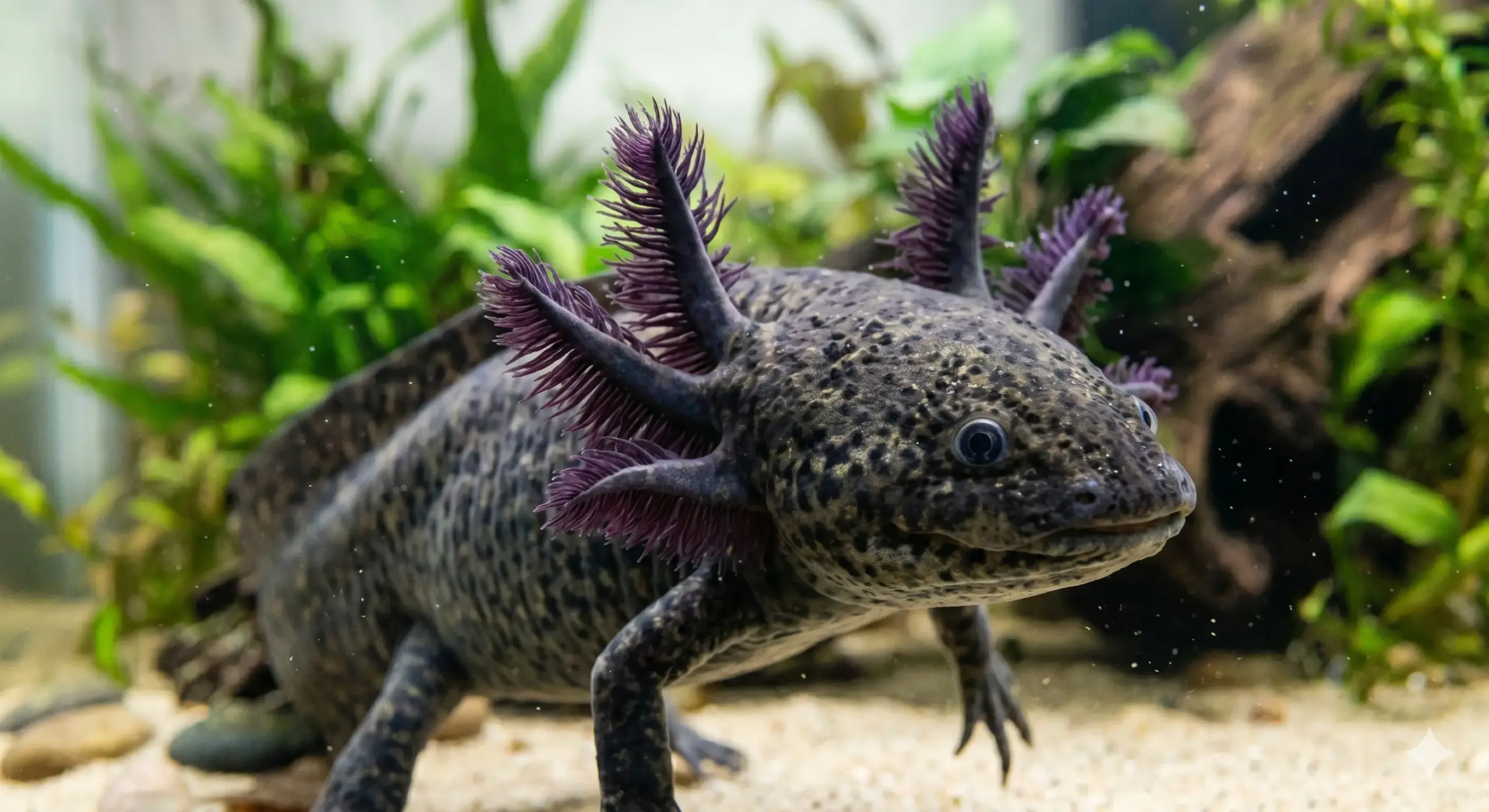
Their most striking feature might be their purple/Dark Grey Gills. These oxygen-absorbing stalks are often darker and more robust than other morphs. The rich blood flow combined with dark pigmentation gives the external gill filaments a full, feathery appearance that looks incredibly dramatic.
Why Choose a Wild Type Over Other Morphs?
Many experienced keepers prefer the Wild Type Axolotl because it is often considered “hardier.” Inbreeding for specific, rare color mutations can sometimes inadvertently weaken a genetic line. Because they haven’t been as heavily inbred for specific colors like the “Albino” or “Copper” morphs, they tend to have slightly stronger immune systems.
This genetic robustness means they can be more active in their tanks. They exhibit strong foraging behaviors and interact dynamically with their environment. Watching a natural morph explore its habitat gives you a genuine glimpse into the natural behaviors of the species.
Plus, their natural look brings a piece of ancient Mexican history into your home. They look like miniature prehistoric water dragons. Keeping one is like maintaining a living link to the ancient Aztec civilization, where these unique creatures were once deeply revered as gods.
Care Requirements for Your Wild Type Axolotl
To keep your Wild Type Axolotl healthy, you must replicate its natural environment as closely as possible. Creating an optimal habitat requires focusing on water stability and proper equipment. These amphibians are sensitive to their surroundings, so attention to detail is highly rewarded.
Temperature and Tank Setup
Water Temperature is one of the most critical aspects of their care. They are cold-water creatures. Keep the tank between 16°C to 18°C (60°F to 64°F) at all times. Temperatures consistently above 20°C can cause severe stress, fungal infections, and serious long-term health complications.
The Tank Size is another fundamental factor for long-term husbandry success. A minimum of 20 gallons for one adult is recommended, though a 30-gallon long tank is much better. Ample floor space is vital because these salamanders spend almost all of their time walking along the bottom.
| Parameter | Ideal Range | Why It Matters |
|---|---|---|
| Water Temperature | 16°C – 18°C | Prevents stress and dangerous fungal infections. |
| Tank Volume | 20+ Gallons | Provides adequate room and dilutes biological waste. |
| Filtration Type | Low-flow filter | Keeps water clean without creating stressful currents. |
| Substrate type | Fine aquarium sand | Prevents accidental impaction from swallowing gravel. |
Filtration is necessary to handle their high bioload, but they prefer low-flow water. High currents can stress them out and damage their gills over time. Utilizing spray bars or sponge filters can help break up heavy water movement while maintaining excellent biological filtration.
Substrate selection must be handled with extreme caution. Never use small gravel or small pebbles. Fine sand or a bare-bottom tank is safest to prevent impaction. These animals feed via vacuum suction, meaning they will swallow anything nearby, including hazardous rocks.
The Human Experience: A Journey of Patience and Light
I remember the first evening holding that transport container. My hands shook. The water inside was cold, dark, almost intimidatingly still. I stared down at this little creature, this ancient soul wrapped in a mottled, velvety cloak of midnight green. It felt like holding a fragment of time itself, a secret passed down through forgotten generations of freshwater lakes. My friends laughed when I brought him home, calling him a little monster of the mud. They wanted bright pinks. They wanted the flashy albino morphs that glow under artificial blue lights.
But I saw something deeper in those dark, intelligent eyes. We spent long, quiet winter nights together. I would sit by the glass, watching him glide silently over the smooth sand. His delicate, feathery crown fanned out like a crown of underwater smoke. It takes patience to love something that hides in shadows. You learn to read the tiniest shifts in mood, the slight flare of a gill, the slow, rhythmic stride of those tiny webbed feet. One evening, after a stressful week at work, I sat by the glass in darkness. He swam forward, pressing his dark face against the glass right where my finger rested. It was a silent connection. No noise. No demands. Just two completely different worlds meeting quietly across a pane of glass in the midnight calm. He taught me the true art of slowing down, of appreciating the quiet, unvarnished beauty of the natural world.
The Wild Type Axolotl in History and Science
Did you know that the Wild Type Axolotl is a profound scientific marvel? For decades, researchers have turned to this organism to unlock complex biological mysteries. Their unique genetic makeup offers insights that cannot be found in almost any other vertebrate animal on the planet.
These creatures possess the incredible ability to regenerate lost limbs, heart tissue, and even parts of their brain! If they experience an injury, they can perfectly rebuild the lost structure without forming any scar tissue. The new limb functions flawlessly, matching the original down to the exact cell structure.
Because of this, scientists study the Wild Type Axolotl genetics to understand how humans might one day heal from serious injuries. According to research published by the Axolotl Research Colony, decoding their massive genome could revolutionize regenerative medicine. It might pave the way for breakthrough treatments in human tissue repair.
Sadly, while they thrive in captivity, they are critically endangered in their natural habitat in Mexico. The native waterways of Xochimilco have been heavily fragmented. Conservation efforts are currently underway to build specialized canals, hoping to give this historical dark morph a fighting chance at survival in the wild.
Common FAQ about Wild Type Axolotls
Q: Can a Wild Type Axolotl change color?
A: They can’t change color like a chameleon, but their intensity can shift slightly based on the light, their diet, and their mood (stress levels). For instance, their golden spots may look brighter under direct lighting, while stress can cause their skin tones to turn slightly pale.
Q: What do Wild Type Axolotls eat?
A: Their diet should consist of high-quality earthworms (nightcrawlers), bloodworms, and specially formulated Axolotl pellets. Providing a varied, high-protein diet ensures they receive optimal nutrition to maintain their vibrant dark pigmentation and support their immune system health.
Q: Are wild type morphs more aggressive than pink ones?
A: No, they share the same general temperament as other color morphs. However, because they are often highly active and possess strong natural hunting instincts, they might exhibit slightly more enthusiastic feeding responses during tank maintenance or mealtime.
The Wrap-up
The Wild Type Axolotl is a stunning, ancient creature that reminds us of the raw beauty of nature. Its intricate dark patterning, shimmering gold highlights, and rich historical background make it truly exceptional. It stands out in a hobby often dominated by artificially selected color morphs.
Whether you are a beginner or a pro, this morph is a fantastic addition to any cool-water aquarium. By providing the right temperature, smooth sandy substrate, and a low-stress environment, you can enjoy the company of this living fossil. They bring a captivating piece of natural history directly into your home space.