
Every reptile keeper eagerly awaits the moment their tiny, frantic hatchling transforms into a calm, majestic companion. Have you ever wondered exactly when that developmental shift happens, or found yourself searching the web for internet myths like the legendary 14 foot biggest bearded dragon in the world?
A bearded dragon is officially considered a full adult when they reach 18 months of age, though their sexual maturity can sometimes occur slightly earlier between 8 to 12 months. At this adult stage, their rapid skeletal growth completely tapers off, and their dietary requirements permanently shift toward a heavily plant-based menu.
While tracking this milestone is straightforward, the internet often goes wild with bizarre myths regarding reptile sizes, pushing owners to research extreme anomalies. Let us separate viral urban legends from reality while breaking down true adult milestones, ideal habitats, and size spectrums across the reptile world.
Separating Internet Myths From Real Reptile Sizes
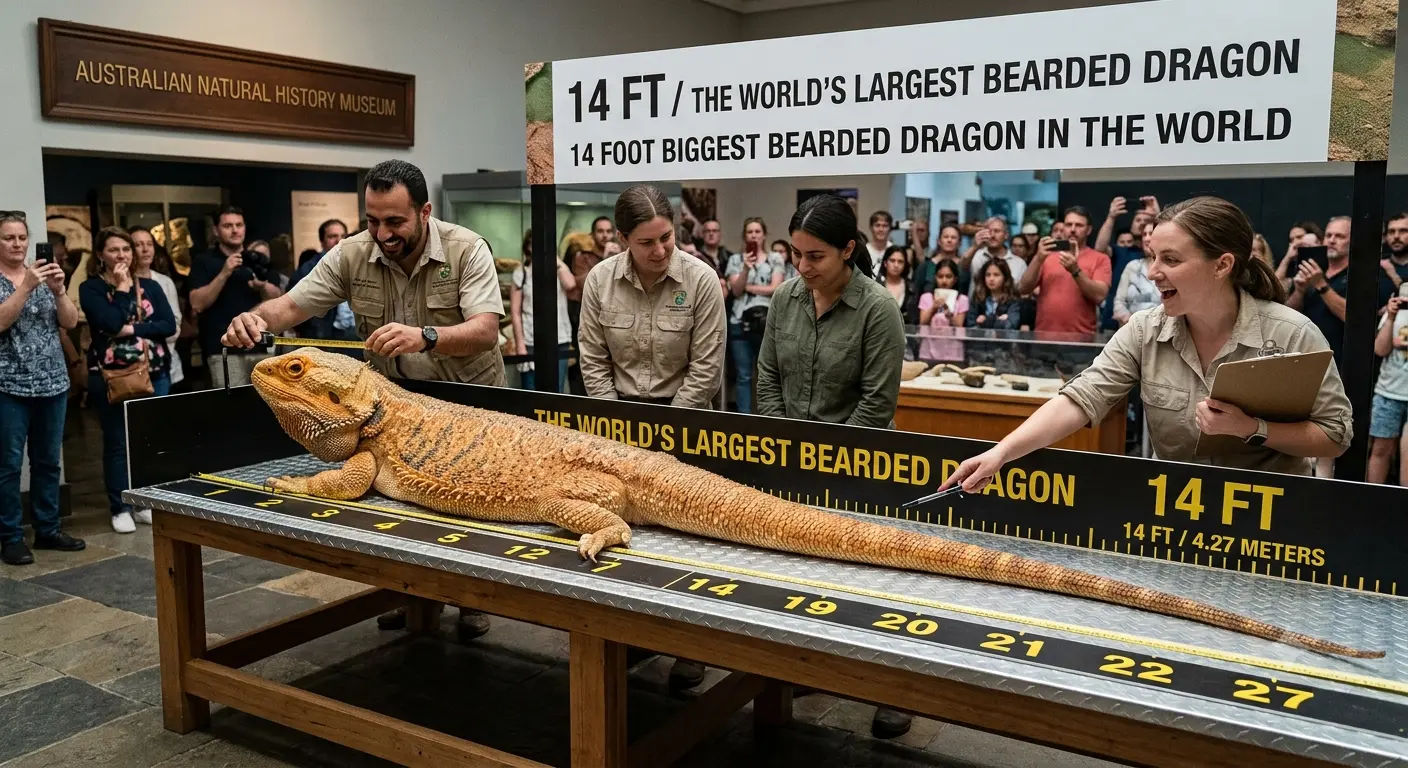
The reptile community loves a good story, which is why searching for the 14 foot biggest bearded dragon in the world has become such a viral phenomenon among enthusiasts. However, modern biological science and herpetological records confirm that no such creature exists within this specific Australian desert species.
A standard adult central bearded dragon (Pogona vitticeps) will max out at a total length of 24 inches from its snout to the tip of its tail. Rumors regarding a 14 foot biggest bearded dragon in the world are simply a mix-up with large monitor lizards or giant constrictor snakes.
When looking at global documentation, searching for a 14 foot biggest bearded dragon in the world guinness record yields absolutely no verified results because it is physically impossible for this species. True record-breaking lizards belong to other families entirely, such as the Komodo dragon or the heavy water monitor.
The origin of these wild internet claims usually traces back to poorly translated articles, forced perspective photography, or intentional satirical social media posts. Many amateur keepers mistake total length measurements of exotic iguanas with the standard growth metrics of desert agamid lizards.
Understanding the strict biological limitations of your pet prevents unrealistic expectations regarding their development and ensures you do not overfeed them in hopes of achieving impossible dimensions. Real beauty in herpetology lies in supporting natural, healthy growth boundaries rather than chasing unverified global records.
The True Spectrum of Dragon Sizes
To fully understand what is normal for your adult pet, it helps to look at both ends of the evolutionary size spectrum within the popular market. While some dream of giant beasts, others prefer the compact charm of the smallest bearded dragon in the world, which belongs to the Pogona microlepidota or Pogona minor species.
These naturally miniature wild variations often grow no longer than 4 to 6 inches throughout their entire lifespan, making them look like permanent hatchlings. Meanwhile, the central dragon we keep at home sits comfortably right in the middle of these extreme biological size boundaries.
If you hear sellers talking about a goliath bearded dragon, they are typically referring to specific bloodlines, like the German Giant morph, which can grow up to 26 inches. These are not a separate species but rather a selectively bred line that exhibits slightly higher bone density and structural length.
A certified goliath bearded dragon requires meticulous care during its first year because its rapid skeletal extension demands precise ultraviolet absorption and balanced supplementation. These large bloodlines show that while a 14 foot biggest bearded dragon in the world is pure fantasy, genuine genetic diversity can still produce impressive captive lizards.
Whether you manage a standard adult, a selectively bred giant, or explore the biology of the smallest bearded dragon in the world, identifying your exact species variation is crucial. This taxonomy determines their lifestyle needs, baseline thermal requirements, and maximum target weight markers.
Understanding Adult Milestones and Growth Rates
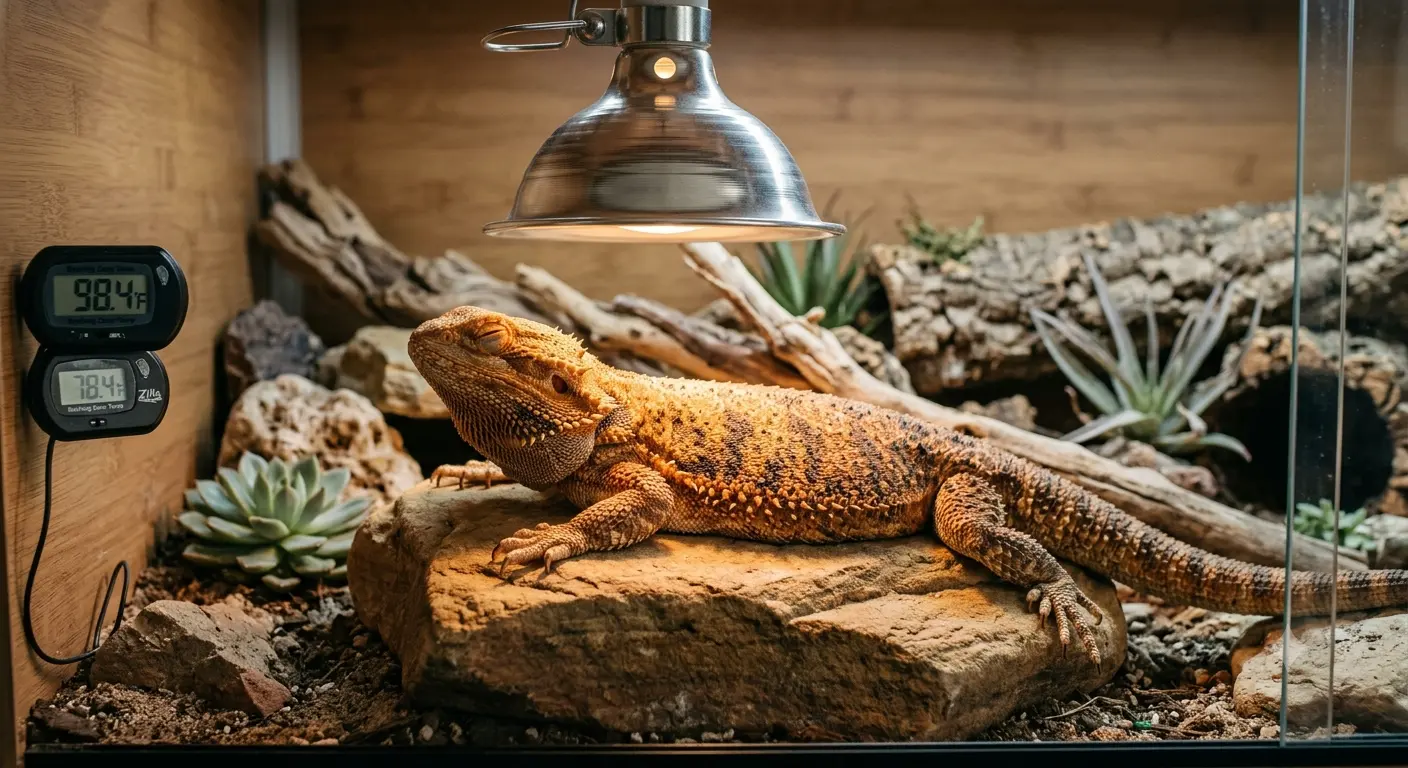
As your pet crosses the threshold from a juvenile to a mature adult, you will notice significant structural transformations in their body shape and behavioral patterns. Their triangular heads broaden significantly, and their bodies shift from a sleek, aerodynamic look to a much wider, pancaked appearance.
At this stage, tracking their physical mass becomes far more important than just measuring their length from head to tail. Owners who initially investigated the mythical 14 foot biggest bearded dragon in the world weight often discover that a real, healthy adult central dragon should weigh between 400 and 550 grams.
Once they reach 18 months, their metabolism slows down noticeably, meaning they no longer require massive amounts of daily insect proteins to fuel bone production. To ensure you are feeding them the correct proportions for their age group, check out our comprehensive guide on bearded dragon feeding guidelines to keep them healthy.
Skeletal calcification completes entirely around the two-year mark, which hardens their jaw structure and stabilizes their overall stance. This physical maturity brings a drop in shedding frequency, changing from bi-weekly juvenile cycles to just a few partial sheds per year for adults.
Monitoring these subtle physical changes allows you to adjust your husbandry routines before metabolic complications arise from outdated schedules. An adult lizard enjoys a predictable lifestyle, relying on consistent daylight hours and stable environmental patterns to maintain their physical health over time.
Designing the Perfect Adult Habitat
An adult lizard requires significantly more space to thrive, roam, and maintain proper thermoregulation compared to a tiny, energetic hatchling. Skimping on their living space can lead to severe muscle atrophy, chronic stress, and metabolic issues that shorten their lifespan.
Investing in a premium biggest bearded dragon enclosure means upgrading to a tank that features minimum dimensions of 48 inches by 24 inches by 24 inches. This spatial configuration translates directly to a 120-gallon environment, which is the gold standard for a fully grown mature adult.
Within this large enclosure, you must establish a clear thermal gradient that allows your pet to choose between a hot basking zone and a cool retreat. Heavy branches, natural slate rocks, and custom climbing ledges will help them utilize the full vertical volume of their upgraded home.
When selecting the ultimate biggest bearded dragon enclosure, ventilation is just as critical as raw cubic volume to prevent stagnant humidity from building up. Front-opening terrariums made of high-grade PVC or thick wood offer superior thermal insulation while reducing vertical stress when reaching inside to handle your pet.
Proper interior planning prevents dangerous accidents, ensuring heavy basking rocks rest firmly on the enclosure floor rather than on shifting loose substrates. A spacious home allows your mature reptile to display natural foraging behaviors, keeping them mentally stimulated and physically fit throughout adulthood.
| Life Stage | Age Range | Average Weight | Recommended Minimum Enclosure |
|---|---|---|---|
| Hatchling | 0 – 2 Months | 4 – 20 Grams | 20 Gallon Long Tank |
| Juvenile | 2 – 7 Months | 20 – 200 Grams | 40 Gallon Breeder Tank |
| Sub-Adult | 7 – 18 Months | 200 – 400 Grams | 75 Gallon Enclosure |
| Full Adult | 18+ Months | 400 – 550+ Grams | 120 Gallon Enclosure (Minimum) |
A Professional Keeper’s Journey: Real Lessons in Growth
Three years ago, a tiny hatchling arrived at my home, looking no bigger than a couple of paperclips joined together. I named him Barnaby, and I immediately fell into the classic trap of worrying endlessly over every single millimeter of his growth chart. Saturday mornings became a stressful routine of weighing him on a kitchen scale, obsessing over why he wasn’t transforming into a giant overnight.
During his eighth month, Barnaby completely stopped eating his daily greens, turning his nose up at fresh mustard greens and butternut squash. Panic set in completely. I spent hours reading outdated forums, buying expensive liquid vitamins, and trying to force-feed him purees with a plastic syringe, which only left both of us utterly exhausted and covered in green slime.
The breakthrough happened when I stepped back and looked at the bigger biological picture rather than forcing immediate compliance. I discovered that by simply moving his basking branch two inches closer to the heat source, his internal ambient digestion temperatures optimized perfectly, and his natural adult appetite returned entirely on its own.
Dietary Shifts in Adult Life
The most profound change you will manage as a keeper is the complete inversion of their nutritional breakdown once they cross into adulthood. Young juveniles require a diet consisting of 80% live insects and only 20% fresh greens to sustain their explosive growth phases.
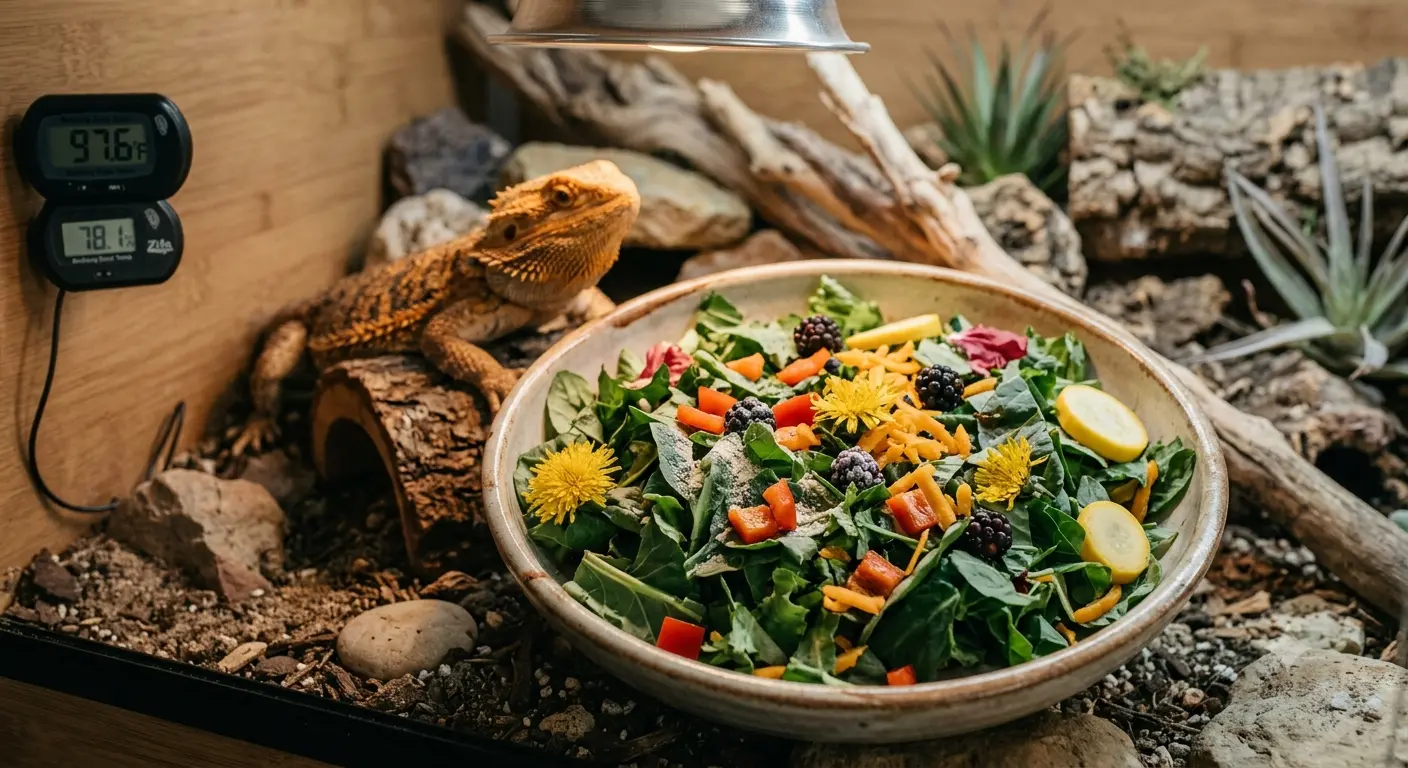
For a mature adult, this ratio flips completely to 80% fresh leafy greens and vegetables, alongside a mere 20% of live feeder insects. Overfeeding live insects to a fully mature lizard leads directly to severe clinical hepatic lipidosis, commonly known as fatty liver disease.
Focus on offering a rotating variety of high-calcium greens, such as escarole, endive, dandelion greens, and turnip greens, while avoiding regular feeding of kale or spinach. Treat live insects like dubia roaches, hornworms, and silkworms as occasional dietary rewards rather than the primary daily staple.
Hydration shifts significantly during adulthood as well, with mature dragons drawing the vast majority of their moisture directly from raw vegetables. Misting their salads daily with fresh water ensures their kidneys stay fully functional without elevating the overall humidity levels of their habitat.
Tracking this dietary transition requires patience, as many mature lizards will initially resist the sudden reduction of live insect rewards. Consistency is the secret weapon to success; offering their salad bowl early in the morning when their appetite peaks ensures long-term nutritional compliance.
Signs of a Healthy Adult Life
A thriving mature lizard exhibits clear physical signs of vibrant health, including clear alert eyes, crisp skin sheds, and a strong, muscular tail base. Their energy levels will naturally level out compared to their frantic youth, adopting a much calmer disposition.
They should actively bask for several hours every morning before moving around their enclosure to explore, interact, or digest their meals smoothly. Regular bowel movements, well-formed urates, and a complete absence of lethargy indicate that your husbandry parameters are perfectly dialed in.
Always ensure you consult certified veterinary professionals via established medical groups like the Association of Reptile and Amphibian Veterinarians (ARAV) for regular wellness checkups. Keeping their environmental conditions clean and optimized will guarantee your spectacular companion remains happy for up to fifteen incredible years.
Behavioral signals like gentle head bobbing, relaxed arm waving, or flattening their bodies to capture heat are completely normal methods of adult communication. Recognizing these baseline actions helps you distinguish between healthy daily routines and subtle signs of hidden respiratory or physical distress.
Maintaining clean glass surfaces, removing unconsumed salads promptly, and deep cleaning the substrate every month eliminates harmful bacterial growth. Your long-term commitment to these daily micro-routines builds a safe foundation for your pet to enjoy their golden adult years in absolute comfort.
The Final Verdict on Mythical Lizard Records
As we analyze the biological truths of these incredible desert creatures, it becomes obvious why myths like the 14 foot biggest bearded dragon in the world continue to thrive online. They capture our imagination and spark our curiosity about what nature is capable of creating when left undisturbed in remote environments.
However, true reptilian joy comes from watching your mature pet live out their best life within their authentic biological scale. Chasing stories about a 14 foot biggest bearded dragon in the world distraction shouldn’t diminish the amazing reality of owning a healthy, standard-sized desert companion.
By providing an expansive 120-gallon environment, implementing a balanced high-fiber diet, and monitoring their real adult milestones, you become an elite keeper. Let the internet debate fictional records while you focus on providing the ultimate modern husbandry for the genuine dragon sitting inside your terrarium.
Frequently Asked Questions
Q: Is there any truth to the viral photos of a 14 foot biggest bearded dragon in the world?
A: No, those viral images are completely photoshopped or feature different lizard families, as the biological maximum size limit for this specific desert species is 24 inches.
Q: How much does a true goliath bearded dragon weigh when fully grown?
A: A true German Giant or exceptionally large goliath bloodline can weigh between 600 to 800 grams, far exceeding the average 450 grams of a standard adult.
Q: Can the smallest bearded dragon in the world live in a standard 120-gallon setup?
A: While smaller wild species like Pogona microlepidota can live in smaller spaces, giving any reptile a massive, enriched enclosure is always beneficial for their health.
Q: Why did my adult lizard stop growing in length but continue to gain weight?
A: Around 18 months, their skeletal frame reaches its maximum biological length, meaning any excess caloric intake will expand their body width and mass instead of height.
Q: Where can I find the official 14 foot biggest bearded dragon in the world guinness listing?
A: You will not find it listed because the organization only records verified biological data, and no central bearded dragon has ever breached the two-foot mark.