
The Urgent Answer: Can Bearded Dragons Eat Prunes for Constipation?
Seeing your bearded dragon strain without passing waste is deeply distressing for any pet parent. When your beloved reptile stops passing waste for several days, panic sets in quickly, leading many worried keepers to ask: can bearded dragons eat prunes to relieve constipation?
Direct Answer: No, bearded dragons should never eat prunes under any circumstances. Prunes pose severe health hazards for reptiles, including dangerously high sugar concentrations, elevated oxalate levels that bind vital calcium, and high acidity that disrupts delicate gut flora. Feeding prunes can worsen gastrointestinal distress, induce severe diarrhea, or trigger metabolic bone disease.
While prunes work as an effective natural laxative for human digestion, reptile intestinal biology operates completely differently. Read on to discover why prunes are toxic to your dragon, how dried fruits destroy intestinal gut flora, and the vet-approved natural remedies that safely dissolve blockages.
Nutritional Analysis of Dried Prunes: A Reptile Health Hazard
Prunes are simply dehydrated plums, specifically cultivated to deliver concentrated energy and dietary fiber to mammals. However, when evaluated under strict reptilian dietary requirements, their nutritional profile reveals multiple alarming safety risks.
Desert reptiles like bearded dragons evolved in arid environments with access to low-sugar foliage and insects. Their metabolic systems lack the digestive enzymes required to process heavily concentrated simple sugars safely.
High Sugar Content and Gut Flora Dysbiosis
When high sugar fruits enter a bearded dragon’s digestive tract, they cause rapid bacterial fermentation. Friendly gut microbes are instantly overwhelmed by the sudden influx of fructose, leading to wild yeast and pathogenic bacteria proliferation.
This severe microbial imbalance, known as gut dysbiosis, causes painful gas buildup, intense abdominal bloating, and watery diarrhea. Ironically, severe diarrhea leads to rapid internal dehydration, which causes remaining gut contents to harden into severe blockages.
High Oxalate Levels and Calcium Binding Risks
Prunes contain notable concentrations of oxalic acid, commonly known as oxalates. In reptile nutrition, oxalates represent one of the most dangerous anti-nutrients because they bind aggressively to dietary calcium within the gut.
When oxalates bind to calcium, they form insoluble calcium oxalate crystals that the intestine cannot absorb. This deprives the dragon’s body of calcium, forcing the parathyroid gland to leach calcium directly from the skeleton to maintain blood calcium levels.
Over time, this chronic calcium depletion triggers Metabolic Bone Disease (MBD). MBD causes soft jawbones, trembling limbs, spinal deformities, and eventual paralysis, creating a far worse crisis than temporary constipation.
Dehydration Hazards of Dried Fruit
Dried fruits lose nearly all their natural water content during processing. When consumed, dried prune flesh acts like a dry sponge inside the dragon’s stomach, absorbing vital digestive juices.
Instead of lubricating the digestive tract, a prune expands inside the stomach and steals moisture from surrounding tissues. This sudden fluid withdrawal hardens existing fecal matter, turning mild sluggishness into severe physical impaction.
Safer, Vet-Approved Natural Alternatives for Constipation Relief
If your bearded dragon is experiencing bowel infrequency, skip human dried fruits entirely. Exotic veterinarians recommend several gentle, high-moisture remedies that safely stimulate natural bowel motility without risking toxicity.
1. 100% Pure Canned Pumpkin Puree
Pure canned pumpkin puree is widely considered the safest and most effective natural laxative for captive reptiles. It is exceptionally rich in soluble fiber and water while remaining naturally low in sugar and oxalates.
Always ensure the canned pumpkin contains 100% pure pumpkin with no added sugar, nutmeg, cinnamon, or pumpkin pie spices. Offering 0.5 to 1.0 milliliter via a needleless oral syringe gently softens hardened stool within 24 to 48 hours.
2. Unsweetened Applesauce
Unsweetened applesauce provides mild hydration combined with pectin, a gentle fruit fiber that promotes smooth intestinal contraction.
Select organic products containing zero added sugars, artificial flavorings, or preservatives. Offering a few drops on a clean spoon or dabbed gently on your dragon’s snout encourages natural licking behavior.
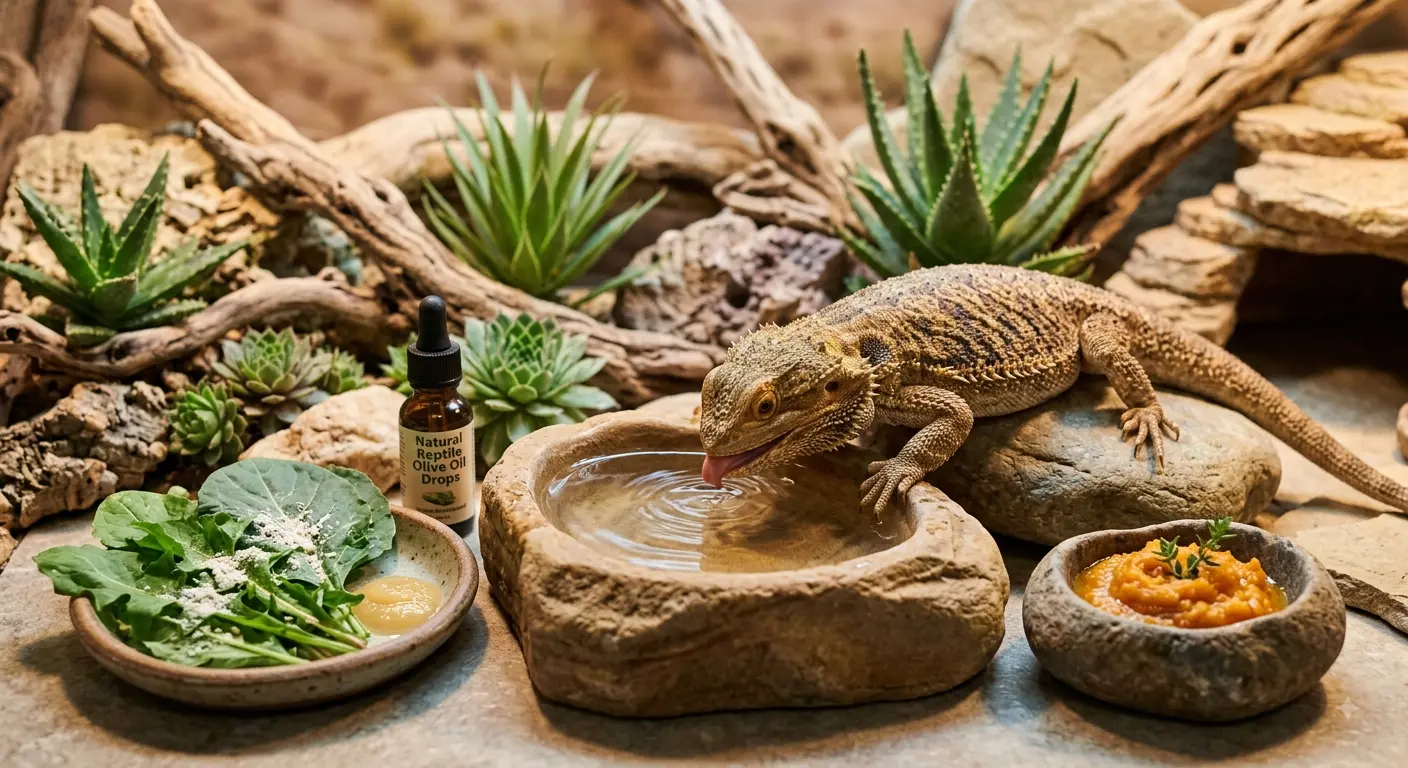
3. Food-Grade Olive Oil Drops
Pure, extra virgin olive oil serves as a mechanical lubricant along the intestinal lining, allowing stuck fecal masses to slide out smoothly.
Dose extremely conservatively—no more than 1 to 2 small drops placed directly on your dragon’s nose. Excessive oil consumption can disrupt fat-soluble vitamin absorption and lead to overly runny stools.
4. Warm Hydrotherapy Baths and Gentle Massage
Warm water soaking is almost always the safest first step before administering any oral remedies. Submerging your dragon in warm water relaxes vent sphincter muscles and naturally stimulates peristalsis.
Prepare a shallow bath using lukewarm water heated precisely between 95°F and 100°F (35°C to 38°C). Allow your dragon to soak for 15 to 20 minutes while gently massaging the left side of their abdomen from the ribcage toward the vent.
Comparison Matrix: Prunes vs. Safe Natural Remedies
To help you quickly evaluate your options, the following comparison matrix details how prunes stack up against vet-approved treatments for reptile digestive health:
| Remedy Option | Sugar Level | Oxalate Hazard | Hydration Benefit | Vet Safety Rating |
|---|---|---|---|---|
| Dried Prunes | Extremely High | High (Binds Calcium) | Dehydrating (Absorbs Water) | Dangerous (Avoid) |
| Pure Pumpkin Puree | Very Low | Negligible | High Internal Hydration | Safe (Recommended) |
| Unsweetened Applesauce | Moderate | Low | Moderate Hydration | Safe (Use Sparingly) |
| Olive Oil (1-2 Drops) | Zero | Zero | Mechanical Lubricant | Safe (Occasional) |
| Warm Bath Soak | Zero | Zero | Optimal Muscle Relaxation | Safest First Step |
I spent hours scrolling through online forums late into the night, coming across bizarre advice that suggested feeding citrus juice or soft dried fruits. Frustrated and desperate for a quick resolution, I filled a plastic tub with cold tap water and placed Barnaby inside—a foolish mistake that only caused him to shiver and turn his beard dark black. Realizing my error, I pulled him out immediately and called an experienced exotic keeper friend to calm my nerves.
Taking a deep breath, I switched to a logical approach. I refilled the basin with warm water measured precisely at 97°F, allowed Barnaby to soak for twenty minutes, and gently rubbed his lower abdomen in small downward circles. Afterward, I used a soft eyedropper to offer him half a teaspoon of plain organic pumpkin puree mixed with a single drop of olive oil, which he slowly licked off his nose.
By the following afternoon, Barnaby passed a large, healthy bowel movement and immediately brightened up, demanding his usual greens. That stressful experience taught me that patience, gentle heat, and simple natural ingredients are infinitely superior to risky shortcut foods.
Identifying True Impaction vs. Minor Constipation
Distinguishing between mild constipation and life-threatening impaction is essential for every reptile owner. Temporary constipation usually stems from minor husbandry issues, such as low basking temperatures or slight dehydration.
Impaction occurs when a hard, indigestible object physically blocks the intestinal tract. Common culprits include ingested coconut coir, coarse gravel substrate, oversized feeder insects with hard chitin, or dried fruits that swelled up inside the stomach.
Key warning signs of severe impaction include weakness or dragging in the hind legs, a firm lump felt on the left abdominal side, blackbearding, and total lack of appetite.
For professional medical diagnoses and emergency care, consult qualified experts through the Association of Reptilian and Amphibian Veterinarians (ARAV). To better evaluate your pet’s waste consistency, color variations, and urate health, explore our detailed bearded dragon poop guide.
Frequently Asked Questions (FAQs)
Conclusion & Final Verdict
In summary, when asking can bearded dragons eat prunes as a quick laxative remedy, the scientific answer remains a firm no. Prunes introduce excess sugars, high oxalates, and dehydration risks that cause far more harm than good to a reptile’s delicate digestive system.
Instead of relying on processed human fruits, utilize safe, vet-approved methods such as warm hydrotherapy soaks, pure canned pumpkin puree, and a single drop of olive oil. By maintaining optimal basking temperatures and proper humidity, you keep your bearded dragon healthy, active, and regularly passing waste.