
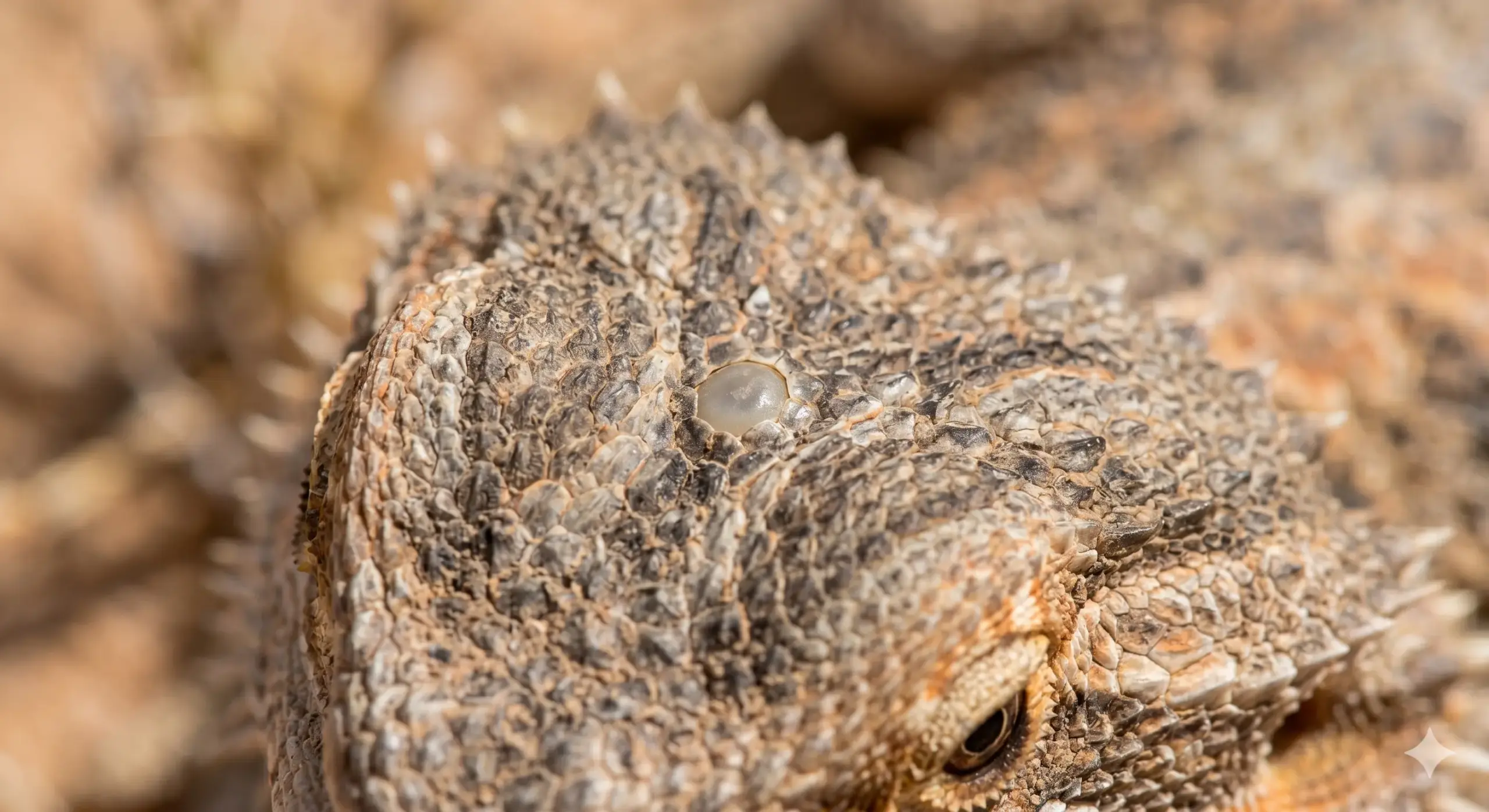
If you own a bearded dragon, you might think you know everything about your scaly friend. You watch them eat, you see them bask, and you enjoy their calm personality. But look closer at the very top of their head. Do you see that tiny, pale spot?
It’s not a scale, and it’s not an injury. It is a fully functioning third eye. This is just the beginning of the mysteries surrounding these Australian reptiles. In this article, we reveal 7 shocking facts about bearded dragons that most owners—and even some experts—don’t even know.
Understanding the unique biology of your pet, including the biological mechanics behind the Bearded Dragons Third Eye, is essential for providing optimal care. These adaptations showcase how complex these desert survivors truly are over generations.
1. The Secret “Solar” Eye (The Parietal Eye Mechanism)
That little spot on their head is anatomically known as the parietal eye. While it doesn’t see colors, crisp shapes, or detailed images like our eyes, it can accurately detect minute changes in light and shadows. In the wild harshness of the Australian outback, this anatomical feature functions as an ultimate, built-in life-saver.
If a hawk or a predatory bird flies overhead, the Bearded Dragons Third Eye instantly senses the sudden shadow. This triggers an immediate neurological signal telling the dragon to run for cover. It provides a massive evolutionary advantage against aerial attacks.
Furthermore, this unique organ acts as a biological “solar panel,” helping them calculate exactly how much sun they need. By measuring light intensity, it tells the lizard when to bask and when to retreat to the shade to regulate temperature. This keeps their metabolic functions operating perfectly.
According to research published by the Association of Reptile and Amphibian Veterinarians (ARAV), proper environmental lighting is crucial. Without a properly functioning Bearded Dragons Third Eye sensor, these reptiles struggle to align themselves with essential wild cycles.
2. Nature’s Transformers: They Can Change Their Gender
This sounds like an imaginative concept straight from a sci-fi movie, but it is 100% verified scientific fact. Researchers have discovered that wild and captive bearded dragon embryos can actively change from male to female while inside the egg. This dramatic transformation is triggered if temperatures in the nest rise too high.
These “sex-reversed” dragons are born looking and functioning entirely as females, but they remain genetically male. Their internal chromosomes still carry the original male design, making them a true marvel of biological adaptation. It highlights how climate heavily influences reptile populations.
Interestingly, these sex-reversed females are highly fertile. Studies show they often lay significantly more eggs than “natural” biological females! This ensures the species can rapidly bounce back even after severe, scorching heatwaves in their native habitats.
3. The “Hello” Wave That Means Something Else
Have you ever watched your pet lift its front arm and wave it in a slow, circular motion? It’s undeniably cute, and many owners assume their pet is simply saying “hi.” However, in complex dragon language, this specific motion has a completely different meaning.
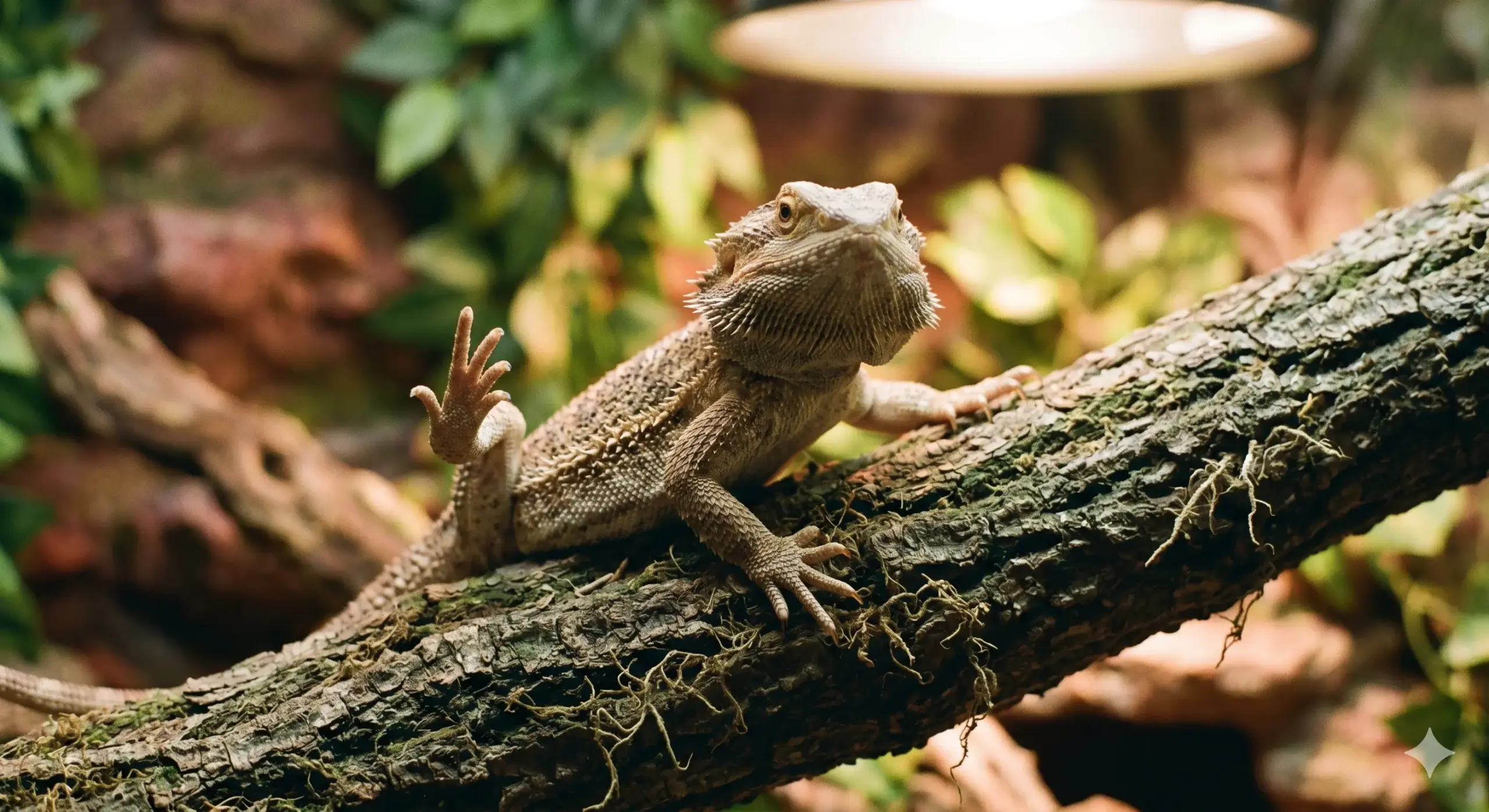
This distinct gesture is actually a clear, undeniable sign of submission and peace. By waving slowly, the smaller or less dominant lizard is communicating a vital message to others nearby. They are essentially saying, “I recognize you are the boss, please don’t hurt me.”
It’s their peaceful way of avoiding a dangerous physical fight before it even starts. You will often see babies do this in the presence of larger adults, or even toward human owners. It helps maintain social harmony within their territory.
4. They Can Run on Two Legs Like a Dinosaur
Bearded dragons are usually slow, methodical, and incredibly lazy creatures that prefer lounging under heat lamps. However, when they experience a sudden burst of energy or need to escape an immediate predator, their behavior changes dramatically. They can stand upright on their two back legs and sprint!
When they utilize this unique gait, they look exactly like a miniature T-Rex running frantically across the hot desert sand. This fascinating “bipedal” running style allows them to move at much higher speeds than crawling on all fours. It is a specialized emergency escape mechanism.
By lifting the front of their body, they reduce ground friction and maximize the driving power of their strong hind limbs. It is a stunning visual reminder of their deep, prehistoric ancestry. It proves they are capable of surprising athletic feats when necessity strikes.
5. The Human Experience: Secrets from a Real Keeper
I remember the first time I noticed the tiny spot on my first lizard. Panic gripped me. I thought it was a terrible scale rot infection or a wound from a sharp rock. My heart raced as I picked him up, expecting the worst. He just stared back with calm, unblinking eyes. Quiet. Unfazed.
That was the moment I truly discovered the wonder of a hidden tool in plain sight. It humbled me deeply. Reptile keeping teaches you extreme patience because they communicate on a completely different wavelength than mammals. There are no warm purrs or excited tail wags here. Instead, you get a deep, ancient bond built entirely on silent trust and daily, quiet observation.
One evening, I walked past his enclosure quickly. A dark shadow fell over his tank. Instantly, he bobbed his head and flinched downward, reacting to my movement. His hidden sensor worked flawlessly. It was a beautiful, raw demonstration of wild survival mechanics happening right inside my living room.
6. They Don’t Sweat (They Pant Like Dogs)
Have you ever noticed your pet sitting peacefully on a hot rock with its mouth opened wide? It can look a bit intimidating or aggressive to a brand-new owner. Rest assured, they are not trying to look scary or display dominance when doing this.
Since reptiles completely lack sweat glands, they cannot perspire to cool down their internal temperature like humans do. Instead, they open their mouths wide to release trapped internal body heat into the air. This common behavior is professionally known as “gaping.”
It is the exact reptilian equivalent of a dog panting on a hot summer afternoon to stay cool. Gaping indicates that your pet has reached its maximum preferred heat level and is actively regulating its thermal balance. It shows their environment is working as intended.
7. Their Beard is a Complex Mood Ring
The famous “beard” under their chin isn’t just a quirky physical feature used for show. It functions as an incredibly expressive, real-time mood ring that changes color based on how the reptile feels. It is their primary method of visual communication.
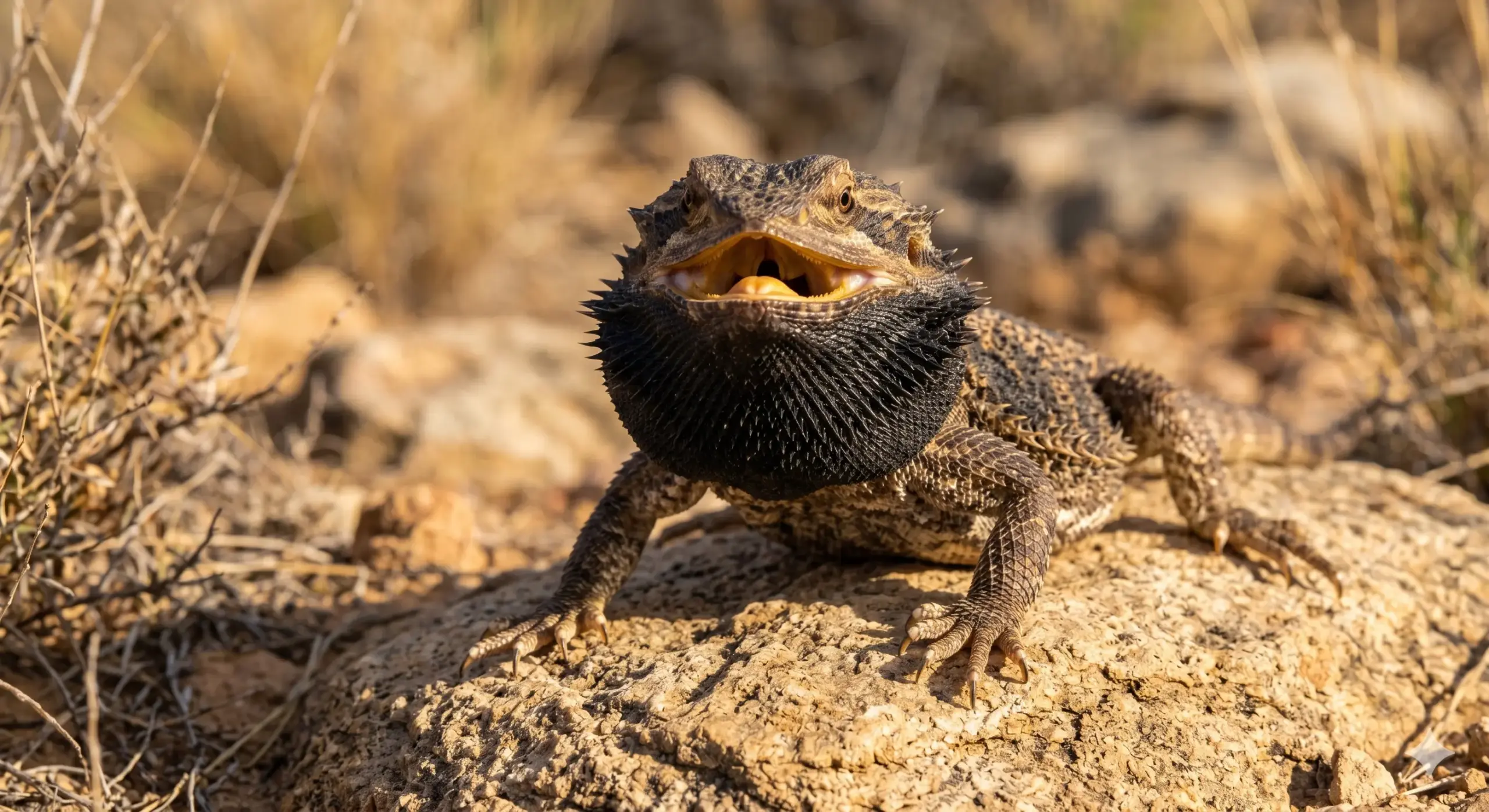
If a lizard becomes angry, highly stressed, territorial, or ready to find a mate, its beard will rapidly turn jet black. They may also puff it out to appear much larger to potential rivals. This acts as a clear warning to give them space.
Conversely, if the beard displays bright orange, vibrant yellow, or normal pale tones, it means they are happy and relaxed. Monitoring these dramatic color shifts helps you understand your pet’s emotional state. It allows you to adjust their handling and care accordingly.
8. They Can Go Months Without Eating (Brumation)
During the cold winter months, wild and captive reptiles often enter a natural state of deep dormancy known as brumation. During this period, their internal heart rate drops significantly, and their overall metabolism slows down to a crawl. They require almost no energy.
As a result, they can safely sleep inside a dark hide for weeks or even months without consuming a single meal. This is an ancient, vital survival tactic developed to endure the harsh, food-scarce winters of the Australian outback. It keeps them alive until spring arrives.
For unsuspecting new owners, witnessing this sudden, deep sleep can be absolutely terrifying. However, it is a perfectly natural and healthy biological process for an adult lizard. Understanding this cycle prevents unnecessary panic and improper interventions.
Understanding the Bearded Dragons Third Eye Matrix
To summarize how these distinct behaviors and traits operate, including the role of the Bearded Dragons Third Eye, let’s look at this breakdown matrix below:
| Feature / Behavior | Primary Function | What It Means for Owners |
|---|---|---|
| Bearded Dragons Third Eye | Detects shadows, light, and overhead aerial predators. | Do not shadow them from above unexpectedly; it triggers fear. |
| Slow Arm Waving | Displays submission and social peace to others. | Your pet is acknowledging your presence non-aggressively. |
| Mouth Gaping | Releases excess body heat to regulate temperature. | The basking spot is sufficiently hot; they are thermoregulating. |
| Jet Black Beard | Signals intense stress, anger, or mating readiness. | Give the reptile space and check for environmental stressors. |
| Winter Brumation | Conserves energy during cold, low-light seasons. | Expect minimal appetite and heavy sleeping; reduce lighting. |
Frequently Asked Questions About Bearded Dragons Third Eye
Q: Can the Bearded Dragons Third Eye see actual colors or detailed images?
A: No, it cannot see colors or crisp images. It only senses changes in light intensity, brightness, and moving shadows to alert them to overhead predators.
Q: Is it normal for my bearded dragon to go into brumation in captivity?
A: Yes, it is completely normal. Even in indoor enclosures, their internal biological clock can sense seasonal changes, prompting them to sleep and fast for winter.
Q: Why does my bearded dragon wave at me when I approach the tank?
A: This is a submissive gesture. Your pet views you as a larger, dominant presence and is communicating that they mean no harm and want peace.
Q: What causes a bearded dragon’s beard to turn completely black?
A: A black beard is caused by stress, anger, fear, territorial defense, or a desire to mate. It is a visual signal that the lizard is highly aroused or upset.
🚨 IMPORTANT NUTRITION ALERT: Now that you are fully educated on the secrets of the Bearded Dragons Third Eye, do you know what dangerous items might be hiding in their daily food bowl? Some incredibly common household vegetables can actually be toxic and deadly for your exotic pet! Check out our life-saving dietary companion guide: Top 10 Toxic Foods for Bearded Dragons: A Life-Saving Guide to keep your precious companion completely safe and healthy for years to come.
Read Also: How does this unique organ compare to their regular eyesight? Dive deeper into the anatomical differences in our comprehensive guide: Bearded Dragon Third Eye vs Normal Eyes: Key Structural Differences.
Read Also: Want to explore the deep biology behind this fascinating organ? Discover the full scientific breakdown of this unique reptile feature in our dedicated guide: What is the Parietal Eye? A Scientific Breakdown for Reptile Keepers.
Read Also: Not sure exactly where to look on your pet’s head? Check out real visual examples and learn how to identify this tiny scale in our detailed guide: Bearded Dragon Third Eye Close-Up: How to Safely Identify the Pale Scale.
Read Also: Is it safe to pet or clean the top of your reptile’s head? Learn why they flinch when approached from above and how to handle them safely in our guide: Can You Touch a Bearded Dragon’s Third Eye Safely? Essential Keeper Tips.
Read Also: How exactly does this parietal organ act as a biological radar? Discover how it tracks overhead predators and regulates your pet’s daily sleep cycles in our full breakdown: Bearded Dragon Third Eye Function: Shadows, Predators & Biological Clock.
Read Also: Ever wondered what the world actually looks like through this parietal sensor? Experience the greyscale and UV shadows in our unique perspective guide: Bearded Dragon Vision Simulator: How Do They See the World?.